

Sports
How Team USA won a thrilling gold medal game against Canada

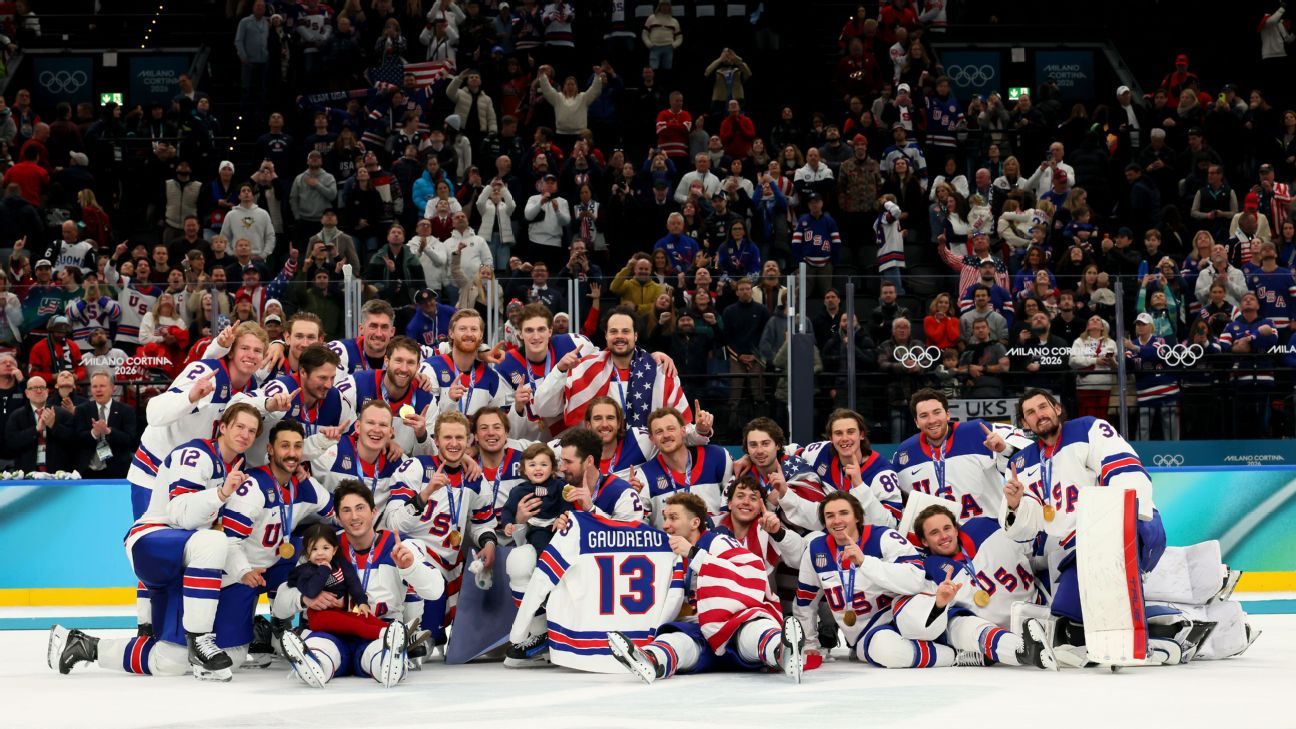
The Olympic men’s hockey gold medal game promised to be an epic showdown between the United States and Canada. And it delivered.
Following goals by Team USA’s Matt Boldy and Canada’s Cale Makar in regulation — and a slew of incredible saves by Team USA’s Connor Hellebuyck and Canada’s Jordan Binnington — the game went into overtime Sunday.
In that extra session, Jack Hughes took a pass from Zach Werenski and buried it past Binnington, giving the U.S. a 2-1 victory and its first gold medal in men’s hockey since 1980.
Here’s what went right and wrong for both teams, the MVP of the game, and what this result means for the rivalry moving forward.
Why Team USA won
It would be easy to write the words “Connor Hellebuyck” and leave it at that.
The Winnipeg Jets star is the reigning NHL MVP and winner of the Vezina Trophy as the league’s best goaltender. He cemented himself as the best netminder in the world with a gold medal game performance for the ages.
He stopped 41 of 42 shots against Canada, 27 of them coming from the slot and 17 of them coming from the inner slot, according to Hockey Stats. His paddle save on Devon Toews on a point-blank chance was the best stop by a goalie in the tournament. His breakaway stop on Macklin Celebrini was equally as clutch. The Americans have had great performances from goalies in their history, from Jim Craig in the Miracle on Ice to Ryan Miller in Vancouver. None of them top what Hellebuyck gave the Americans in this gold medal game.
THAT WAS ONE HELLE-BUYCK OF A STOP. 😳 pic.twitter.com/N3wCimdBGw
— NBC Olympics & Paralympics (@NBCOlympics) February 22, 2026
But if we’re being honest, leaning on Hellebuyck to be their best player was not exactly an ideal scenario for Team USA against Canada, who basically carried play for the final two periods with a 33-18 shot advantage.
Both Canada and the U.S. probably didn’t anticipate their special teams needing to be so vital in the championship final, but their penalty kills were also a key to the game. The Americans killed off a 5-on-3 power play for 1:42 in the second period against the best offensive talent in the world. After the U.S. failed to score on a double-minor high sticking penalty issued to Canada’s Sam Bennett late in the third period, they had to then kill off a Canadian power play after Hughes was whistled for a high stick.
There were times in which it looked like the Americans were falling back into their old role as the team trying not to lose to Canada instead of trying to win. That could have spelled the same kind of disaster they experienced in Sochi, for example. But Hellebuyck prevented the dam from breaking.
The U.S. won gold for the first time since 1980 because it converted in the 3-on-3 overtime. This format is, of course, entirely unfair to the two teams that battled for 60 minutes in a traditional hockey game. Let’s face it: There’s a reality in the multiverse in which the U.S. and Canada don’t even make the gold medal game if their 3-on-3 luck was different in the quarterfinals.
But if there’s going to be 3-on-3 to decide the gold medal, there are few American players you want out there more than Hughes. The New Jersey Devils star is fast and creative and has been a force in the NHL overtime with nine game winners in 404 games, the second most in team history.
JACK HUGHES DELIVERS AMERICA’S GOLDEN MOMENT IN OVERTIME. pic.twitter.com/4foFDOri53
— NBC Olympics & Paralympics (@NBCOlympics) February 22, 2026
Hughes’ goal doesn’t happen without a great forechecking play by Werenski, who knocked Nathan MacKinnon off the puck and then slid a pass to the streaking Hughes for the golden goal.
The American players brought out the late Johnny Gaudreau’s Team USA jersey on the ice during their celebration. Werenski was a teammate and a close friend. That’s one of those “hockey family” moments you won’t forget.
For Johnny Gaudreau. ❤️ pic.twitter.com/rWycdK8NUo
— NBC Olympics & Paralympics (@NBCOlympics) February 22, 2026
Hellebuyck was the story of the gold medal game for Team USA. Jack Hughes was the story of the tournament for the Americans. He was maligned by critics for his play in the 4 Nations Face-Off, looking overwhelmed after shifting from center to wing. He started on the fourth line for Team USA, was arguably the team’s best forward in group play and earned a larger role in the elimination tournament. That he scored the golden goal was only appropriate.
Move over, Mike Eruzione. No, it wasn’t a miracle. But it was the most consequential goal ever scored in American hockey history.
Why Canada lost
There’s little question that the Canadians were “goalied” by Hellebuyck in the gold medal game, but they also had a multitude of chances that they should’ve cashed in on — even against otherworldly goaltending. MacKinnon missed a gaping net. Celebrini had six shots on goal, including a breakaway chance, but the 19-year-old couldn’t conjure the magic that he had earlier in the tournament.
Coach Jon Cooper put his lines in a blender during the game, hoping to spark something that would lead to a potential game-winning goal. He never found the right mix.
Some credit has to go to the American defense corps. While the goaltending disparity between these team got the most attention, it was the depth of Team USA’s defense that was its greatest advantage. In the first period, those defenders did a great job of disrupting plays in the attacking zone. The rest of the game was bending, not breaking, and then having Hellebuyck clean up the rest. They didn’t really activate offensively enough because of their responsibility in the D zone, but in the end, that group won out against the Canadians’ incredible offensive forces.
But let’s face it: There is also a Sidney Crosby-sized caveat to the Americans’ victory. The Team Canada captain and Pittsburgh Penguins star sustained a lower-body injury against Czechia, missed the Canadians’ semifinal game against Finland and was questionable for the gold medal game. That he couldn’t go was a surprise — Hockey Canada was using his photo to promote the game, for what it’s worth — and his absence was felt heavily.
Nick Suzuki, Crosby’s replacement between Mitch Marner and Mark Stone, lost six of seven faceoffs in the game. It’s hard not to believe that one of those Canadian power plays might have converted with the Penguins star out there; Crosby is 12th in NHL history with 607 power-play points. That’s not to mention the loss of his leadership. In such a tight game, having a two-time gold medal winner — capturing one of those golds against the Americans in overtime, no less — could have made a difference.
For a year, American fans have talked about not having Quinn Hughes, Charlie McAvoy or a healthy Matthew Tkachuk in the final of the 4 Nations Face-Off. That Crosby didn’t play in this gold medal game might serve as the same asterisk for Canadian fans.
There has also been some early quibbling about the officiating from Canadian fans, including a slash on McDavid that was ignored and a non-call on a Team USA too many men penalty. But they had ample chances to beat Hellebuyck and couldn’t. They had the puck in overtime and couldn’t find a hero until Hughes accepted the mantle for the Americans.
The Canadians deserved gold with this effort. The Americans ended up with the medal around their necks. Now it’s a real rivalry.
Gold medal game MVP: Connor Hellebuyck
As Jack Hughes caught his breath in a postgame interview with NBC, the only thing he praised more than the brotherhood of USA Hockey was the play of his goaltender.
“He was our best player today by a mile. That was a ballsy, gutsy win. That’s American hockey right there,” Hughes said.
Hellebuyck played well in the 4 Nations Face-Off, but losing the title game conjured up past criticisms from his NHL career, claiming he doesn’t play his best when the pressure is turned up in the playoffs. Team USA management shook that off and made Hellebuyck the starter for the 2026 Olympics, outside of a failed audition by Jeremy Swayman in group play.
Hellebuyck had a .947 save percentage heading into the gold medal game and ends the tournament at .956. His goals saved above average was 5.92, the most of any goalie in the Olympics and indicative of how incredible he was in the gold medal game.
It was expected the Americans would have the goaltending advantage over Canada. That was mostly a criticism of Canada’s depth, and the suspicion that Binnington might cost them eventually. Instead, the advantage turned out to be that the Americans had a goaltender who could carry them to the gold medal on his own. As Hughes said, Hellebuyck was Team USA’s best player “by a mile.” And the reason its anthem played.
State of the U.S.-Canada rivalry
The state of the rivalry is that it’s now actually a rivalry.
The U.S. and Canada women’s rivalry became the most heated one in hockey because they are seen as equals. The U.S. won in Nagano, Canada won four straight gold medals, and now the U.S. has won two of the past three Olympics. The Americans won 11 of the past 16 IIHF world championships. Both teams had strong talent pipelines (we’ll see your Hayley Wickenheiser and raise you a Hilary Knight). Every game was one battle after another, and the winner was never predestined — even in Milan, with the U.S. almost squandering its best roster ever against its archrivals.
The U.S. and Canada men’s rivalry had, for the most part, been extremely lopsided since the NHL started sending players to the Olympics in 1998. Canada won Olympic gold in Salt Lake City against Team USA in 2002. The Canadians famously beat the U.S. in 2010 in Vancouver on Crosby’s golden goal in overtime. They sent the U.S. to the bronze medal game in Sochi in 2014. They won the World Cup of Hockey in 2016, where the U.S. was a nonfactor. They won the 4 Nations Face-Off in 2025 on McDavid’s golden goal in overtime.
Outside of preliminary-round wins in Vancouver and in that fight-filled game at 4 Nations, there weren’t many best-on-best moments for the Americans in this rivalry. Team USA was a yapping puppy, an annoying little brother, a team that entered games with Canada convinced it was the lesser of the two hockey superpowers — and frequently played that way.
But bubbling under the surface over the past two decades was a rich pipeline of American hockey talent. The Americans made inroads in the IIHF world junior championship tournament, winning more gold medals (six) than Canada (five) since 2010. The players they were churning out from their national development program weren’t the blue-collar grinders that USA Hockey felt it needed to produce in the penumbra of the Miracle on Ice. They were players like Patrick Kane and eventually the Hughes brothers, the Tkachuk brothers, Jack Eichel and Auston Matthews. Elite, skilled talents that are among the brightest offensive stars in the NHL.
And so the Americans entered the 2026 Olympics believing, for the first time in this rivalry’s history, that they were equals to the Canadians. Not necessarily based on on-ice results — although forcing overtime in 4 Nations while missing Quinn Hughes, McAvoy and having an injured Matthew Tkachuk certainly inspired confidence — but on the deepest hockey talent pool the country had ever created.
But they needed to beat Canada for any of this to matter, and now the Americans own the gold medal in men’s hockey for the first time since the miracle.
Canadian fans are already resting on the twin crutches of Crosby’s absence and Hellebuyck having the game of his life, and that’s fantastic for this rivalry. The Americans have the gold. The Canadians still have their arrogance of hockey superiority by birthright. All that means is that we’re going to be doing this dance together for a very long time, except now on equal footing.
As Jack Hughes said after winning Olympic gold for the Americans: “We wanted to go through Canada and beat them.”
Now it’s a rivalry.
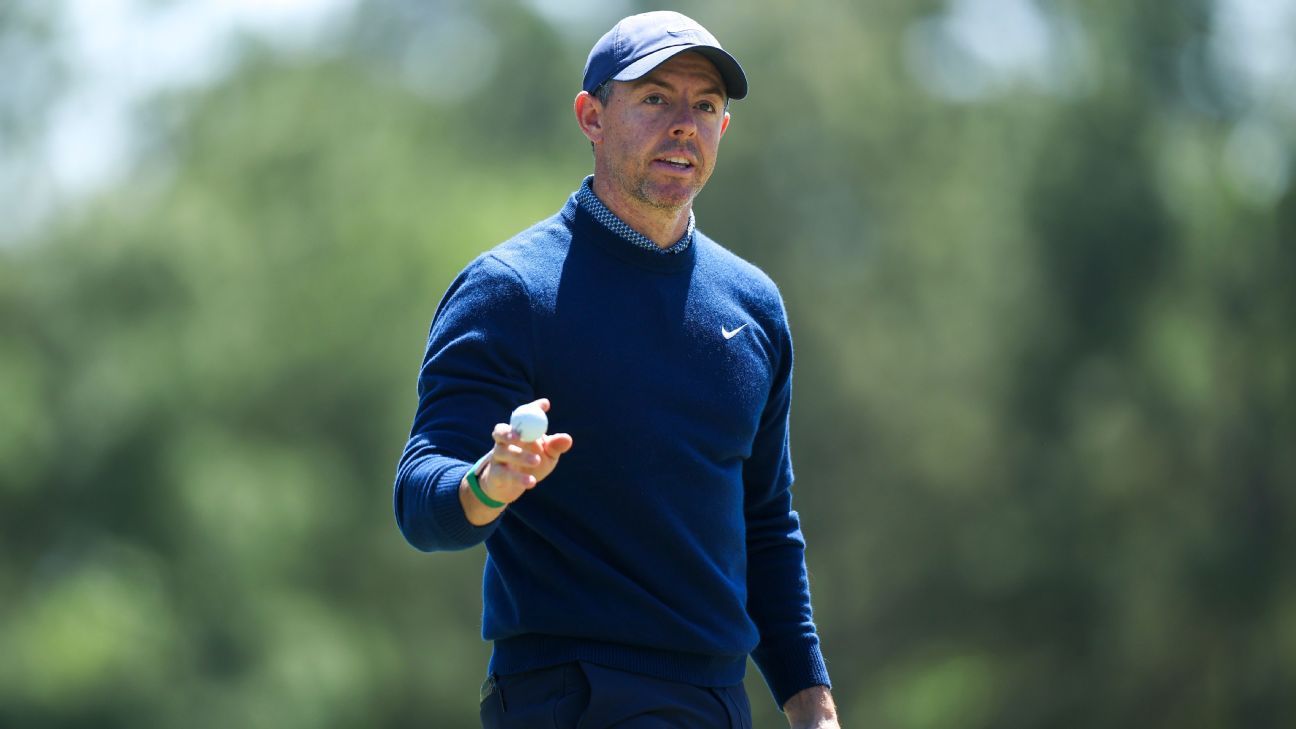
AUGUSTA, Ga. — We are just 18 holes into the 90th playing of the Masters and the tournament is already delivering on a high level.
A favorable forecast leading into the week has set the stage for a firm and fast Augusta National, one that appears prepared to weed out the pretenders from the contenders and potentially deliver one of the best versions of this major championship.
Through one round, the leaderboard is already stacked with some of the best players in the world as well as players who have had recent success here. Five of the top 10 finishers in last year’s event find themselves inside the top 10 again and four of the top five in the world, per Data Golf (as well as five of the top 10 in the OWGR), are part of the group of only 18 players under par.
With a golf course that should only get tougher over the next three days, here’s what we’re watching heading into the second round of the Masters.
Which players have the best shot at staying near the top of this loaded leaderboard?
Paolo Uggetti: There has not been a proper defense of the green jacket since Tiger Woods won in 2001, a year after winning his second Masters in 2000.
After an opening round 67 – good enough to hold a share of the lead at 5-under — Rory McIlroy is ready to try and do just that.
The score Thursday is one McIlroy felt was almost undeserved. He hit only five of 14 fairways and said he probably should have landed at 2-under. That he was able to score as well as he did regardless exemplified the kind of confidence the five-time major winner has in his game right now and the kind of freedom he possesses after finally securing the grand slam last year.
“I said this when I came in on Tuesday, I think winning a Masters makes it easier to win your second one. I do,” McIlroy said. “I think it’s easier for me to make those swings and not worry about where it goes when I know that I can go to the Champions Locker Room and put my green jacket on and have a Coke Zero at the end of the day.”
Must be nice. More than just his energy, McIlroy has come to relish this type of tough style of golf that requires shot-shaping, spin control and the right combination of aggression and patience. As this tournament gets harder, it would be shocking to see him not contend on the weekend. He’s not the only one who thinks so.
“By the way, Rory may never lose this thing again after last year,” Fred Couples said Thursday. “I said that on about the 12th hole to my caddie.”
The same goes for Scottie Scheffler, who played his C game Thursday and still shot 2-under, as well as Justin Rose who followed up his near Masters victory last year with a round of 70 too. Both know exactly what it takes to win here and are unlikely to fade.
Patrick Reed already has a green jacket and has been playing some of the best golf in the world this year, notching two wins on the DP World Tour. Reed also had a top-10 finish last year and there will be no lack of experience or getting ahead of himself.
“When I won in ’18, it was the first year I actually fully bought into just taking it day by day and shot by shot,” Reed said. “I think that’s what my recipe is, because when you get to the first major, you’re always going to put too much pressure on yourself, you’re always going to grind a little harder.”
Finally, a quiet round of 70 from two-time major winner Xander Schauffele should not be ignored. Schauffele has flown slightly under the radar after a disappointing 2025, but he’s got three top-10 finishes so far in 2026 and has had incredible form here at Augusta. In eight starts, he’s got five finishes inside the top 10.
“Kind of just got to hang in there,” Schauffele said. “Anything can happen on this property, especially the way it’s playing.”
How did the course play today and what could we see for the rest of the tournament?
Mark Schlabach: During the opening round, Patrick Reed, the 2018 Masters champion, broke a tee trying to repair a ball mark on the 17th green.
Jason Day, playing in his 15th Masters, noticed the “tinge of purple” on the No. 1 fairway, a sign that the Augusta National course is starting to get firm, bouncy and fast.
Chris Gotterup, who is making his debut in the first major of the season, averaged a whopping 363 yards off the tee because the ball is rolling so far on firm fairways.
High temperatures are predicted to reach the mid-80s on Saturday and Sunday, and relative humidity is dropping to 20-30% each afternoon, which means it’s going to stay dry.
“You already know it’s going to get crusty,” said Reed, who opened with a 3-under 69. “You know it’s going to get fast, and it’s going to take a lot of patience. You’re going to have to hit the ball solid and put the ball in the right spots. When you do, be patient and try to minimize errors.”
Shane Lowry, who carded a 2-under 70 on Thursday, predicted it might be the “toughest Masters we’ve played in a while.”
“You look at the forecast,” Lowry said. “They can do whatever they want with the golf course this weekend. I think over the last few years, we’ve had a day every year where it’s been raining or it’s been heavy rains. It’s kind of helped us a little bit, but I think before the week is out, it’s going to get very, very crusty around here.”
Day said Augusta National can make the course as difficult as it wants in the current conditions.
“If they want [single] digits to win, it’ll be baked out and fast, and guys will be kind of spewing on themselves out there,” said Day, who posted a 3-under 69. “Be really difficult.”
Uggetti: A perfect example of what players are talking about above is what happened today on the 13th green. Earlier in the day, McIlroy had to layup on the par-5 and left himself a 60-yard pitch on a downslope to the hole. McIlroy was able to generate enough spin to put the ball past the hole and keep it on the green. He made the ensuing birdie putt which kicked off a run of three straight birdies.
A few hours later, Scheffler and Gary Woodland played the hole and left themselves 62 and 39 yards respectively for their pitches. But even as they clipped their shots well off the turf, the greens had already gotten firmer and less receptive. Instead of holding, both of their balls rolled off the back left of the green and suddenly a birdie hole had turned into a grind for par.
“I think when the greens get that firm, you really have to think about where the best miss is, and distance control is very important, but also, like, different — missing it left, missing it right,” McIlroy said. “So when the greens do get firm like this, it makes it a much more tactical test, and you really have to think about things.”
McIlroy pointed out that the wind will be relatively tame the rest of the week, but the golf course? That’s only getting tougher. Buckle up.
Who had the most disappointing first round?
Uggetti: There was a lot of hype surrounding Jon Rahm heading into this week and with good reason. The Spaniard had notched a win and five top-5 finishes in five events on LIV. He appeared to be rounding into form just at the right time to compete for a second green jacket and spoke with much positivity about his game after taking a proper offseason to work on “bad habits.”
Yet Rahm delivered another dud Thursday, shooting a 6-over 78 and putting himself 11 shots behind the first-round leaders.
It would be easy to attribute Rahm’s mediocre play at the majors in recent years to his decision to leave for LIV. And while maybe there’s a kernel of truth there, it is also a crutch. The bottom line is Rahm does not belong in the conversation with Scheffler and McIlroy as one of the top players in the game.
His game is not sharp enough to compete at an Augusta that’s firm and fast and only getting harder. Rahm himself noted earlier this week that his win at the Masters had come during a version of the tournament in 2023 that was wet and soft where surviving the elements was more important than hitting the kinds of shots that this week will require.
“If I had to say what was really good in 2023 that is probably getting towards that level again hopefully is my iron game,” Rahm said Tuesday, “I hit my irons really well.”
On Thursday, a frustrated Rahm lost over a stroke to the field with those irons as well as a shocking 3.62 shots to the field with his putting — he three-putted four times! — the third-worst mark of the entire field. Even though he could bounce back Friday and make the cut, he effectively shot himself out of the tournament after just 18 holes.
Schlabach: After winning back-to-back tournaments in the LIV Golf League, Bryson DeChambeau was a popular pick to win his first green jacket this week.
Last year, DeChambeau played in the last pairing with McIlroy in the final round and tied for fifth at 7 under. It was his second straight top-10 in the Masters. It seemed that he had finally figured out the code for Augusta National.
That wasn’t the case on Thursday. He carded a 4-over 76 and is already nine strokes behind the leaders.
After making the turn at even par, things fell apart for DeChambeau on the par-4 11th. He hit his approach shot into the right greenside bunker. He needed three swings to get out, resulting in a triple-bogey 7.
0:35
Bryson DeChambeau has disastrous 11th hole in the bunker
Bryson DeChambeau needs three shots to get out of a bunker before recording a triple bogey on Hole 11 at the Masters.
DeChambeau said he hit his second shot 12 yards farther than he wanted. He also said the bunker was softer than he anticipated.
The Crushers GC captain will have to go low on Friday. He hit eight of 18 greens and nine of 14 fairways.
It was his worst opening round since he carded a 7-over 78 in the first round of The Open at Royal Portrush in Northern Ireland in July 2025. He went 16 under over the final 54 holes and tied for 10th at 9 under.
“Just going to give what the golf course gives me,” DeChambeau said. “I have to try to hit my irons better. I drove it left numerous occasions. You know, everybody has an ability for weird things to happen, and today I just did not have my irons under control, which is weird. It’s been good coming into it [the week].
What other golfers have work to do on Friday to make the cut?
It’s a loaded leaderboard with many of the world’s best golfers within striking distance.
But there are more than a handful of familiar names who are in danger of missing the 36-hole cut, which is projected at 4 over par or better (38.4%) by DataGolf.com.
Two-time Masters champion Bubba Watson, Sungjae Im, Nicolai Højgaard and DeChambeau are right on the projected cut line. Patrick Cantlay, Harry Hall and Maverick McNealy are 5 over, and Min Woo Lee, Fred Couples and Rahm are 6 over.
Hall planned wholesale changes after going 37-40 in his first Masters round.
“I’m going to change my driver,” he said. “I’m going to put two drivers in play tomorrow, different ones. I’m putting a new putter in play and going to figure [it] out on the range. I don’t think I spin my irons enough either. I went into a spinnier ball this week, but I still can’t stop it on a dime like I need to. So. I probably need to add to my irons or do something to compete in these majors.”
Former Open Championship winner Brian Harman is 7 over, and Robert MacIntyre is 8 over.
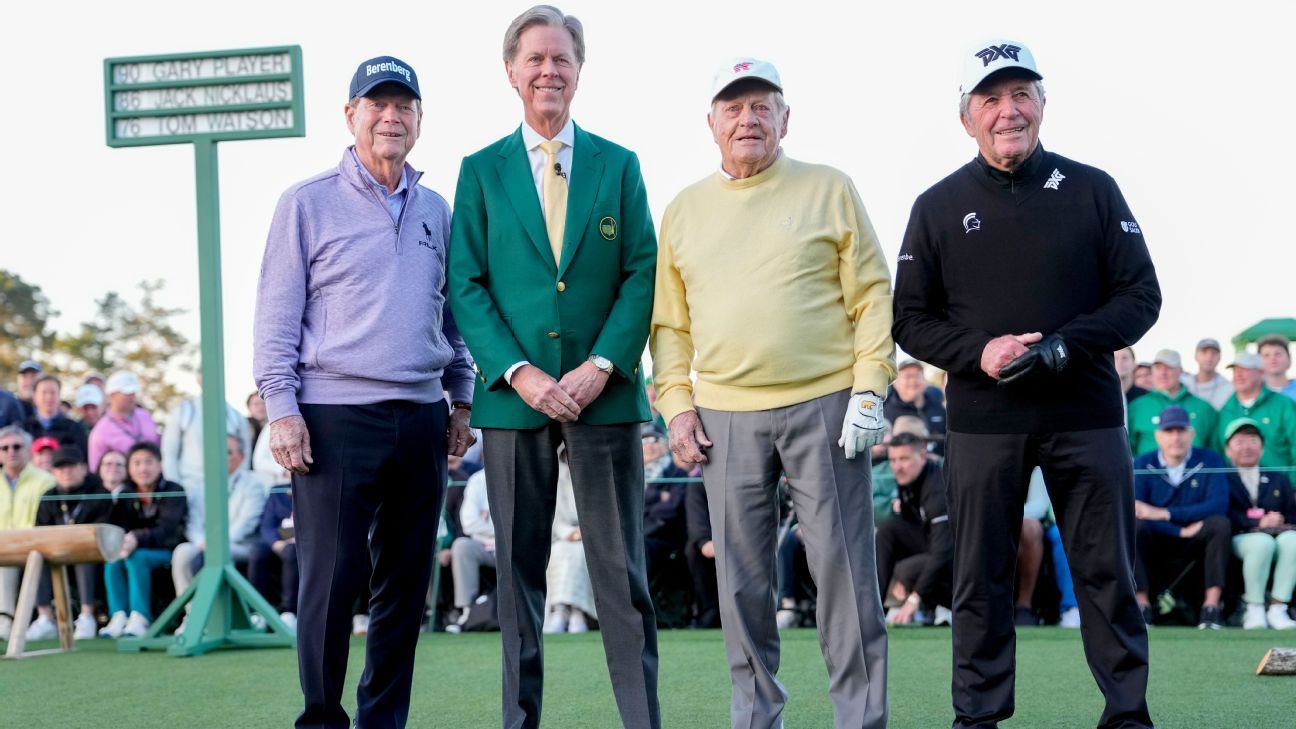
AUGUSTA, Ga. — Former Masters champion Gary Player said he sympathizes with Tiger Woods‘ ongoing pain from multiple injuries but says the 15-time major champion needs to hire a driver and stop operating vehicles while medicated.
Player, speaking to reporters Thursday after hitting a ceremonial tee shot before the opening round of the 90th Masters, said Woods needs to hire a chauffeur following his DUI arrest in Florida on March 27.
“Do I blame him for taking medicine? Hell, no,” Player said. “He has sleep deprivation. Do I blame him for taking something to help him sleep? No. But I don’t think he should drive a car. When you’re taking that medicine, it’s dangerous when you’re driving a car, same as it’s dangerous when you look at your cellphone in the car.”
Woods, 50, was formally charged Wednesday with misdemeanor DUI and refusing to take a chemical or physical test of his breath or urine, according to court records. Woods is also facing a ticket for distracted driving, a moving violation, after he told police that he was looking at his phone before he clipped the back of a trailer and had his SUV flip on its side.
The five-time Masters champion announced March 31 that he was stepping away from competitive golf and his administrative roles with the PGA Tour to seek “comprehensive inpatient treatment.”
A judge approved Woods’ request to seek treatment outside the U.S. due to privacy concerns. It’s believed that Woods is at a facility in Switzerland after his plane landed there.
“My heart goes out for him,” Player said. “There’s nothing worse than living in pain every day of your life. You can’t think of anything worse. I just hope he can get it all sorted out because he’s such an asset to golf and has done so much for the game.”
Said six-time Masters champion Jack Nicklaus: “Just whatever you need to help you and get back, because I think golf needs him, and we’d love to have him back.”
On Tuesday, prosecutors indicated that they plan to issue a subpoena seeking copies of Woods’ prescription medication records on file at Lewis Pharmacy in Palm Beach, Florida.
A Martin County Sheriff’s affidavit said deputies found two pain pills in Woods’ pants pocket and that the golfer showed signs of impairment following the crash.
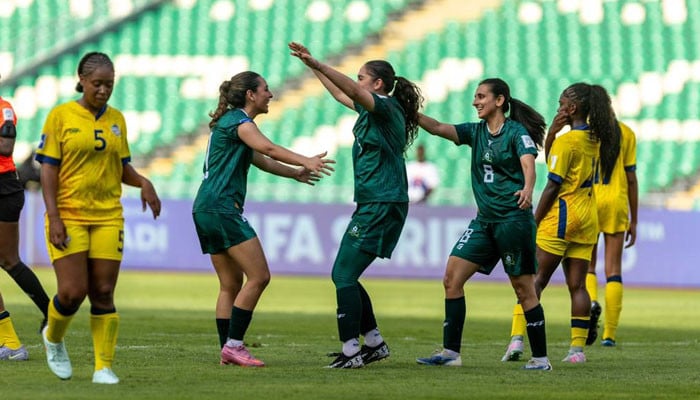
Pakistan made a sizzling start to their Fifa Series campaign with a record-breaking 8-0 victory over the Turks and Caicos Islands at the Stade Alassane Ouattara in Abidjan on Thursday.
Four goals by four different scorers in the first half set the tone for Adeel Rizki’s side before two more players got their names on the scoresheet as Pakistan surpassed their previous-best victory — 7-0 against the Maldives in September 2022.
Pakistan made their attacking intent clear from the very beginning when Mariam Mahmood, fresh from winning the Welsh league title with Wrexham Women, struck the side netting with a shot from an acute angle inside the first four minutes.
After Nadia Khan tested Turks and Caicos goalkeeper Archenie Desir with a shot from long range, Pakistan opened the scoring in the 10th minute with Zahmena Malik finding the back of the net.
It was 2-0 two minutes later, Aqsa Mushtaq slotting in after a rebound after Mariam had forced a save from Desir.
Pakistan continued to press with midfield metronome Layla Banaras showing her quality when she made it 3-0 with a weaving run and smart finish just past the half-hour mark.
In a game where Pakistan had pinned their opponents in the opposing half for almost the entirety of the match, Mariam got on the scoresheet in the 38th when she expertly volleyed in a cross at the back post.
Pakistan continued in the same vein in the second half, Nadia planting a perfect header to a cross from the left in the 56th to make it 5-0.
Aqsa scored a pearler to make it 6-0 in the 76th before Layla also got her second with a perfectly-placed shot from outside the box. Isra Khan’s goal in the 81st completed the record-breaking triumph.
PFF president Mohsen Gilani hailed the historic win. “I congratulate the players and the coaching staff for creating history. This is the start of a new era for women’s football in Pakistan and I hope the team continues in the same vein in the Fifa series.”

White House staff warned not to place bets on prediction markets

OpenAI Backs Bill That Would Limit Liability for AI-Enabled Mass Deaths or Financial Disasters

Rory’s defense, disappointing first rounds and looking ahead to the rest of the Masters

-
 Business1 week ago
Jaguar Land Rover sees sales recover after cyber attack
-
Uncategorized1 week ago
[CinePlex360] Please moderate: “Trump signals p
-

 Entertainment6 days ago
Joe Jonas shares candid glimpse into parenthood with Sophie Turner
-

 Tech6 days ago
Our Favorite iPad Is $50 Off
-

 Sports6 days ago
UConn Final Four run could trigger a $50M furniture giveaway for Massachusetts-based Jordan’s Furniture
-

 Entertainment6 days ago
Blake Lively reacts to harassment claims dismissal against Justin Baldoni
-

 Fashion1 week ago
China’s Anta Sports posts record $11.62 bn revenue in 2025
-
 Business6 days ago
Video: Why Is the Labor Market Stuck?