

Politics
Hurricane Melissa’s death toll climbs to 44, storm churns north

- At least 25 confirmed dead in Haiti, 19 in Jamaica.
- Forecaster estimates up to $52 billion in damages.
- Melissa among strongest-ever storms at landfall.
PORT-AU-PRINCE/KINGSTON/HAVANA: Hurricane Melissa’s confirmed death toll climbed to 44 on Thursday, according to official reports, after wreaking destruction across much of the northern Caribbean and picking up speed as it headed toward Bermuda.
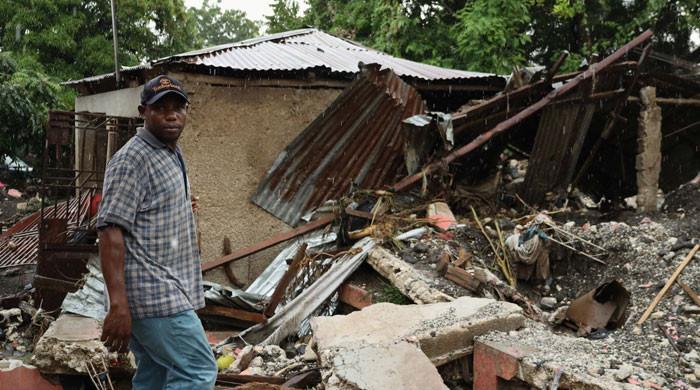
Jamaica’s information minister told Reuters at least 19 deaths had been confirmed, but authorities were continuing search and rescue efforts. The storm left hundreds of thousands without power, ripped roofs of buildings and scattered fields with rubble.
Jamaica’s military has called on reserve personnel to report for duty to help with relief and rescue operations.
Melissa made landfall in southwestern Jamaica on Tuesday as a powerful Category 5 hurricane, the Caribbean nation’s strongest-ever storm to directly hit its shores, and the first major hurricane to do so since 1988.
Windspeeds were well above the minimum level for the strongest hurricane classification. Forecasters at AccuWeather said it tied in second place for strongest-ever Atlantic hurricane on record in terms of windspeed when in struck land.
The forecaster estimated $48 billion to $52 billion in damage and economic loss across the western Caribbean.
Authorities in Haiti, which was not directly hit but nevertheless suffered days of torrential rains from the slow-moving storm, reported at least 25 deaths, mostly in the southern town of Petit-Goave when a river burst its banks.
A river also caved in and carried off part of a national highway, local newspaper Le Nouvelliste reported. The road, which had been weakened by last year’s Hurricane Beryl, connected to the nearby city of Jacmel.
Melissa also hit eastern Cuba, where some 735,000 evacuated, but as of Thursday, no deaths were reported there, despite extensive damage to homes and crops.
At 8pm (0000 GMT), Melissa was a Category 1 storm 409 km (254 miles) south-west of the North Atlantic British island territory, where hurricane conditions were expected by nightfall even as Melissa’s eye skirts north-west.
Melissa was packing maximum sustained winds of 105 mph (169 kph).
Residents in Bermuda however remained calm as the storm was expected to give the island a relatively wide berth. Authorities said they would close its causeway Thursday night and shut schools and ferries on Friday “out of an abundance of caution.”
In the Bahamas, which Melissa cut through Wednesday night, authorities lifted storm warnings but did not give the “all clear”. An official said authorities expected to decide by Saturday whether it was safe for the hundreds of people who evacuated off affected islands to return to their homes.
Wading barefoot through mud
The front page of Thursday’s Jamaica Observer newspaper read: “DEVASTATION.”
Densely populated Kingston was spared the worst damage. Its main airport was set to reopen on Thursday, as was the capital’s port. Relief flights and aid had begun to flow into Jamaica’s airports, authorities said.
But across the country, more than 130 roads remained blocked by trees, debris and electric lines, authorities said, forcing the military to clear roadways on foot into isolated areas, with ambulances following close behind.
Satellite imagery showed swaths of trees and homes devastated in the hardest-hit areas of Jamaica, sparse remaining greenery defoliated and most structures destroyed.
In a neighbourhood of the island’s Montego Bay, 77-year-old Alfred Hines waded barefoot through thick mud and debris as he described his narrow escape from the rising floodwaters.
“At one stage, I see the water at my waist and (after) about 10 minutes time, I see it around my neck here and I make my escape,” he told Reuters on Wednesday.
“I just want to forget it and things come back to normal.”
In western parts of the island, people crowded by supermarkets and gas stations to fill up on supplies.
“Montego Bay hasn’t got any petrol. Most of the petrol stations are down,” British tourist Chevelle Fitzgerald told Reuters, adding it took her at least six hours to cross the 174 km (108 miles) to Jamaica’s capital.
“The highway was closed. You had some blockage on the road and trees falling down,” she said.
Over 70% of electrical customers in Jamaica remained without power as of Thursday morning, said Energy Minister Daryl Vaz, with power lines felled across the island’s roadways.
Many schools remained without power or water, officials in the capital Kingston said.
Immediate humanitarian aid
Scientists say hurricanes are intensifying faster with greater frequency as a result of warming ocean waters caused by greenhouse gas emissions. Many Caribbean leaders have called on wealthy, heavy-polluting nations to provide reparations in the form of aid or debt relief.
Despite the U.N. setting up a fund for developing nations to quickly access reliable financing for more extreme weather events in 2023, donations have not met targets.
U.S. forecaster AccuWeather said Melissa was the third most-intense hurricane observed in the Caribbean, as well as its slowest-moving, compounding damages for affected areas.
U.S. search and rescue teams were headed for Jamaica on Thursday to assist in recovery efforts, Jamaican authorities said. U.S. Secretary of State Marco Rubio said the U.S. was prepared to offer “immediate humanitarian aid” to the people of Cuba, a long-time U.S. foe.
Authorities in Cuba – which Melissa struck in the night as a Category 3 storm – said they were “awaiting clarification on how and in what way they are willing to assist.”
At least 241 Cuban communities remained isolated and without communications on Wednesday following the storm’s passage across Santiago province, according to preliminary media reports, affecting as many as 140,000 residents.
Residents of Santiago, Cuba’s second-largest city, began returning to repair their homes. Authorities had evacuated 735,000 people to shelters outside the hurricane’s cone and relocated tourists in northern cays to inland hotels.
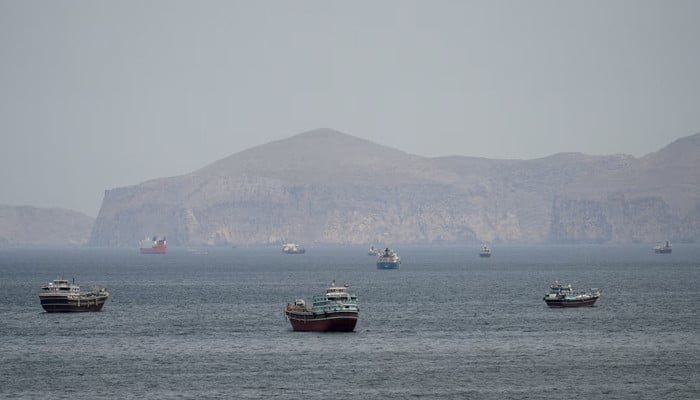

A Pentagon assessment said it could take six months to completely clear the Strait of Hormuz of Iranian-laid mines, which could keep oil prices high, the Washington Post reported on Wednesday.
Iran has all but blocked the vital waterway since the start of a war with the United States and Israel, sharply driving up oil and gas prices and disrupting the global economy.
The strait — through which one-fifth of the world’s oil and gas passes in peacetime — has remained largely closed during a shaky ceasefire, with the US imposing its own blockade.
Even if hostilities end and the blockade lifts, it could take months to clear the waterway of mines, according to a Pentagon assessment, the Washington Post reported citing officials close to the discussion.
The assessment added that it was unlikely such an operation would begin before the end of the war.
The six-month estimate was shared with members of the House Armed Services Committee during a classified briefing, the Post reported.
Lawmakers were told that Iran may have placed 20 or more mines in and around the strait, some floated remotely using GPS technology which makes them harder to detect, according to the report.
AFP has contacted the Department of Defense for comment.
Pentagon spokesman Sean Parnell told the Washington Post that its information was “inaccurate.”
Iran’s Revolutionary Guards have warned of a “danger zone” covering 1,400 square kilometres — 14 times the size of Paris — where mines may be present.
Iran’s parliament speaker said the Islamic republic would not reopen the strait as long as the US naval blockade remained.
A spokesman for German transportation giant Hapag-Lloyd cautioned last week that shippers needed details on viable routes as they remain fearful of mines.
When the Hormuz strait briefly reopened at the start of the ceasefire this month, only a few ships trickled through amid fears of attacks or mines.
Earlier in April, the US Navy said its ships transited the waterway to begin removing the mines, but that claim was denied by Iran’s Revolutionary Guard, which threatened any military vessels attempting to cross the channel.
London hosted talks with military planners from over 30 countries starting Wednesday on a UK and France-led multinational mission to protect navigation in the Strait of Hormuz once hostilities end.
The “defensive” coalition is set to discuss plans to reopen the strait and conduct mine clearance operations.
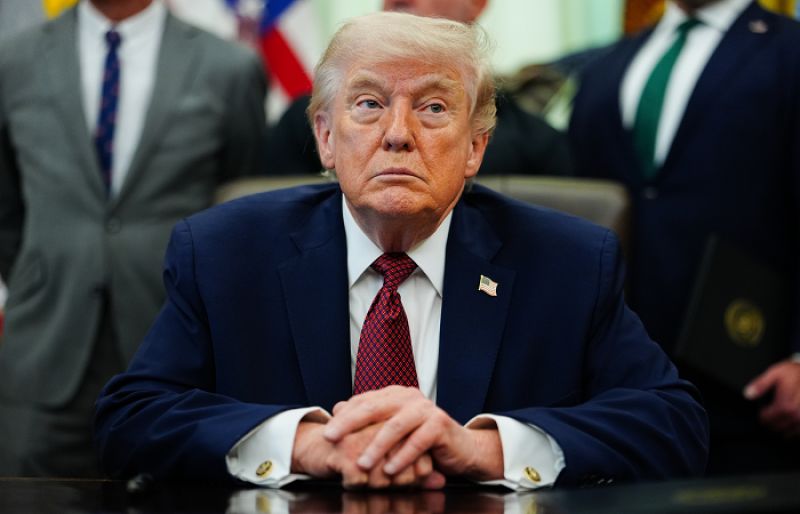
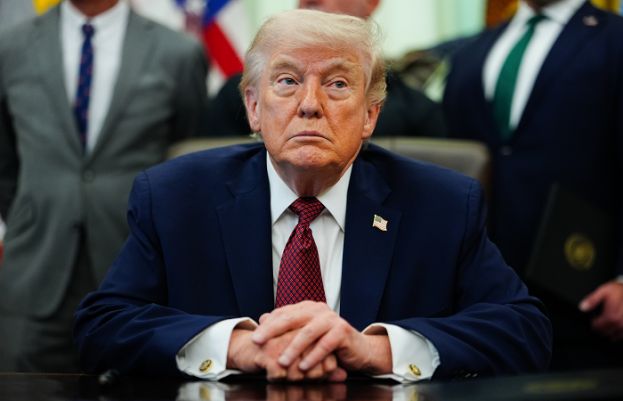
By extending a ceasefire indefinitely with Iran, President Donald Trump appears to be searching for a way out of a costly war, but Tehran may be unwilling to give him a win.
Trump has insisted on maintaining a naval blockade, which Iran is demanding must end before it can consider any agreement to end the conflict launched on February 28 by Israel and the United States.
For Trump, who boasts of his prowess to secure big deals quickly through his team of business buddies, negotiating with Iran’s Islamic republic presents an ultimate contrast — methodical, unyielding diplomats ready to fight for the long haul against what they see as a deceitful enemy.
Trump had raised hopes of progress at a second round of talks in Pakistan, with Vice President JD Vance designated to fly out, but Iran refused to confirm its attendance and Vance stayed home.
With a two-week ceasefire set to end, and Gulf Arab allies of the United States bracing for potential new Iranian strikes, Trump said he was extending the ceasefire because Iran’s leadership, decimated by the war, was “fractured” and needed time to come up with a proposal.
“He really could have doubled down and engaged in more reckless military action. But so far he has stopped digging himself into a deeper hole,” said Alex Vatanka, a senior fellow at the Middle East Institute who studies Iran.
For Trump, who campaigned on promises to shun military interventionism, the war has proven politically disastrous, facing opposition from even his Republican base.
Iran responded to being attacked by exerting control over the Strait of Hormuz, the gateway for one-fifth of the world’s oil, making American consumers pay more at the pump months before congressional elections.
– Seeking to exhaust all options –
Despite suffering losses, Iran’s clerical state is not on the verge of collapsing and will not surrender, said Danny Citrinowicz, a former Israeli intelligence expert on Iran now at Tel Aviv University’s Institute for National Security Studies and the Washington-based Atlantic Council.
Trump “does not want escalation. I am not saying there is not going to be one, but he is trying to really exhaust any political option,” he said.
“I think Trump is fed up with this war and more than that he understands, despite what he is saying, that the price is only going to intensify. It’s not going to decrease,” Citrinowicz said.
But Iranian leaders are deeply suspicious of Trump, whose negotiators were discussing a deal with them days before the United States and Israel attacked — a pattern also seen last June, with the two sides talking just before an Israeli bombing campaign then.
Both Trump and Iran’s ruling clerics are sensitive to any suggestion of backing down.
In declaring the naval blockade during the ceasefire, Trump had forced Iran to respond, undermining his own diplomacy “for the sake of optics and looking strong,” Vatanka said.
In one potential off-ramp, Vatanka said that the United States could maintain the blockade but not enforce it rigorously.
“The Iranians would know if it’s not being enforced because that is easy to measure,” Vatanka said.
Iran could call it a win but if they insist on a full opening, “that tells me they’re more interested in the optics than actually getting a deal. It would be a mistake on their part,” Vatanka said.
– How big a blockade? –
Trump has not indicated any let-up on the blockade so far. Senator Lindsey Graham, a Republican who long advocated for striking Iran, indicated the blockade could now serve as the key US means of pressure.
Graham wrote on X that he had concluded after speaking with Trump on Wednesday that “the blockade will be growing and that it could become global soon.”
Sina Toossi, a senior fellow at the progressive Center for International Policy, said Trump had a choice on the blockade — lifting it, which would reinforce to Iran how much leverage it had gained, or keeping it and risking ending the ceasefire.
“The prevailing view in Tehran is that time is on its side and that a prolonged conflict would impose mounting costs on the US and the global economy,” he said.
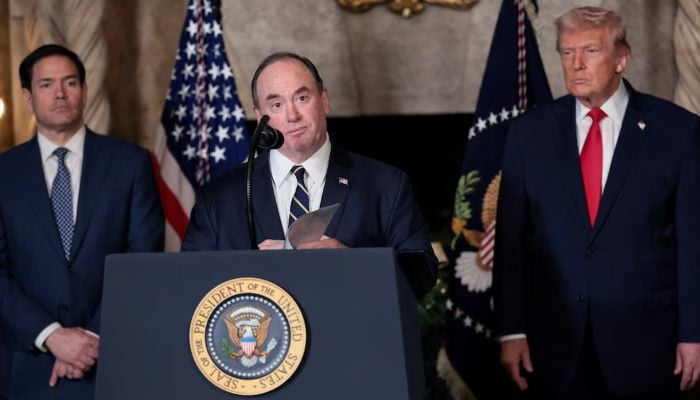

- Phelan clashed with Hegseth, other military leaders.
- Hegseth has fired top officials from across the military.
- Firing of Navy secretary comes amid US naval blockade of Iran.
WASHINGTON: Navy Secretary John Phelan has been fired, a US official and a person familiar with the matter said on Wednesday, in another wartime shakeup at the Pentagon coming just weeks after Defence Secretary Pete Hegseth ousted the Army’s top general.
The Pentagon announced his departure in a brief statement, saying he was leaving the administration “effective immediately.” But it did not provide a reason or say whether it was his decision to go.
His firing was first reported by Reuters.
The sources, who spoke on condition of anonymity, said Phelan was dismissed in part because he was moving too slow to implement reforms to speed shipbuilding and because he had fallen out with key Pentagon leadership.
One source cited bad relationships with Hegseth, Hegseth’s deputy, Steve Feinberg, as well as the Navy’s number 2 civilian, Hung Cao, who the Pentagon said will now take over as acting Navy secretary.
The source also cited an ethics investigation into Phelan’s office.
A billionaire seen as having close ties to President Donald Trump, Phelan is the first administration-picked service secretary to be fired since Trump came back into office last year.
His departure fits within a broader context of upheaval at all levels of leadership at the Pentagon under Hegseth’s watch, including the firing last year of the chairman of the Joint Chiefs of Staff, Air Force General CQ Brown, as well as the chief of naval operations and Air Force vice chief of staff.
On April 2, Hegseth fired Army Chief of Staff Randy George without citing a reason. Two US officials said the decision was tied to tensions between Hegseth and Army Secretary Daniel Driscoll.
Senator Jack Reed, the top Democrat on the Senate Armed Services Committee, called Phelan’s dismissal “troubling.”
“I am concerned it is yet another example of the instability and dysfunction that have come to define the Department of Defence under President Trump and Secretary Hegseth,” Reed said.
The latest departure comes during a tense ceasefire with Iran, as the US flows more naval assets into the Middle East.
The US military is relying on naval assets to carry out a blockade of Iran, which President Donald Trump is hoping will pressure Tehran to negotiate an end to the conflict on his terms.
The Navy is under intense pressure to expand its fleet. China’s shipbuilding industry now dwarfs the US, which was once a global powerhouse.
Trump’s $1.5 trillion defence budget request for fiscal year 2027 includes over $65 billion to procure 18 warships and 16 support ships made by General Dynamics and Huntington Ingalls Industries.
It is part of what the Pentagon is calling the “Golden Fleet” initiative, which officials say is the largest shipbuilding request since 1962.


Canada forms new advisory committee to strengthen US trade relations

High street drug dealer sells cannabis to undercover reporter

Clearing Hormuz Strait mines could take six months: report

-

 Fashion1 week ago
France’s LVMH Q1 revenue falls 6%, shows resilience amid Iran war
-

 Entertainment1 week ago
Is Claude down? Here’s why users are seeing errors
-

 Tech1 week ago
The Deepfake Nudes Crisis in Schools Is Much Worse Than You Thought
-

 Sports1 week ago
PSL 11: Peshawar Zalmi win toss, opt to field first against Quetta Gladiators
-

 Tech1 week ago
Human-machine teaming dives underwater
-
 Business1 week ago
Standard Life buys rival in £2b deal to create savings giant
-
 Business1 week ago
BP sees ‘exceptional’ oil trading result as Iran war sends crude costs soaring
-

 Fashion1 week ago
What no one is saying about the 2026 apparel slowdown