

Business
Hurricane season brings financial fears in the Caribbean

Gemma HandyBusiness reporter, St Johns, Antigua
 Getty Images
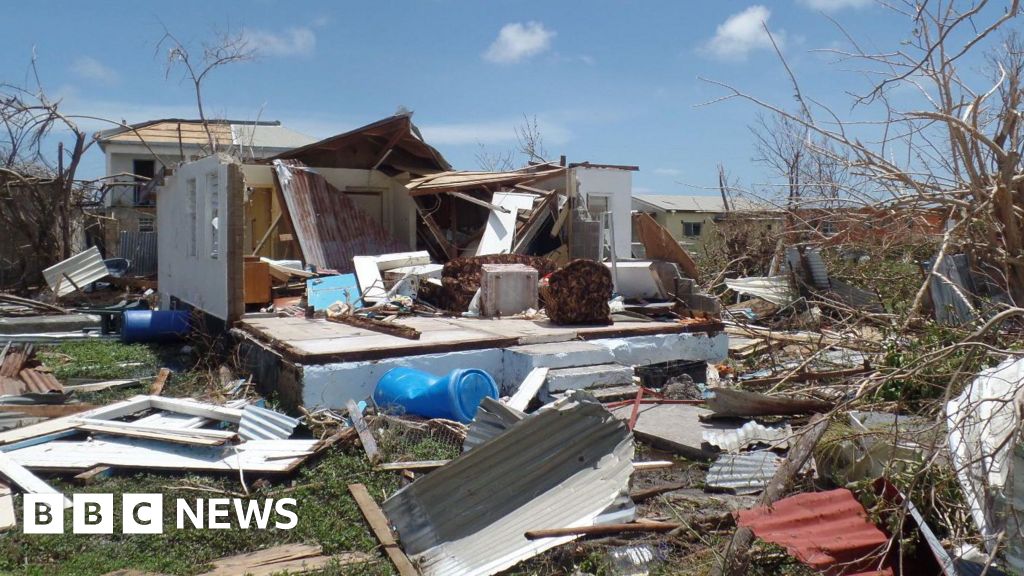
For some Barbudans, thunderstorms still trigger flashbacks of the night in September 2017 when they lost everything they owned to Hurricane Irma’s devastating winds.
Eight years on, while memories may be close to hand, home insurance for many on Barbuda and other islands in the Caribbean’s hurricane belt is more prohibitively expensive than ever.
Across the region premiums have gone through the roof in the past two years, surging by as much as 40% on some islands, according to industry figures.
Experts blame a perfect storm of increasing risk – as the region sees worsening and more rapidly intensifying cyclones – yet tiny populations of people to pay for policies, equating to poor returns for insurance companies.
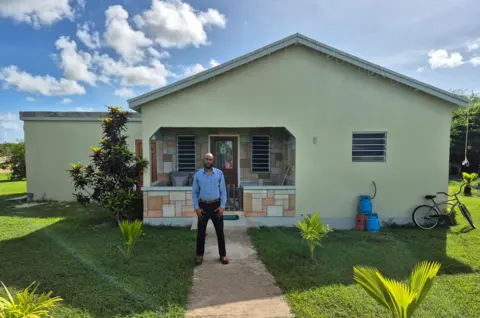
Dwight Benjamin’s Barbuda home was one of few left relatively undamaged by Irma. After the storm, he invested in a one-room extension topped with a concrete roof that will serve as a shelter for his family should disaster strike again.
“I think the house should be sound enough but that’s my added protection,” he says.
With peak hurricane season now in full swing, Dwight is among many Caribbean people anxiously monitoring weather platforms for activity in the Atlantic. Should a system head his way, he will do as he did during Irma – hope and pray.
“I’ve never had insurance; most Barbudans don’t really think it’s worth it. It’s just an added expense to the meagre resources we have,” he explains.
“Plus, we believe in what we have built and that it should be able to withstand the weather.”

 Courtesy Dwight Benjamin
Like Dwight, many Caribbean people build homes “out of pocket”, rather than opting for mortgages that can have high interest rates in this part of the world.
And the majority of homes on islands affected by hurricanes are uninsured. In Jamaica only 20% are reported to have cover, and just half in Barbados.
It is not just storms threatening the region, but earthquakes and volcanos too, points out Peter Levy, boss of Jamaican insurance company BCIC.
As a result of these threats of natural disaster, which Mr Levy calls the Caribbean’s “unique market”, the cost of home insurance will always be high.
One Antiguan insurance firm, Anjo, typically charges premiums of between 1.3% and 1.7% of a home’s value. Whereas in the UK, for example, it can be less than 0.2%.
 Getty Images
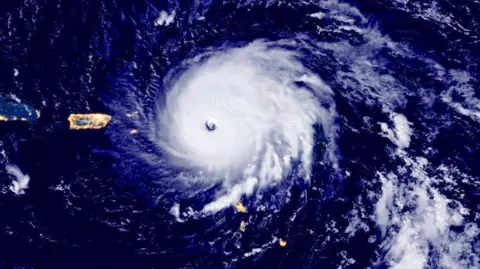
The Atlantic hurricane season runs from 1 June to 30 November, with the most activity occurring between mid-August and mid-October. The northern Caribbean nations, such as Antigua and Barbuda, the Bahamas, British Virgin Islands, and the Dominican Republic, are among the most at risk of a direct hit.
The peak months can be torturous for people with Irma-related trauma, says Mohammid Walbrook, another Barbudan resident. “Whenever there’s an announcement of a storm coming our way, it brings back bad memories. For some, even thunder and lightning are a trigger,” he says.
Back in 2017, Mohammid took shelter in a bathroom with his mother, father, sister and nephews when Irma’s category five winds tore the roof from his parents’ home.
His own uninsured two-bedroom property was also badly damaged. He was one of several Barbudans to receive a new house through assistance from international donors.
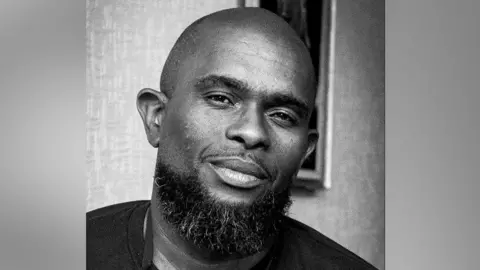 Courtesy Mohammid Walbrook
While some Caribbean countries – like British territory Turks and Caicos, also battered by Irma – have emergency cash reserves that can help with post-storm restoration, others do not have that luxury.
For deeply indebted nation Antigua and Barbuda, agencies like the United Nations Development Programme (UNDP) are a lifeline in the aftermath of a natural disaster.
The country’s prime minister Gaston Browne estimated the cost of rebuilding Barbuda after Irma, where 90% of buildings were damaged, topped $200m (£148m). Help came from China, the European Union and Venezuela, among others.
In 2017, the UNDP stumped up $25m for Barbuda and the island country of Dominica, which was ravaged by Hurricane Maria that same month.
The money restored more than 800 wrecked buildings across the two islands. But the body’s intervention was crucial in other ways too.
With livelihoods destroyed, the UNDP’s cash-for-work programme hired hundreds of local residents who had suddenly found themselves unemployed.
They assisted with everything from debris removal to reconstruction of homes and infrastructure, including Barbuda’s hospital and post office, the UNDP’s Luis Gamarra tells the BBC.
“Injecting economic resources into affected families helps reactivate the local economy,” he says.
Almost 1,000 contractors were also trained in more resilient “build back better” techniques, to safeguard structures against future disasters.
“The climate is changing and putting more pressure on governments and communities. Storms are becoming more frequent, more intense and happening earlier in the year too,” Mr Gamarra continues.
He thinks the expansion of partnerships with the private sector and with other countries in the region might help mitigate the impacts.
One such mechanism is the Caribbean Catastrophe Risk Insurance Facility, of which 19 Caribbean governments are members. Set up after Hurricane Ivan in 2004, the first-of-its-kind risk-pooling venture allows member governments to buy disaster coverage at low cost.
Last year it made record payments topping $85m to Hurricane Beryl-hit islands.
In Antigua and Barbuda, hurricane preparedness is a year-round endeavour, explains Sherrod James, director of the country’s office of disaster services.
Assessments of buildings to be used as storm shelters, along with training of volunteers to man them, starts months before the season starts, he says.
“We also meet with the private sector, helping them put policies and preparations in place, looking at the safety and resilience of their buildings. We make sure our critical partners, such as the ports, are prepared.
“And we do a lot of proactive work to address chokepoints within waterways that can exacerbate flooding,” adds Mr James. “These days, storms can go from a category one to five in a day. The new norm has thrown out the old regiment of what has to be done; we have to be much more proactive now.”
For many Barbudans, this time of year will always bring trepidation. Dwight was among dozens who recently attended a Hurricane Irma remembrance service at the island’s Pentecostal Church.
“It was very touching and brought back a lot of memories,” he says. “This time of year, we keep an eye on the weather and our fingers crossed. But we are resilient people and we know how to survive.”

Lululemon store sign in London, March 2, 2026.
Peter Dazeley | Getty Images
Lululemon on Wednesday named Heidi O’Neill as the athleisure company’s new CEO, effective Sept. 8.
The news comes after the company has seen more than a year of disappointing performance and is embroiled in a dramatic proxy battle, with founder Chip Wilson criticizing the business.
Shares of the company sank more than 5% in extended trading.
O’Neill has held multiple roles at Nike, contributing to the sportswear behemoth’s growth. She also held positions at Levi Strauss, Hyatt Hotels and Spotify.
“Heidi is an inspiring leader and proven, consumer-driven brand strategist, with a rare ability to both imagine a new future for a brand and to create the structure and processes to deliver on that vision,” said Marti Morfitt, Lululemon’s executive chair of the board of directors, in a statement. “We selected Heidi because of the breadth of her experience, her demonstrated success delivering breakthrough ideas and initiatives at scale, and her ability to be a knowledgeable change and growth agent.”
O’Neill said in a statement that she plans to focus on building off of the company’s core foundation and unlock growth in global markets. O’Neill will start with a base salary of $1.4 million, according to an 8-K filing.
“I am humbled by the opportunity and energized by what the team is already building,” she said in her statement. “I look forward to joining the company and helping to define and deliver the organization’s next chapter of success.”
Lululemon has been struggling with weak sales and increased competition, as well as mounting costs from tariffs. In its last earnings report, the retailer said it expects tariffs to cost the company $380 million this year.
Wilson, Lululemon’s largest shareholder, has also been placing increased public pressure on the company to make changes to its board of directors. He did not immediately respond to a request to comment on the appointment.
In a statement, GlobalData managing director Neil Saunders said O’Neill has “a very strong pedigree in the activewear and sporting space” and “has an intimate knowledge of how the industry works.”
“There will be some, mostly activist investors, who see O’Neill as something of a safe and traditional choice,” Saunders said. “This argument is partly valid as a lot of cultural change is needed at Lululemon in order to improve performance. However, in our view, O’Neill is her own person who will come with an agenda of change.”
While at Nike, O’Neill played a key role in the company’s doomed direct-to-consumer sales strategy, where the brand pivoted away from wholesale partners in favor of its own website and stores under former CEO John Donahoe. When current CEO Elliott Hill took over as Nike’s next chief executive, he made it a priority to walk back the direct-selling plan.
Prior to leaving Nike, O’Neill also oversaw product and innovation at a time when the brand faced criticism for falling behind on new products and focusing too heavily on the same legacy lifestyle franchises, Dunks, Air Force Ones and Air Jordans. While the franchises briefly led to a surge in sales, fueling Nike’s growth to a $50 billion-plus brand, they ultimately became ubiquitous in the market and viewed as uncool by some consumers.
Now, Hill is still working on unwinding that strategy and clearing inventory from those franchises from the marketplace, which has hit Nike’s margins and led to a decline in sales online.

A Southwest Airlines Boeing 737 airplane lands at Los Angeles International Airport after arriving from Chicago on March 7, 2026 in Los Angeles, California.
Kevin Carter | Getty Images
Southwest Airlines forecast second-quarter earnings below analyst estimates, citing higher fuel prices, while holding off on updating its full-year 2026 forecast.
Southwest expects to earn between 35 cents and 65 cents a share in the current quarter, while analysts polled by LSEG expected 55 cents a share.
The airline in January forecast earnings per share of $4 this year, saying that it expected its new initiatives would pay off. Southwest has sought to increase revenue with checked bag fees and seat assignment fees.
“Achieving this outcome would require lower fuel prices and/or stronger revenue performance to offset higher fuel expense. The Company expects to provide updates to this guidance as appropriate,” Southwest said in an earnings release Wednesday.
Airlines have been either cutting their full-year forecasts or holding off on further forecasts because of volatile prices for jet fuel, generally their biggest expense after labor. They are also pulling back on their capacity growth plans to cut costs, which can drive up airfare when fewer seats are for sale.
Southwest said it expects its capacity to be flat to up no more than 1% in the second quarter, and unit revenues to rise by 16.5% to as much as 18.5% over last year.
“Demand continues to be strong, and we remain focused on controlling what we can control by managing costs, optimizing revenue initiatives, and directing capacity toward higher‑return opportunities,” CEO Bob Jordan said in the earnings release.
Here’s what the company reported for first quarter compared with Wall Street expectations, according to consensus estimates from LSEG:
- Earnings per share: 45 cents vs. 47 cents cents expected
- Revenue: $7.25 billion vs. $7.27 billion expected
Southwest swung to a profit of $227 million, or 45 cents a share in the first quarter, compared with a $149 million loss, or a loss of 26 cents per share, a year earlier.
Revenue rose nearly 13% to $7.25 billion compared with $6.43 billion in the year-earlier period.
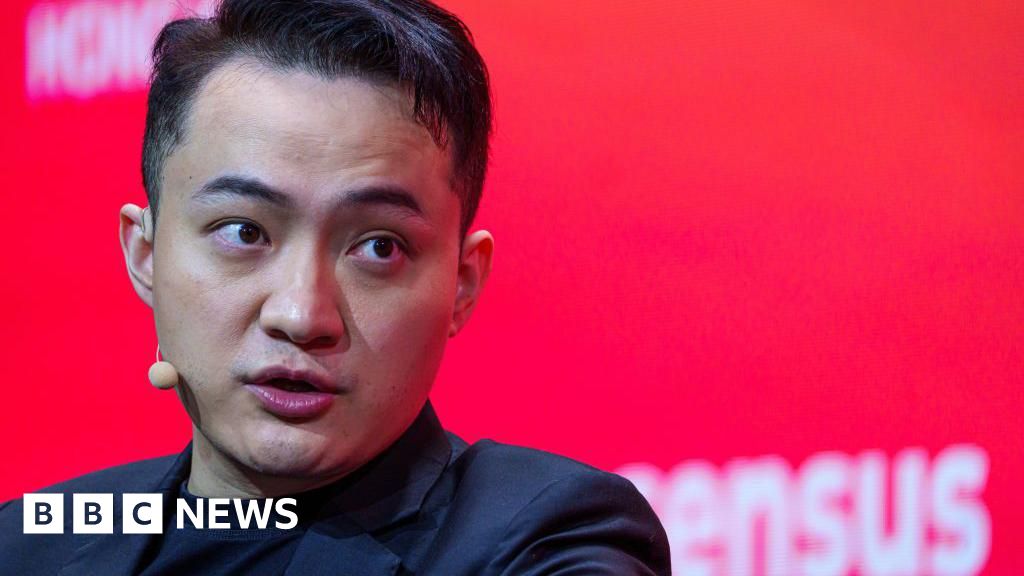
Billionaire investor Justin Sun is suing the family’s World Liberty crypto venture after spending $45m on its tokens.
Source link


2026 NFL Draft Odds: Draft Positions for Ty Simpson, Jeremiyah Love, More
Lululemon names former Nike exec Heidi O’Neill as new CEO

‘Storage Wars’ star Darrell Sheets dies at 57; death reported as suicide

-

 Fashion7 days ago
France’s LVMH Q1 revenue falls 6%, shows resilience amid Iran war
-

 Entertainment1 week ago
Is Claude down? Here’s why users are seeing errors
-

 Tech1 week ago
The Deepfake Nudes Crisis in Schools Is Much Worse Than You Thought
-

 Sports1 week ago
PSL 11: Peshawar Zalmi win toss, opt to field first against Quetta Gladiators
-

 Tech1 week ago
Bremont Is Sending a Watch to the Moon’s Surface
-
 Tech1 week ago
Human-machine teaming dives underwater
-
 Business1 week ago
BP sees ‘exceptional’ oil trading result as Iran war sends crude costs soaring
-

 Fashion1 week ago
What no one is saying about the 2026 apparel slowdown