

Business
Hyundai i20 becomes Rs 87,000 cheaper: Now starts at Rs 5.99 lakh – Best time to buy?


Hyundai i20 Price Cut Details: Hyundai Motor India has made the i20 more affordable by cutting prices for several variants. Now the premium hatchback is more accessible to buyers with a starting price of Rs 5.99 lakh (ex-showroom). Earlier, the entry price was Rs 6.86 lakh. That is a big drop for a car in this segment.
Official Statement
Commenting on the announcement, Sunil Moolchandani, National Sales Head, HMIL, said, “With the new starting price of Rs 5,99,000, we are making the i20 experience even more compelling, accessible and desirable for customers. This reflects our commitment to offering value-driven mobility solutions.”
New base variant
The i20 lineup now starts from the Era variant, priced at Rs 5,99,000 (ex-showroom). The variant comes equipped with 6 airbags, digital instrument cluster, front and rear skid plates, body-colour ORVMs and door handles, Type-C USB charger and telescopic steering.
Hyundai has also reduced prices for the mid-level trims. The i20 Magna Executive now costs Rs 6,73,900, compared to Rs 6,86,865 earlier. The i20 Magna is priced at Rs 6,99,900, down from Rs 7,12,385. All prices are ex-showroom.
Hyundai i20 Magna Executive features
The Magna Executive variant comes equipped with a digital cluster, front and rear skid plates, shark fin antenna, Highline Tyre Pressure Monitoring System (TPMS), automatic headlamps, telescopic steering, keyless entry, electrically adjustable ORVM and steering wheel with audio & Bluetooth controls.
Hyundai i20 Magna features
Building on this, the Hyundai i20 Magna variant further enhances the premium quotient with features such as an electric sunroof, LED DRLs, rear AC vents and front armrest with storage.
Hyundai is also offering a 10.1-inch touchscreen infotainment system as a dealer-installed option. It supports wireless Apple CarPlay and Android Auto and comes with a rear camera. This package costs Rs 14,999 and includes a 3-year warranty on the screen.

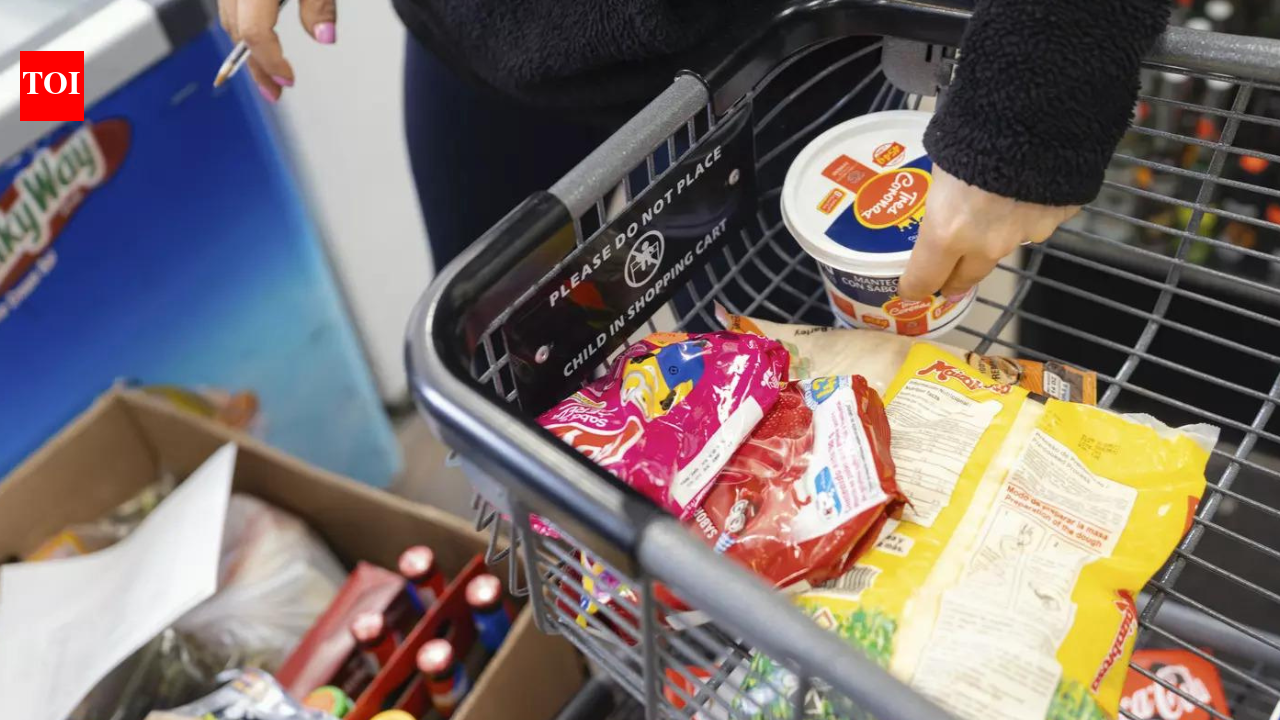
Low-income families are being offered help with the cost of food during the Easter holidays.
Source link
Business
Delay in FSSAI finalising front of pack labelling rules unusual by its own norm – The Times of India
While the Food Safety and Standards Authority of India (FSSAI) has claimed in the Supreme Court that the framing of front-of-pack labelling (FOPL) regulations would take longer and sought more time, a look at several regulations framed by the authority in the last ten years shows that the average time taken to frame one or make amendments to existing ones has been about two years. In the case of the FOPL, the process has been dragging on for about a decade.After framing guidelines in 2014 which included front-of-pack labelling specifying how much fat, sugar or salt a packaged food contained, when the FSSAI put it in the public domain in 2015, it had stated that the guidelines would be “converted into regulation in due course after following the process of inviting suggestions and comments, suggestions etc. from various stakeholders”. FSSAI put out the draft Food Safety and Standards (Labelling and Display) Regulations, 2018 in public domain in April 2018. However, since then there have been half a dozen stakeholder consultations and more drafts put out, but no regulation in sight yet.In response to a public interest petition in the Supreme Court seeking directions to FSSAI to make FOPL regarding high fat, sugar and salt mandatory for packaged foods, the court has been monitoring the process even as the authority has been seeking repeated extensions. In its latest affidavit in court, the FSSAI laid out a long process before the Supreme Court.It told the court that it is “contemplating” a tabular or pictorial representation to reflect high fat sugar or salt on front of pack labelling. It stated that it is a complex matter “requiring further consultation and examination” and hence stakeholder consultation is proposed before deciding on the modalities of FOPL. The latest stakeholder consultation had over 60 food industry and industry association representatives and just two public health experts representing civil society or public health interest.There remain several steps:1. After stakeholder consultations a draft amendment will be prepared2. Draft amendment will be placed before scientific panel (consist of nine eminent food scientists from different government organizations/institutions). Scientific committee comprising of chairpersons of the 21 scientific panels and six independent members, FSSAI and Health ministry “for due consideration”3. To include amendment in the regulation a draft regulation including the proposed amendment/s is placed before the scientific panel concerned4.Recommendations of the scientific panel will be placed before the scientific committee5. On endorsement of the scientific committee it will be placed before FSSAI for approval and if there are substantial changes in the notified draft regulation, another draft regulation will have to be notified6. Once approved by FSSAI, the draft or final regulation is sent to health ministry7. After ministry approval, if it is a draft regulation, it has to be notified in the gazette for public comments giving 60 days’ time and the entire process spelt out above is repeated before it is finally notified.8. In case what the health ministry approves is the final regulation, it has to be sent to the legislative department of the law ministry for vetting followed by approval of the health ministry. The approved final regulation is published in the Gazette of India for implementation.In short, the FSSAI stated in court that the regulation is far from becoming a reality any time soon. However, the longest time FSSAI has taken for framing any of the existing regulations or amendments has been over three years. The only other regulation that the FSSAI has not framed even after seven years is the Food Safety and Standards (Genetically Modified and Engineered Foods) Regulations which have been in the works since 2019.Average time to bring in various regulations/amendments to regulations
| New regulations | Draft notified in the gazette | Put in public domain for feedback from stakeholders | Date of gazette notification | Gap between draft and final notification |
| Food Safety and Standards (Health Supplements, Nutraceuticals, Food for Special Dietary Use, Food for Special Medical Purpose, Functional Food and Novel Food) Regulations, 2016. | Jul 30, 2015 | Sep 11, 2015 | Dec 23, 2016 | 17 months |
| Food Safety and Standards (Alcoholic Beverages) Regulations, 2018 | Sep 5, 2016 | Sep 9, 2016 | Mar 19, 2018 | 18 months |
| Food Safety and Standards (Fortification of Foods) Regulations, 2018 | Dec 23, 2016 | Jan 3, 2017 | Aug 2, 2018 | 19 months |
| Food Safety and Standards (Organic Foods) Regulations, 2017 | Jun 19, 2017 | Jun 22, 2017 | Dec 29, 2017 | 6 months |
| Food Safety and Standards (Advertising and Claims) Regulations, 2018 | Mar 13, 2018 | Mar 23, 2018 | Nov 19, 2018 | 8 months |
| Food Safety and Standards (Packaging) Regulations, 2018 | Mar 19, 2018 | Apr 2, 2018 | Dec 24, 2018 | 9 months |
| Regulation amendments | ||||
| Food Safety and Standards (Contaminants, toxins and Residues) First Amendment Regulations, 2024 | Aug 20, 2020 | Aug 26, 2020 | Oct 17, 2024 | 26 months |
| Food Safety and Standards (Packaging) First Amendment Regulations, 2025. | May 17, 2022 | May 24, 2022 | Mar 28, 2025 | 34 months |
| Food Safety and Standards (Food Products Standards and Food Additives) First Amendment Regulations, 2024. | May 25, 2022 | May 31, 2022 | Oct 21, 2024 | 29 months |
| Food Safety and Standards (Food Products Standards and Food Additives) First Amendment Regulations, 2025 | Oct 31, 2022 | Nov 3, 2022 | Jul 10, 2025 | 32 months |
| Food Safety and Standards (Prohibition and Restrictions on Sales) first Amendment Regulations, 2024 | Apr 27, 2023 | Apr 28, 2023 | Oct 17, 2024 | 18 months |

UK inflation held steady at 3% in February before the impact of an energy shock linked to war in the Middle East, official figures have revealed.
Economists have said data showing flatlining inflation highlights “the calm before the storm”, with inflation expected to accelerate again in the coming months.
The rate of Consumer Prices Index (CPI) inflation was unchanged from the level reported in January, the Office for National Statistics (ONS) said.
It was in line with predictions from economists.
However, the steady picture for inflation does not yet reflect the impact of the conflict in the Middle East on the cost of living, with the first attacks taking place at the very end of February.
Oil and gas prices have jumped in recent weeks due to the conflict and other goods prices could also be affected by disruption to shipping through the Strait of Hormuz.
Economists said inflation could lift as high as 4% in the third quarter of 2026 due to the projected surge in energy costs.
ONS chief economist Grant Fitzner said: “After last month’s slowdown, annual inflation was unchanged in February as various price movements offset each other.
“The largest upwards driver was the price of clothing, which rose this month but fell a year ago.
“This was offset by falls in petrol costs, with prices collected before the start of the conflict in the Middle East and subsequent rise in crude oil prices.”
The February data showed clothing and footwear prices contributed to inflation, with prices up 0.9% for the month – its highest level since March 2025 – after previously staying flat in January.
However, this upward impact on inflation was cooling inflation in other areas.
Inflation across the services sector eased slightly to 4.3% for the month, dipping to its lowest level for almost four years.
Slower alcohol and tobacco price rises were also a drag on inflation, easing to 3.6% for the month – the lowest since February 2022.
The slowdown was driven by falling inflation for the prices of beers, wines and spirits over the month.
Elsewhere, motor fuel inflation also eased back, with the average price of petrol falling by 1.6p per litre between January and February.
However, petrol and diesel prices have risen significantly since the latest data after the price of crude oil jumped due to the conflict in the Middle East.
Economists said on Wednesday that inflation is now set to accelerate over the coming months as the impact of the conflict feeds into the price of goods.
Stuart Morrison, research manager at the British Chambers of Commerce, said: “For businesses across the UK, today’s inflation data represents the calm before the storm.
“UK firms are particularly exposed to the economic impact of the crisis in the Middle East as our electricity prices are tightly tethered to global gas prices.
“This will feed directly into higher costs and renewed inflationary pressure in the months to come.”
Luke Bartholomew, deputy chief economist at Aberdeen, said: “Today’s inflation report is little more than a relic of the world before the Iran conflict.
“While the February report was broadly in line with expectations, and confirms that inflation was on a path back to 2%, the outlook for inflation has radically changed.”
Experts also indicated previous expectations that interest rates would be cut further this year have been scuppered, with many predicting the Bank of England will continue to hold them at 3.75% in an effort to diminish further price rises.
Matt Swannell, chief economic adviser to the EY ITEM Club, said: “With the growth outlook weak, unemployment high and rising, and policy already restrictive, we think a prolonged hold for bank rate is the most likely outcome.”
Chancellor Rachel Reeves said: “In an uncertain world we have the right economic plan, taking a responsive and responsible approach to supporting working people in the national interest.
“We’re taking £150 off energy bills and providing targeted support for those facing higher heating oil costs.
“We’re also acting to protect people from unfair price rises if they occur, bring down food prices at the till, and cut red tape to boost long-term energy security – building a stronger, more secure economy.”


Graham Carey’s partner Rachel Borthwick passes away in India after breast cancer battle

Cristiano Ronaldo’s eldest son trained with Real Madrid’s academy – sources

PSL 11 ticket refund process to begin from March 30

-

 Fashion1 week ago
Sales at US apparel, clothing accessories stores up 4% YoY in Jan 2026
-

 Tech1 week ago
Justice Department Says Anthropic Can’t Be Trusted With Warfighting Systems
-

 Sports1 week ago
PCB files complaint over allowing Bangladesh to take review on penultimate ball – SUCH TV
-
 Business1 week ago
Stocks and pound rise as US rate call approaches
-

 Entertainment7 days ago
Val Kilmer revived 1 year after death through AI
-

 Sports1 week ago
March Madness 2026 – How to watch in SA, start time, schedule, TV channel for NCAA championship basketball tournament
-
 Business1 week ago
Brits cashing in jewellery as gold price hits record high
-

 Sports1 week ago
WBC championship: USA-Venezuela preview, live updates, analysis