

Tech
‘I Laughed, I Cried, I Got the Runs’: The Best Mushroom Coffees for an Alternative Buzz


Photograph: Pete Cottell
Others Tested
Four Sigmatic Organic Coffee for $20: Four Sigmatic was founded about a decade ago by Finnish-American bohos who had the prescience to market mushroom coffee to woo-woo Angelenos who are rich enough to disregard science. Its catalog is expansive and includes a whole constellation of mushroom-infused ingestibles, with bagged, preground coffee serving as the flagship product alongside instant latte mixes, smoothie add-ins, and “capsules.” Buying from Four Sigmatic is a breeze—no need for subscriptions, kits, or any other nonsense. Just pick out what you want, pay for it, and it shows up on your doorstep a few days later. Four Sigmatic’s Focus blend is labeled as a dark roast, but it’s missing the cigarette-butts-and-bowling-alley aftertaste that looms on the finish of similar blends. Despite my preference for lighter beans, this hit like a hug from an old friend after weeks of sipping murky silt. The caffeine buzz normalized after two days of using Think in lieu of more standard shroom-based coffee replacements, so I added a three-quarter-teaspoon hit of the powdered Focus blend to my daily cup to see what would happen. Within 10 minutes I felt an overwhelming urge to sort my finances spreadsheet in preparation for tax season, then I set up a new template in Loopy Pro to accommodate a friend who planned to join my basement jam session that evening. He bailed, but I was jacked on Genius Adaptogens so I played all the instruments myself into the wee hours of the night.

Photograph: Pete Cottell
Not Recommended
MUD/WTR Original Blend for $45: The packaging of MUD/WTR isn’t quite as unhinged as a bottle of Dr. Bronner’s, but it’s definitely in the same realm. The spicy dust inside the can is a maximalist circus of weirdness as well, with herbaceous stalwarts like turmeric and masala chai holding it down alongside the usual shroom suspects. It took me a few days to realize that properly emulsifying this ruddy power per the suggested instructions—1 tablespoon with ¾ cup of water, battered thoroughly with the included handheld immersion blender—is an impossible task, so I started experimenting with supplemental ingredients in hopes that some blend of milk, fat, and sugar would minimize the gritty aftertaste that overwhelms the palate. I landed on 1 tablespoon of simple syrup and 4 ounces of whole milk frothed in my trusty Subminimal NanoFoamer Pro. The final result hits somewhere between a chai latte and the kind of hot cocoa you’d order at a coffee shop with boring ’90s music, mean baristas, and a dirty bin full of stale vegan + gluten-free snacks next to the register. I didn’t hate it, but the bottom quarter of the cup is an undrinkable gunky mess. And don’t get me started on the chunky brown lacing that clings to the edge of the cup. The physical and mental effects of MUD/WTR felt more like a facsimile of a boost than a visceral kick in the pants, but a placebo high is better than nothing, right? Combine that with the amount of adjunct ingredients required to make this drinkable and I ended up with a beverage I would only drink every now and then as a treat on a chilly day rather than a daily sipper I can rely on for increased focus, energy, virility, and the million other things this product promises within the wall of text that adorns its packaging.
Power up with unlimited access to WIRED. Get best-in-class reporting and exclusive subscriber content that’s too important to ignore. Subscribe Today.









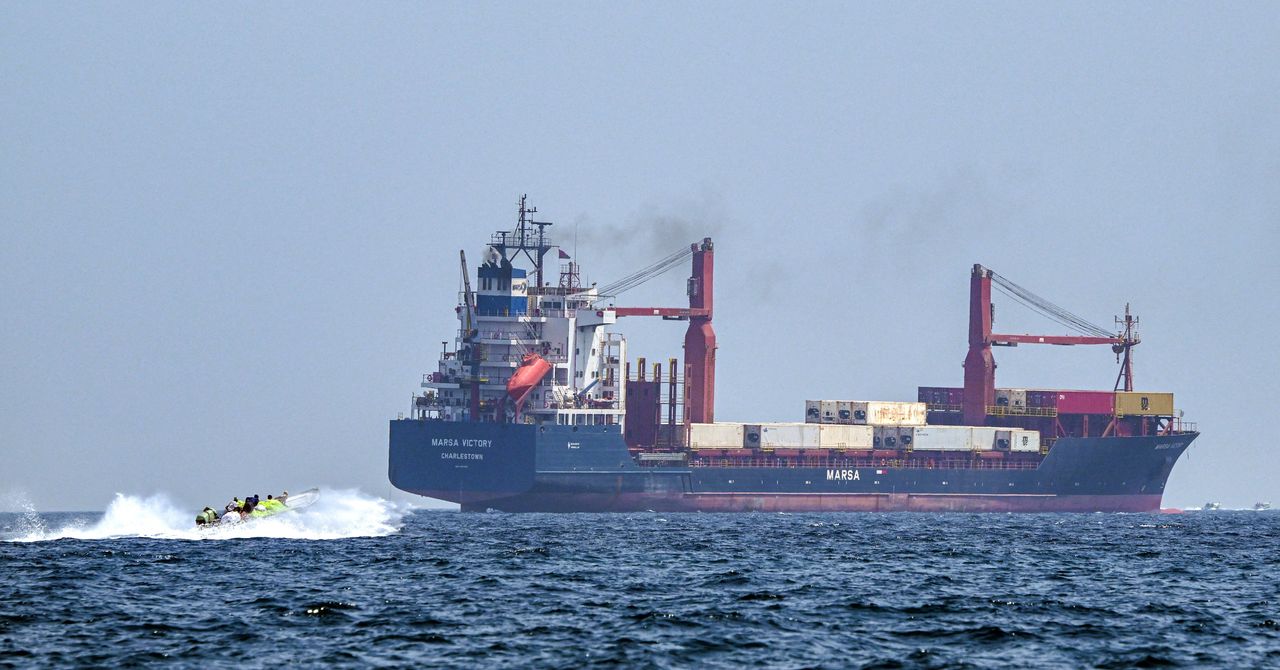
Shipping through the Strait of Hormuz—the narrow but vital oil trade route in the Middle East—has almost ground to a halt since the start of the United States and Israel’s war against Iran. Tankers in the region have faced military strikes and a spike in GPS jamming attacks, a new analysis says.
Since the first US-Israeli strikes against Iran on February 28, more than 1,100 ships operating across the Gulf region have had their GPS or automatic identification system (AIS) communications technology disrupted, says Ami Daniel, the CEO of maritime intelligence firm Windward. Ships have been made to appear as if they were inland on maps, including at a nuclear power plant, the firm says.
The analysis comes as maritime officials have warned of a “critical” risk to ships operating in the region and as the initial conflict has quickly expanded to involve countries across the Middle East. At least three tankers in the region have been damaged in the conflict.
“We’re seeing a lot of GPS jamming,” Daniel says of shipping in the Strait of Hormuz and surrounding areas. The levels of electronic interference are “way above the baseline” of usual interference, he says. “It’s becoming very dangerous to go in and out.”
Over the last few years, attacks against GPS and navigation systems have been on the rise—largely driven by the wars in Ukraine and Gaza. They can impact people’s phones or devices, but also disrupt the safety and navigation systems in planes and ships. The electronic interference largely comes in two forms: jamming and spoofing. During jamming attacks, satellite signals are overwhelmed so that positioning data isn’t available. Whereas spoofing can create false signals that make an object appear incorrectly on a map—for instance, making ships appear as if they are inland at airports.
Inaccurate location data can lead to ships running off course, potentially increasing the chances of them crashing into other tankers, running aground, or causing damaging oil spills. In warzones, electronic interference is often used to try and disrupt the navigation systems of drones or missiles, which can rely on location data to find and hit their targets.
Analysis of shipping data by Windward found that there has been an “escalating” level of electronic interference across Iranian, United Arab Emirates, Qatari, and Omani waters since the initial strikes on February 28. Daniel says that the majority of the activity the company has identified so far has been jamming rather than spoofing. The company’s analysis says it has identified around 21 “new clusters” where ships have had their AIS data jammed in recent days.
“Ships were falsely positioned at airports, a nuclear power plant, and on Iranian land, creating navigation and compliance risks,” a report from the firm says. “AIS signals have also been diverted to the Barakah Nuclear Power Plant and nearby waters, while hundreds of other vessels are creating circle-like patterns off UAE, Qatari, and Omani waters.”
GPS and AIS interference within the Strait of Hormuz and the surrounding area is not new. In June 2025, as Israel and Iran exchanged missile fire, significant jamming in the region was reported.
While almost all commercial air travel has been grounded around the Middle East, there have been signs of electronic interference on aircraft flying ahead of and around the strikes. “There are at least six new spoofing signatures in the Middle East,” says Jeremy Bennington, vice president of positioning, navigation, and timing strategy and innovation at technology firm Spirent Communications. “Hundreds of flights have been impacted. However, that decreased significantly over the weekend as flights have been canceled.”
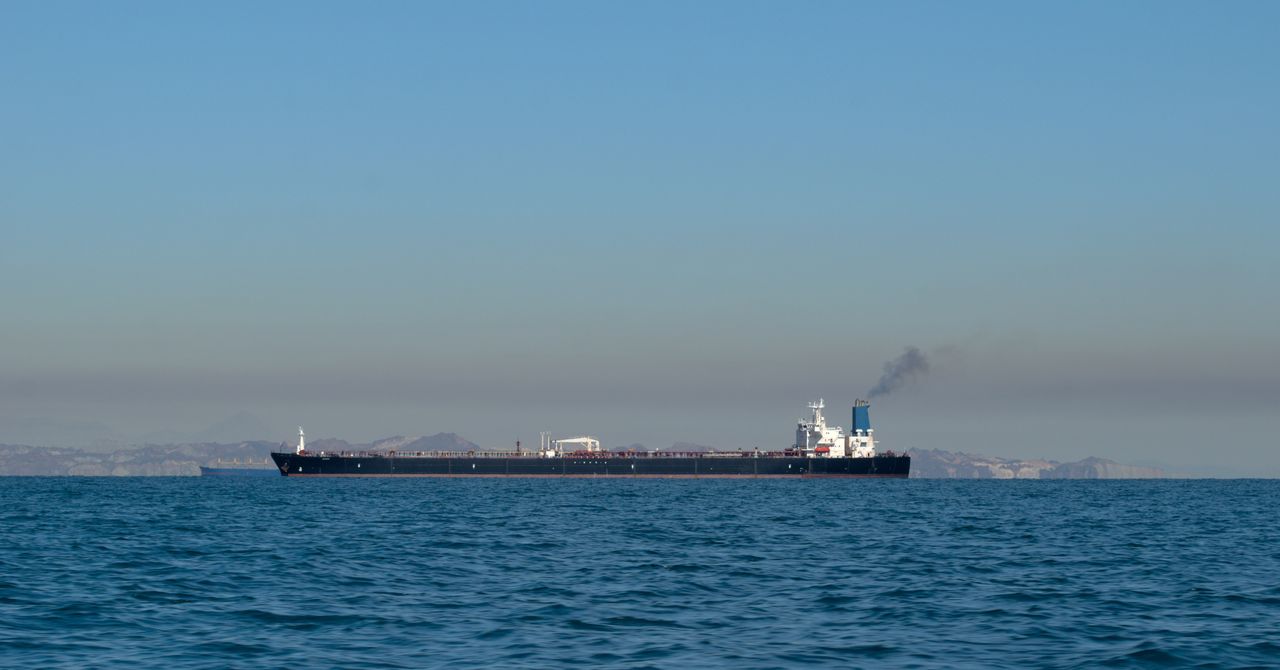
Oil prices surged on Monday following the United States and Israel’s attacks on Iran this weekend, as some analysts predict that it could soon reach over $100 a barrel. Amid escalating attacks on oil and gas infrastructure in the region and stopped traffic in a crucial shipping route, experts tell WIRED that how the White House directs the conflict over the coming week—as well as Iran’s and other oil producers’ responses—will be key in determining just how high prices eventually climb.
The price of Brent crude jumped to almost $80 a barrel—a nearly 13 percent increase over Friday’s prices—when markets opened Sunday evening. The market has been pricing in the risk of the US’s aggressive stance toward Iran for months, says Tyson Slocum, the director of the energy program at the progressive think tank Public Citizen, insulating prices from an even more severe jump. But the disorganized US follow-through to the initial attack—which killed Ayatollah Ali Khamenei, Iran’s supreme leader—is introducing much more uncertainty.
“For all of Trump saying, ‘Hey, you know, we took out Khamenei, we knew exactly where he was,’—apparently we didn’t do the same for Iran’s attack capabilities,” Slocum says. “It seems like our plan was to take out Khamenei and then hope for the best.”
Iran controls the Strait of Hormuz, one of the most important shipping routes in the world. One out of every five barrels of oil travels through the strait. Major members of the Organization of the Petroleum Exporting Countries (OPEC), the world’s dominant oil and gas cartel, rely almost entirely on the strait to get their product out of the region.
“As long as I have been in the oil market, Iran and the closure of the Strait of Hormuz has been kind of the ultimate risk scenario for prices,” says Canadian oil market researcher Rory Johnston. Usually, he says, OPEC would respond to an international crisis that involves oil by increasing production. “But if OPEC’s emergency production is on the other side of the problem area, it doesn’t do as much good.” Johnston compares the region to a garden hose, where a kink in one section can decrease output.
Throughout the weekend, while Iranian officials sent mixed messages on whether the strait is formally closed, traffic through the strait dropped to near zero. Insurance companies have jacked up policies on ships traveling through the strait, while some ships have been hit by drone strikes. What seems to be happening, Johnston says, is more of a “voluntary closure” than an official one.
There are worse scenarios for oil prices that could unfold in the coming days than just the closure of the strait. In September of 2019, drones hit major oil production facilities east of the Saudi Arabian capital of Riyadh. While the Houthi rebel movement in Yemen publicly claimed responsibility for the attack, US officials blamed Iran. The attack temporarily shot oil prices up 15 percent.
On Monday, Saudi officials said that they had closed a major domestic refinery following drone strikes, while a few other oil and gas fields across the region were also shut down. Qatar LNG, the country’s state-run liquefied natural gas producer, said Monday it was shutting down production due to drone strikes, sending gas prices in Europe spiking. Johnston says that continued, serious strikes like these could have a massive impact on prices.
“Going back to the garden hose thing … [that would be] more like taking a gun and blasting off the faucet,” Johnston says.
Clayton Seigle, a senior fellow at the Center for Strategic and International Studies, a think tank based in Washington, DC, agrees. “The more desperate Iran becomes, the greater likelihood for it to use energy as leverage to advance its interests,” he says. “If tankers abandon the Gulf trade in large numbers, and certainly if major oil infrastructure is damaged, we’re likely to see triple-digit crude prices again.”

Apple’s first hardware launch of 2026—not counting the second-generation AirTag it debuted at the end of January—is the next iteration of the price-friendly iPhone: the iPhone 17e. The company announced the handset via an online press release, ahead of its “Special Apple Experience” in New York City this Wednesday.
While last year’s iPhone 16e was widely criticized for its questionable value—it replaced the iPhone “SE” models from yesteryear and jacked the price up from $429 to $599—the newer model in the series has some notable features that were missing in its predecessor, like Apple’s MagSafe technology and the Dynamic Island. The price remains firm at $599 despite the challenging economic environment and the memory shortage.
The iPhone 17e opens for preorder today and will be widely available on March 11.
E for Effort
Apple has stuck with the same 6.1-inch OLED display as the iPhone 16e, down to the same old-school notch design. That means you won’t get the sleek look of the Dynamic Island, which also doubles as a live notifications display. Thankfully, if you’re worried about durability, this iPhone has the same Ceramic Shield 2 front glass protecting the display as its pricier siblings, giving it a nice strength boost from the previous generation.
Apple did not upgrade the screen with its ProMotion refresh rate tech, as it’s stuck at 60 Hz. This capability is the number of times the screen refreshes with images—the higher the better, as your display will appear smoother, with interactions feeling more fluid. It’s something the company has offered in the iPhone Pro models, and finally enabled in 2025 with its entire iPhone 17 range, but you’ll have to upgrade for the luxury. It’s a shame, as most budget Android phones offer 120 Hz as standard, even devices as cheap as $200. That also means the iPhone 17e doesn’t have the option to enable an always-on display.
Arguably, the best upgrade is the addition of MagSafe, the magnetic ring that has been embedded in the back of mainline iPhones since the iPhone 12. Apple confusingly didn’t include it with the iPhone 16e despite a healthy accessory market that would have made the iPhone 16e a little more versatile. While the 16e still had basic wireless charging, with the iPhone 17e, you can take advantage of faster magnetic wireless charging at 15 watts (plus access to MagSafe accessories).
This iPhone is powered by the A19 chipset, which debuted on the iPhone 17, though there’s one less graphics core, so graphics performance is a small step below. That’s in line with what Apple did with the iPhone 16e and the iPhone 16 that came before. Apple didn’t share RAM details yet, but it’s likely that the iPhone 17e has 8 GB of RAM like its predecessor, whereas the rest of the iPhone 17 lineup has 12 GB.
Courtesy of Apple


Billie Eilish crawls into her past with Justin Bieber
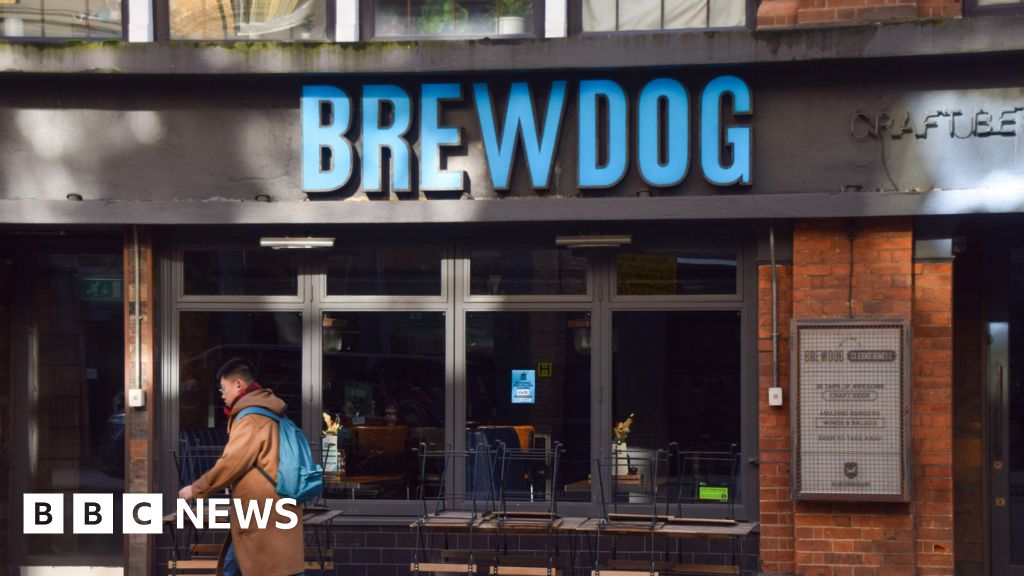
Brewdog: Bars close and hundreds lose jobs as beer firm sold in £33m deal

IRGC targets US intelligence centers, military depots in 11th wave of attacks

-
 Business6 days ago
Households set for lower energy bills amid price cap shake-up
-

 Entertainment1 week ago
Talking minerals and megawatts
-
 Business6 days ago
Lucid widely misses earnings expectations, forecasts continued EV growth in 2026
-

 Sports1 week ago
Eileen Gu comments on Alysa Liu’s historic gold medal
-

 Entertainment1 week ago
Hailee Steinfeld shares big life update amid excitement for baby’s arrival
-
 Politics1 week ago
Supreme Court ruling angers Trump: Global tariffs to rise from 10% to 15%
-

 Sports1 week ago
South Africa thrash India by 76 runs in T20 World Cup Super 8 – SUCH TV
-
 Business1 week ago
Haryana Govt bars IDFC First Bank, AU Small Finance Bank over alleged Rs 590 crore fraud