As countless case studies published on Computer Weekly have shown through the years, every minute and every penny that a Formula 1 team is spending on research, development and testing is precious and only grudgingly wasted.
In a cost-capped sport that is as much an engineering competition as it is one of driver skill, victory – whether in the drivers’ or constructors’ championships – often comes down to the finest of margins.
This season, the world of F1 is also dealing with a once-in-a-decade overhaul of the sporting regulations that have essentially forced a ground-up redesign of its cars. For some, like Mercedes-AMG Petronas, this has paid off big time. But for Oracle Red Bull Racing, the past few weeks have been rough ones.
The team’s drivers, former world champ Max Verstappen and his new partner Isack Hadjar, may not have much to show for it as they head to Miami for the fourth round of the season, but at HQ in Milton Keynes, its engineers are working flat out and morale is good.
When it comes to testing parts and components in its wind tunnel, a recent engagement with identity and access management specialist 1Password is paying dividends, with the team’s technicians now able to work much more efficiently.
In a world like cyber security, success can be hard to quantify. Sometimes it can even be dangerous to say too much, lest you speak candidly and give a watching threat actor something to go on. But in this instance, Oracle Red Bull Racing can definitively state that after adopting 1Password, it has slashed its wind tunnel recovery time from an hour to two minutes – that’s a cut of 97% – during the test and development process.
But why is that the statistic we’re running with? And how does identity and access management (IAM) technology apply to wind tunnels? It seems an unlikely link on the surface, but Matt Cadieux, team CIO, explains why it matters.
“The guys who are developing and improving the tunnel and its software push boundaries. The models are bigger, the complexity is bigger, and sometimes when you’re running that load for the first time, the infrastructure is not capable enough,” says Cadieux. “Probably once a every few months we have an outage, and it’s largely due to pushing boundaries with our tools and methods.”
A challenging customer
Ian Brunton heads up software development at Oracle Red Bull Racing’s Aerodynamics team. He takes up the story.
“The people I work with are essentially responsible for writing the software used across the teams of engineers that design the car. We plug into commercial CAD [Computer Aided Design] packages and tie them up to the CFD [Computational Fluid Dynamics] estate so that we can iterate quickly in those early stages,” he says.
“We also support the wind tunnel … We’re currently building a new wind tunnel here which is a significantly challenging project, but I think will pay a dividend in helping us build, ultimately, the fastest car on the planet.”
Brunton describes his team as challenging customers when it comes to IT. He sets high standards and expectations, and by his own admission is harsh in their application. “We’re aiming to provide high uptime,” he says, “and the last thing we need is any system, regardless of what it is, not operating as it is expected to.”
The need for uptime becomes even more important because the wind tunnel environment is a highly regulated one in terms of the number of hours the team is allowed to do testing, as well as the number of experiments that it can run.
“We basically have an eight-week period in which we have to audit what we’ve done in that period, and we have a budget to use in that period,” says Brunton. “To some extent, the pressure is on – it’s almost worse in the wind tunnel than it is at the track … Generally, at the track, you have components that are well manufactured, you know they’re going to fit together and you have a limited number of options in which to configure and build the car.
“But when you’re at the tunnel, it’s effectively an experiment in what we think is going to add performance. There might be parts that maybe don’t completely fit; engineers are discovering, as they’re going, how to design that part.
“[With] the pressure that those guys are under to build the car in that timeframe, they can’t afford any downtime – [we don’t want to waste] time, or waste runs in terms of that experiment. Losing that budget is criminal in the sense that it has a direct impact on the performance of the car on the track.”
It’s about trying to optimise the amount of time that the people working at the tunnel can focus on just working at the tunnel Ian Brunton Oracle Red Bull Racing
From Brunton’s perspective, a failure in an inherently complex system – with close to 20 services running across multiple clusters using multiple Kafka topics and different databases, that has caused the tunnel to shut down before completion, wasting time and slows development – is a big problem.
“If something happens and the system needs to be reset, it relies on someone at the tunnel realising there’s a problem and getting on the phone to someone like me – and that can be in the middle of the night because the tunnel runs 24 hours a day – I’ve got to take the call, get onto my machine, figure out the problem and start bringing that system back online,” says Brunton.
In essence, what 1Password enables him to do is to automate returning the systems to a known steady state, so that someone who is technical in terms of car design and engineering but may not know what Kubernetes is or what a SQL database does can effectively hit a big red button and get things moving again.
With 1Password, service restoration is fully automated with Ansible and RunDeck, and a complete redeploy can be triggered in around two minutes with the playbook authenticating via a dedicated, rotatable token to retrieve the secrets it needs at runtime.
“It’s about trying to optimise the amount of time that the people working at the tunnel can focus on just working at the tunnel,” says Brunton.
ID control plane
But the engagement doesn’t begin and end with wind tunnel uptime; the efficiencies go much deeper.
In moving its secrets into 1Password, Oracle Red Bull Racing has created a single, trusted control plane for credentials spanning Kubernetes clusters, environments, namespaces, factory, wind tunnel and simulation workloads.
Developers now access shared vaults with clear ownership and repeatable patterns to make sure that they can retain predictable access during redeployments or workflow changes, while human and automation access are segregated into dedicated vaults with limited user access for critical Kubernetes workloads – this includes Aero clusters and Kubernetes deployments.
The team is now using 1Password’s Kubernetes Operator, authenticated via 1Password Connect Server, to pull values from 1Password items and create Kubernetes secrets for workloads. If items change, the operator can update the secret and trigger a roll-out to allow workloads to pick up the new values.
In Brunton’s Aerodynamics unit alone, for example, five vaults hold almost 100 entries for cluster credentials, SQL passwords, client secrets, access tokens and Windows Virtual Machine (VM) logins. Meanwhile, his colleagues in Vehicle Performance and Powertrains maintain more than 150 entries. Now that new deployments default to 1Password, the two teams can reduce the time they spend coordinating access, limit potentially dangerous ad hoc sharing, and understand what credentials are current when developers are in the process of modifying (or restoring) workloads.
For simulation workflows, Oracle Red Bull Racing is using the 1Password command line interface (CLI) to retrieve SQL connection strings and Microsoft Entra ID credentials to access their needed services. Now that these secrets are centralised, they can replace plaintext credentials with secret references from a shared and governed source instead of having to embed secrets in code or configuration files – another risk.
Since their applications now rely on secret references, this means users can safely change out their credentials and support both safer automation and earlier application programming interface (API) adoption. The results are improved fidelity and capability much earlier in the simulation process, when changes are much easier to manage – and more affordable – than doing it outside of simulation.
Going trackside
“We’re always trying to raise the bar with our cyber posture and credential management,” says Cadieux. “Everyone here is part of a team and tries to do the right thing – and if you tap someone on the shoulder, it usually corrects the behaviour quite quickly – so having early visibility and being able to nip problems in the bud with a simple tap is helpful.”
Having standardised secrets and access across engineering, Oracle Red Bull Racing is now looking to take 1Password trackside. On a given race weekend, it runs multiple advanced Monte Carlo (the mathematical model, not the Grand Prix) simulations to evaluate different scenarios and support on-the-fly strategy decisions.
It is now exploring the application of these same patterns to its Oracle Cloud Infrastructure (OCI)-based trackside systems – including credential and certificate management – through which it can achieve consistent automation at race-day pressure.
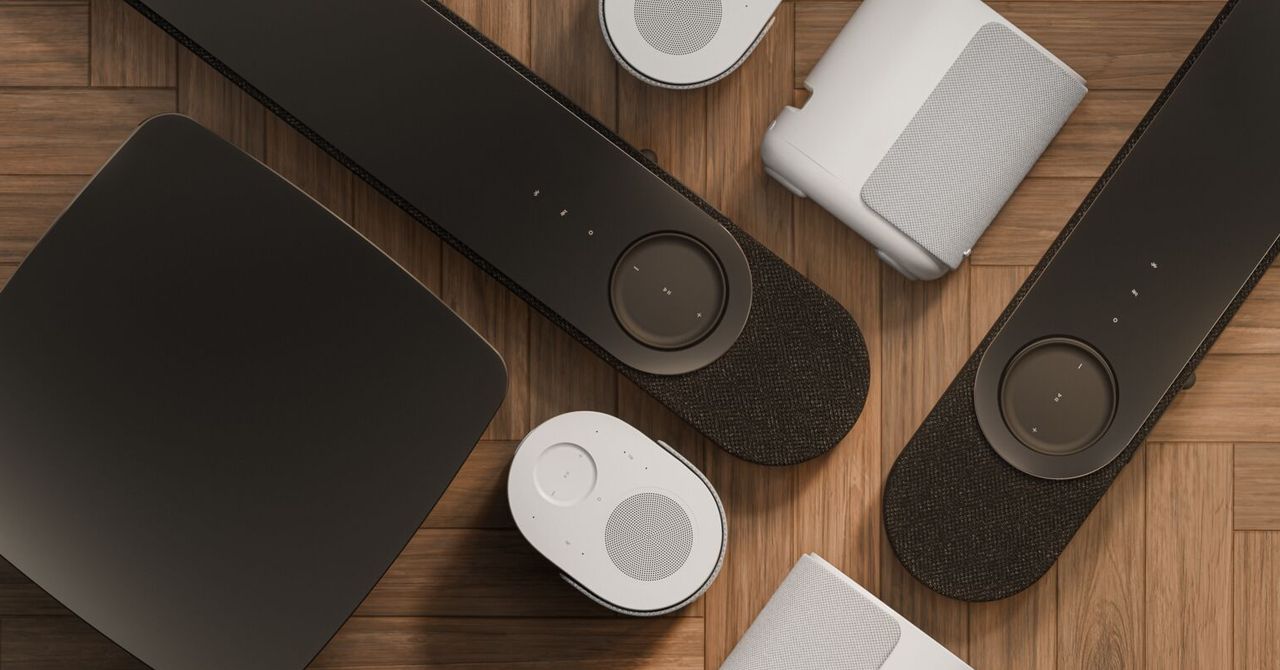
Bose has three new speakers to spice up your home listening. The company’s new “Lifestyle Collection”—designed with a snazzy fabric-wrapped grille and gentle curves—includes the Lifestyle Ultra Speaker, Lifestyle Ultra Subwoofer, and Lifestyle Ultra Soundbar. All of them can be connected to multiple units and third-party speakers via AirPlay and Google Cast for a better multi-room audio experience.
These audio products mark a “reentering” into the home speaker space for the company, bringing back the iconic Lifestyle lineup that originally debuted in 1990—known for simplicity and ease of use—which Bose subsequently discontinued in 2022.
To no surprise, Bose says the Ultra Soundbar is the “best soundbar we have ever made,” and that the Ultra Speaker might even be one of the company’s best in its storied history. The wireless speaker starts at $299, with a $349 limited-edition model in Driftwood Sand; the soundbar costs $1,099, and the subwoofer is $899. They’re available for preorder now and go on sale May 15.
Bose Luxury Ultra Speaker in Driftwood Sand.
Courtesy of Bose
These Wi-Fi-enabled speakers support AirPlay, Google Cast, Spotify Connect, and, uniquely, are the first to integrate with Alexa+ (in the US only), allowing you to ask Amazon’s chatbot to play music through the speakers via voice commands. There’s also Bluetooth support, and even an auxiliary input for connecting the Ultra Speaker to a turntable.
You can group two Lifestyle Ultra Speakers into a stereo system in the Bose app, or group them all together for a home theater system. Sadly, if you hoped to use it as a surround system with your existing Bose soundbar, the company says it’s only backward compatible with the Bass Module 700. And with the new Lifestyle Ultra Soundbar, it can only be used as a wired connection. For multi-room audio, the company has passed those grouping duties to the Google Home app for Google Cast technology, or Apple’s AirPlay for iOS users. Speaking of the app, there’s a redesigned onboarding process that purportedly makes setting up all of these speakers a breeze.
On the audio front, the Ultra Speaker notably features an upward-firing driver for Dolby Atmos–like spatial audio, along with two front-facing drivers. (It doesn’t seem to support Dolby Atmos Music at this time.) The company is also touting its CleanBass technology, which pairs Bose’s QuietPort acoustic opening with the woofer for deep sound that performs better than its size suggests, though we’ll have to hear it for ourselves to see if it lives up to Bose’s claims.
Armed with some Python and a white-hot sense of injustice, one medical student spent six months trying to figure out whether an algorithm trashed his job application.
Google AI workers in the UK have launched a pioneering unionisation bid to end use of their technology by Israel and the US military.
The British-based Google DeepMind employees – who aim to become the first frontier artificial intelligence (AI) lab worldwide to unionise – sent a letter to management this week to request recognition of the Communication Workers Union (CWU) and Unite the Union as their official representatives. In a vote of CWU members at DeepMind, 98% backed the move.
John Chadfield, CWU national officer for tech workers, said: “This is a really important moment where tech workers at Google’s frontier AI lab are connecting with some of the most oppressed people in communities around the world in meaningful ways, based on foundational values of solidarity and trade unionism.
“By exercising their rights to collectivise they are in a strong position to demand their employer stop circling the ethical drain of military-industrial contracts, echoing the sentiment of many working people in the UK and elsewhere.”
The workers are part of a wider campaign, with DeepMind staff globally considering in-person protests and “research strikes” – where they abstain from work expected to significantly improve core products such as the Gemini AI assistant.
Google employees have previously protested the ethics of contracts such as Project Nimbus, a joint programme with Amazon to make cloud computing and AI tools available to Israel during its campaign in Gaza, which saw upwards of 70,000 dead. Meanwhile, Maven, a US government project from which Google withdrew in 2019 after staff protests, has reportedly been used in targeting in the Iran war.
The unionising DeepMind workers are seeking an end to use of Google AI by Israel and the US military. Their demands also include restoring a scrapped commitment not to make AI weapons or surveillance tools, the creation of an independent ethics oversight body, and the individual right to refuse to contribute to projects on moral grounds.
A DeepMind employee said: “We don’t want our AI models complicit in violations of international law, but they already are aiding Israel’s genocide of Palestinians. Even if our work is only used for administrative purposes, as leadership has repeatedly told us, it is still helping make genocide cheaper, faster and more efficient. That must end immediately, as must harm to Iranians and human lives anywhere.”
Google recently agreed to let the US Department of Defense use its AI models for classified work, a move opposed by over 600 employees. Google staff worry how the technology will be used given the deal could reportedly open the door to autonomous weapons and mass surveillance of US citizens, red-line issues that previously saw the Pentagon impose restrictions on competitor Anthropic.
The unionisation bid aims to gain representation for at least 1,000 staff tied to Google DeepMind’s London office. The employees’ letter gave management 10 working days to voluntarily recognise the CWU and Unite, or take other steps such as agreeing to mediated negotiations, before a formal legal process is launched to force recognition. Google DeepMind is headquartered in London, but has about a dozen offices across North America and Europe.
“I hope that recourse to the statutory procedure will not prove necessary,” CWU official Chadfield wrote in the letter. “We look forward to working with you in a spirit of co-operation on behalf of the workforce.”
The CWU branch for DeepMind staff is United Tech and Allied Workers.











 Tech1 week ago
 Tech1 week ago

 Sports7 days ago
 Entertainment1 week ago
 Entertainment1 week ago
 Tech1 week ago