

Fashion
ICE cotton falls as strong dollar, US data halt weigh on sentiment


ICE December cotton futures settled at 64.47 cents per pound, down 0.44 cents or 0.70 per cent.
ICE cotton futures extended losses as a stronger US dollar dampened overseas demand, and the ongoing US government shutdown halted key USDA data releases.
December futures settled at 64.47 cents per pound, down 0.70 per cent.
Meanwhile, China’s NDRC announced 2026 cotton import quotas of 894,000 tons, balancing domestic supply through flexible allocation between state and non-state trade.
The US Dollar Index climbed to a two-month high, making dollar-denominated cotton futures relatively more expensive for buyers using other currencies. The strong dollar continues to act as a dominant factor suppressing cotton’s upward momentum.
Trading volumes remained moderate as investors monitored currency movements and the impact of the government shutdown. Data from ICE showed that as of October 8, deliverable stocks under ICE’s No. 2 cotton futures contract stood at 16,471 bales, down from 17,891 bales the previous day—reflecting a modest drawdown in certified inventories.
Market analysts noted that cotton has been moving almost exactly opposite to the dollar over the past few weeks, a trend expected to continue. As long as the dollar remains strong, cotton prices are unlikely to rise significantly.
In addition to currency effects, traders are evaluating the impact of the US government shutdown, which has halted the release of key agricultural data from the US Department of Agriculture (USDA).
According to the USDA’s official website, due to the shutdown, the department will suspend publication of its monthly World Agricultural Supply and Demand Estimates (WASDE) report until further notice. The WASDE report is a vital source of market insight into global cotton demand, production, and ending stocks.
The USDA’s weekly Crop Progress and Export Sales reports have also been temporarily suspended, limiting access to up-to-date market information for traders and analysts.
Meanwhile, on the global front, China’s National Development and Reform Commission (NDRC) has released detailed regulations governing cotton import tariff quotas for 2026. The total quota has been set at 894,000 tons, with 33 per cent allocated to state-owned trade and the remaining 67 per cent available for non-state trade.
According to the NDRC notice published by the Securities Times, the allocation rules allow enterprises to determine trade methods independently, without restrictions on import mechanisms or timing. This policy aims to enhance flexibility in cotton import management while maintaining balance in domestic market supply.
In summary, the ICE cotton market on October 9 remained under pressure from a strengthening US dollar and the absence of key USDA data amid the government shutdown, leading to a downward close for December futures.
Currently, ICE cotton for December 2025 is trading at 64.38 cents per pound (down 0.09 cent), cash cotton at 61.97 cents (down 0.44 cent), the March 2026 contract at 66.25 cents (down 0.09 cent), the May 2026 contract at 67.62 cents (down 0.04 cent), the July 2026 contract at 68.75 cents (down 0.08 cent) and the October 2026 contract at 68.39 cents (down 0.30 cent). A few contracts remained at their previous closing levels, with no trading recorded today.
Fibre2Fashion News Desk (KUL)













Wholesale revenue dropped 12.8 per cent on a currency-adjusted basis to €4.9 billion, while direct-to-consumer (DTC) sales increased 3.4 per cent, lifting the DTC share to 32.4 per cent from 28.9 per cent.
Regionally, sales fell 6.9 per cent in Europe, Middle East and Africa (EMEA), 7.4 per cent in Asia-Pacific and 10 per cent in the Americas, with North America driving much of the decline.
Puma has reported sales of €7.3 billion (~$8.61 billion) in FY25, with currency-adjusted revenue down 8.1 per cent amid strategic reset actions.
Wholesale declined while DTC share increased.
Margins contracted and EBIT turned negative, leading to a net loss.
Q4 saw sharper declines across regions and categories.
Puma expects further sales softness and negative EBIT in FY26.
By product segment, footwear sales decreased 7.1 per cent, apparel declined 9.7 per cent and accessories fell 8.5 per cent, although selective growth was observed in running, training and premium sport style lines, Puma said in a press release.
Profitability weakened significantly during the year. Gross margin contracted 260 basis points to 45.0 per cent, impacted by promotional activity, inventory reserves, unfavourable mix and currency effects. Adjusted EBIT turned negative at €165.6 million, while reported EBIT declined to -€357.2 million after €191.6 million in one-off costs related mainly to the cost efficiency programme and goodwill impairments.
Loss from continuing operations widened to -€643.6 million, translating to earnings per share of -€4.37 versus €1.88 in the prior year.
From a balance sheet perspective, inventories rose 2.3 per cent to €2.06 billion as inventory takebacks from wholesale partners supported distribution clean-up. Working capital increased 20.2 per cent, while trade receivables and payables declined sharply in line with reduced sales and purchasing activity. Puma ended the year with additional financing capacity, including €1,202.2 million in unutilised credit lines.
Fourth quarter (Q4) performance reflected the peak impact of the strategic reset. Currency-adjusted sales declined 20.7 per cent to €1,564.9 million, with reported revenue down 27.2 per cent due to currency headwinds. The decline was driven by deliberate reductions in wholesale exposure, inventory clearance actions and lower promotional intensity.
Wholesale sales fell 27.7 per cent in Q4, while DTC revenue decreased 8.0 per cent, although DTC share increased to 41.1 per cent from 35.5 per cent. Regionally, sales dropped 12.6 per cent in Asia-Pacific, 22.2 per cent in the Americas and 24.3 per cent in EMEA.
Across product divisions, footwear sales declined 25.4 per cent, apparel fell 13.7 per cent and accessories dropped 18.2 per cent, with selective resilience in training and performance running categories.
Profitability deteriorated sharply. Gross margin declined to 40.2 per cent from 47.7 per cent due to promotions, inventory provisions and currency effects. Adjusted EBIT fell to -€228.8 million, while reported EBIT reached -€307.7 million following one-off costs linked to restructuring and impairment charges. The quarter ended with a loss from continuing operations of -€335 million.
Arthur Hoeld, CEO of Puma, said: “2025 was a reset year for us. We want to establish Puma as a top 3 sports brand globally, return to above-industry growth and generate healthy profits in the medium term. It is crucial to make the Puma brand less commercial and ensure we once again excite our consumers with attractive products, compelling storytelling and distribution in the right channels. I am satisfied with the progress we have made so far. We cleaned up most of our distribution by reducing promotions in our own channels and cutting our exposure to those wholesale channels that damage our brand’s desirability. To better position our product icons and our performance offering and tell more engaging product stories, we created the right structures inside our company. We also addressed operational inefficiencies and further optimised our cost base.”
Looking ahead, Puma expects currency-adjusted sales in fiscal 2026 to decline in the low- to mid-single-digit percentage range, with EBIT projected between -€50 million and -€150 million. Capital expenditure of around €200 million is planned as the company continues investments in brand repositioning and digital capabilities, added the release.
Fibre2Fashion News Desk (SG)
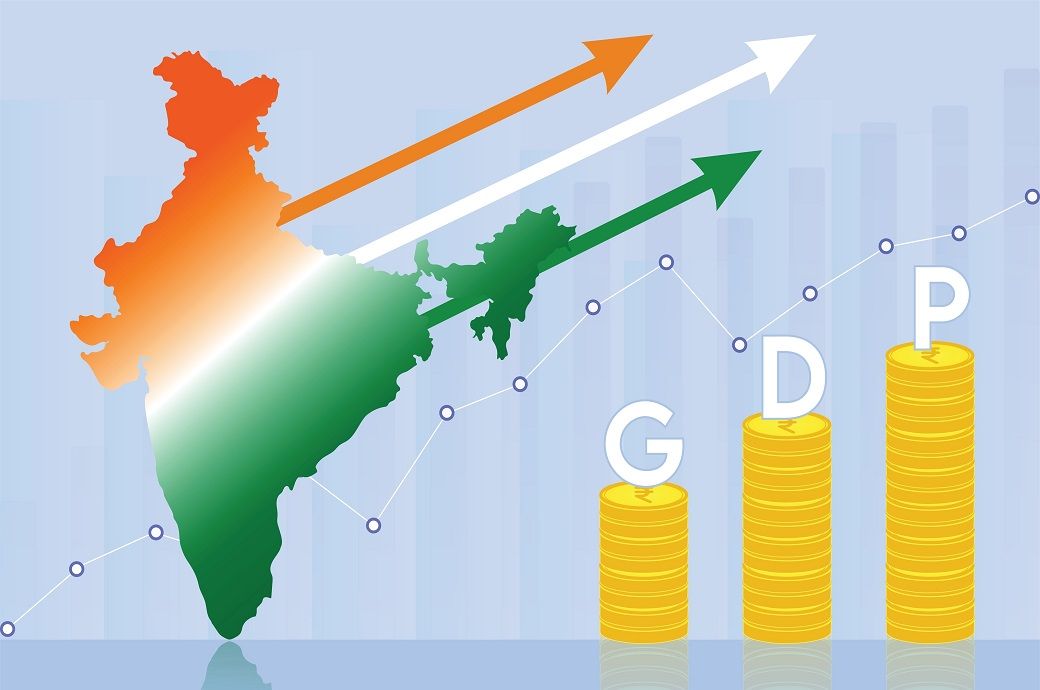
Nominal GDP, or GDP at current prices, is estimated to grow at 8.6 per cent to reach ₹345.47 trillion in FY26 against ₹318.07 trillion in 2024-25.
India’s real GDP is estimated to grow at 7.6 per cent to ₹322.58 trillion (~$3.54 billion) in FY26 compared to the first revised GDP estimate of ₹299.89 trillion for FY25 (7.1 per cent growth).
It released the new series of annual and quarterly national accounts estimates with FY23 base.
Real GVA is projected to grow at 7.7 per cent to reach ₹294.40 trillion in FY26 against ₹273.36 trillion in FY25.
Real gross value added (GVA) is projected to grow at 7.7 per cent to reach ₹294.40 trillion in FY26 against ₹273.36 trillion in FY25 (a 7.3-per cent growth rate).
Nominal GVA is estimated to grow at 8.7 per cent to hit ₹313.61 trillion during FY26, against ₹288.54 lakh crore in 2024-25.
Robust economic performance in FY26 is primarily on account of robust real growth observed in the second quarter (8.4 per cent) and third quarter (7.8 per cent).
The manufacturing sector has been the major driver of resilient performance of the economy the consecutive three fiscals after rebasing, a release from the ministry said.
Both private final consumption expenditure and grossed fixed capital formation exhibited more than 7-per cent growth rate in FY26.
Fibre2Fashion News Desk (DS)


Ranking MLB’s best at every position for 2026: Olney’s top 10s

Orlando vs. Miami (Mar 1, 2026) Live Score – ESPN

Labour parliamentarians urge UK Government to oppose Rosebank oil field

Pakistan carries out precision strikes on seven militant hideouts in Afghanistan

Eye-popping rise in one year: Betting on just gold and silver for long-term wealth creation? Think again! – The Times of India

These Cheap Noise-Cancelling Sony Headphones Are Even Cheaper Right Now

-
 Politics1 week ago
Pakistan carries out precision strikes on seven militant hideouts in Afghanistan
-
Business1 week ago
Eye-popping rise in one year: Betting on just gold and silver for long-term wealth creation? Think again! – The Times of India
-
 Tech1 week ago
These Cheap Noise-Cancelling Sony Headphones Are Even Cheaper Right Now
-

 Sports1 week ago
Kansas’ Darryn Peterson misses most of 2nd half with cramping
-

 Sports1 week ago
How James Milner broke Premier League’s appearances record
-

 Entertainment1 week ago
Viral monkey Punch makes IKEA toy global sensation: Here’s what it costs
-

 Entertainment1 week ago
Saturday Sessions: Say She She performs "Under the Sun"
-
Sports1 week ago
Mike Eruzione and the ‘Miracle on Ice’ team are looking for some company