

Sports
‘I’m going to be that person:’ Eagles’ A.J. Brown wants more for himself, and for others

A.J. Brown pulled up to the “most dangerous gym in America” on a Friday in May, alone in his Honda Accord.
It was just weeks removed from the Philadelphia Eagles‘ 40-22 destruction of the Kansas City Chiefs in Super Bowl LIX when Brown reached out to trainer Haddy Abdel on social media. This wasn’t the first time a well-known figure had been captivated by the chaotic, grueling workouts conducted at Diamond Gym in Maplewood, New Jersey.
Most, though, just talk a good game before cooling on the idea of being thrust into an environment where hulking bodybuilders double as drill sergeants, extracting every ounce of effort and discipline from a client list that, according to Abdel, includes men recently out of jail or battling drug addiction. But Brown was different.
“He pulled up … where we train at, in his car by himself, and showed up and said, ‘I’m ready to work.’ It was one of the craziest experiences I’ve had with anybody that’s ever come to train with us before,” Abdel said.
“He’s like, ‘I came here for this. I got all the money now. I have everything I’ve ever wanted in my life.’ And when you get that, and you taste that, it’s easy to get complacent, it’s easy to forget where you came from. He wanted to remember where he came from.”
The closing sequence of the two-hour session looked like something out of Rocky IV. Brown, dressed in black Eagles sweatpants and a black sweatshirt with the hoodie pulled up, lifted a barbell with large chains on either end to his chest and ripped off 10 standing military presses. He released the weight, gripped a block of wood on the floor and did 15 pushups. The crowd circled around him as he rose and walked to the last station. Screams intensified. A boy, maybe 10, commanded Brown over and over to “Lift that s—!” An exhausted Brown stepped to the bar and deadlifted around 600 pounds in one fluid motion, cementing his standing in the room.
“I had to go to a place, I had to go to my childhood, had to think about some s— I went through,” Brown said. “I got everything I ever wanted in life, bro. I had to go back down to my childhood, me living in that trailer, starving bro. Then I thought about [my] son. I’ve got a little boy, he motivated me. I said, ‘I’m not going to give up with my son watching me.'”
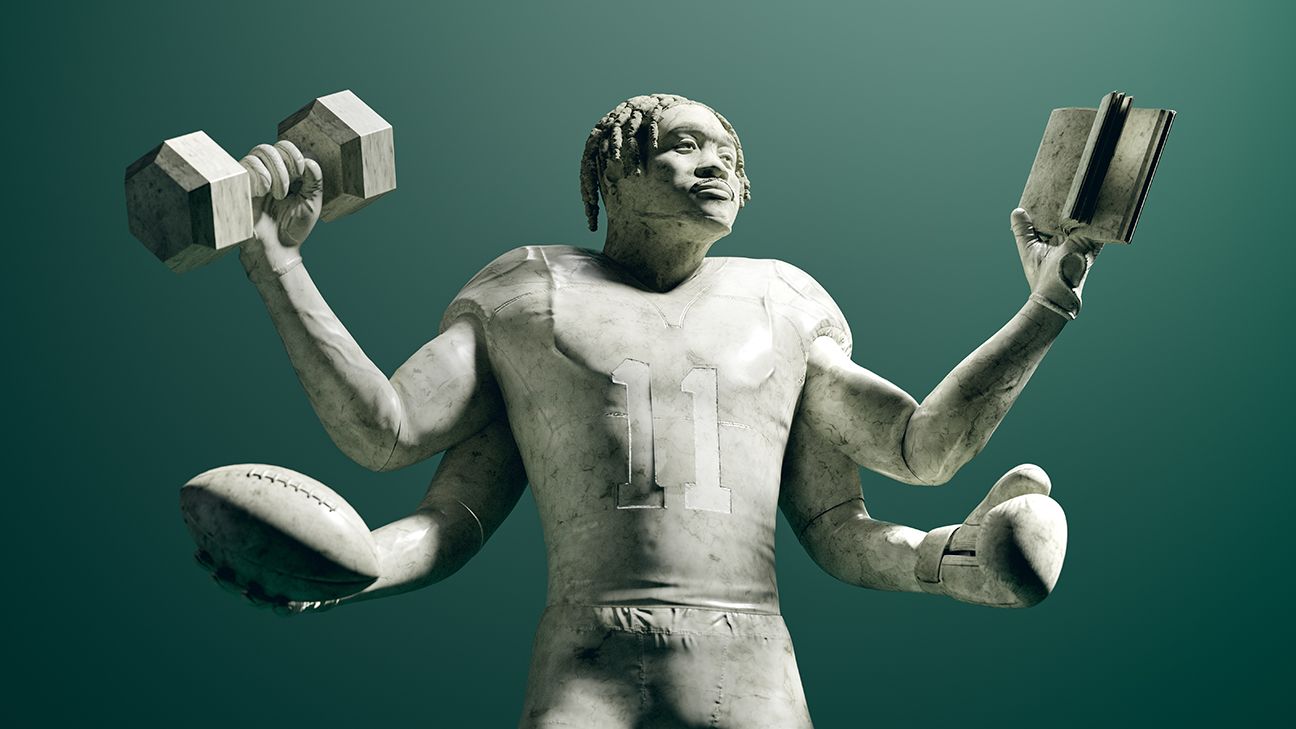
The longer Brown stands on the public stage, the more layers he reveals. He is a boxer. A reader. A mental health advocate. A philanthropist. A family man.
He’s part introvert, part performer. A team-first player with the highest of personal ambitions. A leader with style that can be confused for selfish interests. Such complexities make him one of the more captivating, and misunderstood, players in the NFL.
This offseason, he has pulled back the curtain further, opening up about the scars that he carries from his childhood. By tapping into his roots, he is at once bridging the divide between himself and those he wishes to mentor and ensuring he stays close to the flame that fueled his launch to stardom.
Entering his seventh season, the 28-year-old from Starkville, Mississippi, is a three-time Pro Bowl honoree and three-time Associated Press All-Pro. He holds the record for most single-season receptions by an Eagles receiver (106) and is the only Eagle to produce multiple seasons of 1,400-plus receiving yards. He added champion to the résumé in February.
The last accomplishment fell short of personal expectation, with the ecstasy of winning a Lombardi Trophy lasting all of two days. “I thought my hard work would be justified by winning it all,” Brown wrote on Feb. 12. “It wasn’t.”
Shortly after that Instagram post, Brown had a conversation with longtime trainer Joey Guarascio that delved deeper into his psyche.
“It almost made him mad because the feeling after the Super Bowl was like, ‘That’s it? Like there needs to be more. We need to make this thing a dynasty. I need to be a Hall of Famer,'” Guarascio said.
“Every time we talk, it’s, ‘I want to leave a legacy that’s memorable. I want people to talk about the Eagles like they do the New England Patriots in the 2000s.’ He always had an idea and a belief that he could do it, and now that he’s starting to get the physical evidence behind it, it’s just, you know, he’s talking it into fruition.”
All indications are that Brown is “hungrier than ever,” as Guarascio put it, as the Eagles begin their title defense against the rival Dallas Cowboys Thursday night (8:20 p.m. ET, NBC). “I truly feel like I’m the best in the league,” Brown said, “and I want to put a stamp on it.” But the mission reaches well beyond football.
BROWN TOOK A seat in front of a group of kids inside the Delaware County Juvenile Detention Center in Chester, Pennsylvania, earlier this offseason and began to divulge details about his past that he had never shared publicly.
The A.J. Brown Foundation is launching an internship program this October to create a pathway for children in the system. Beyond that initiative, Brown wants to serve as a direct mentor to them, and knew he needed to get vulnerable to earn their trust.
“I didn’t want it to look like I’m this celebrity coming in and just telling those guys what to do,” Brown said. “I wanted to let them know I made mistakes, too.”
He was 11 or 12 when his parents Arthur Brown and Josette Robertson split up, he said, and took the news hard.
“I felt like my mom divorced me, too,” Brown said. “I knew firsthand about losing a first love.”
Brown acted out in the name of getting his parents’ attention. He failed the seventh grade. That same year, he said he joined a gang called Gangster Disciples.
He went on to detail missteps, including transgressions that could have led to his arrest but never did.
“I didn’t get in trouble with the police, God willing, but I made mistakes. And these mistakes that you all have made doesn’t define you,” Brown said. “My path doesn’t define me.”
Brown credits the guiding hand of his father as well as advice from a respected member of the neighborhood for redirecting him. “Go play ball,” he told him while offering his protection. “This s— ain’t for you.”
“I used sports to detach myself,” Brown said.
He threw himself into baseball and basketball. With football, there wasn’t exactly an immediate connection. His former position coach at Starkville, Willie Gillespie, recalls Brown not taking to a Bull-in-the-Ring drill during eighth grade practice, where the player in the middle of a circle of kids crashes into the ball carrier.
“He wasn’t real happy about that. Too much physical stuff going on,” Gillespie said.
Brown declined to play football in ninth grade but gave it another go as a sophomore after not being chosen for the varsity basketball team.
He had grown a couple inches by that point and looked the part in uniform, leading the coaches to agree: “We’ve got to find a way for this kid to play.” Brown was a top-level center fielder — he would go on to be selected in the 19th round of the 2016 MLB draft by the San Diego Padres — so receiver made the most sense since it allowed Brown to use his ball-tracking abilities.
He still didn’t love the contact element of the sport but that started to change when the coaches also began to play him at safety, where he would lead the team in interceptions in 10th grade despite playing the role part time.
But it was on offense where Brown really began to shine. Gillespie remembers a play early in the 10th grade season against West Point where Brown caught a ball on a slant and took it about 40 yards for a touchdown. “I think the confidence at that point really took off,” he said.
Gillespie said Brown and his older sisters Reva and Shareda mainly lived with Arthur, whom he credited with doing “a tremendous job” in raising them. He added that A.J. and Robertson reestablished a connection years ago.
But Gillespie said Brown “carried a lot of baggage” for a long time in respect to his parent’s divorce — an event that Brown said makes him slow to trust to this day.
“He’s such an emotional kid,” Gillespie said. “His emotions run high. I think for a long time, he hid those emotions, and he had so many things that he really didn’t understand and didn’t feel good about it.
“Everybody else was kind of looking at it like football is everything but he was more concerned about family and mom. So, he had those moments where he was really down about those situations. But at the end of the day, he has been truly blessed to play at the top level of football and has been able to change some people’s lives having gone through these experiences. And hopefully it helped to heal him, which I think it has by him opening up and talking about it, mental states and all that type stuff. I think that helped heal him.”
CYNTHIA MILONS’ FIRST interaction with Brown was on a basketball court. She was a referee for the Starkville Athletic Youth Basketball League then and Brown, by her memory, was no more than 8 years old.
“I just remember him fouling and getting mad. He would always blame me, that I would foul him out,” she said with a laugh. “I just remember him being so competitive.”
Arthur Brown was the coach, “and let’s say A.J. gets his passion from his dad,” Milons added.
Their paths crossed again at Starkville High School when Milons served as Brown’s 10th grade English teacher. Milons’ family is full of athletes, including brother Freddie Milons, a former standout wide receiver at the University of Alabama who was drafted by the Eagles in 2002, and the two bonded over sports.
Milons remembers Brown as a shy, sweet kid with a bright smile who wouldn’t hang around many people outside of his sisters. Whatever behavior problems did come up, she said, would be handled by discussing with Arthur, working under the philosophy that it “takes a village” to raise a child.
Her influence on Brown first came to light in 2017 when he selected Milons to receive national recognition through the Extra Yard for Teachers initiative, complete with Starkville High School receiving a $10,000 grant. It was seen again in a big way during a wild-card playoff win over the Green Bay Packers in January when cameras caught Brown reading on the sideline while dealing with a quiet day at the office, as he finished with one catch for 10 yards.
“That was just hilarious to me,” Milons said. “It was just one of those things, like, Lord, A.J. is just A.J. It doesn’t matter to him what other people say about it. That’s what I love most about him: He just does this thing.”
Milons and Brown talked earlier this summer about that moment, with Brown explaining to her that reading has a calming, connecting effect on him.
4:26
The story behind A.J. Brown’s sideline book, ‘Inner Excellence’
A.J. Brown sits down with Sal Paolantonio to discuss the impact his sideline reading has had on the Eagles and the NFL community.
The reactions in Starkville were similar to other parts of the country.
“My wife said, ‘What A.J. doing? What are you doing?” said Gillespie. “I don’t know what he’s thinking. I know I ain’t never read a book on no sideline.”
But Gillespie has a unique insight into Brown’s makeup, having known him since he was a child and sharing a sideline with him. He knows when Brown gets animated on the sideline or vents his frustration or, in this case, picks up a book, it’s rooted in being self-critical.
“It’s all about winning. It’s all it’s all about, I could have done more,” he said. “A lot of times he’s upset with himself, not so much with the organization or with the team or teammates. His expectation for himself, sometimes that’s not being met, and that kind of throws him a little bit.”
Plenty of good came from Brown’s sideline reading, including Brown becoming a prominent figure for reading advocacy, complete with his own book list that he circulated online this offseason.
His act encouraged one of the teachers at Starkville High School to put a poster on the wall that still hangs up there today:
“If A.J. BROWN can find time to read,” it says, “YOU CAN TOO.”
“A lot of people here are really proud of what he’s accomplished,” Gillespie said. “I think that the biggest thing he does is he just gives a community hope.”
BROWN’S SUMMER DID not go exactly as planned, as he spent the bulk of training camp practices on the sideline while he dealt with a hamstring injury — now since healed.
He contributed in other ways — most notably by taking a special interest in receiver Darius Cooper, an undrafted rookie out of Tarleton State.
Cooper (5-foot-11, 210 pounds) has a similar build to Brown, who was the rookie’s favorite player growing up. Brown, in turn, has poured his knowledge into Cooper. There were even times when Brown would walk up to the huddle with Cooper before a play, offering last-second instructions.
“Just being in my ear in practices, telling me different techniques and things to do,” said Cooper, who beat the odds by making the 53-man roster. “It’s just a blessing being under his wing and I’m just grateful to be here.”
On a Sunday in mid-August, Brown traded his uniform for a white button down and suit pants for his trip to Boys’ Latin Middle School in Philadelphia. The gym was filled with students awaiting his arrival. But it was more than just an appearance. The “Fresh Cuts For Success & Mission For Heart” event put on by his foundation offered free haircuts for children about to go back to school as well as school supplies for both students and teachers. After being introduced by the DJ and receiving a loud ovation, Brown went around the room shaking hands and taking pictures with Eagles fans who got to see yet another side to the multidimensional talent.
“When I was younger, I wish I had a mentor,” Brown said. “My father did an excellent job but just to see somebody play a professional sport come back in the community, we didn’t really have that growing up. And I said, ‘I’m going to be that person.'”
Brown acknowledges he was more closed off when he first got into the league. He didn’t show his personality, he said, because he didn’t want to be judged.
He has since shed that protection, layer by layer.
“Now I don’t care,” he said. “I’m going to live my life, I’m going to enjoy myself … I just stopped caring about what people say, honestly.”
NEWYou can now listen to Fox News articles!
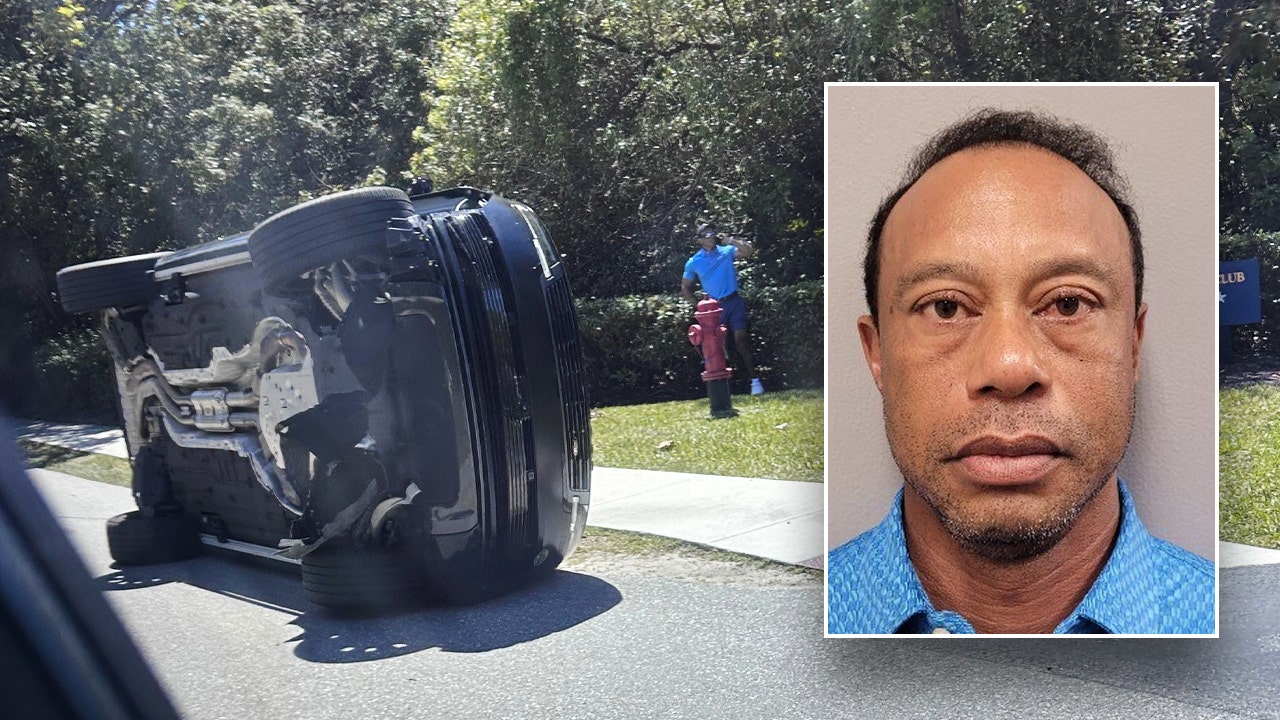
Tiger Woods was released from jail Friday night after he was arrested earlier in the day on a DUI charge following a car crash in Florida.
In a mugshot released hours after his arrest, Woods’ eyes appeared bloodshot, as he donned a blue polo inside the Martin County Jail in Florida.
Woods was seen leaving the jail in the passenger seat of a black SUV after his release on bail late Friday, according to The Associated Press.
Martin County Sheriff John Budensiek confirmed in a news conference that Woods was traveling at “a high rate of speed” when his vehicle collided with another car, resulting in his vehicle rolling over onto the driver’s side.
CLICK HERE FOR MORE SPORTS COVERAGE ON FOXNEWS.COM
Tiger Woods was booked into Martin County, Florida, jail on March 27, 2026. (AP)
Authorities said Woods “exemplified signs of impairment.” He blew “triple-zeroes” for alcohol but refused a urine test.
“DUI investigators came to the scene here, and Mr. Woods did exemplify signs of impairment. They did several tests on him. Of course, he did explain the injuries and the surgeries that he had. We did take that into account, but they did do some in-depth roadside tests,” Budensiek added.
“We really weren’t suspicious of alcohol being involved in this case, and that proved to be true at the jail. … But when it came time for us to ask for a urinalysis test, he refused. And, so, he’s been charged with DUI, with property damage and refusal to submit to a lawful test.”
Woods was spotted on the phone after the crash, wearing navy blue shorts.
Woods was charged with DUI, property damage and refusal to submit to a test, all misdemeanor charges. No one was injured, authorities said. Woods was alone in the car and crawled out of the passenger door after the crash.
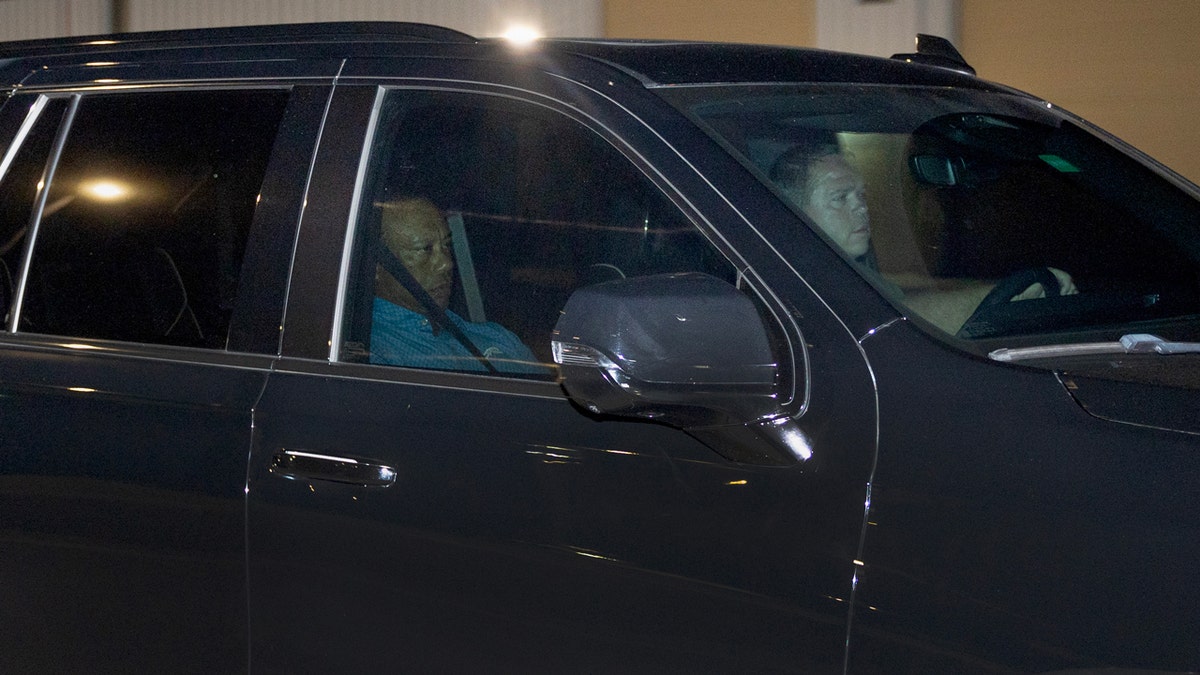
Tiger Woods was driven from the Martin County Jail after being arrested for driving under the influence following a car crash on March 27, 2026, in Stuart, Florida. (Joe Raedle/Getty Images)
VANESSA, KAI TRUMP TAKE IN TIGER WOODS’ RETURN TO GOLF AT TGL FINALS
“This could’ve been a lot worse,” Budensiek noted.
President Donald Trump commented on the arrest of his “very close friend.”
“I feel so badly. He’s got some difficulty,” Trump said. “There was an accident, and that’s all I know. Very close friend of mine. He’s an amazing person, an amazing man, but some difficulty.”
Woods has not commented on the arrest.
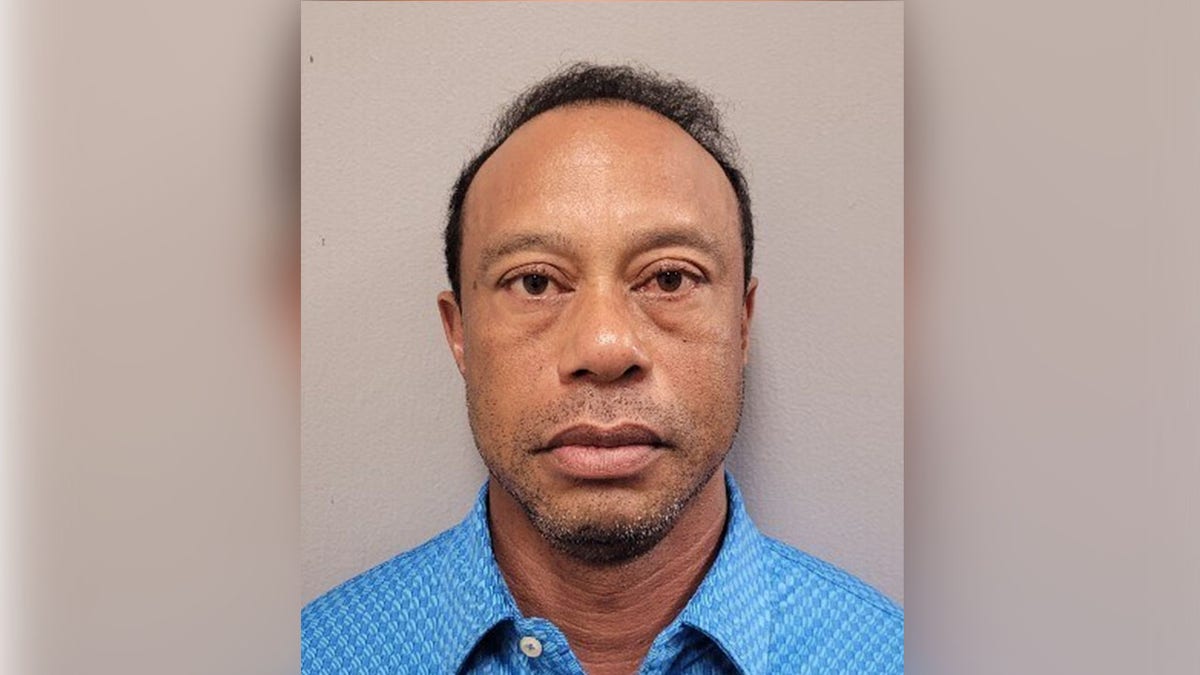
Tiger Woods was arrested on a DUI charge after getting into a car crash on Friday. (Associated Press)
Woods currently is dating Trump’s ex-daughter-in-law, Vanessa, whose daughter, Kai, is set to play college golf in Miami next week.
This is Woods’ second DUI arrest within the last decade. In 2017, he was taken into custody, also in Jupiter Island, after taking prescription drugs and being asleep behind the wheel of a running car at 3 a.m.
In 2021, he got into a wreck that resulted in serious leg injuries that kept him off the golf course for the entire year.
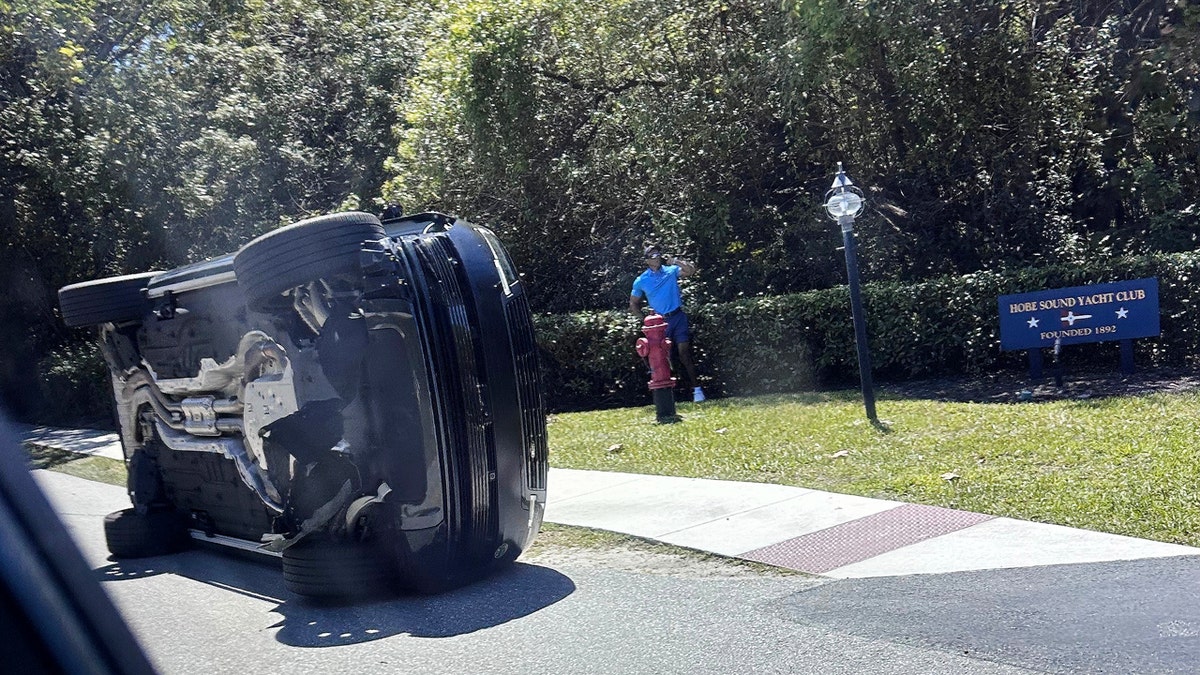
Golfer Tiger Woods stands by his overturned vehicle in Jupiter Island, Fla., Friday, March 27, 2026. (Jason Oteri/AP)
CLICK HERE TO GET THE FOX NEWS APP
Woods made his return to competitive golf earlier this week in the TGL championship after rupturing his Achilles just before last year’s Masters (this year’s tournament is in less than two weeks). Woods has not appeared on the links since the 2024 PGA Championship, in which he missed the cut.
Follow Fox News Digital’s sports coverage on X, and subscribe to the Fox News Sports Huddle newsletter
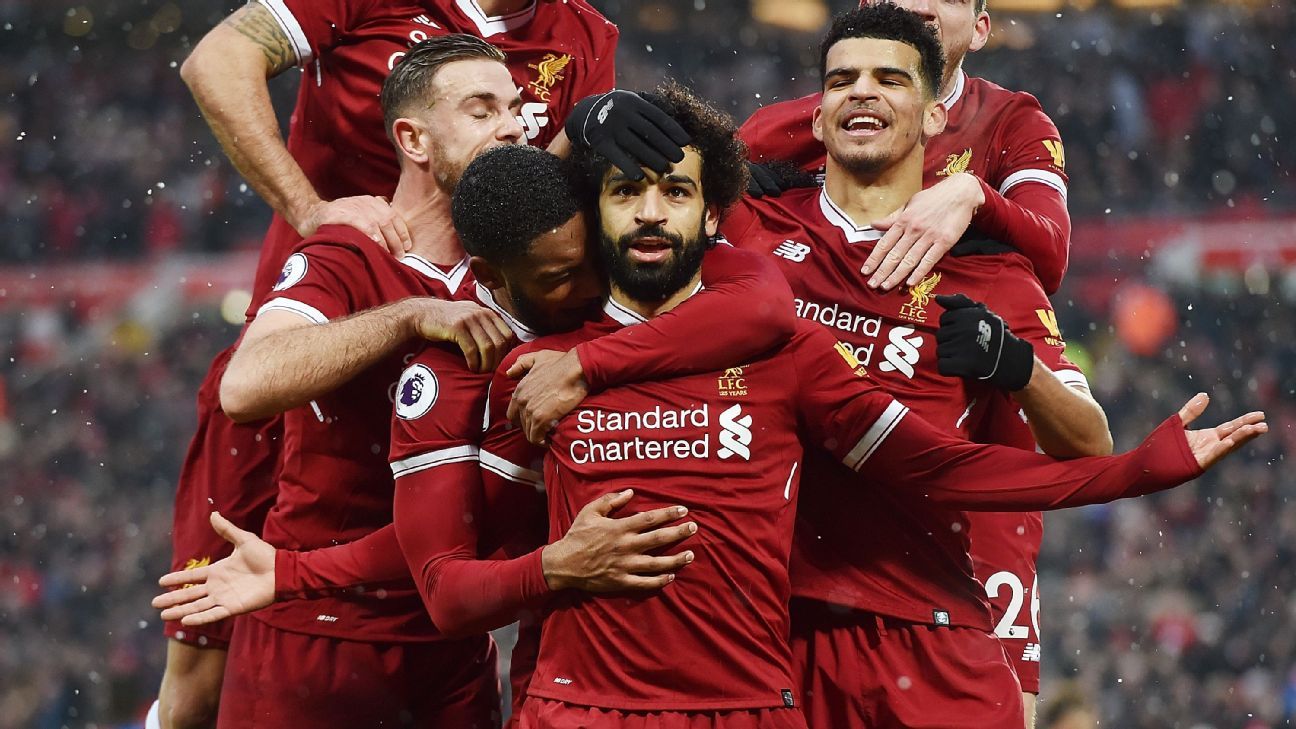
Mohamed Salah formally broke the news on Tuesday that many Liverpool fans had felt was coming for several months: that he will be cutting his contract short and leaving Anfield on a free transfer at the end of the season.
Salah signed a new two-year deal with the Reds last summer. However, since then a dip in form, a slip down the pecking order, an explosive public outburst and a subsequent nosedive in his relationship with head coach Arne Slot, has seen the Egypt international fail to get as much game time as he feels he deserves.
However, since arriving in 2017, Salah has firmly established himself as one of Liverpool’s greatest-ever players and will undoubtedly depart a hero regardless of the current circumstances.
– Why Salah beats Ronaldo, Henry as Premier League’s greatest
– Salah will get the Liverpool farewell, but he leaves a void to fill
– Liverpool’s ‘greatest’: Mohamed Salah saluted by teammates
The 33-year-old has scored 255 goals in 435 appearances for the club (putting him third on their all-time list) and been instrumental in two Premier League title triumphs, domestic cup successes and the UEFA Champions League trophy in 2018-19.
He has also collected a number of individual plaudits, including three PFA Players’ Player of the Year awards, two Premier League Player of the Season awards and four Premier League Golden Boots.
Salah was also bestowed with the illustrious Puskás Award as part of The Best FIFA Award gala night in 2018, which — unlike the majority of his vast array of prizes and trophies — raised more than a few quizzical eyebrows around the world.
The forward was handed world football’s Goal of the Year award via an online fan vote for his strike against Everton in December 2017, when he collected the ball on the edge of the box before darting between two defenders and curling an exquisite finish beyond the goalkeeper.
Of course, it was and remains a perfectly decent goal. Yet many at the time were baffled to see Salah’s effort deemed to be the most beautiful goal scored that year … when it wasn’t even his best goal of 2017-18, or anywhere close.
The sentiment was even echoed by teammate James Milner, who offered wry congratulations to his then-Liverpool teammate after the winner was announced, fending off competition from Cristiano Ronaldo, Gareth Bale and a clutch of scorching golazos from the 2018 FIFA World Cup.
“Congrats Mo Salah on your 7th best goal from last season winning goal of the year,” Milner wrote in a social-media post which also featured “#oneofmanyworldies” among several hashtags and emojis.
But was Milner right? By our count there were at least six Salah strikes from his imperious 2017-18 season that deserved a place on the Puskás short list ahead of his goal in the Merseyside derby. But, whether you agree with this subjective list or not, it serves as a reminder of just what a player Salah has been for Liverpool.
Salah scored twice in a 3-0 victory against Southampton including a lovely effort from outside the box. The precise, angled finish was fairly similar to his strike against Everton but from a little further out.
2. Nov. 29, 2017 vs. Stoke City
Another rampant 3-0 win saw Salah score the goal of the game when he connected with a dinked cross from Sadio Mané to thump a vicious volley past the goalkeeper. The powerful finish was actually voted Goal of the Month by Liverpool fans.
Liverpool inflicted a first Premier League defeat of 2017-18 on Manchester City with a frantic 4-3 victory over the leaders at Anfield that went down as the game of the season. The score went from 1-1 to 4-1 in the space of just nine hectic minutes with Salah scoring what proved to be the decisive goal with an audacious 35-yard lob.
Liverpool and Spurs contested another dramatic thriller that saw the two sides trade stoppage-time goals in a pulsating 2-2 draw at Anfield. Salah opened the scoring for the home side before Victor Wanyama pegged them back with an absolutely monstrous hit from distance. The Egypt international then looked to have snatched a 91st-minute win when he wriggled through a cluster of four defenders and belted it past Hugo Lloris. However, a 96-minute penalty from Harry Kane spoiled the party somewhat.
5. March 17, 2018 vs. Watford
Salah scored four goals (and assisted the other) in a 5-0 rout at Anfield on what proved to be one of many virtuoso displays for the nimble forward this season. His first was good, the second was slick and the third was nigh-on ingenious as the Reds star somehow fended off an entire pack of defenders before prodding an improvised finish past the goalkeeper.
6. April 24, 2018 vs. AS Roma
If you’ll forgive the obvious pun, Salah filed another five-star performance in Liverpool’s 5-2 thrashing of his former club in the first leg of the Champions League semifinal. He opened the scoring with his best goal of the night, curling an immaculate shot beyond the outstretched arm of future teammate Alisson Becker. He then dinked home a second before laying on assists for the Reds’ third and fourth goals of the evening.
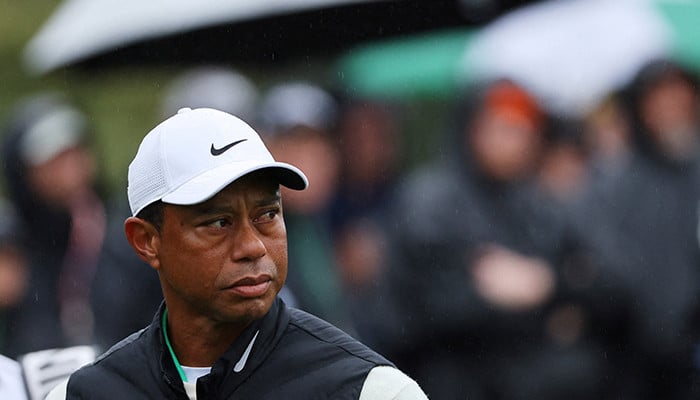
Tiger Woods’ turbulent career veered into fresh turmoil on Friday when the golf icon was arrested and charged with driving under the influence after a rollover crash near his Florida home, authorities said.
Woods, 50, escaped injury but was detained after his vehicle clipped a truck while attempting to overtake on a residential road on Jupiter Island, flipping onto its side before sliding to a stop.
Martin County Sheriff John Budensiek said Woods — who was arrested for driving under the influence in 2017 — showed signs of “impairment”, although he passed a breathalyser test.
“When it came time for us to ask for a urinalysis test, he refused, and so he’s been charged with DUI, with property damage and refusal to submit to a lawful test in the crash,” Budensiek said.
The 15-time major champion was released later on Friday, with Florida law requiring him to remain in jail for at least eight hours before he could post bail.
Budensiek said drug recognition experts who examined Woods at the scene found the golfer “lethargic” and believed he was impaired with “some kind of medication or drug.”
No drugs or medication were found in his vehicle and since Woods refused the urine test, his right under Florida law, authorities “will never get definitive results as to what he was impaired on at the time of the crash,” Budensiek said.
‘Could have been worse’
While neither Woods nor the driver of the other vehicle was injured, Budensiek said the incident on the two-lane road “could have been a lot worse.”
“Had somebody been moving in the opposite direction, we would not be having a conversation saying there was no injuries,” he said.
Budensiek said he didn’t know how fast Woods was driving in the moments before the crash.
He said the driver of the truck had slowed to make a turn, then tried to move to the side of the road when he saw Woods’s fast-moving vehicle attempting to overtake him.
“When I show you the photos, they kind of speak for themselves … you can see that [Woods] slid for a decent space before he came to a stop,” said the sheriff, who said that after the crash Woods climbed out of the passenger-side window of his Land Rover.
President Donald Trump expressed sympathy for Woods in remarks to reporters in Miami following the incident.
“He’s got some difficulty, there was an accident, and that’s all I know,” Trump said. “Very close friend of mine. He’s an amazing person, amazing man, but, uh, some difficulty.”
Woods was arrested in Jupiter in 2017 after police found him asleep at the wheel of his damaged car. Woods eventually pleaded guilty to reckless driving and said he had taken a mix of painkillers.
Five years ago, Woods was involved in a serious car crash in California that left him with severe right leg injuries that required pins inserted in his foot and ankle and a rod in his tibia as well as a follow-up surgery in 2023.
Woods returned from that crash at the 2022 Masters, where he struggled to walk all four rounds on the way to a 47th-place finish.
Woods, whose clean-cut image was left in tatters after a 2009 sex scandal that upended his career, has been working to return from an Achilles tendon rupture last March and back surgery last October.
He competed earlier this week in the TGL simulator indoor golf league finals and had not ruled out playing in next month’s Masters, where his five victories include his first major title in 1997 and his most recent in 2019.
“This body … it doesn’t recover like it did when it was 24, 25. It doesn´t mean I’m not trying,” Woods said. “I keep trying.”
Woods, whose 82 PGA Tour career victories are level with Sam Snead for the all-time record, has not competed on tour since missing the cut at the British Open in July 2024.
He last made the cut at the 2024 Masters, where he finished 60th.


Zayn Malik shares personal video message on ‘Mind of Mine’ 10th anniversary

EU Parliament, Council reach deal on major reform of Customs Code

Tiger Woods released from jail after DUI arrest; eyes appear bloodshot in booking photo

-
 Business1 week ago
Flipkart group CFO to leave co amid IPO plans – The Times of India
-
 Business1 week ago
Video: The Effects of High Oil Prices
-

 Fashion1 week ago
China’s textile & apparel exports surge 17% to $50 bn in Jan-Feb 2026
-

 Sports1 week ago
Rating Adidas’ 2026 World Cup away shirts: Argentina, Spain, Mexico and more
-

 Fashion1 week ago
The hidden $1.62 war tax now embedded in every garment you source
-

 Sports1 week ago
American Conference Commissioner Tim Pernetti thanks Trump for Army-Navy game executive order
-
Tech1 week ago
The Corsair 4000D RS PC Case Keeps Your System Cool
-

 Tech1 week ago
‘Uncanny Valley’: Nvidia’s ‘Super Bowl of AI,’ Tesla Disappoints, and Meta’s VR Metaverse ‘Shutdown’