

Business
IMF opposes purchasing rule tweaks | The Express Tribune

ISLAMABAD:
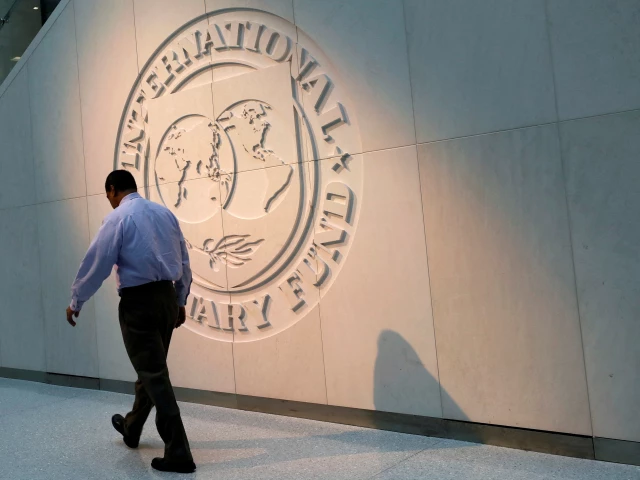
The International Monetary Fund (IMF) has slammed federal and Punjab governments for amending public procurement rules to award contracts to state departments without bidding and observes that some of these firms are subletting the contracts to private companies in an opaque manner.
The IMF has asked Pakistan to end preferences for state-owned enterprises (SOEs), including the provisions that allow direct contracting, within one year. Preferences, such as these, serve to disrupt competition, are vulnerable to abuse and increase the risk of corruption, it said in remarks on the government’s procurement system.
In its Governance and Corruption Diagnostic Assessment, the global lender termed decisions of the government of Punjab to amend public procurement rules to award contracts to SOEs without competitive bidding “unfortunate”. The IMF observed that “there appears to be an extensive practice of sub-contracting to private firms in opaque and unmonitored transactions. It is perhaps an understatement to observe that corruption vulnerabilities are high in contracting processes that feature direct negotiation”.
It added that the decision to amend rules for direct contracting has undermined the core principles of competition in public procurements. These observations have highlighted the unchecked practice of giving contracts, particularly in the infrastructure sector, to government entities on the grounds of being time sensitive and in public interest.
The IMF said that the 2023 National Risk Assessment (NRA) has identified corruption as a major predicate offense for money laundering and high-risk sectors include banking, real estate, construction, politically exposed persons and public procurement. “Unfortunately, amendments introduced in public procurement rules at the federal government level and in Punjab province have undermined core principles of open competition,” it said.
The IMF added that these amendments have provided for the award of contracts to SOEs without competition when projects are considered time sensitive and in the public interest. It pointed out that it was not possible to quantify the number and value of contracts directly negotiated with state-owned firms. “Anecdotal stories in the media have frequently highlighted high-value contracts that have been assigned in this fashion and the tendency for contractual costs to exceed expectations.”
The IMF said that public procurement remains fragmented and privileges state parties, who are able to capture markets and rents from their favored status.
Sovereign Wealth Fund
The report revealed that the government has finally given assurance to the IMF that it will withdraw the exemption from the applicability of the SOE Act to the Sovereign Wealth Fund. The government had been resisting this for the past over one year.
The report noted that while the approval of the SOE Act had been an important step, there were concerns about the exemption to the 2023 SOE Act and the SOE Policy Framework included in the enactment of the Sovereign Wealth Fund (SWF) Act. In the 2023 SWF Act, seven SOEs were exempted from the SOE Act. “The authorities have proposed amendments to end the SWF Act, which are expected to be placed before parliament to ensure that these SOEs will no longer be exempted.” The IMF underlined that it is crucial that all SOEs are included without any exemptions.
It said that many of the governance weaknesses in public procurement flow from issues with its legal and regulatory framework. The Public Procurement Rules 2004 under Rule 20 prescribes open competition as the principal method of procurement with mandatory consideration for transparency under Rule 4. It is mandatory for all the procuring agencies to publish the final evaluation report 15 days prior to the award of a contract.
IMF praises CMU
The global lender acknowledged the work being done by the Central Monitoring Unit (CMU) in monitoring the performance of SOEs. It said that the establishment of the monitoring unit has been a significant step forward for SOE financial oversight and transparency regarding the performance of SOE.
This will further strengthen their analysis, which will enhance the monitoring of SOE performance and avoid governance vulnerabilities related to SOEs, according to the IMF. The CMU publishes a wide range of reports and guidelines related to the performance, governance and oversight of SOEs. These publications are available on the official CMU page.
Debt management
The IMF found faults in public debt management. It said that the government debt management function in Pakistan has been conducted under a fragmented institutional structure. This fragmentation has led to inefficiencies and challenges in managing the country’s debt effectively. The current setup involves multiple entities with overlapping responsibilities, which complicates coordination and decision-making that can lead to suboptimal borrowing choices.
The fragmentation is evident in debt data monitoring and management. The debt data repository, DMFAS, currently only includes external debt captured by the Economic Affairs Division. This limited scope hinders a comprehensive view of the country’s total debt obligations.







Business
Top stocks to buy today: Stock recommendations for April 24, 2026 – check list – The Times of India

Stock market recommendations: Bharat Electronics, and Colgate-Palmolive (India) have been recommended as the top stocks to buy today (April 24, 2026) by Bajaj Broking Research. Take a look at the target prices and expected returns:Bharat ElectronicsBuy in the range of ₹ 440.00-450.00
The stock is in structural up trend forming higher high and higher low in all time frame signaling strength and continuation of the uptrend. The entire up move of the last 8 months is in a rising channel as can be seen in the chart highlighting sustained demand at an elevated level.On the smaller time frame, the stock is at the cusp of generating a breakout above the bullish Flag like formation as post a sharp up move in the first 3 weeks of April the stock went into a consolidation phase in the last four sessions. It is seen resuming up move and is at the cusp of generating a breakout above the bullish Flag formation highlighting continuation of the up move and offers fresh entry opportunity.We expect the stock to extend the up move and head towards 495 levels in the coming months being the confluence of the 123.6% external retracement of the previous decline 473 – 400 and the upper band of the rising channel of the last 8 months.Colgate-Palmolive (India)Buy in the range of 2120-2160
The share price of Colgate-Palmolive has generated a breakout above bullish Flag pattern signaling continuation of the up move and offers fresh entry opportunity.We expect the stock to head higher towards 2330 levels in the coming months being the measuring implication of the bullish flag breakout.The daily 14 periods RSI is in buy mode thus supports the positive bias in the stock.(Disclaimer: Recommendations and views on the stock market, other asset classes or personal finance management tips given by experts are their own. These opinions do not represent the views of The Times of India)
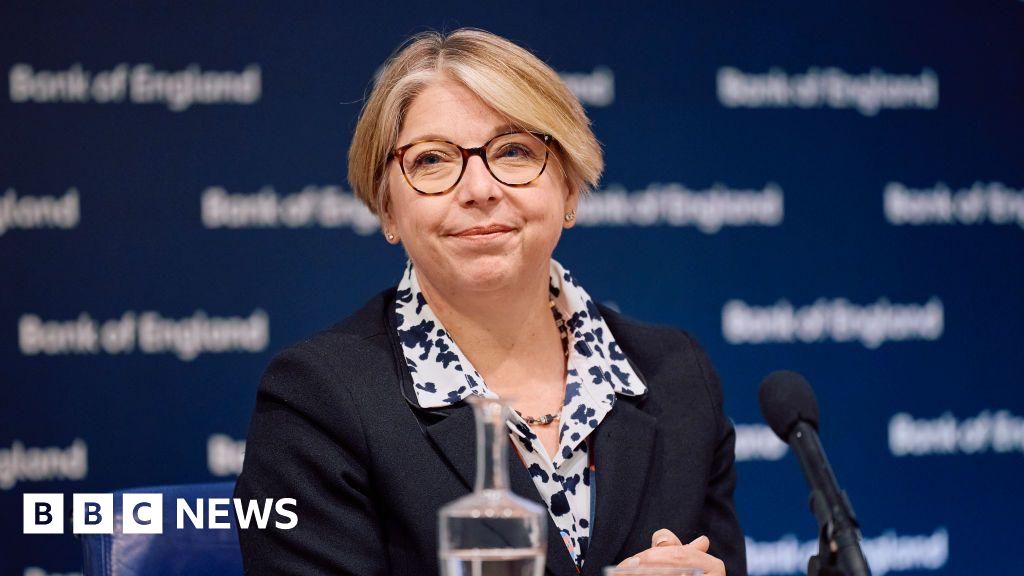
It is unusual for a senior figure at the Bank to be so forthright on market movements.
Source link

Consumer confidence has fallen for the third consecutive month amid household “jitters” over rapid price rises, figures show.
GfK’s long-running consumer confidence index fell four points to minus 25 in April, following falls of two points and three points in March and February respectively.
The deepening concern was driven by perceptions of the UK economy, with a six-point slide in confidence for the next 12 months to minus 43, its lowest level since February 2023.
Confidence in personal finances over the coming year fell five points to minus four – one point lower than this time last year.
The major purchase index – an indicator of confidence in buying big ticket items – held steady, albeit at minus 18 but one point better than last April.
The only measure to improve was the savings index – often an indication that households are concerned about their finances and looking to build contingency funds – which is up five points to 32.
Neil Bellamy, consumer insights director at GfK, said: “Consumers really do have the jitters now.
“It is a year since we last saw a monthly drop of this size, and we have to go back to October 2023 to find the last time consumer confidence was lower.
“Everyone is grappling with rapid price rises, especially at the fuel pumps, which are taking a dent out of household budgets, and people know further price hikes are coming.
“Consumer confidence is deteriorating sharply, with fuel prices and threats of more energy price increases acting as constant reminders of inflation.
“While the Gulf crisis is intensifying pressures, much of the current strain reflects earlier domestic cost increases.
“How long can all this disruption and pain continue?”


Former Giants co-owner Steve Tisch seen in team’s draft room

UK’s clothing exports down 7.6% to $293 mn in Jan-Feb
Top stocks to buy today: Stock recommendations for April 24, 2026 – check list – The Times of India

-

 Fashion1 week ago
France’s LVMH Q1 revenue falls 6%, shows resilience amid Iran war
-

 Entertainment1 week ago
Is Claude down? Here’s why users are seeing errors
-

 Sports1 week ago
PSL 11: Peshawar Zalmi win toss, opt to field first against Quetta Gladiators
-

 Tech1 week ago
The Deepfake Nudes Crisis in Schools Is Much Worse Than You Thought
-
 Business1 week ago
Standard Life buys rival in £2b deal to create savings giant
-

 Tech1 week ago
CYBERUK ’26: UK lagging on legal protections for cyber pros | Computer Weekly
-

 Fashion1 week ago
Raymond unveils luxury Chairman’s Collection Store in Mumbai
-
 Business1 week ago
PepsiCo earnings beat estimates as North American food business improves