

Politics
In meeting with Iranian FM, Putin pledges support for Iran

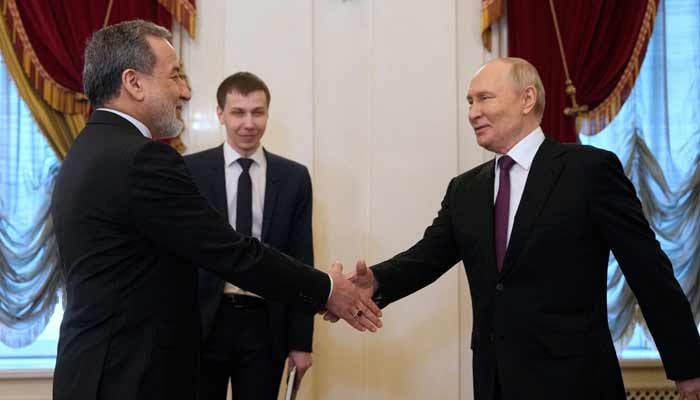
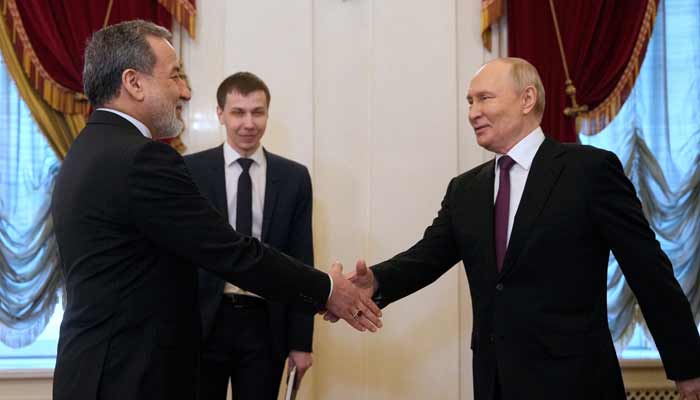
- Putin says he received message from Iran’s Supreme Leader.
- Moscow “will do everything” to achieve regional peace: Putin.
- Russia building two new nuclear units in Iran’s Bushehr.
Russian President Vladimir Putin held talks with Iranian Foreign Minister Abbas Araghchi in St. Petersburg on Monday and told him he hoped the Iranian people would weather what he described as a “difficult period” and that peace would soon prevail.
Russia has offered to mediate to try to help restore calm to the Middle East following US and Israeli strikes on Iran, which Moscow has condemned. It has also repeatedly offered to store Iran’s enriched uranium as a way of defusing tensions, an offer the United States has not taken up.
“For our part, we will do everything that serves your interests and the interests of all the peoples of the region to ensure that peace is achieved as quickly as possible,” Putin told Araghchi, according to Russian state media.
“Last week I received a message from Iran’s Supreme Leader. I would like to ask you to convey my most sincere thanks for this and to confirm that Russia, like Iran, intends to continue our strategic relationship,” Putin added.
Iran last year sealed a 20-year strategic partnership agreement with Moscow, Russia is building two new nuclear units at Bushehr, the site of Iran’s only nuclear power plant, and Iran supplied Russia with Shahed drones for use against Ukraine.
Araghchi said relations between Russia and Iran would continue to strengthen and thanked Putin for Moscow’s support, the state RIA news agency reported.
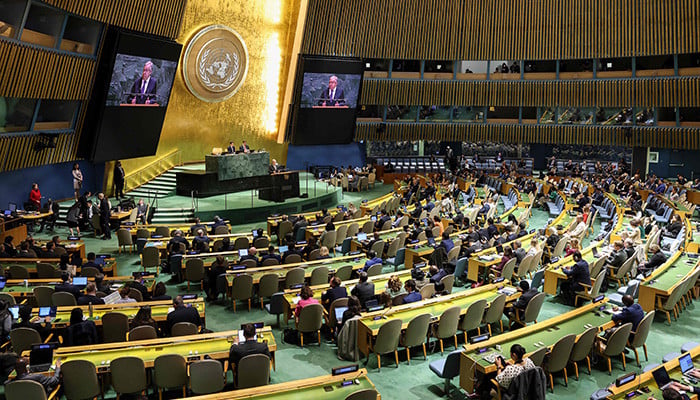
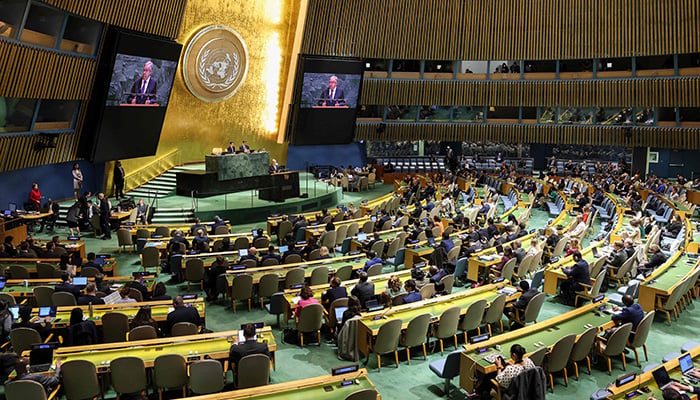
- UN nuclear talks begin as global tensions intensify.
- Guterres says treaty commitments remain unfulfilled.
- US President Trump signals potential nuclear tests.
Signatories of the landmark nuclear non-proliferation treaty began a meeting Monday at the United Nations as fears of a renewed arms race escalate, with atomic powers again at loggerheads over safeguards.
In 2022, during the last review of the treaty considered the cornerstone of non-proliferation, UN Secretary-General Antonio Guterres warned humanity was “one misunderstanding, one miscalculation away from nuclear annihilation.”
On Monday, he warned “the drivers” of nuclear weapons proliferation were accelerating.
“For too long, the treaty has been eroding. Commitments remain unfulfilled. Trust and credibility are wearing thin. The drivers of proliferation are accelerating. We need to breathe life into the treaty once more,” Guterres said in opening remarks.
With global geopolitical friction only heightened since the last meeting, it was unclear what the gathering at UN headquarters could achieve.
France’s Foreign Minister Jean-Noel Barrot told signatories that “never has the risk of nuclear proliferation been so high, and the threat posed by Iran’s and North Korea’s programmes is intolerable for each and every state party to this treaty.”
Tempering expectations, Do Hung Viet, Vietnam’s UN ambassador and president of the conference, said: “We should not expect this conference to resolve the underlying strategic tensions of our time.”
“But a balanced outcome that reaffirms core commitments and set out practical steps forward would strengthen the integrity of the NPT,” he said.
“The success or failure of this conference will have implications way beyond these halls,” Viet added. “The prospects of a new nuclear arms race are looming over us.”
The nuclear non-proliferation treaty (NPT), signed by almost all countries on the planet — with notable exceptions including Israel, India and Pakistan — aims to prevent the spread of nuclear weapons, promote complete disarmament, and encourage cooperation on civilian nuclear projects.
The nine nuclear-armed states — Russia, the United States, France, the United Kingdom, China, India, Pakistan, Israel and North Korea — possessed 12,241 nuclear warheads in January 2025, the Stockholm International Peace Research Institute (Sipri) reported.
The US and Russia hold nearly 90% of nuclear weapons globally and have carried out major programs to modernise them in recent years, according to Sipri.
China has also rapidly increased its nuclear stockpile, Sipri said, with the G7 raising the alarm Friday over Moscow and Beijing boosting their nuclear capabilities.
US President Donald Trump has indicated his intention to conduct new nuclear tests, accusing others of doing so clandestinely.
In March, French President Emmanuel Macron announced a dramatic shift in nuclear deterrence, notably an increase in the atomic arsenal, currently numbering 290 warheads.
‘Affront’ to NPT
“It is obvious that trust is eroding, both inside and outside the NPT,” Seth Shelden of the International Campaign to Abolish Nuclear Weapons, a Nobel Peace Prize laureate, told AFP.
He questioned the likely outcome of the four-week summit.
Decisions on the NPT require agreement by consensus, with the previous two conferences failing to adopt final political declarations.
In 2015, the deadlock was largely due to opposition by Israel’s arch-ally Washington to creation of a nuclear-weapon-free zone in the Middle East.
A 2022 impasse was due mainly to Russian opposition to references to Ukraine’s nuclear power plant at Zaporizhzhia, occupied by Moscow.
This year’s summit could hit any number of stumbling blocks.
The ongoing war in Ukraine, Iran’s nuclear programme and the war there, proliferation fears and Pyongyang’s developing arsenal could all be deal-breakers.
The United States along with its allies Britain, the UAE and Australia spoke out at Iran’s appointment as a conference vice president.
Washington’s meeting envoy said conferring a leadership role on Tehran was an “affront” to countries that take the NPT “seriously.”
Artificial intelligence could be a prominent issue as some countries call for all sides to keep human control over nuclear weapons.
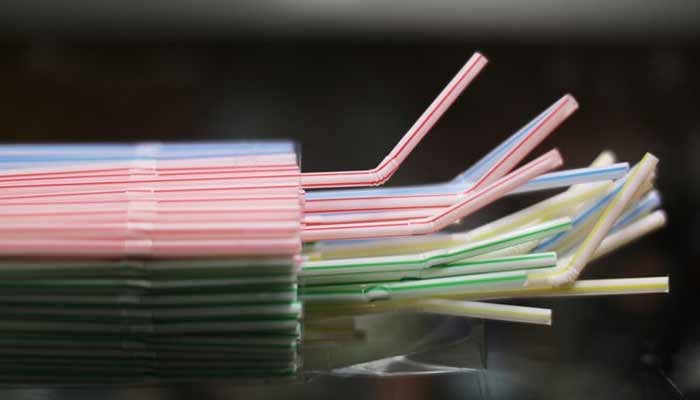
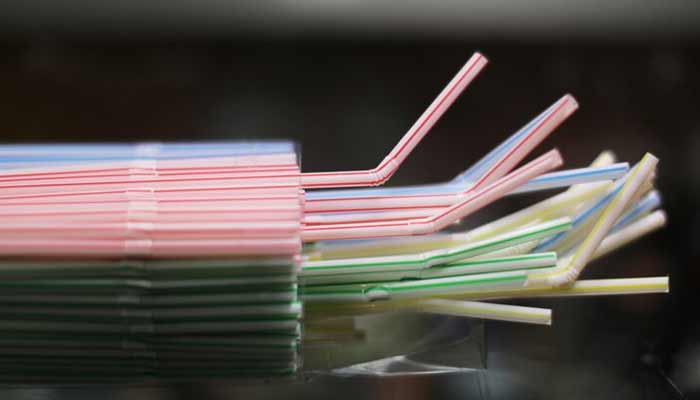
A French teenager has been charged with mischief and public nuisance in Singapore for licking a straw and putting it back in an orange juice vending machine, court documents showed Monday.
Didier Gaspard Owen Maximilien, 18, allegedly filmed himself “licking a straw and placing it back at the vending machine”, uploaded the video on Instagram knowing that it “would or would probably cause annoyance to the public”, according to the documents.
The teenager is studying in Singapore, according to court records.
The public nuisance offence carries a jail term of up to three months and a fine.
A second charge of committing mischief said Maximilien knew that he was “likely to cause wrongful loss or damage” to iJooz, the company operating the vending machine which had to replace all 500 straws in the dispenser.
The mischief offence carries a punishment of up to two years in jail on conviction and a fine, according to the charge sheet.
Both offences were allegedly committed on March 12.
The charges were lodged before a district court last Friday, and the next hearing will be on May 22.
The Straits Times newspaper said the video “quickly went viral, sparking shock and concern among netizens”.
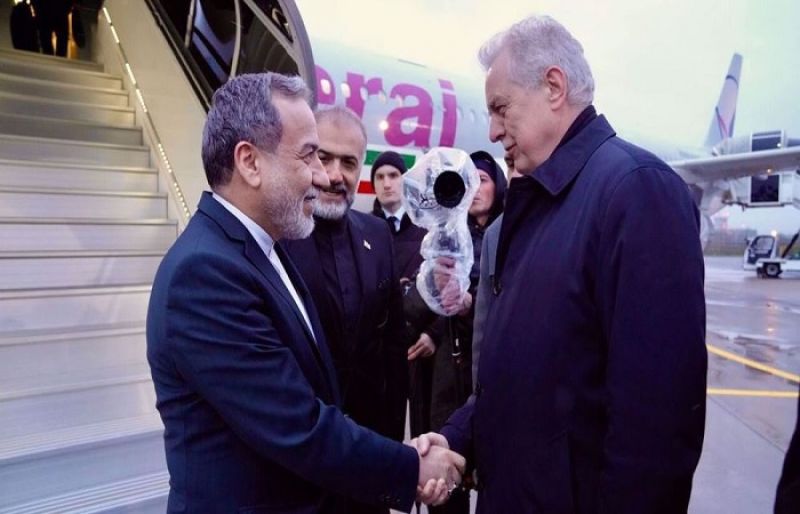
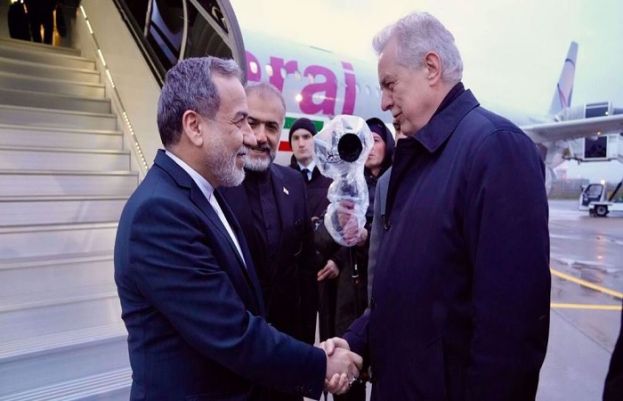
Iran’s Foreign Minister Abbas Araghchi has arrived in Russia to continue close consultations between Tehran and Moscow on regional and international issues, and to enhance bilateral relations.
Speaking upon arrival at Pulkovo International Airport in St. Petersburg on Monday, Araghchi noted that due to the recent US-Israeli aggression against the country, there had been a gap in meetings with Russian counterparts.
“We have tried to use the available opportunity, following our trips to Pakistan and Oman, to travel to Russia,” he said.
Araghchi added that Monday’s meeting would be a good opportunity to discuss developments in the war and review the latest situation, expressing confidence that consultations and coordination between the two countries would be of particular importance.
Constructive consultations held in Pakistan
Regarding his trips to Islamabad and Oman over the past three days, the foreign minister emphasized the bilateral nature of the visits.
Pointing to Pakistan’s role as a mediator in Iran-US negotiations, Araghchi said it was necessary to review the latest situation with Pakistani officials.
“Previous negotiations, despite some progress, did not achieve their goals due to American approaches, their excessive demands, and their wrong policies. Therefore, we needed to hold consultations with our friends in Pakistan to review the latest developments,” Araghchi explained.
He stressed that Iran’s position in the negotiations is very important.
“We must secure the rights of the Iranian people after 40 days of resistance and protect the country’s interests,” he added.
Iran-Oman expert-level consultations on Strait of Hormuz to continue
Referring to his meetings with senior Omani officials, Araghchi noted that Iran and Oman are both littoral states of the Strait of Hormuz, and it is necessary for them to consult each other, especially as safe passage through the strait has become a globally significant issue.
“It is natural that as two coastal countries of this strait, we must talk to each other to secure our common interests and coordinate any action taken in this regard, because the interests of Iran and Oman are directly involved in this matter,” Araghchi said.
He confirmed that there is a broad consensus between Iran and Oman, and it was agreed during the visit that consultations would continue at the expert level.
Iran closed the waterway to the enemies and their allies following the launch of the US-Israeli aggression against Iran on February 28, with the assassination of the Leader of the Islamic Revolution, Ayatollah Seyyed Ali Khamenei, and several top military commanders.
On April 8, forty days into the war, a temporary Pakistan-brokered ceasefire took effect. Talks ensued in Islamabad but stopped short of an agreement amid the United States’ maximalist demands and insistence on unreasonable positions.
Iran announced the reopening of the chokehold to commercial traffic following the announcement of a ceasefire by US President Donald Trump on April 7.
The country, however, imposed a total closure on the waterway on April 18 after Trump said the US was continuing an unlawful blockade it had imposed on Iran in continuation of unlawful aggression towards the country.


Melania Trump says ABC should ‘take a stand’ on late-night host Kimmel

A Brain Implant for Depression Is About to Be Tested in Humans

UN proliferation meeting begins amid ‘looming’ risk of nuclear arms race

-

 Sports1 week ago
NCAA men’s gymnastics championship: All-time winners list
-

 Sports1 week ago
WWE WrestleMania 42 Night 2: Live match results and analysis
-

 Politics6 days ago
UK’s Starmer seeks to deflect blame over Mandelson appointment
-

 Fashion1 week ago
UK’s Sosandar returns to profitability amid robust FY26 performance
-
 Entertainment7 days ago
Lee Anderson, Zarah Sultana kicked out of UK Parliament for calling PM ‘liar’
-
 Business7 days ago
How Trump’s psychedelics executive order could unlock stalled cannabis reform
-
 Business1 week ago
No fuel shortage: Govt assures 100% domestic LPG, PNG, CNG supply amid Hormuz energy crunch – The Times of India
-

 Sports1 week ago
Quetta Gladiators opt to bowl after winning toss against Peshawar Zalmi in PSL 11 clash