

Fashion
India–Canada CEPA: Closing Canada’s preference gap before compliance

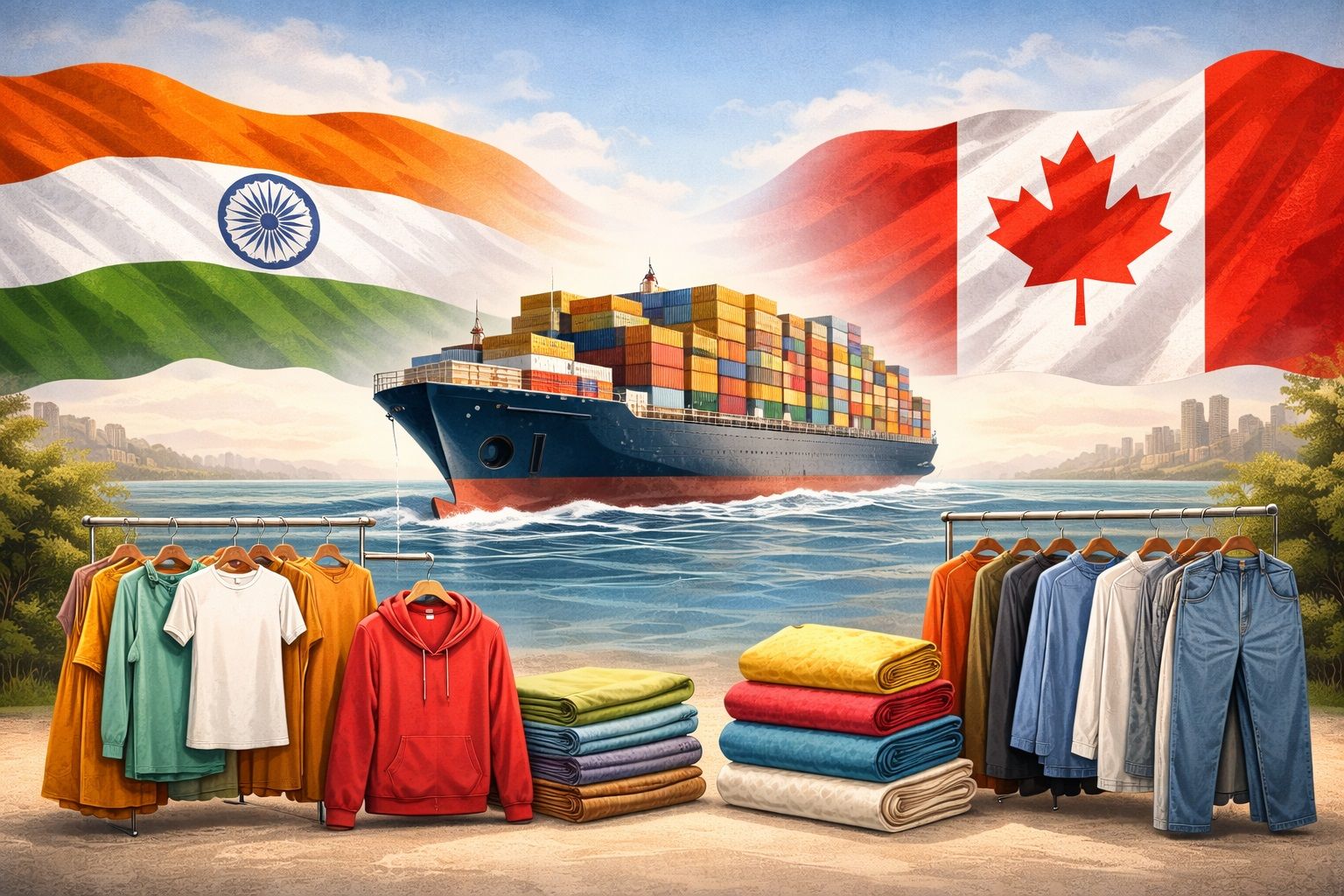
That prediction is not really a bet that Canadian shoppers will buy twice as many Indian garments. It is a bet that India can finally compete in Canada on equal trade terms because today, Canada is one of the few rich, high-volume apparel markets where India often sells with a built-in disadvantage: many Indian garments still enter under MFN ‘tariff-peak’ duties in HS **/**, while key rivals land at zero per cent thanks to Canada’s preference system.
If CEPA closes that gap, orders can move fast, especially in knit basics where buyers can switch suppliers within a season. But there is a second shift that matters just as much: Canada is becoming a compliance-first market, and that will decide who wins after tariffs.












Total UK certificates of origin fell 10 per cent year-on-year, from 39,457 in March 2025 to 35,533 in March 2026. However, exports to Arab League markets recorded a steeper 20 per cent fall, declining from 15,437 to 12,360 over the same period. In contrast, certificates for non-Arab markets slipped by just 4 per cent, from 24,751 to 23,785.
UK exports to Middle East markets fell 20 per cent in March 2026, far outpacing the 4 per cent dip in non-Arab trade, signalling a clear region-specific disruption.
Overall export certificates dropped 10 per cent YoY, reflecting delays, rerouting and shipment losses.
Rising freight, insurance costs and longer lead times are straining SMEs.
The divergence suggests a region-specific disruption rather than a broad slowdown in global demand. A fall in certificates indicates goods are being delayed, rerouted, or not shipped, highlighting the immediate impact of instability across key Middle East trade corridors.
“Our documentation data shows a clear and immediate shock to UK trade flows linked directly to disruption across the Middle East,” said Steven Lynch, Director of International Trade at the BCC.
He noted that firms are facing longer and more expensive shipping routes, rising insurance costs, and extended lead times, with small and medium-sized enterprises particularly affected. While some trade may be delayed rather than permanently lost, Lynch warned that the operating environment has fundamentally changed.
In response, the BCC has launched a Diplomatic Advisory Hub with the UK Foreign Office to provide businesses with real-time guidance on overseas trade risks.
Fibre2Fashion News Desk (MS)
Trützschler Spinning
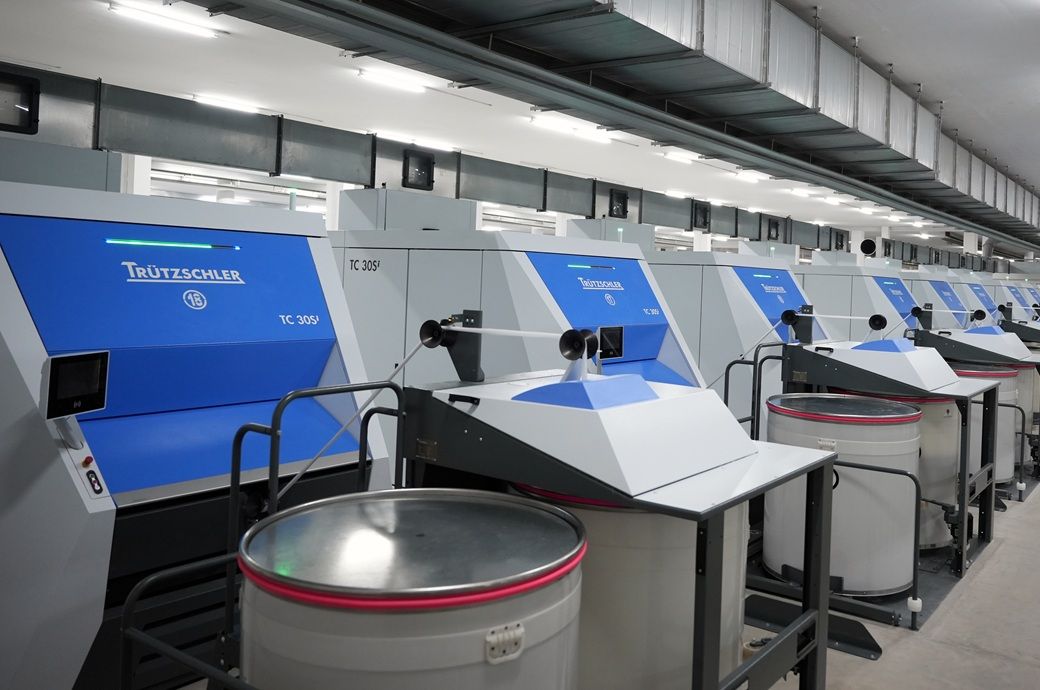
Trützschler Spinning will focus on technologies that enable highly efficient, stable, and resource-saving spinning preparation, with a strong emphasis on automation and direct spinning. At the heart of our booth, visitors will experience Trützschler’s latest automation highlight: T-CAN – a smart system that intelligently combines self-driving cans with AGV technology and an intuitive software interface. In this way, T-CAN significantly reduces manual handling. The result is lower operational costs, minimized downtime, as well as consistent and reliable material allocation. Developed in response to rising labor costs and increasing labor shortages in the global textile industry, T-CAN represents a key step towards more automated, efficient, and future-ready spinning mills.
Trützschler will present advanced spinning, card clothing and nonwovens solutions at ITM 2026 in Istanbul, Türkiye.
Highlights include the automated T-CAN system, TC 30i card, IDF 3 draw frame and TCO 21XL comber.
The company will also feature digital platforms and sustainable innovations aimed at improving efficiency, productivity and fibre processing performance.
A further highlight is the combination of the next-generation card TC 30i and the integrated draw frame IDF 3, which together form a perfect match for direct spinning. The TC?30i achieves up to 40% higher productivity, while maintaining or even improving yarn quality. Its intelligent feature T-GO enables extremely precise carding gap settings far beyond what is achievable manually. The only proven automatic gap optimizer has successfully demonstrated its value in several thousand customer operations worldwide. The IDF 3 provides a shortened spinning preparation process for rotor and airjet applications without compromising on quality. It is highly valued for its user-friendly operation. A new can changing system increases card efficiency by up to 3%, while advanced measuring devices support more homogeneous slivers and improved yarn quality.
The powerful combination of TC 30i and IDF 3 delivers high productivity, stable yarn parameters, and efficient processing of blends with high short fibre content or recycled materials.
Experts will also be available to discuss Trützschler’s latest advancement in combing technology: the TCO 21XL. This innovation increases productivity by about 50% because it operates twelve heads instead of a typical eight head setup, while delivering the same excellent sliver quality and, at the same time, requiring less energy per head. Equipped with the COUNT CONTROL function, the TCO 21XL further enhances quality assurance in the combing process. The result is a permanently constant sliver count for first-class yarn quality.
Beyond machinery, service and digital solutions will complete our presence at the fair. With local service and technology support teams, local spare parts and wire stocks and Trützschler repair stations, customers can rely on fast assistance and minimized downtime in Türkiye and globally. Our service team will present possibilities to upgrade existing machinery and the latest service tools. In addition, visitors can explore MyMill, Trützschler’s cloud-based platform for monitoring and optimizing spinning mill operations. MyMill is one of several digital services available via the My?Trützschler platform, which serves as the central digital access point for Trützschler customers. My?Trützschler bundles all digital services in one place and provides seamless access to applications such as MyMill, Training and Spare Parts Shop, offering valuable insights and support across the entire Trützschler ecosystem.
Trützschler Card Clothing
At ITM 2026, Trützschler Card Clothing (TCC) will unveil a new flat top, designed for spinning mills that aim for reliability and long-term performance in modern spinning preparation. Engineered for robustness and durability, this innovation is designed to support consistent performance over an extended service life. Fully recyclable and seamlessly compatible with Trützschler’s intelligent carding systems, the new flat top reflects TCC’s commitment to durability, efficiency, and sustainable design in card clothing.
Trützschler Nonwovens
With the T-SUPREMA needle-punching concept, successfully implemented with Texnology, Trützschler Nonwovens targets producers of technical nonwovens with flexible, proven solutions for geotextiles, filter media and other durable applications. The concept is complemented by the new NC-Xe card, a fit-for-purpose and cost-efficient solution that meets strong demand from cost-conscious investors while delivering proven Trützschler product and process quality.
Another focus is Trützschler Nonwovens’ proven carding technology for supersoft air-through bonded (ATB) hygiene nonwovens. With special designs, tailored configurations and dedicated component executions, the NC-X card reliably processes the finest bicomponent microfibres down to 0.4 denier. This enables the formation of highly voluminous, uniform and exceptionally soft webs, ideally suited for high-quality diaper backsheet and topsheet applications.
Globally proven Carded/Pulp and Wet-Laid/Spunlace line solutions for the production of lightweight nonwovens for disposable wipes and moist toilet tissue complete the Trützschler Nonwovens portfolio.
Connect with us in Istanbul!
Whether it’s advanced spinning preparation with T-CAN, TC 30i, IDF 3 and TCO 21XL, a powerful new card clothing innovation, or future-oriented nonwoven technologies – ITM 2026 brings all of our key innovations together. Our experts are looking forward to welcoming you at Hall 7, Booth 714A. Together, we take your fibre processing performance to the next level – boosting productivity, efficiency and cost-effectiveness.
Note: The headline, insights, and image of this press release may have been refined by the Fibre2Fashion staff; the rest of the content remains unchanged.
Fibre2Fashion News Desk (JP)
In a statement, SIMA Chairman Durai Palanisamy expressed appreciation to the government for concluding the agreement, noting that it provides 100 per cent duty-free access for Indian textile exports, including apparel, home textiles and made ups. He added that the extension of MFN-equivalent benefits ensures a level playing field for Indian exporters and enhances meaningful market access.
India’s textile industry has welcomed the India-New Zealand Free Trade Agreement (FTA), citing 100 per cent duty-free access as a boost to competitiveness and market diversification.
Industry leaders said the pact will expand exports, support value-added segments, and strengthen resilience amid global disruptions, while creating jobs and enhancing long-term trade growth.
Palanisamy noted that the agreement aligns with India’s broader vision of building a strong manufacturing and export base under the ‘Viksit Bharat 2047’ roadmap and achieving a $350 billion textile and apparel market by 2030. He added that recent FTAs with key global markets are helping secure real market access and support industry expansion.
The industry also pointed to the strategic importance of diversifying export markets amid geopolitical uncertainties, including disruptions linked to the Middle East. Government support through policy measures and supply chain interventions has helped the sector remain resilient, while exporters are being encouraged to explore new markets and focus on value addition.
Echoing similar sentiment, Suketu Shah, CEO of Vishal Fabrics Ltd, said the agreement is a strong step forward, offering duty-free access to a high-potential market and enhancing India’s competitiveness. He noted that with bilateral trade currently around $2.4 billion and scope for further expansion, the pact opens new growth avenues for value-added textile exports and strengthens long-term trade ties between the two countries.
Industry stakeholders believe the FTA will not only deepen bilateral trade but also generate employment in the labour-intensive textile sector while enabling Indian manufacturers to expand their global footprint.
Fibre2Fashion News Desk (KUL)


Middle East conflict hits UK exports, down 20%: BCC

Queen Camilla makes stunning confession in interview with Jenna Bush Hager

Oil jumps to highest price since 2022 after report Trump to be briefed on new Iran options
Us-India Trade Talks: US–India trade deal: Where do talks stand & what to expect – explained – The Times of India

UK inflation accelerates after Iran war drives sharp rise in fuel prices

PSL 11: Hyderabad Kingsmen opt to field after winning toss against Multan Sultans

-
Business1 week ago
Us-India Trade Talks: US–India trade deal: Where do talks stand & what to expect – explained – The Times of India
-
Business1 week ago
UK inflation accelerates after Iran war drives sharp rise in fuel prices
-
 Sports1 week ago
PSL 11: Hyderabad Kingsmen opt to field after winning toss against Multan Sultans
-
 Business1 week ago
Trump administration in advanced talks for a rescue package for Spirit Airlines, source says
-

 Tech1 week ago
Nation states responsible for ‘nationally significant’ cyber attacks against UK, says NCSC chief | Computer Weekly
-

 Tech1 week ago
Microsoft faces court battle in £2bn Windows Server class action | Computer Weekly
-

 Tech1 week ago
Blackbox replaces two racks of HPE storage with 8U of Everpure | Computer Weekly
-

 Fashion1 week ago
Bangladesh RMG units call for allowing local FOC raw material sourcing