

Sports
India qualify for Asia Cup final after defeating Bangladesh

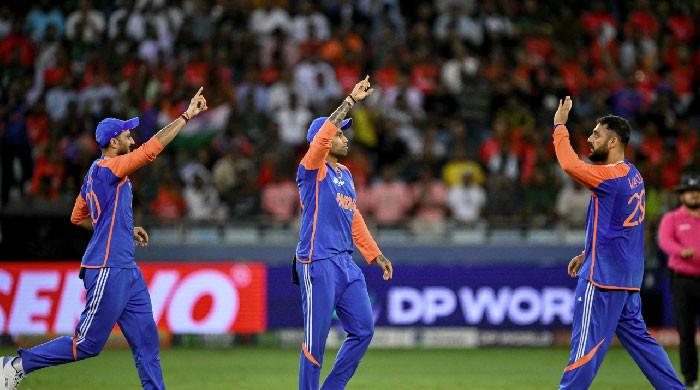
- Abhishek Sharma stars with blistering 75 from just 37 balls.
- Kuldeep Yadav shines, takes three wickets for only 18 runs.
- Saif Hassan fights back with gritty 69 but Bangladesh collapse.
India reached the Asia Cup 2025 final by thumping Bangladesh in the Super Fours clash at Dubai International Cricket Stadium, Dubai, on Wednesday.
The victory propelled India into the final, while also marking the end of Sri Lanka’s campaign in the continental tournament.
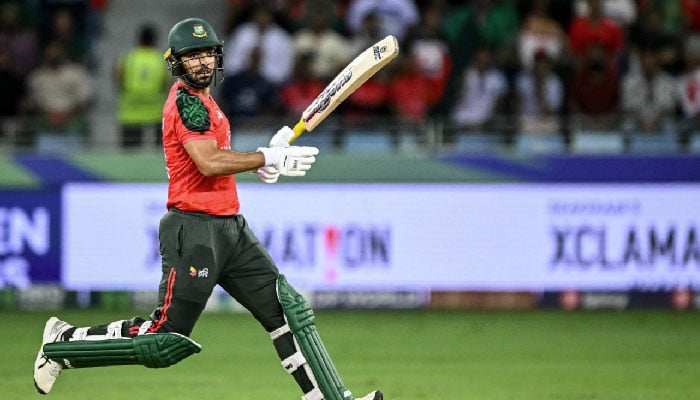
Set to chase 169, Bangladesh’s batting unit unfolded on a meagre 127 in 19.3 overs despite opening batter Saif Hassan’s gutsy half-century.
The right-handed opener remained the top-scorer with 69 off 51 deliveries, laced with five sixes and five fours.
Saif was also involved in an important 42-run partnership for the second wicket with top-order batter Parvez Hossain Emon, who scored 21 off 19 deliveries with the help of two fours and a six.
Besides them, the rest of the Bangladesh batters could not amass double figures against a disciplined India’s bowling attack, led by Kuldeep Yadav, who picked up three wickets for 18 runs in his four overs.
The left-arm spinner was supported by Jasprit Bumrah and Varun Chakravarthy, who made two scalps each, while Axar Patel and Tilak Varma chipped in with one apiece.
Bangladesh’s stand-in captain Jaker Ali’s decision to put India into bat backfired as the 2016 champions racked up 168/6 in their 20 overs.
India’s in-form opening pair of Abhishek Sharma and Shubman Gill gave them a flying start by putting together 77 runs inside seven overs until Rishad Hossain provided Bangladesh with a much-needed breakthrough by getting rid of the latter.
Gill remained a notable contributor to India’s total with a 19-ball 29, comprising two fours and a six.
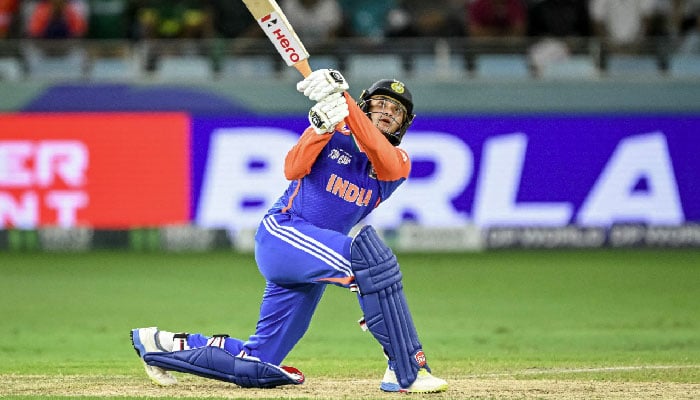
Abhishek was then involved in brief partnerships with Shivam Dube (two) and captain Suryakumar Yadav (five) before eventually getting run out in the 12th over. He walked back after top-scoring for India with 75 off 37 deliveries, studded with five sixes and six fours.
Following his dismissal, India lost two more wickets in quick succession and were consequently reduced to 129/5 in 14.3 overs before Hardik Pandya and Axar Patel launched a recovery.
The duo put together 39 runs for the sixth wicket until Mohammad Saifuddin got Pandya caught on the final delivery of the innings. The all-rounder contributed with 38 off 29 deliveries, laced with four fours and a six.
Patel, on the other hand, remained unbeaten with a scratchy 10 off 15 deliveries.
Rishad was the standout bowler for Bangladesh, taking two wickets for 27 runs in his three overs, while Tanzim Hasan Sakib, Mustafizur Rahman and Saifuddin chipped in with one apiece.
It is pertinent to mention that despite sealing the Asia Cup 2025 final spot, India will take on Sri Lanka in their last Super Four match on Friday.
Sports
NASCAR’s Truck Series and O’Reilly Autoparts Series honor Kyle Busch with moments of silence at Charlotte
NEWYou can now listen to Fox News articles!
The NASCAR world is paying tribute to Kyle Busch this weekend, and that includes some classy ones from two series in which the late driver had a lot of success.
While Busch — who passed away Thursday after “severe pneumonia [that] progressed into sepsis” — had been a full-time driver in NASCAR’s top series, the Cup Series, for more than 20 years, he still competed occasionally in both the O’Reilly Auto Parts Series and the Craftsman Truck Series.
He was especially known for his dominance in the Truck Series, winning 69 of his 184 races, and at one point owned a team. In fact, the final win of Busch’s career came just under a week before his death in a Truck Series race at Dover.
ZERO BS. JUST DAKICH. TAKE THE DON’T @ ME PODCAST ON THE ROAD. DOWNLOAD NOW!
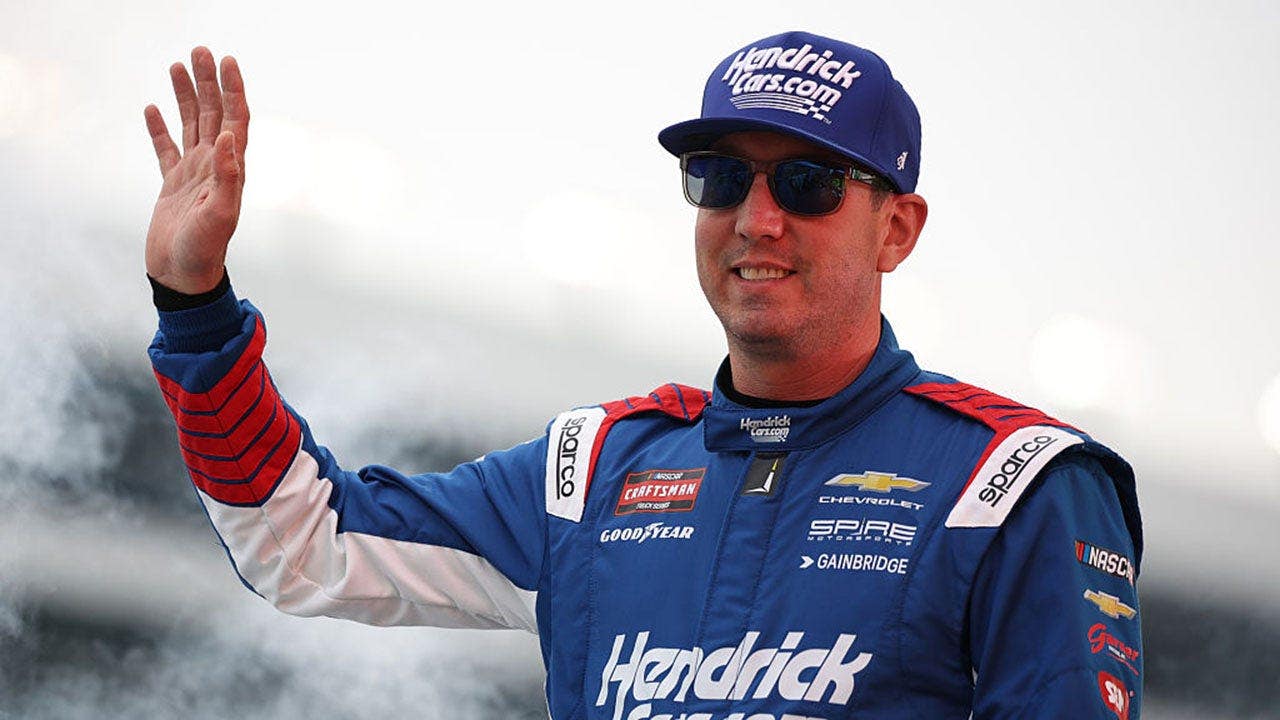
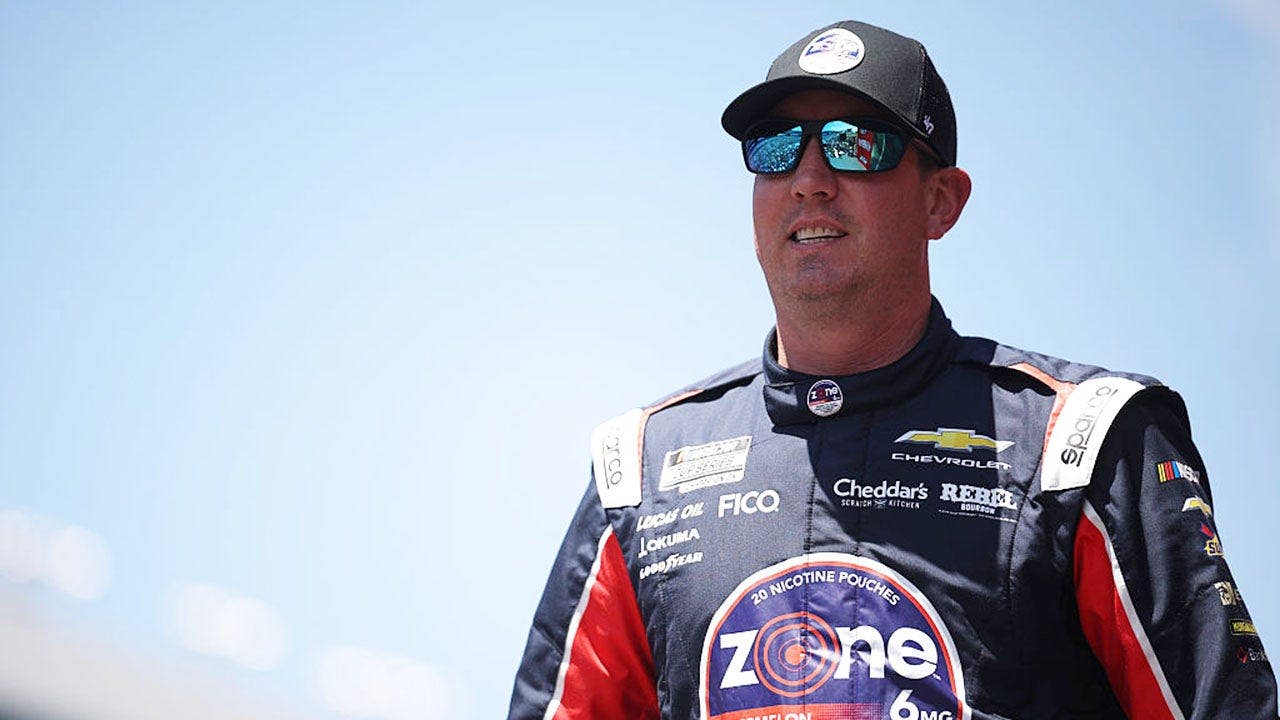
Kyle Busch, driver of the No. 7 HendrickCars.com Chevrolet, is introduced before the NASCAR Craftsman Truck Series SpeedyCash.com 250 at Texas Motor Speedway in Fort Worth, Texas, on May 1, 2026. (James Gilbert/Getty Images)
On Friday, the Truck Series was in Charlotte as part of the Coca-Cola 600 weekend for a race that Busch was supposed to take part in.
NASCAR, RACING WORLD REACTS TO KYLE BUSCH’S SHOCKING DEATH AT 41: ‘CANNOT COMPREHEND THIS NEWS’
Corey Day was in the No. 7 Chevrolet for Spire Motorsports, the truck in which Busch took his final win, and it was set to start on pole after Friday’s qualifying was rained out.
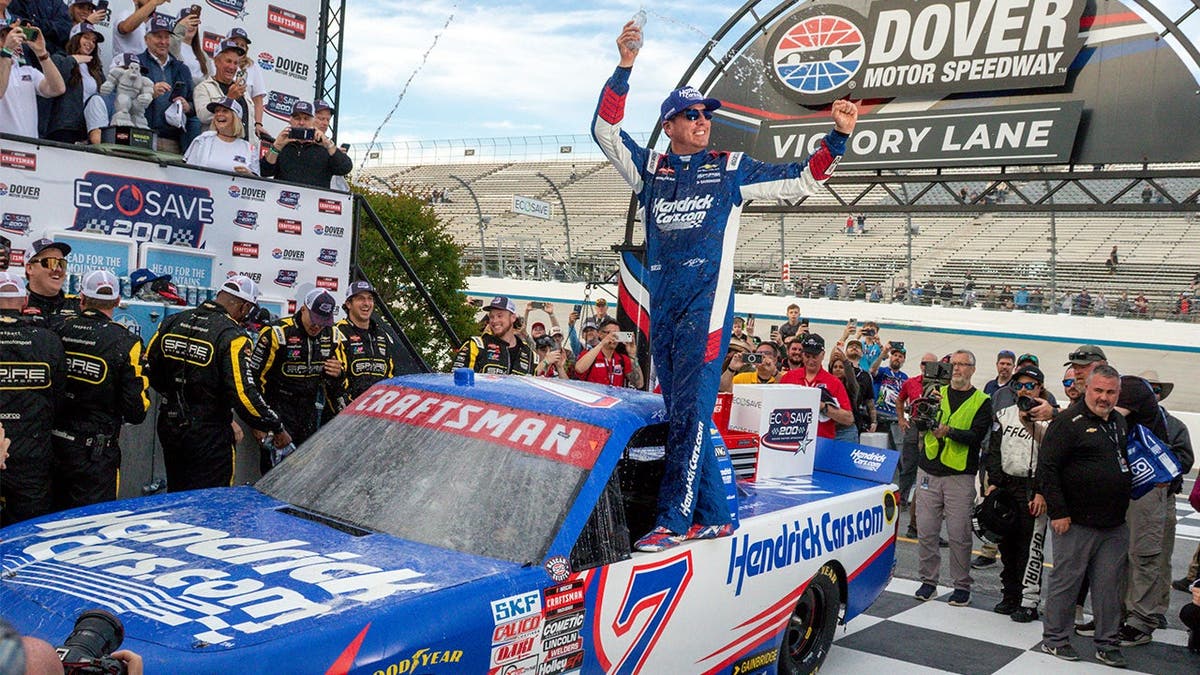
Kyle Busch celebrates the final win of his NASCAR career at Dover Motor Speedway. (Photo by David Hahn/Icon Sportswire)
Before the race was set to begin on Friday evening, teams and fans held a moment of silence for Busch.
Unfortunately, the race never got underway and was postponed until Saturday morning and then again to Saturday night.
The O’Reilly Autoparts Series, which Busch raced in many times and won many times during his career, also took a moment to remember him before their race at Charlotte on Saturday.
CLICK HERE TO DOWNLOAD THE FOX NEWS APP
That race was also suspended due to rain.
There will be some heavy hearts on Sunday when the Coca-Cola 600, the NASCAR Cup Series’ longest race of the year, gets started at 6 p.m. ET.
NEWYou can now listen to Fox News articles!
While Kyle Busch was a legend in the NASCAR ranks, he was incredibly well respected throughout the world of motorsports.
That’s why one of Busch’s NASCAR numbers — the one I’d argue is most iconic — will make an appearance in the 110th Running of the Indianapolis 500.
Busch had a bunch of numbers across NASCAR’s three national series, but in the Cup Series, he used No. 5, No. 18 and No. 8.
ZERO BS. JUST DAKICH. TAKE THE DON’T @ ME PODCAST ON THE ROAD. DOWNLOAD NOW!
Kyle Busch used No. 18 during his years with Joe Gibbs Racing. (Isaac Brekken/AP)
For many fans, No. 18 is the number they associate with Busch, as he used it for 15 years, including during both of his championship seasons.
NASCAR, RACING WORLD REACTS TO KYLE BUSCH’S SHOCKING DEATH AT 41: ‘CANNOT COMPREHEND THIS NEWS’
You can close your eyes and picture it on the side of those legendary M&M’s paint schemes.
Well, Sports Business Journal’s Adam Stern shared that Dale Coyne Racing, which runs the No. 18 Honda driven by Romain Grosjean, will display the classic No. 18 used on Busch’s car during his time with Joe Gibbs Racing in the Cup Series.
How about that tribute?
Of course, the numbers are typically trademarked, so as Stern reported, the idea — which came from Fox Sports IndyCar commentator Townsend Bell — required getting in touch with Joe Gibbs Racing.
Busch never raced in the Indy 500 or in the IndyCar Series; however, he did have a lot of success at the Indianapolis Motor Speedway in NASCAR.
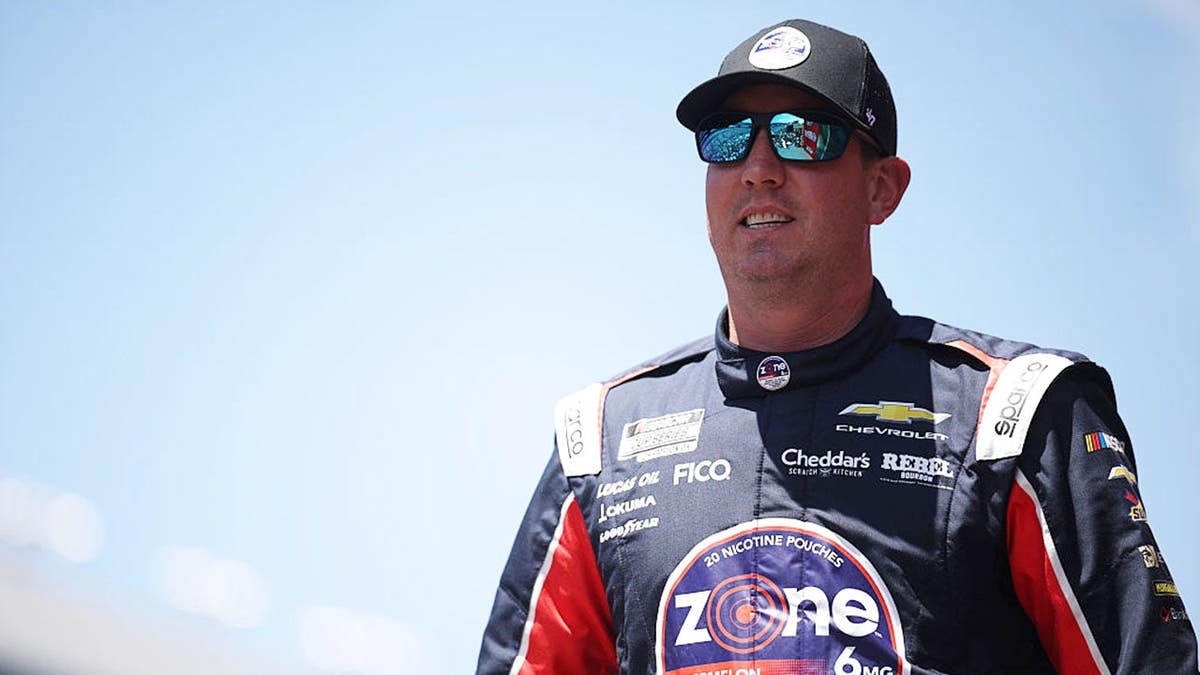
NASCAR star Kyle Busch died on Thursday at just 41 years old. (James Gilbert/Getty Images)
His brother, retired NASCAR driver and former Cup Series champ, Kurt Busch, attempted double duty by competing in both the Indianapolis 500 and Coca-Cola 600 on the same day in 2014.
It’s a heck of a tribute from the folks at Dale Coyne Racing with an assist from JGR.
CLICK HERE TO DOWNLOAD THE FOX NEWS APP
And while I don’t want to play favorites, wouldn’t it be something to see that No. 18 in Victory Lane?
Grosjean will start Sunday’s race in 24th, which means he has some ground to make up, but anything can happen in the Indy 500.
NEWYou can now listen to Fox News articles!
The 2026 INDYCAR season has already delivered stellar moments, even before “The Greatest Spectacle in Racing.”
That highly anticipated race happens on Sunday, May 24, with the 110th Running of the Indianapolis 500.
Coverage for the Indy 500 begins at 10 a.m. ET.
You can watch the Indy 500 pre-race and race broadcasts on FOX and stream the broadcasts on FOX One, FOX Sports.com and the FOX Sports App.
Ahead of all the action, we’ve rounded up the best drivers to grace the course.
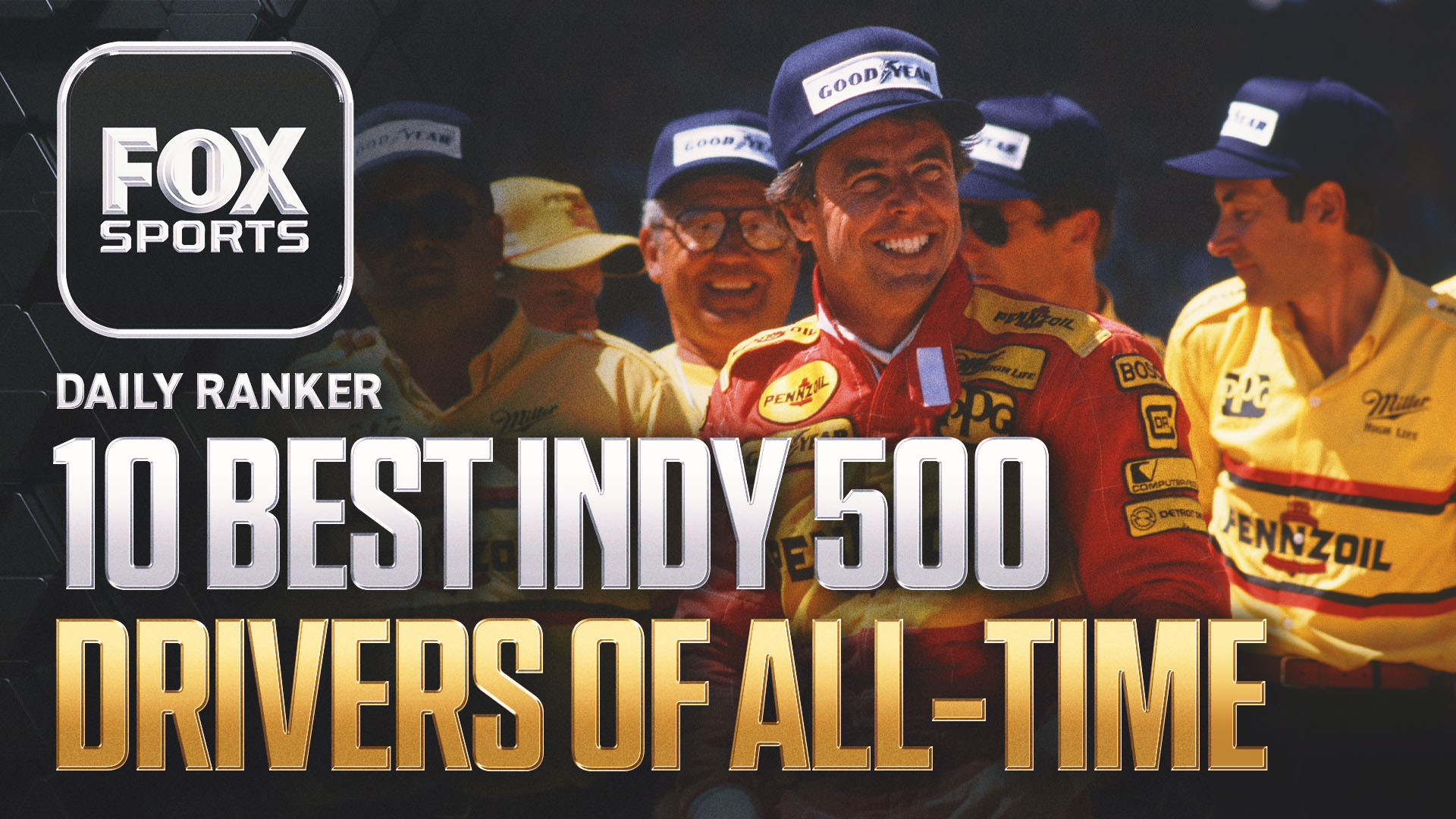
Here are the 10 best Indianapolis 500 drivers of all time.
10 Best Indy 500 Drivers Of All Time
10. Dario Franchitti
Although he had one of the shorter Indy 500 careers on this list, Franchitti managed to compile some impressive results. He earned three victories at the track between 2007-2012. Moreover, he added three other top-10 finishes to his name despite participating in just 10 races. His best stretch was when he claimed six top-seven finishes in seven attempts from 2005 and 2012.
9. Arie Luyendyk
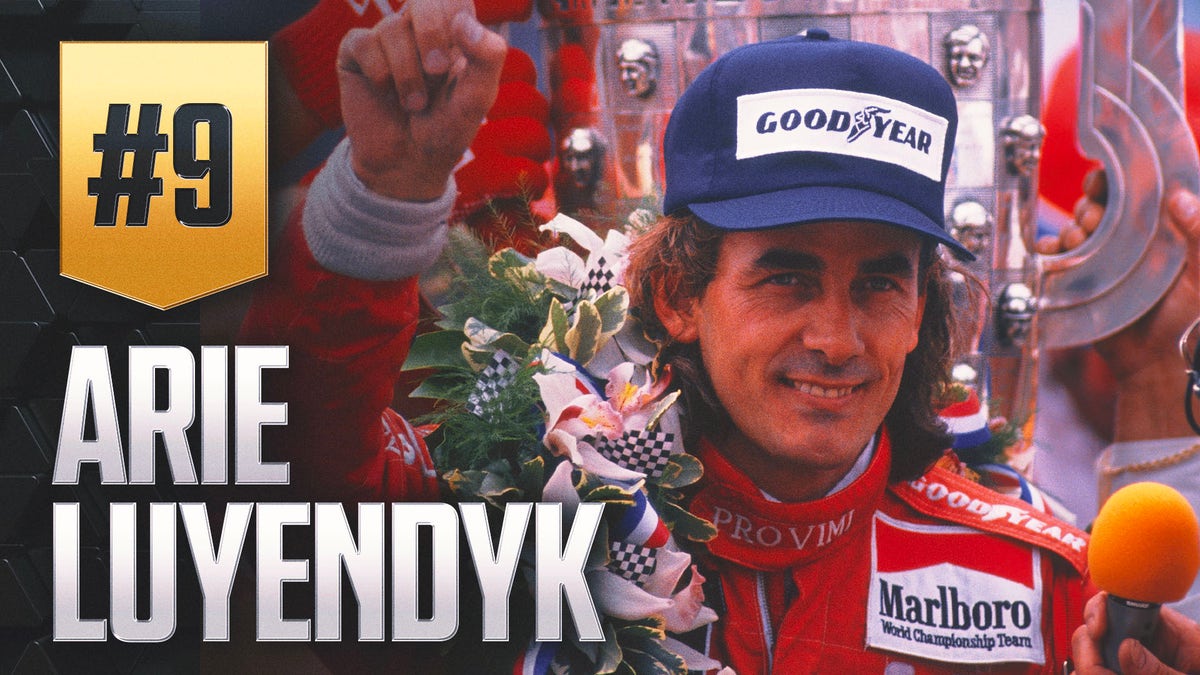
Luyendyk won the Indy 500 twice, but it was a mixed bag overall. He raced in the event every year from 1985 to 2002 and withdrew in 2003, but he finished outside the top 10 in 10 different races. Still, few can match the success he found, with seven top-10 finishes at Indianapolis Motor Speedway.
8. Louis Meyer
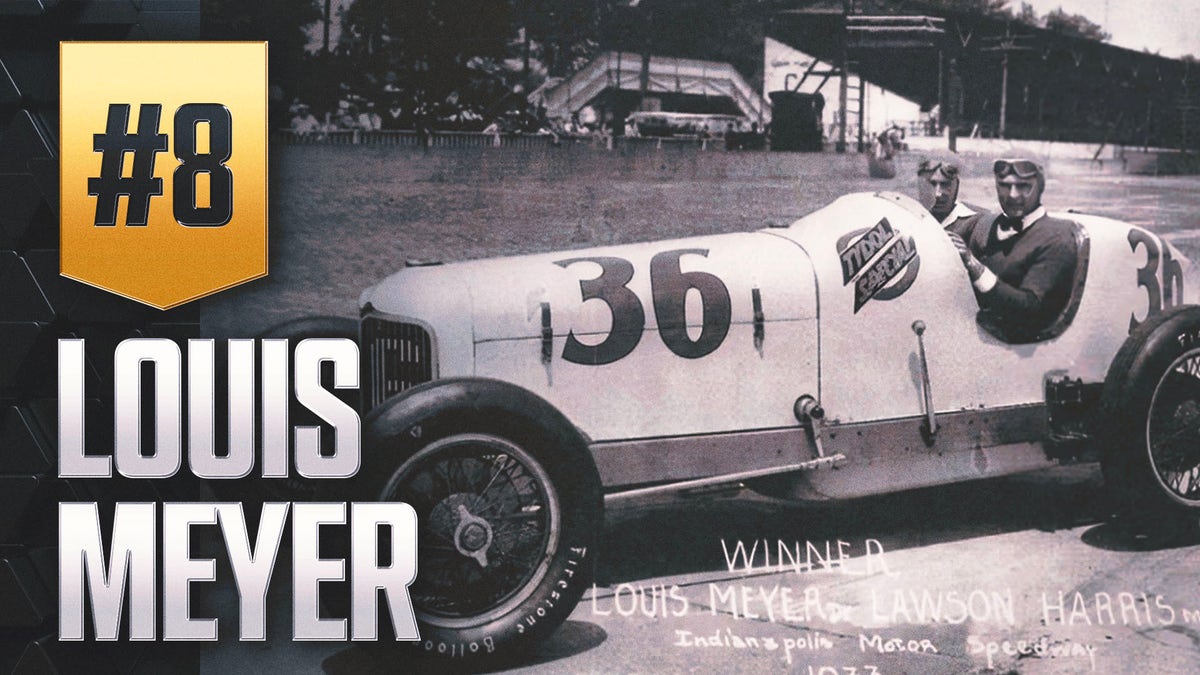
The first three-time winner in the race’s history, Meyer is one of the top drivers who isn’t talked about nearly enough. He had a truly remarkable race in 1936, becoming just the second racer in history — and last — to win the Indy 500 from a starting position of 28th or lower. Meyer grabbed first and second, respectively, in his first two tries in Indianapolis.
7. Bobby Unser
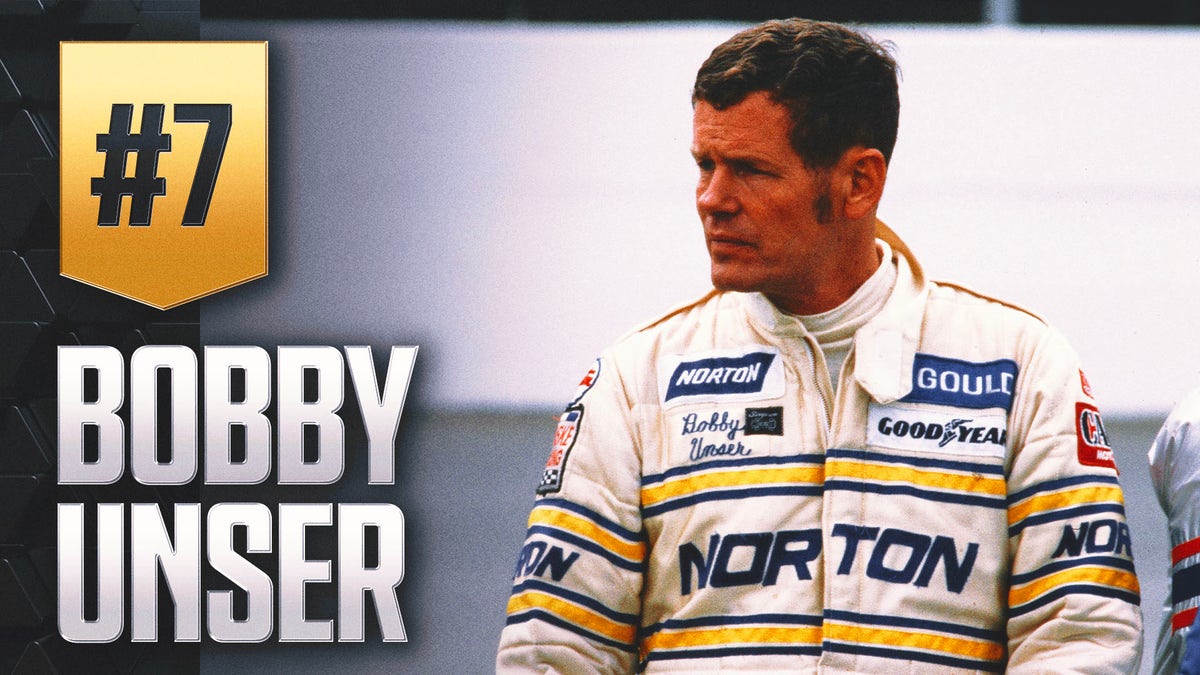
It’s not how you start, it’s how you finish. Never has that been more true than with Unser, who had just one top-10 finish in his first four tries at Indy. However, Unser would eventually win the Indy 500 three times (1968, 1975 and 1981). In his last four starts, he had three top-six finishes, including winning the event on his last time at the track at age 47.
6. Johnny Rutherford
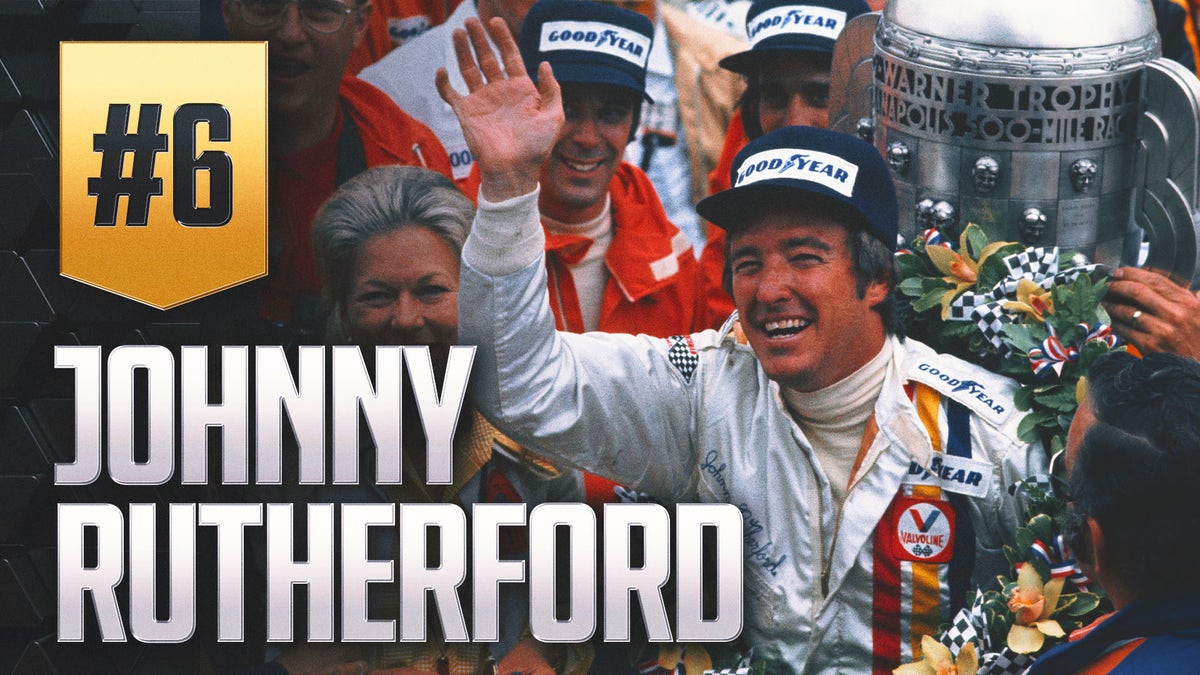
Another three-time Indy 500 winner, Rutherford claimed his victories between 1974 and 1980. Rutherford had a bit of a slow start to this race, finishing 18th or lower in each of his first nine times at the track. He then turned in four straight top-10 finishes, including winning in 1974 and 1976 and grabbing second in 1975.
5. Wilbur Shaw
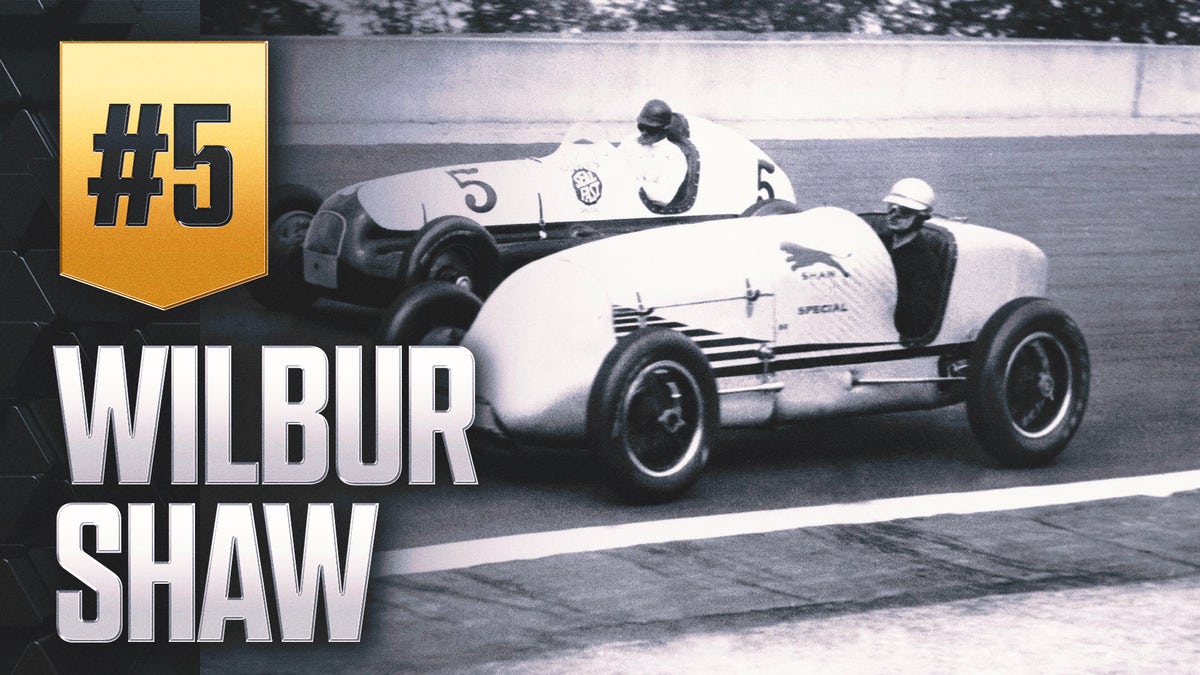
As good as Rutherford’s three-year stretch was, Shaw one-ups him with his bonkers four-year run. From 1937 to 1940, Shaw placed first, second, first and first. A run like that automatically vaults you into the top five in the history of the Indy 500. Before that, it had been an up-and-down race for Shaw, but you cannot overlook just how dominant he was overall, with three victories and seven top-five finishes.
4. Helio Castroneves
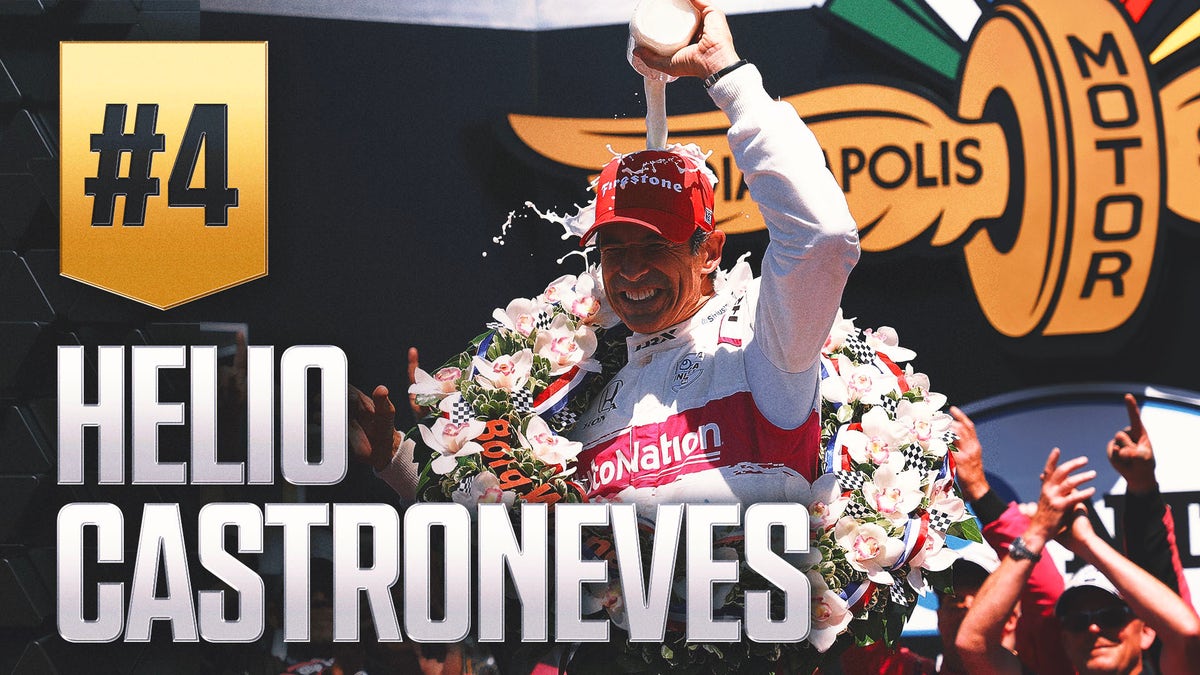
Castroneves is the first of four drivers on this list tied for the most wins (four) at the Indy 500. He earned his most recent victory in 2021, while his previous three wins came between 2001 and 2009. He’s also one of just six drivers to claim back-to-back Indy 500 victories, doing so in 2001 and 2002. Perhaps the most remarkable part of his driving career at IMS is the fact that he owns the record for the longest span between his first and last win — 20 years.
3. Al Unser Sr.
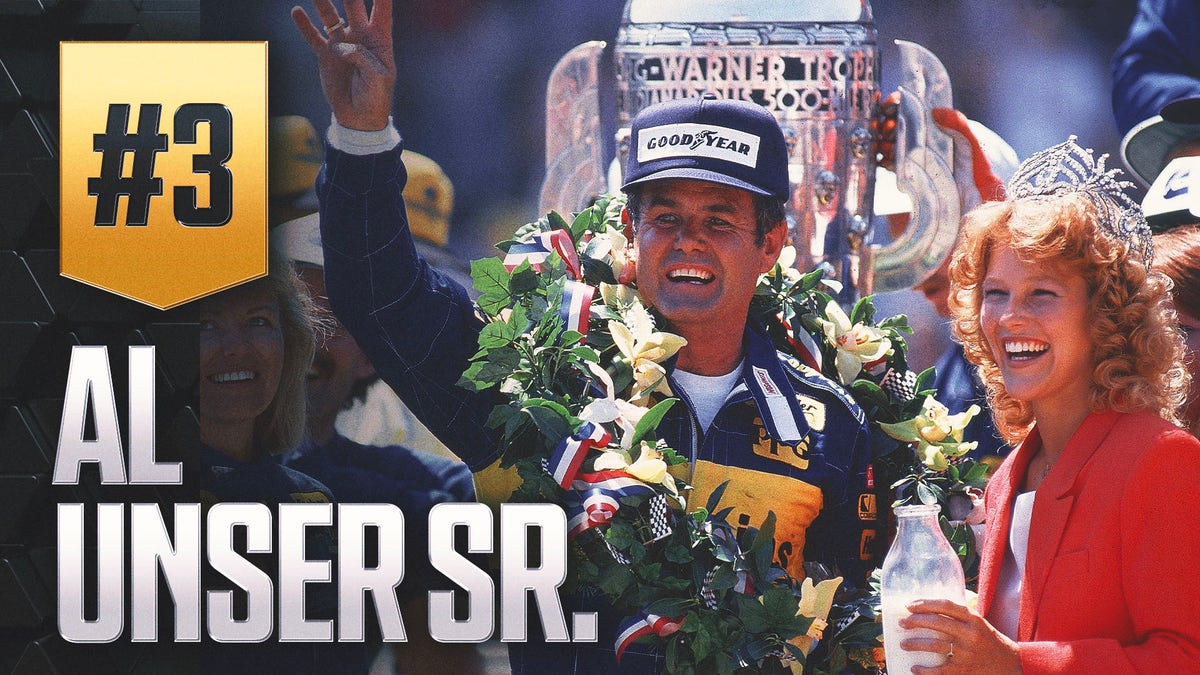
Unser isn’t just tied for the most Indy 500 wins, claiming his four in 1970, 1971, 1978 and 1987. He’s also the oldest winner ever at 47 years, 360 days old, slightly edging out his brother, Bobby. In his second-to-last race at IMS in 1992, Unser finished in third, while his son, Al Unser Jr., was the winner.
2. A.J. Foyt

Foyt is undoubtedly deserving of one of the top spots on this list as the first four-time winner in the race’s history, finishing in first place in 1961, 1964, 1967 and 1977. Most impressive about his career in Indy, though, is that Foyt has the most starts there of any driver (35), including racing in every single one from 1958 to 1992.
1. Rick Mears
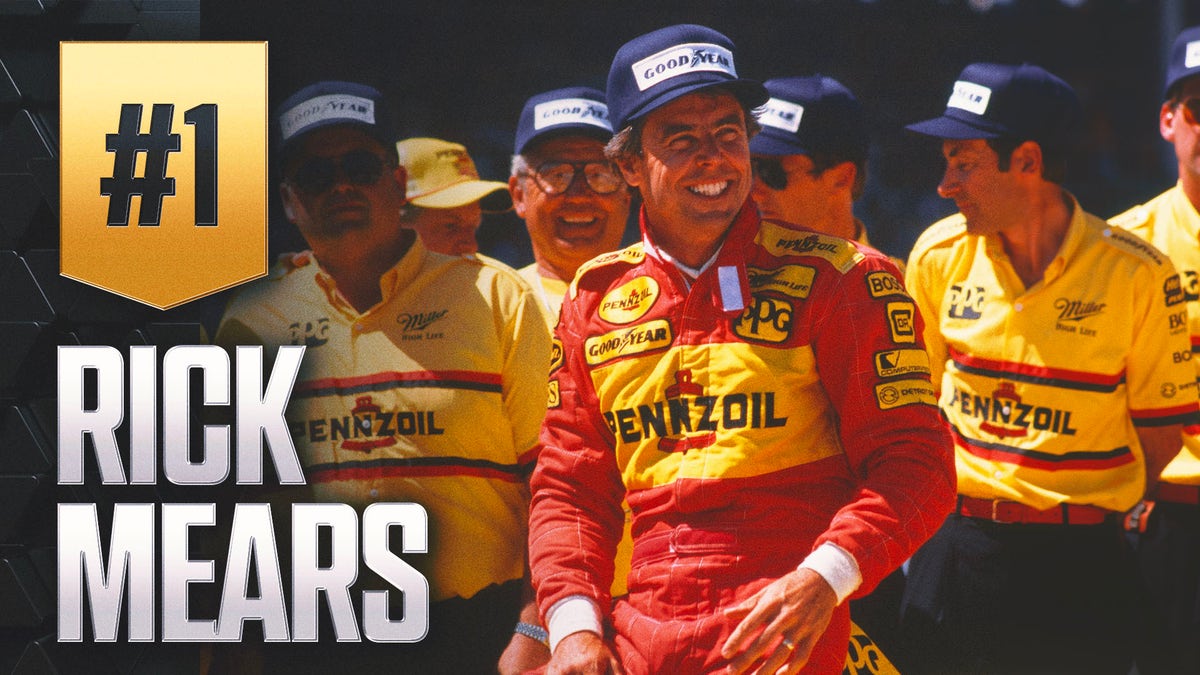
The other driver tied for the most wins at IMS, Mears dominated in Indy. He started 11 times on the front row, with six of those times coming consecutively from 1986 to 1991 — both of which are records at the track. He has also claimed a record six pole positions at the event and is one of just 12 racers to earn back-to-back pole positions.
Check out all of our Daily Rankers.


NASCAR’s Truck Series and O’Reilly Autoparts Series honor Kyle Busch with moments of silence at Charlotte

Kyle Busch’s iconic No. 18 will appear in the Indianapolis 500 in tribute to late driver
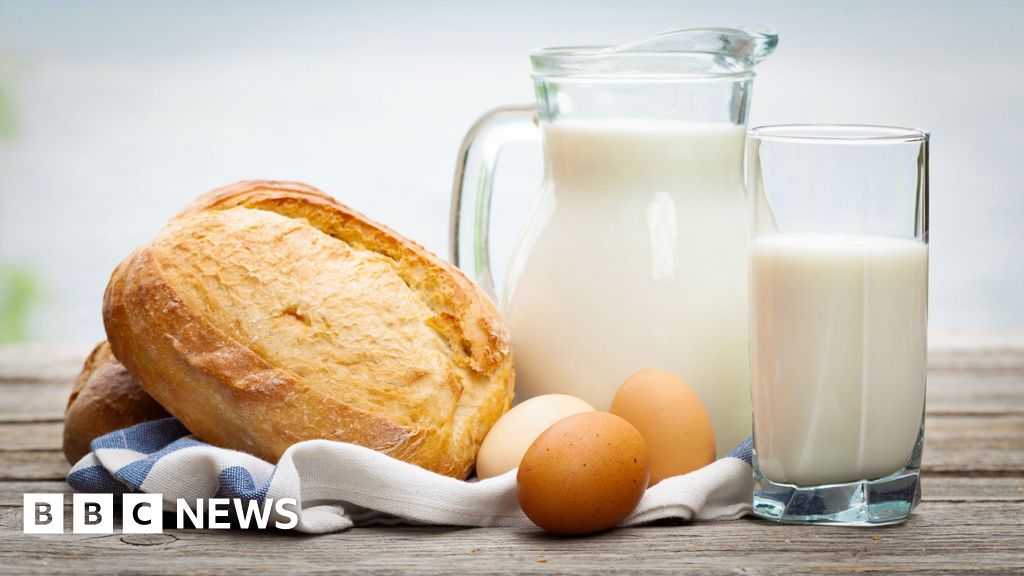
Why essentials like eggs, bread and milk cost so much more now

-

 Entertainment1 week ago
Where Pete Davidson, Elsie Hewitt stand after breakup: Details revealed
-

 Entertainment1 week ago
Emilia Clarke recalls near-death incident while filming ‘Game of Thrones’
-

 Politics1 week ago
Rising diesel costs from Iran war strain US school budgets
-

 Politics1 week ago
UK’s Starmer faces survival battle as potential rivals circle
-

 Entertainment1 week ago
Drake drops highly anticipated "Iceman" album, plus two surprise albums
-

 Tech1 week ago
Greg Brockman Officially Takes Control of OpenAI’s Products in Latest Shakeup
-

 Tech7 days ago
Why Is Your Grill So Dumb? The Best Grills Set Temp Like an Oven
-
 Business1 week ago
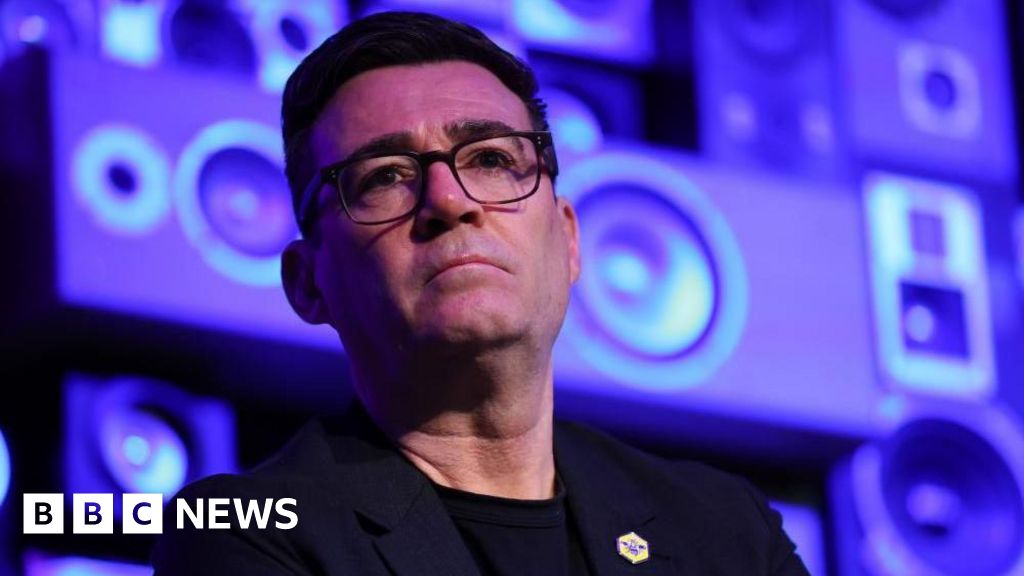
UK borrowing costs rise and pound falls as leadership drama continues