

Business
India-US trade deal: How New Delhi’s 18% tariff compares with rival nations – The Times of India

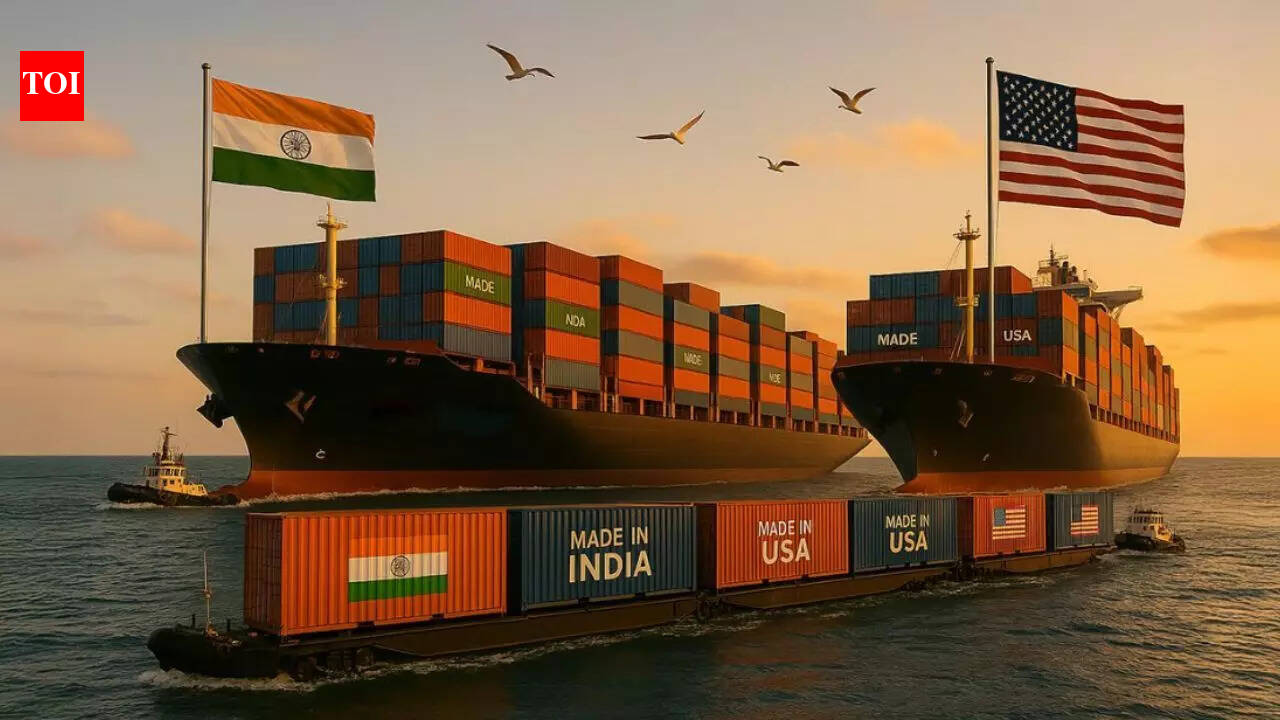
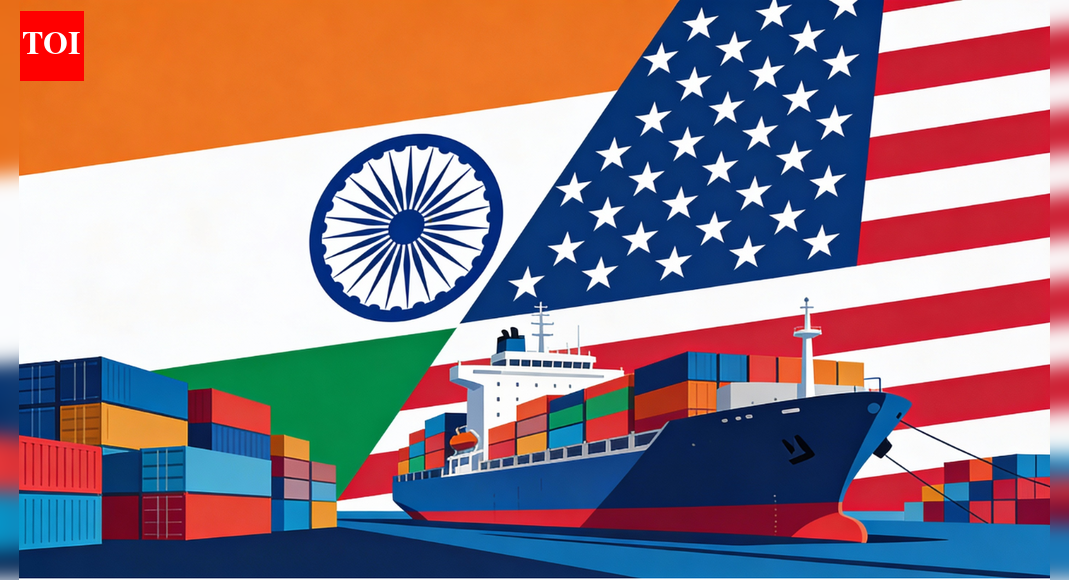
India and the United States have agreed on a framework for a bilateral trade deal under which Washington will reduce tariffs on Indian goods to 18% from the current 50%.The announcement is significant as the US had imposed steep duties on Indian exports entering American markets, effective August 27, 2025.
In August 2025, Washington announced a 25% tariff along with an additional 25% punitive duty on India for purchasing Russian crude oil and military equipment. These duties were imposed over and above existing tariffs on Indian goods. Under the new framework, the overall duty has now been brought down to 18% .Prime Minister Narendra Modi welcomed the move, saying he was delighted that “made in India products will now have a reduced tariff of 18%.”Tariffs are customs or import duties imposed by a country on goods bought from other nations.
How India compares globally
A comparison of US tariff rates across major economies places India in the middle of the global tariff spectrum, with an 18% duty on its exports.Brazil faces the steepest tariff at 50% , followed by Myanmar and Laos at 40% each. China attracts a 37% tariff, while South Africa faces a 30% levy.Several manufacturing hubs in Southeast Asia are subject to duties in the 19–20% range, including Vietnam and Bangladesh at 20% , and Malaysia, Cambodia and Thailand at 19% each.With an 18% tariff, India is now placed below most emerging-market competitors, offering it a relative pricing advantage in the US market.Advanced economies enjoy significantly lower tariffs. The European Union, Switzerland, Japan and South Korea each face a 15% duty, while the United Kingdom has the lowest rate at 10% .The reduction in tariffs is expected to benefit India’s labour-intensive sectors, as exporters will be able to price their products more competitively in the US market.
Why the US imposed tariffs
The US has argued that it faces a significant trade deficit with India, blaming New Delhi for imposing high tariffs on American goods, which it says restrict US exports to the Indian market.Under the proposed pact, India is expected to eliminate duties on certain goods immediately, phase out duties on others, reduce tariffs in some sectors, and offer quota-based tariff concessions for select products.However, sensitive sectors such as agriculture and dairy remain completely outside the ambit of the agreement, PTI reported.An executive order from the US is expected to provide greater clarity on tariff changes, while a joint statement from both countries will outline the sectors covered under the deal. Both are awaited.
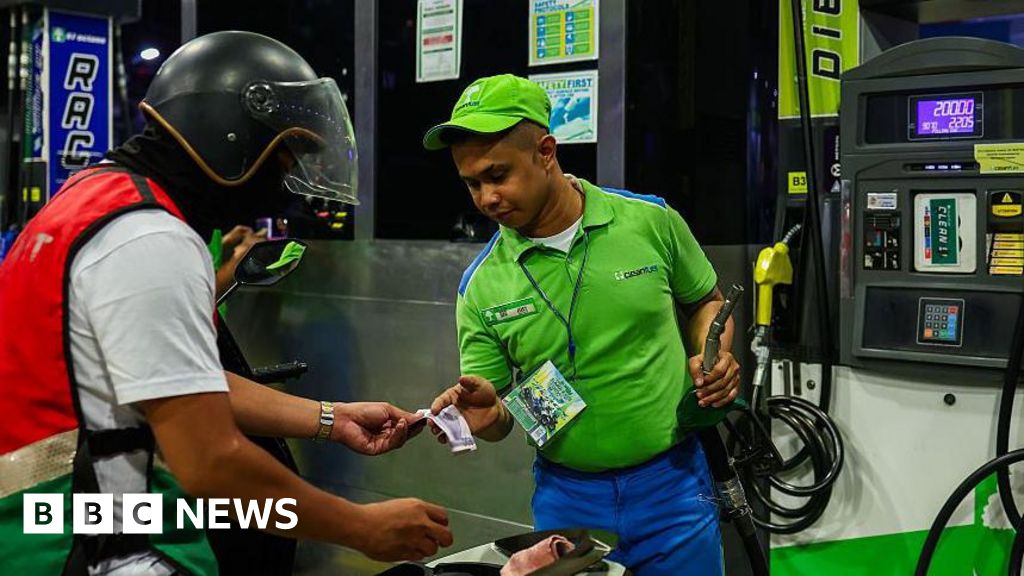
Crude rose back above $100 a barrel as the US and Iran clashed over bringing the conflict to an end.
Source link

President Donald Trump said he’s considering sending the National Guard to U.S. airports, two days after the administration deployed Immigration and Customs Enforcement agents to several major U.S. airports following hourslong waits for travelers because of the partial government shutdown.
In a Truth Social post Wednesday, Trump blamed Democrats for the shutdown, which began Feb. 14.
“Thank you to our great ICE Patriots for helping. It makes a big difference,” he wrote in his post. “I may call up the National Guard for more help.”
Travelers wait in line at a Transportation Security Administration (TSA) checkpoint at Hartsfield-Jackson Atlanta International Airport (ATL) in Atlanta, Georgia, US, on Monday, March 23, 2026.
Elijah Nouvelage | Bloomberg | Getty Images
More than 11% of TSA officers called out on Wednesday and over 450 have quit since the shutdown started, the Department of Homeland Security said.
Elevated absences of Transportation Security Administration officers, who are required to work though they’re not getting paid during the shutdown, have contributed to long lines at major U.S. airports, including in Atlanta, Houston and New York.
The DHS, which oversees both ICE and and the TSA, said the ICE agents will “support airports facing the greatest strain” but the department didn’t respond to requests for comment on what the ICE agents’ duties are. ICE agents are getting paid in the shutdown.
Airlines have been warning customers about potentially long security lines, while executives grow increasingly frustrated with lawmakers about the impasse. On Tuesday, Delta Air Lines said it suspended its airport escorts and other special services for members of Congress and their staff because of the ongoing partial shutdown of the DHS.
The shutdown comes as Democrats in Congress have demanded changes to how federal immigration enforcement operates in exchange for releasing DHS funding after two U.S. citizens were shot and killed by ICE officers in Minneapolis.

Low-income families are being offered help with the cost of food during the Easter holidays.
Source link

Oil prices volatile as Trump talks up Iran negotiations

What small businesses need to know

My Favorite Air Fryer Is at Its Lowest Price Since Black Friday

Sales at US apparel, clothing accessories stores up 4% YoY in Jan 2026

Justice Department Says Anthropic Can’t Be Trusted With Warfighting Systems

March Madness 2026 – How to watch in SA, start time, schedule, TV channel for NCAA championship basketball tournament

-
 Fashion1 week ago
Sales at US apparel, clothing accessories stores up 4% YoY in Jan 2026
-
 Tech1 week ago
Justice Department Says Anthropic Can’t Be Trusted With Warfighting Systems
-
 Sports1 week ago
March Madness 2026 – How to watch in SA, start time, schedule, TV channel for NCAA championship basketball tournament
-
 Business1 week ago
Stocks and pound rise as US rate call approaches
-

 Entertainment1 week ago
Val Kilmer revived 1 year after death through AI
-
 Business1 week ago
Brits cashing in jewellery as gold price hits record high
-

 Sports1 week ago
WBC championship: USA-Venezuela preview, live updates, analysis
-

 Tech1 week ago
Meta Is Shutting Down Horizon Worlds on Meta Quest