

Business
`Indian pharma must balance generics with innovation’ – The Times of India


NEW DELHI: India’s pharmaceutical industry must focus on both generics and innovative products, as well as develop products specially tailored for the country’s patient needs. Domestic companies particularly smaller to mid-sized players can carve out a strong role in rare diseases and niche patient segments, where agility and specialised research can drive meaningful breakthroughs, pharma leaders said at India Pharma 2026 on Tuesday. “Given India’s vast and diverse disease burden, this approach is necessary. At the same time, building a parallel market for reimbursement of innovative therapies through insurance, government support, or alternative financing models, will be critical to ensure that breakthrough treatments are developed’’, Pankaj Patel, past president, Ficci and chairman, Zydus Lifesciences, said. Elaborating on the long-term vision of developing 100 new drugs by 2047, he said, would require a significant increase in research and development investment from the current 6–7% of turnover to 12–15%. Further, the Research Development Innovation (RDI) fund expected to get operationalised this year with the recent appointment of two fund managers including BIRAC, could be pivotal. Announced last year as a Rs 1 lakh crore scheme, and anchored by the Department of Science and Technology and operationalised through the Anusandhan National Research Foundation (ANRF), the initiative is expected to be rolled out this year with the appointment of two fund managers. Shivkumar Kalyanaraman, chief executive officer, ANRF, outlined the evolving research funding architecture, noting that it combines grant-based support for academia and not-for-profit institutions with capital-based instruments for the private sector. Anirudh Roy Popli, partner, McKinsey, emphasized that investments in innovation can yield up to fourfold returns, making a strong case for scaling funding across the ecosystem. Further, Sunil Thakur, Partner and IC Member, Quadria Capital and Co-founder, HealthQuad, pointed out that despite strong fundamentals, the lack of deep risk capital and a robust exit ecosystem remains a critical constraint for scaling pharmaceutical innovation in the country.

People with lower incomes benefitted less from the house-buying scheme than those with high incomes, the influential think tank says.
Source link
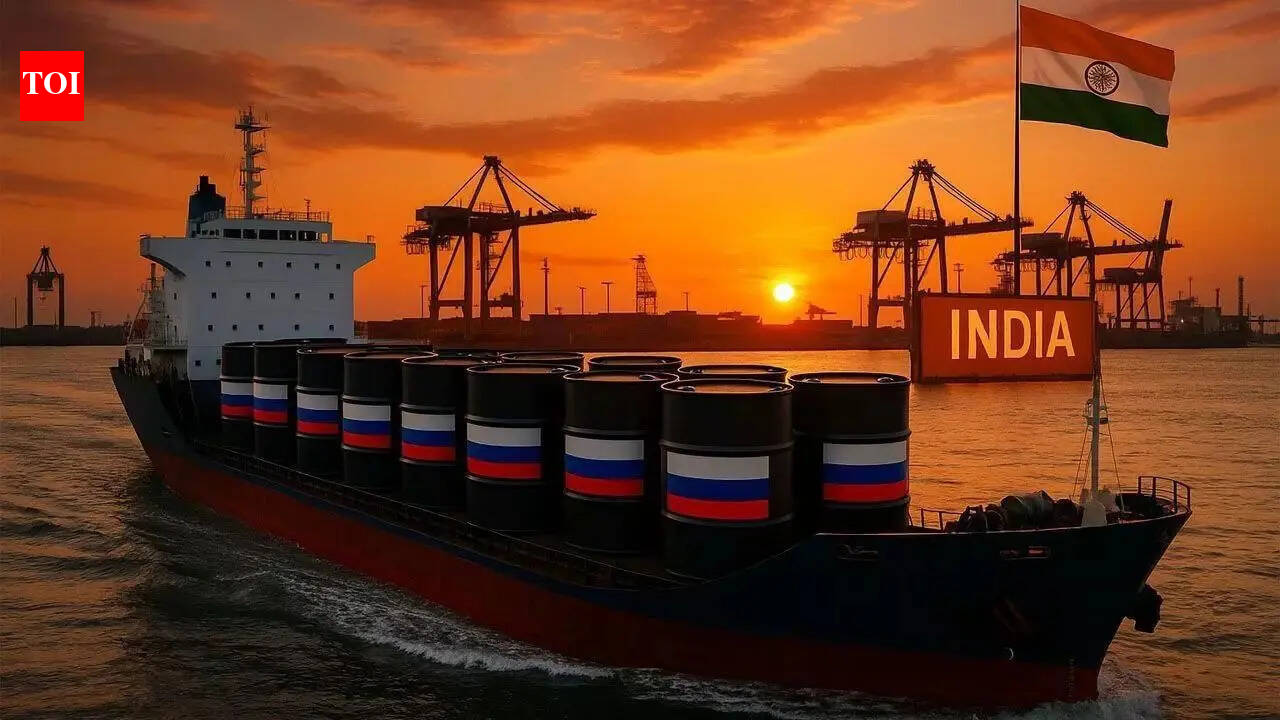
NEW DELHI: India’s crude imports from Russia surged in March, with purchases at nearly Rs 5.3 billion (about $6.2 billion) compared with Rs 1.4 billion ($1.6 billion) the previous month, amid the military conflict in West Asia and closure of the Strait of Hormuz.In its latest analysis of Russian fossil fuel exports and sanctions, Centre for Research on Energy and Clean Air (CREA) said India imported Rs 5.8 billion worth of Russian hydrocarbons in March – the second-highest after China – as both volumes and prices increased. Crude accounted for 91% of imports, followed by coal and oil products.The report added India’s total crude imports fell 4% in March, but those from Russia rose four times.
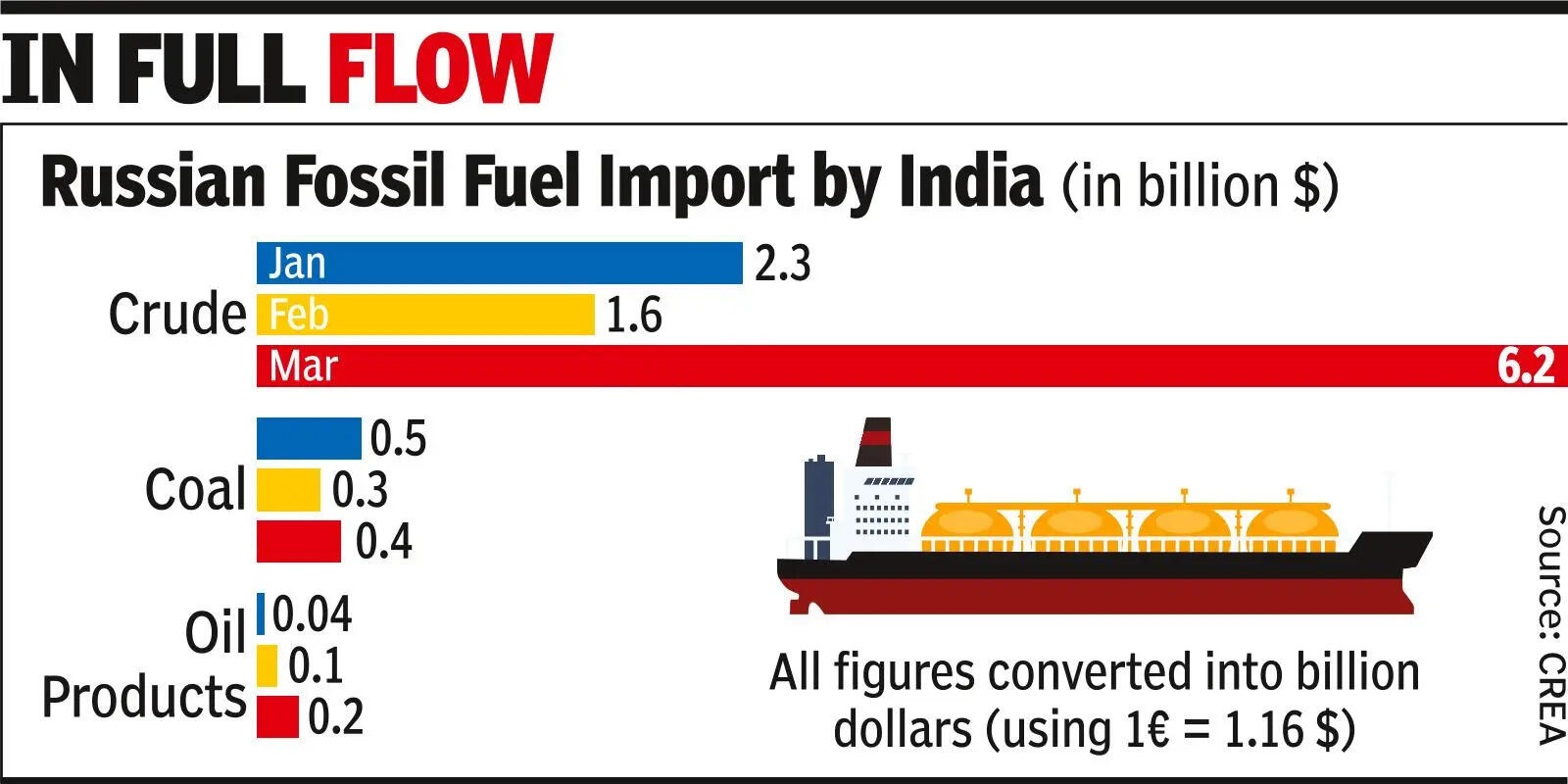
State Refiners Largest Buyers Of Russian Fuel
“The biggest shift was in state-owned refineries’ imports from Russia, which saw a massive 148% month-on-month increase. Their imports were in fact 72% higher than in March 2025, presumably due to Russian barrels being more available in the spot market,” it said. Private refineries registered more than 66% month-on-month increase.In Feb, India was the third-largest importer of Russian hydrocarbons after China and Turkiye, with purchases valued at Rs 1.8 billion and crude accounting for nearly 81% (Rs 1.4 billion) of shipments. The value and volume of imports, however, may differ. Russian Urals were earlier available to India at a discount, but prices surged due to the closure of Hormuz.Though India has been importing Russian barrels in large volumes over the past four years, shipments dipped in Jan and Feb before surging again in March after the US granted a one-month sanctions waiver to ease prices.

US president Donald Trump has said “Aberdeen should be booming” as he said the UK Government is “absolutely crazy” not to boost oil and gas extraction in the North Sea.
Mr Trump took to his Truth Social page on Tuesday to criticise UK policy in the basin, with the Labour-led Government moving towards renewable energy.
In the seemingly unprompted post, the US leader said: “Europe is desperate for Energy, and yet the United Kingdom refuses to open North Sea Oil, one of the greatest fields in the World. Tragic!!!
“Aberdeen should be booming. Norway sells its North Sea Oil to the U.K. at double the price. They are making a fortune. U.K., which is better situated on the North Sea for purposes of energy than Norway, should, DRILL, BABY, DRILL!!!
“It is absolutely crazy that they don’t… AND, NO MORE WINDMILLS!”
The US president has long voiced his dislike of wind energy, particularly offshore wind, having launched a battle with the Scottish Government to stop a development which was visible from his Aberdeenshire golf course.
His comments are the latest in a line of outbursts about the UK’s energy policy, including a Truth Social post where he urged the Government to “incentivise the drillers”.
Scotland’s First Minister John Swinney said he did not agree with Mr Trump.
He said during Channel 4’s Holyrood election debate: “I don’t agree with President Trump about drill, baby, drill.
“I think we’ve got enormous challenges about energy but Scotland is an energy-rich country which is developing formidable renewable energy resources.”
Mr Swinney said “the problem for Scotland” was “the same problem we had in the 1970s with oil”.
“We don’t see the economic benefit of the energy wealth of Scotland, and I want to make sure Scotland’s energy is in Scotland’s hands,” he said.
Scottish Labour leader Anas Sarwar criticised the US president for trying to “dictate” to Scotland but said the Rosebank and Jackdaw oil fields should be allowed to open.
Malcolm Offord, Reform UK Scotland leader, said he agreed with Mr Trump, while the Scottish Greens said new oil exploration was “not compatible” with the climate crisis.
A spokesperson for the UK Government’s Department for Energy Security and Net Zero said: “We are taking action to bear down on the cost of living, including taking £117 off average energy bills this month and supporting de-escalation in the Middle East.
“The lesson of yet another fossil fuel crisis is the UK needs to get off the fossil fuel rollercoaster and on to clean homegrown power we control.”
A Freedom of Information (FOI) request to the North Sea Transition Authority (NSTA) by the Press Association revealed that there were 351 Seaward Production Licences in force in the UK Continental Shelf as of March 4.
An NSTA letter to the Environmental Audit Committee in September 2022 set out that from 2004 onwards, the average time from licence award to production is approximately five years – including both old and new discoveries.


Liverpool’s star power can’t match PSG’s in Champions League

ASEAN+3 nations must safeguard fiscal viability, rebuild buffers: AMRO
[CinePlex360] Please moderate: “Lamar Odom shockin

-

 Fashion1 week ago
India’s exports face reset as EU links trade to carbon metrics: EY
-

 Entertainment7 days ago
Queen Elizabeth II emotional message for Archie, Lilibet sparks speculation
-

 Tech6 days ago
As the Strait of Hormuz Reopens, Global Shipping Will Take Months to Recover
-

 Entertainment1 week ago
Lamar Odom shocking response to Khloé Kardashian account of his overdose
-

 Tech7 days ago
Azure customers up in arms over ‘full’ UK South region | Computer Weekly
-

 Fashion7 days ago
CII submits 20-pt agenda to Indian govt to back firms hit by Iran war
-

 Tech6 days ago
This AI Button Wearable From Ex-Apple Engineers Looks Like an iPod Shuffle
-

 Tech1 week ago
A Single Strike Won’t Shut Off the Gulf’s Desalination System