

Business
Indian Railways 2nd largest Freight-Carrying Rail Network In World: Minister

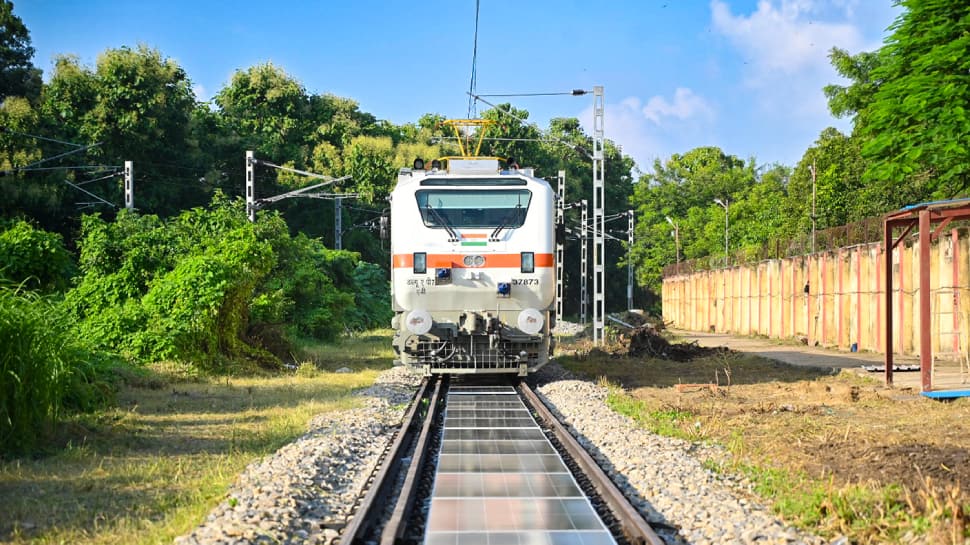
New Delhi: The government has informed that freight loading increased from 1,233 million tonnes (MT) in 2020-21 to 1,617 MT in 2024-25, making Indian Railways the second-largest freight-carrying rail network in the world.
To keep the freight rate competitive, the freight rates have not been revised since 2018 despite increase in input cost over the years, according to Union Minister Ashwini Vaishnaw.
“Passenger fares have been rationalised from July 1, 2025 after a gap of more than 5 years. The increase in fares is very low, ranging from half paise per km to two paise per km for premium classes,” said Vaishnaw in replies to questions in Lok Sabha.
Among key measures for affordable passenger fares are no increase in general class up to 500 km and, thereafter, half paisa increase in fare per passenger per km; half paisa increase in fare per passenger per km in Sleeper Class Ordinary and First-Class Ordinary; 01 paisa increase per passenger per km in Non-AC classes in Mail Express; and 02 paisa increase per passenger per km in reserved AC-Classes.
To maintain affordability for low and middle-income families, the fares for MST (Monthly Season Ticket) and Suburban travel have not been revised, the minister informed.
Indian Railways has also taken several measures to enhance the freight loading and revenue, which include:
To increase the network capacity, rail network expansion has been taken up in a big way by the construction of new lines, multi-tracking of existing lines and gauge conversion of existing lines.
“Further, as on 01.04.25, there are 431 (154 New Line, 33 Gauge Conversion and 244 Doubling) projects sanctioned,” the minister informed.
Indian Railways has taken up the electrification of Railway lines in a mission mode. So far, about 99.1 per cent of the Broad Gauge (BG) network has been electrified.
To increase freight carrying capacity, large numbers of IR wagons have been procured and locomotives have been manufactured. During 2014 to 2025, about 2 lakh wagons have been procured and more than 10,000 locomotives have been added to increase freight loading and mobility.





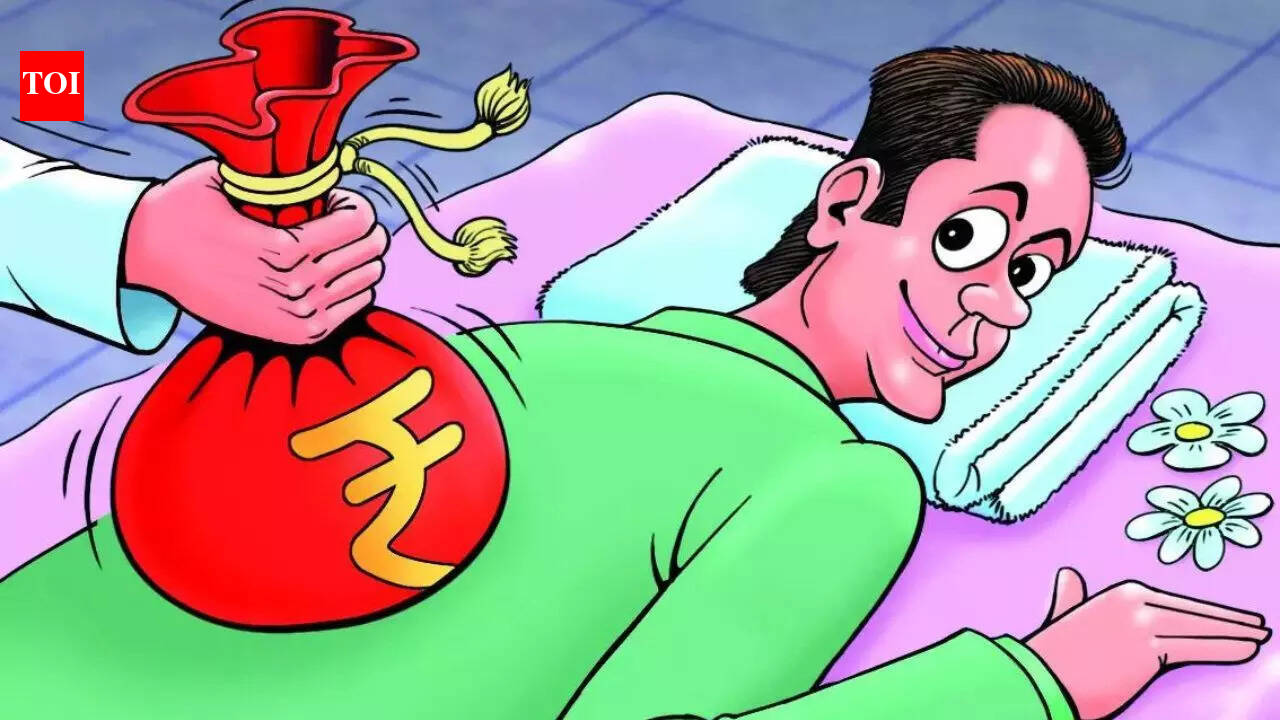
At a time when global markets are witnessing high volatility due to geopolitical uncertainties, the hike in securities transaction tax (STT) on derivatives trades hit investor sentiment on Dalal Street on the Budget day. This in turn led to a sharp sell-off that pulled the sensex down by nearly 1,500 points—its biggest points loss on a Budget day—to close at 80,773 points. The sell-off also left investors poorer by Rs 9.4 lakh crore, the biggest Budget day loss in BSE’s market capitalisation.The day’s trading was marked by high volatility. The sensex rallied over 400 points as FM started her speech, fell about 1,100 points after the STT hike proposal was announced, partially recovered by mid-session to trade 600 points down on the day and then sold-off to close below the 81K mark for the first time in four months.On the NSE, Nifty too treaded a similar path to close 495 points (2%) lower at 24,825 points. Fund managers and market players feel the day’s sell-off was overdone, compounded by the absence of most institutional players since it was a Sunday. “The market’s reaction (to the hike in STT rates) was a bit overdone, although the decision itself was unexpected,” said Taher Badshah, President & Chief Investment Officer, Invesco Mutual Fund. “I think markets should settle down in 2-3 days.” Badshah said the Budget was in line with govt’s set path of the past few years, showing a conservative approach to setting targets.“The revenue and expenditure targets for FY27 are achievable. And since the rate of inflation is lower now, the nominal GDP growth rate of 10% may turn out to be on the higher side as inflation normalises during the year,” the top fund manager said. In Sunday’s market, of the 30 sensex stocks, 26 closed in the red. Among index constituents, Reliance Industries, SBI and ICICI Bank contributed the most to the day’s loss. Buying in software services majors Infosys and TCS cushioned the slide. In all, 2,444 stocks closed in the red compared to 1,699 that closed in the green, BSE data showed.STT hike aimed at curbing F&O speculation The decision to raise securities transaction tax (STT) for trading in equity derivatives means trading futures & options (F&O) will be more expensive from April 1. STT on futures trading rises from 0.02% to 0.05% now, and on options premium and exercise of options to 0.15% from 0.1% and 0.125% respectively. This could more than double statutory costs of trading F&O contracts.While the move is to curb excessive speculation by retail traders who mostly suffer losses, investors sold stocks of those companies that derive a large portion of their turnover from this segment. Stock price of Angel One crashed nearly 9%, BSE crashed 8.1%, Billionbrains Garage Ventures that runs the Groww trading platform, lost 5.1% and Nuvama Wealth Management lost 7.3%. STT hike follows a Sebi survey that showed that 91% of the retail investors lost money in the F&O market with average loss per investor surpassing Rs 1 lakh per year. Institutional and some high net worth players took home most of the profits from the segment.18% GST on brokerage for FPIs removedThe Budget proposed to do away with 18% GST charged on the brokerage that foreign portfolio investors pay in India. Among the host of changes to the GST laws that the finance minister proposed, one was abolishing clause (b) of sub-section (8) of section 13 of the Integrated Goods and Services Tax Act, 2017. This is being “omitted so as to provide that the place of supply for ‘intermediary services’ will be determined as per the default provision under section 13(2) of the IGST Act,” the Budget proposal said.

Buying property from an NRI? Worried about obtaining TAN? Not anymore. To relax the compliance burden, the Budget has proposed that resident individuals and HUFs need not have a Tax Deduction and Collection Account Number (TAN) if they are purchasing a property from a non-resident Indian (NRI). The amendment will take effect from Oct 1, 2026.Under the proposed framework, resident individuals or HUFs can report the tax deducted at source (TDS) by quoting PAN, as is done when the transactions are between two residents. Presently, if a person buys an immovable property from a resident seller, the person is not required to obtain TAN to deduct tax at source. However, where the seller of the immovable property is a non-resident, the buyer is required to obtain TAN to deduct tax at source.Ameet Patel, partner at Manohar Chowdhry & Associates, said this used to be a detailed process. “At present, if a resident were to purchase an immovable property from an NRI, there is no separate relaxation regarding compliance with TDS responsibilities. As a result, in such cases, the buyer needs to obtain a TAN, register on the portal, and then deduct TDS u/s. 195, and pay to the govt. Under section 195, as with all other regular TDS sections, a quarterly e-TDS statement is required. A buyer would need professional help for all this.”Hinesh Doshi, CA, welcomed the move. “There used to be an unnecessary compliance burden due to this. While the process to obtain TAN is simple, people used to obtain TAN for just one transaction. So, this is a good riddance.”

The former One Direction member-turned-solo artist appears on the Sunday Times list for the first time.
Source link


2026 NBA All-Star: Biggest surprises and snubs as full rosters revealed

Kennedy Center to close for construction for 2 years, Trump says
D-St blues! Sensex sheds 1.5K, biggest drop on a Budget day – The Times of India

-

 Sports5 days ago
PSL 11: Local players’ category renewals unveiled ahead of auction
-

 Entertainment5 days ago
Claire Danes reveals how she reacted to pregnancy at 44
-

 Fashion1 week ago
Spain’s apparel imports up 7.10% in Jan-Oct as sourcing realigns
-
 Business6 days ago
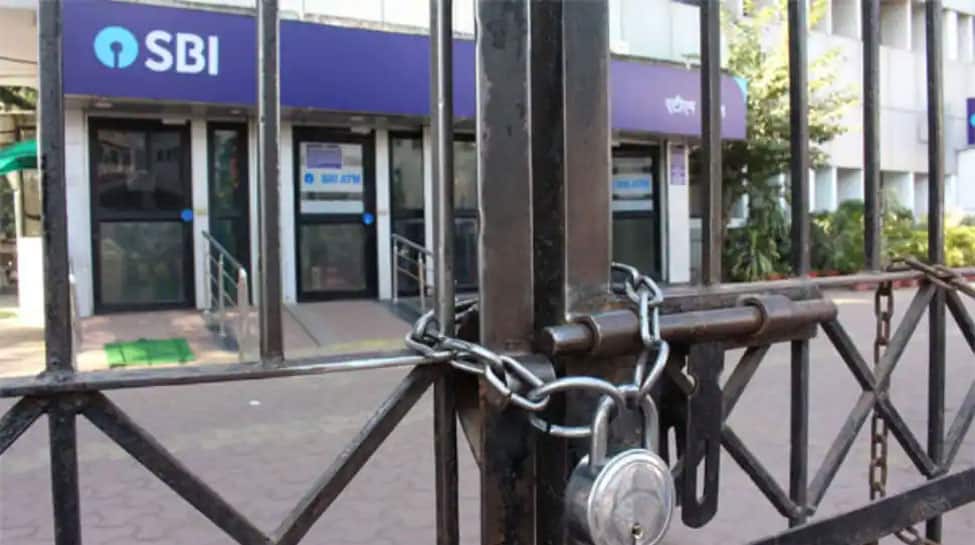
Banking services disrupted as bank employees go on nationwide strike demanding five-day work week
-

 Tech1 week ago
ICE Asks Companies About ‘Ad Tech and Big Data’ Tools It Could Use in Investigations
-

 Sports5 days ago
College football’s top 100 games of the 2025 season
-

 Sports1 week ago
Barcelona deny Madrid another trophy, but the gap is closing
-

 Politics1 week ago
Fresh protests after man shot dead in Minneapolis operation