

Fashion
Mo’ Afrique commissions garment factory in Abuja

It also launched the Modish Scholars Initiative to provide uniforms to underprivileged children in public schools.
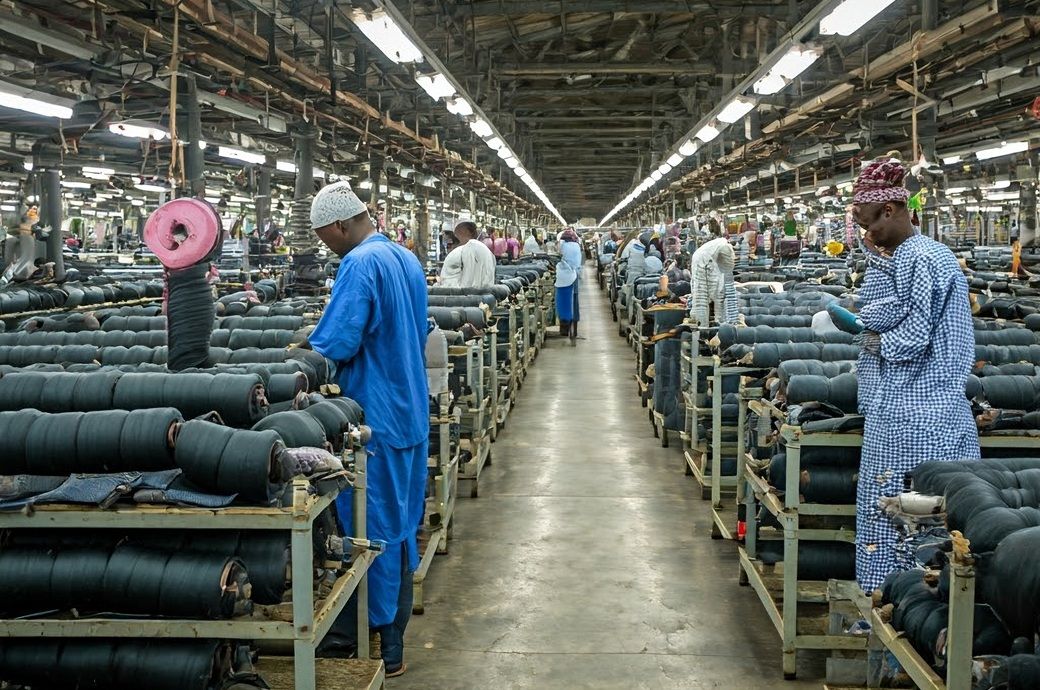
Fashion brand Mo’Afrique recently commissioned a multi-million-dollar garment factory in Nigeria’s capital Abuja as it launched the Modish Formal garments brand.
It also launched the Modish Scholars Initiative to provide uniforms to underprivileged children in public schools.
The factory marks a strategic shift from luxury fashion into industrial-scale manufacturing.
The development reflects the Nigerian government’s industrialisation agenda, Minister of Industry, Trade and Investment Jumoke Oduwole, said at the launch event, stressing that the scale must translate into competitiveness, jobs and exports.
The administration is prioritising policies to support manufacturers, while leveraging regional trade opportunities, she was cited as saying by domestic media outlets.
The factory marks a strategic shift from luxury fashion into industrial-scale manufacturing.
The facility is designed for high-volume production targeting institutional buyers including the military, paramilitary agencies, schools and corporate bodies.
Fibre2Fashion News Desk (DS)













The Federal Open Market Committee voted to hold the benchmark funds rate in a range between 3.5-3.75 per cent.
The committee seeks to achieve maximum employment and inflation at 2 per cent rate over the longer run.
The US Federal Reserve (Fed) has left its benchmark interest rate unchanged for the third meeting in a row amid a solid expansion of economic activity, persistent inflation, low job gains, and little change in unemployment rate in recent months.
Developments in the Middle East are contributing to a high level of uncertainty about the economic outlook.
Developments in the Middle East are contributing to a high level of uncertainty about the economic outlook, the Fed said in a press release.
Fed chair Jerome Powell, due to step down in mid-May, told a press conference that he plans to continue to serve on the board of governors until an investigation of the Fed is “well and truly over with transparency and finality.” He may remain governor until 2028.
Fibre2Fashion News Desk (DS)

A high-level Chinese delegation held talks with the Bangladesh Garment Manufacturers and Exporters Association (BGMEA) to explore foreign direct investment (FDI) and technology collaboration in Bangladesh’s textile sector, with a focus on man-made fibres, synthetic textiles, and advanced processing.
A Chinese delegation met BGMEA to explore foreign direct investment (FDI) and technology partnerships in Bangladesh’s textile sector, focusing on MMF, synthetic fibres and technical textiles.
Bangladesh highlighted its $8–9 billion fabric import market as a key opportunity.
Talks also covered sustainability, training and B2B linkages to boost sector modernisation.
The delegation included senior representatives from the China National Textile and Apparel Council (CNTAC) and the China Dyeing and Printing Association (CDPA), along with leaders from major dyeing, printing, finishing, and chemical firms. The meeting took place at the BGMEA Complex and was led by BGMEA President Mahmud Hasan Khan, alongside senior office-bearers and directors.
Discussions centred on expanding cooperation, particularly China’s role in supporting technological modernisation of Bangladesh’s textile industry. Khan described China as a key long-term partner and urged Chinese companies to invest in high-growth segments such as MMF and technical textiles. He highlighted Bangladesh’s $8-9 billion annual woven fabric import market as a significant opportunity for investors.
He also encouraged Chinese firms to pursue investments independently or through joint ventures, assuring BGMEA’s full support. Additionally, he pointed to benefits under the Bangladesh–Japan Economic Partnership Agreement, which could enable duty-free exports to Japan for Chinese-backed ventures based in Bangladesh.
Technology transfer was a major focus, with calls for regular training and knowledge-sharing in areas such as digital printing and synthetic fabric processing. Sustainability was also discussed, with Bangladesh seeking to leverage China’s expertise in eco-friendly dyeing and finishing technologies.
To strengthen business linkages, the Chinese delegation was asked to share company profiles and production capacities to facilitate B2B engagement with BGMEA members. The visiting team also toured several local dyeing and printing units during their visit.
Both sides reaffirmed their commitment to deepening collaboration, aiming to drive sustainable growth and long-term development in the textile and garment sectors.

One of the first visible changes arrives with the EU’s ban on the destruction of unsold textiles, taking effect on 19 July 2026, less than three months from now, for large companies under the Ecodesign for Sustainable Products Regulation (ESPR). While the rule focuses on what happens to unsold goods, its implications reach much further upstream. Brands facing restrictions on overproduction now have an immediate commercial incentive to improve demand planning, tighten order volumes, increase inventory accuracy, and reduce discrepancies across the supply chain. As a result, data quality and traceability at the production level are becoming a matter of regulatory compliance, not just operational efficiency.
EU rules are shifting sourcing from certificates to data-driven verification.
ESPR and upcoming Digital Product Passports demand structured, traceable product data.
Factories offering real-time, item-level visibility gain a clear edge over audit-based peers.
With RFID adoption still limited, early movers can strengthen competitiveness and secure future orders.
Alongside this, the EU is developing the Digital Product Passport (DPP) framework, which will introduce structured data requirements for products placed on the EU market. Textiles are a priority category, with specific delegated acts and implementation timelines expected to be finalised in the near future. This follows the Omnibus I Directive, which already entered into force in March 2026. While the final DPP requirements are still being defined, the direction is clear: Standardised product data, greater supply chain transparency, and the ability to share information across systems and stakeholders.
This regulatory direction is already influencing how brands evaluate suppliers. According to a recent EcoVadis study, sustainability clauses in supplier contracts are evolving into enforceable governance tools. Traditional compliance tools such as certifications and audit reports remain important, but they are no longer sufficient on their own. They are increasingly complemented by expectations around digital data availability, traceability across production stages, and structured formats that integrate into brand systems.
In practice, digital traceability is not about a single technology, but about combining several elements: Unique product identifiers such as QR codes, RFID, or NFC; data capture at key production and logistics stages; and platforms that structure and share this data across the value chain. Together, these elements enable products to carry a digital identity that links physical items to their associated information.
This is where factory-level infrastructure becomes increasingly important. Solutions such as SML’s Factory Care Solutions (FCS) are designed to capture production data at source, enable on-demand RFID encoding and labelling, validate shipments, and reduce discrepancies. They create a reliable data foundation during manufacturing.
Importantly, these solutions do not replace a brand’s Digital Product Passport system; Rather, they act as the essential data capture and verification layer that feeds into DPP platforms and brand systems.
“Factories have always been evaluated on their ability to meet quality and compliance standards,” says Nanna Ingemann Dalsgaard, VP Sustainability, Digital ID & Marketing at SML Group. “What’s changing now is that brands increasingly expect that compliance to be backed by structured, verifiable data. The factories that can provide that data seamlessly are not just meeting requirements – they are making it easier for brands to operate in a more regulated environment.”
To see the commercial impact of this shift in action, consider two factories competing for a Spring/Summer 2027 order. Both hold the same sustainability certifications. However, Factory A submits quarterly audit summaries by email, while Factory B provides real-time, item-level digital traceability for every garment, verifiable through RFID. By delivering the seamless data Nanna describes, Factory B transforms a regulatory baseline into a decisive operational advantage, making it the obvious choice for the brand.
At the same time, adoption of item-level digital identification is still far from universal. According to IDTechEx, RFID tagging currently reaches only around 40 per cent of the total addressable market for apparel. This creates a significant window of opportunity for manufacturers to build capabilities ahead of regulatory deadlines, align more closely with evolving brand requirements, and strengthen their position in future sourcing decisions.
The regulatory timeline is moving fast, and the direction is consistent: More transparency, more structured data, and greater accountability across the value chain. For manufacturers, the key question is no longer whether these requirements will materialise, but how quickly they can build the capabilities needed to support them.
Certifications will continue to signal commitment. But increasingly, it is the ability to translate that commitment into reliable, shareable data that will win the order.
Note: The headline, insights, and image of this press release may have been refined by the Fibre2Fashion staff; the rest of the content remains unchanged.
Fibre2Fashion News Desk (MS)


US Fed holds interest rates unchanged between 3.5-3.75%

Mo’ Afrique commissions garment factory in Abuja

Two players ejected after scrum amid Knicks’ 50-point lead against Hawks sends referee crashing to the court

PSL 11: Hyderabad Kingsmen opt to field after winning toss against Multan Sultans

Trump administration in advanced talks for a rescue package for Spirit Airlines, source says

UK inflation accelerates after Iran war drives sharp rise in fuel prices

-
 Sports1 week ago
PSL 11: Hyderabad Kingsmen opt to field after winning toss against Multan Sultans
-
Business1 week ago
Trump administration in advanced talks for a rescue package for Spirit Airlines, source says
-
Business1 week ago
UK inflation accelerates after Iran war drives sharp rise in fuel prices
-

 Entertainment1 week ago
Anne Hathaway shares major news about ‘Princess Diaries 3’
-

 Tech1 week ago
Microsoft faces court battle in £2bn Windows Server class action | Computer Weekly
-
 Business1 week ago
Gold prices in Pakistan Today – April 23, 2026 | The Express Tribune
-

 Fashion1 week ago
Bangladesh RMG units call for allowing local FOC raw material sourcing
-

 Sports1 week ago
Transfer rumors, news: Arsenal ramp up interest in Williams