

Fashion
India’s cotton acreage, output may go up in next year: USDA

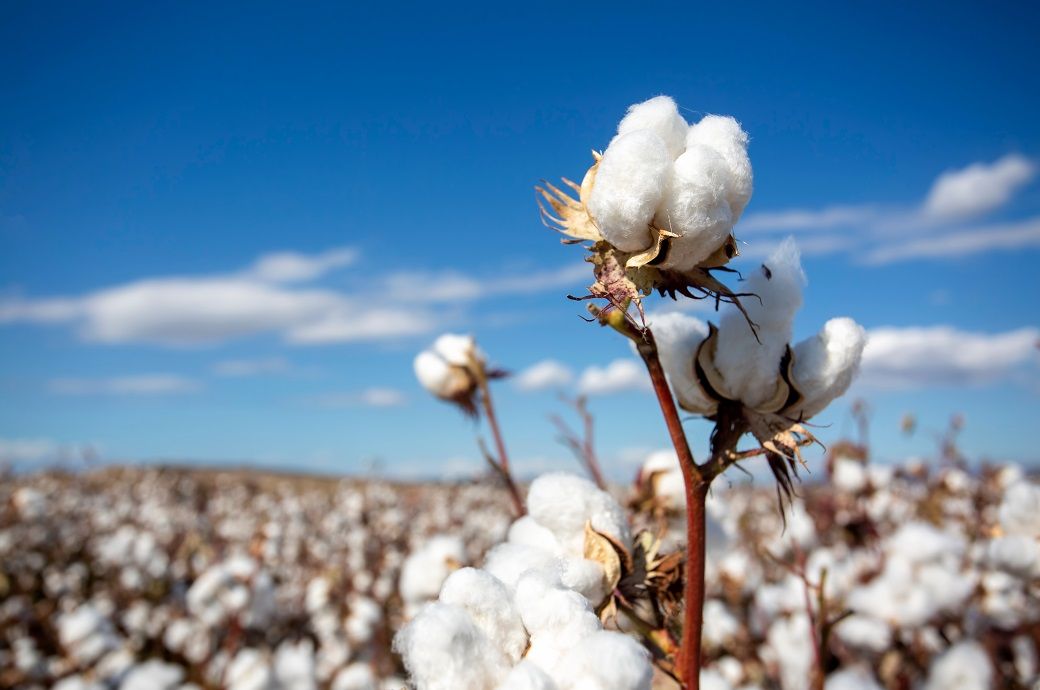
The USDA said in its report that India’s cotton area is estimated to increase to 11.5 million hectares, up 3 per cent from the previous year, while production is forecast at 25.2 million bales (480 pound or 220 kg), marking a 7 per cent rise. In Indian terms, this translates to around 32.3 million bales of 170 kg, or nearly 5.5 million tonnes.
USDA projects India’s cotton acreage to rise 3 per cent and production 7 per cent in 2026–27, supported by better yields and a normal monsoon.
Domestic consumption is expected to grow on stronger textile exports, while imports decline and exports soften.
Higher stocks and favourable cotton-polyester dynamics signal comfortable supply, despite rising input cost pressures.
The production increase is driven by a recovery from last season’s untimely rains and a projected improvement in yield to 477 kg per hectare, up 3 per cent year on year. A normal monsoon outlook and better crop conditions are expected to further support output.
On the demand side, India’s domestic mill consumption is projected to rise to 25.8 million bales, reflecting improved prospects for textile and apparel exports. Higher demand is also likely to be supported by recent trade agreements with the EU and the UK, which are expected to boost shipments of value-added products.
India’s cotton imports are estimated at 3 million bales, lower than the previous year, as improved domestic availability reduces reliance on overseas purchases. In contrast, exports are forecast to decline to 1.2 million bales, down from the previous year, due to tighter exportable surplus and a strategic shift towards higher-margin textile exports.
Total cotton supply is expected to increase to around 39.3 million bales in next marketing year, supported by higher production and elevated beginning stocks. Ending stocks are projected to rise further to 12.3 million bales, pushing the stock-to-use ratio to about 46 per cent, indicating comfortable availability in the domestic market.
At the same time, rising crude oil prices continue to influence the cotton economy by increasing input costs such as fertilisers and agrochemicals, while also raising polyester fibre prices and improving cotton’s relative competitiveness, the report said.
Overall, the outlook for India’s cotton sector in 2026–27 points to a recovery-driven expansion, with higher acreage, improved yields, and strong domestic demand shaping market dynamics, even as export competitiveness and cost pressures remain key concerns.
Fibre2Fashion News Desk (KUL)









CBAM’s scope directly intersects with India’s trade profile. Steel, aluminium, cement and fertilisers make up most CBAM-covered exports and now face higher landed costs in the EU, closer scrutiny of plant-level data and formal verification at the installation level, said Saunak Saha partner, Climate Change and Sustainability Services at EY India in an article titled ‘How Indian industries are adapting to CBAM and carbon pricing’.
Global trade is entering a carbon-priced era as the EU’s CBAM links market access to verified emissions, according to EY.
For India, this raises export costs in key sectors like steel and aluminium while pushing decarbonisation efforts.
Firms are shifting strategies and markets, while India’s Carbon Credit Trading Scheme aims to internalise costs domestically.
The policy timeline raises the stakes. After a transitional reporting period that began in October 2023, the definitive phase from January 1, 2026, requires importers to purchase CBAM certificates aligned with European Union—Emissions Trading system linked carbon prices. The first annual declaration for 2026 imports—along with certificate surrender—is due on September 30, 2027. For Indian producers, this formalises carbon as an explicit line item in export economics, with downstream product coverage expected to broaden over time.
Importantly, CBAM is also reshaping revenue strategy—not just compliance cost. Exporters that diversify away from concentrated EU exposure toward select Africa, West Asia and Latin America markets can defend or even enhance unit realisations, particularly when paired with credible low-carbon attributes.
The Carbon Credit Trading Scheme (CCTS) anchors a national carbon price in the very sectors that CBAM targets, allowing carbon costs to be internalised at home rather than paid at the EU border. That keeps revenues within India’s fiscal system and enables strategic recycling toward Indian industrial decarbonisation, clean-technology deployment and household welfare protection.
Just as importantly, a credible, rules-based CCTS—underpinned by strong MRV—enhances India’s standing in climate-trade forums and supports arguments for recognising an ‘effectively paid’ domestic carbon price. In practical terms, this reframes CBAM from a unilateral liability into a managed, development-aligned transition tool.
Treat CBAM as a structural signal, not a temporary hurdle. Build verifiable emissions baselines, prioritise technology shifts that cut intensity fastest per rupee invested and craft go-to-market strategies that monetise low-carbon attributes across multiple destinations. With disciplined MRV, targeted capex and a credible domestic carbon market, Indian producers can protect market access, lift realisations and compete in a world where carbon—and proof of reduction — has become part of the price, added the article.
Fibre2Fashion News Desk (SG)
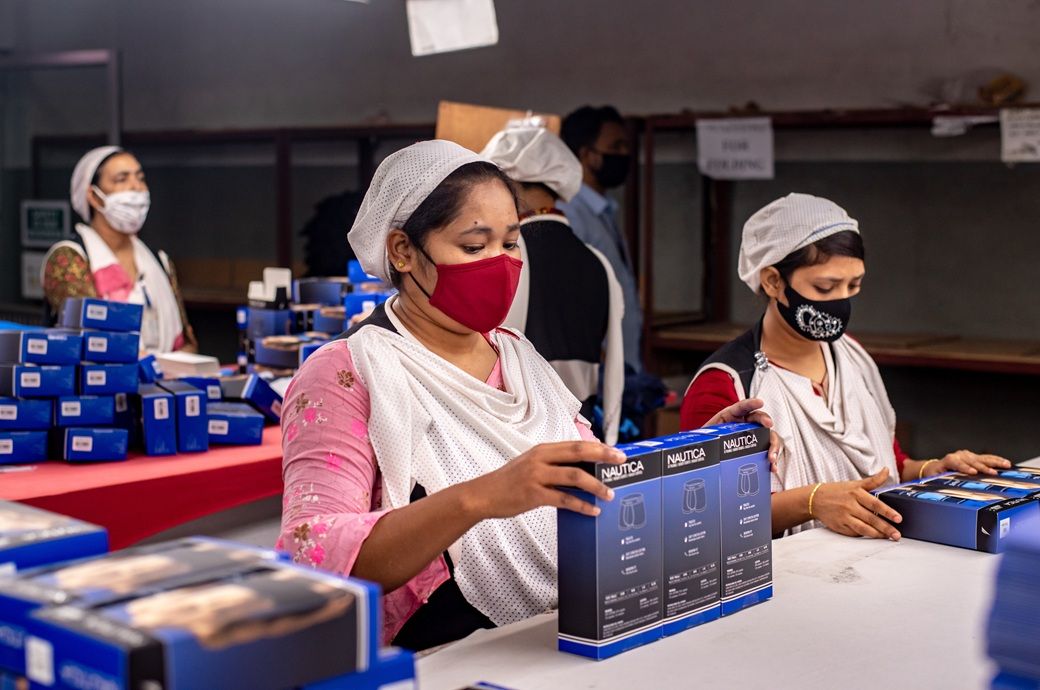
“The revised definition of workers and employees in the Bangladesh Labour Ordinance 2025 has created confusion and does not align with the recommendations of the tripartite consultative committee (TCC),” BKMEA president Mohammed Hatem told a press conference.
Bangladesh trade body BKMEA has urged the government to review provisions of the recently-amended labour law, including the definition of workers and employees, collective bargaining agents and the formation of provident funds.
The new ordinance defines employees as workers, he noted.
He called for a unified facility for provident funds and the universal pension scheme as maintaining both is impractical.
The new ordinance defines employees as workers, he noted. Previously, those engaged in administrative, supervisory or managerial roles were not classified as workers.
Hatem noted that at the TCC meeting, representatives of owners, workers and the government had agreed that employees under a specific labour law provision would not be treated as workers. The amendment, however, is ambiguous and may lead to pressure from international buyers to extend equal benefits to employees as workers, he was cited as saying by domestic media outlets.
The BKMEA president said employees’ benefits are determined by their appointment letters, and including them within the definition of workers would blur the distinction between management and labour, complicating decision-making and factory operations.
Such a move could weaken management structures, disrupt responsibilities and ultimately affect productivity, he added.
He also called for revisions to provisions relating to workers’ provident funds and the universal pension scheme, arguing that maintaining both would be impractical. He urged the government to introduce a single unified facility.
Fibre2Fashion News Desk (DS)

The collaboration reimagines everyday streetwear staples — sweats, utility wear, tees, denim, and accessories — with a bold, graphic-driven sensibility that is unmistakably New York. Brought to life through Awake NY’s distinct style, the collection and campaign reflect the rich diversity that has defined the city’s cultural landscape, reimagining Gap’s most-loved essentials through Awake NY’s contemporary lens.
Gap is partnering with Awake NY on a cross-generational streetwear collection for adults and kids, set to launch on March 27, 2026.
Inspired by Gap’s archives and 1990s New York City culture, the collection reinterprets classic staples with bold graphics.
It celebrates diversity, family and the city’s creative communities through a campaign featuring local artists and founders.
“Gap has always stood for self-expression and modern American style,” said Mark Breitbard, President and CEO, Gap brand. “Partnering with AWAKE is one of the ways we’re bringing our heritage into today’s cultural conversation. By blending their New York perspective with our iconic roots, we’re celebrating individuality and continuing to show up in unexpected places.”
The Gap × Awake NY campaign, shot by Elissa Salas and HIDJI WORLD, celebrates the cross-generational ties of families of all kinds — from those we’re born into to the ones we create. The campaign features an ensemble of New York creatives, including Angelo Baque and his family, the team behind Frenchette, Potluck Club co-owner Cory NG, artists Planta Industrial, and other local creators who embody the self-expression and storytelling at the heart of the collaboration.
“Growing up in Queens in the ’90s, Gap was part of the everyday uniform — democratic, effortless, and for everyone,” said Angelo Baque, Founder and Creative Director of Awake NY. “This collaboration is about honoring that era of New York — the creativity, the diversity, the families and communities that shaped how we dressed and expressed ourselves. Partnering with Gap, and its global scale and reach, allows us to bring that New York energy to audiences everywhere. Reinterpreting Gap’s icons through the lens of Awake NY brings it full circle.”
The collection brings Awake NY’s signature graphic treatments and statement-making design perspective to nostalgic Gap essentials — spanning logo and heavyweight GapSweats fleece, reimagined denim, and cargo silhouettes. Pops of color, bold polka dots and colorful plaids energize the assortment, alongside an athletic-inspired jersey, a limited-edition ‘47 Brand Gap × Awake NY New York Mets hat, and an exclusive co-branded blanket. Prices range from $18–268.
The Gap × Awake NY collection launches Friday, March 27 at 12 p.m. ET / 9 a.m. PT on gap.com and at select Gap stores, including:
- The Grove at Farmers Market – Los Angeles
- Garden State Plaza – Paramus, NJ
- 2 Folsom Street – San Francisco
- Times Square – New York
- Flatiron – New York
- Limited styles available at Awake NY’s flagship store
Note: The headline, insights, and image of this press release may have been refined by the Fibre2Fashion staff; the rest of the content remains unchanged.
Fibre2Fashion News Desk (RM)


Relive the best moments of March Madness through the lenses

India’s exports face reset as EU links trade to carbon metrics: EY

We Made More Than a Thousand Pizzas to Find the Best Pizza Ovens

-
Uncategorized1 week ago
[CinePlex360] Please moderate: “Further tariff
-
Uncategorized5 days ago
[CinePlex360] Please moderate: “Trump signals p
-

 Tech4 days ago
Our Favorite iPad Is $50 Off
-

 Entertainment4 days ago
Joe Jonas shares candid glimpse into parenthood with Sophie Turner
-
 Fashion6 days ago
China’s Anta Sports posts record $11.62 bn revenue in 2025
-

 Politics4 days ago
Iran can sustain Strait of Hormuz closure for years, will cut US military logistics: Official
-
 Business6 days ago
UPI transactions hit record Rs 29.53 lakh crore in March; volumes cross 22.6 billion – The Times of India
-

 Sports4 days ago
UConn Final Four run could trigger a $50M furniture giveaway for Massachusetts-based Jordan’s Furniture