

Politics
India’s Election Commission under fire from opposition

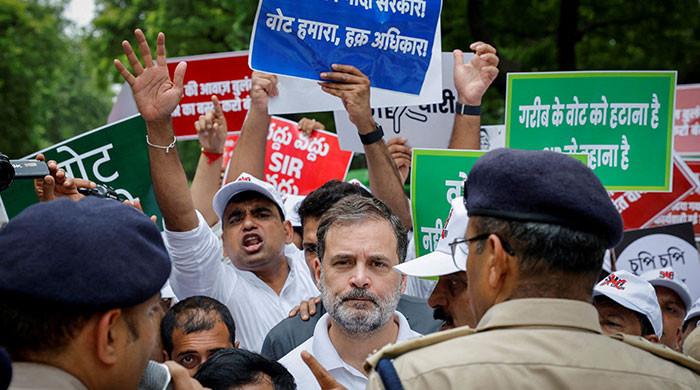
- Opposition, critics allege large-scale rigging impacting polls results.
- Election Commission of India denies charges — first ever in history.
- Rahul Gandhi demands ECI to release digital voter rolls for audit.
NEW DELHI: The Election Commission of India, long regarded as the impartial guardian of the world’s largest democracy, is facing unprecedented scrutiny over its credibility and independence.
Opposition leaders and critics have alleged that large-scale rigging of elections is impacting the overall results of the vote. The ECI has denied all charges, the first against it in India’s history.
Heading the charge is the leader of the opposition in New Delhi’s parliament, Rahul Gandhi of the Congress party, who previously alleged that India’s electronic voting machines are flawed.
Now Gandhi has accused the ECI of refusing to share digital voter records, detailing what he said was a list of errors after his supporters spent weeks combing through vast piles of registration lists by hand.
Allegations
Gandhi, 55, said his party lost dozens of seats in the 2024 parliamentary elections because of vote rigging.
The largest democratic exercise in human history across the country of 1.4 billion people was staggered over six weeks.
Gandhi claimed that the ECI manipulated voter rolls to favour Prime Minister Narendra Modi´s Bharatiya Janata Party (BJP).
Modi, 74, won a historic third term last year but fell short of a majority.
The alleged rigging involved a string of tactics, according to Gandhi.
He said some people voted multiple times, citing bulk registrations from one dwelling and seemingly bogus addresses.
In a presentation to reporters on August 7, Gandhi pointed to a parliamentary constituency his party narrowly lost as an “open and shut” example of the alleged irregularities.
Over 100,000 “fake” votes were cast in the constituency, he said, courtesy of duplicate voters.
His Congress party lost the seat by just over 30,000 votes.
“Our demand from the ECI is clear — be transparent and release digital voter rolls so that people and parties can audit them,” Gandhi said.
ECI’s stance
The ECI has called Gandhi’s accusation “false and misleading”.
India’s chief election commissioner said they would “never” back down from their constitutional duties.
“Politics is being done using the Election Commission… as a tool to target India’s voters,” Gyanesh Kumar told a news conference this month.
“The Election Commission wants to make it clear that it fearlessly stands rock-solid with all voters […] without any discrimination and will continue to do so.”
Kumar also said those alleging fraud either need to furnish proof under oath or apologise.
“An affidavit must be submitted or an apology to the nation must be made — there is no third option.”
Why now?
Gandhi launched a month-long “voter rights” rally in the key battleground state of Bihar on August 17, receiving enthusiastic public response.
The allegations come ahead of elections in Bihar in October or November. The opposition alleged the ECI had embarked on a “mass disenfranchisement” exercise, after it gave voters in the state just weeks to prove their citizenship, requiring documents that few possess in a registration revamp.
India’s top court stepped in last week, allowing a biometric ID most residents possess to be accepted in Bihar’s voter registration.
The “Special Intensive Revision” (SIR) of voter registration is set to be replicated across India.
Gandhi called the exercise in Bihar the “final conspiracy”.
Activists have reported finding numerous living voters declared dead by election officials, and entire families struck off draft lists. Voter verification in Bihar is scheduled to be completed by September 25, with the final list released five days later.
“They aim to steal the elections by adding new voters under the guise of SIR and removing existing voters,” Gandhi said.
The ECI has defended the registration revision, saying it is in part to avoid “foreign illegal immigrants” from voting.
Members of Modi’s BJP have long claimed that large numbers of undocumented Muslim migrants from neighbouring Bangladesh have fraudulently entered India’s electoral rolls.
Criticism mounted after the ECI replaced Bihar’s machine-readable voter records with scanned image files that do not allow text searches.
Critics said the changes made detecting anomalies more time-consuming and prone to error.
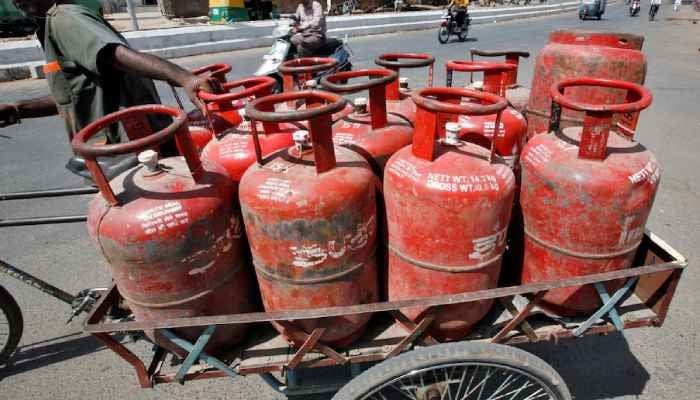
Indian police this week seized 414 cooking‑gas canisters hidden in a graveyard in Hyderabad city and arrested those involved in trying to sell them on the black market amid shortages due to the Iran war, a government official said on Thursday.
Authorities have stepped up raids to curb hoarding of liquefied petroleum gas canisters after the US-Israeli war against Iran disrupted shipping, causing supply shortages. India, the world’s No 2 LPG importer, meets about 60% of its demand through overseas purchases, mostly from the Middle East.
“Just yesterday, around 2,600 raids were carried out and about 700 cylinders were seized,” Sujata Sharma, a senior official in the Ministry of Petroleum and Natural Gas, told a regular briefing on the Middle East crisis.
“In addition, around 400 cylinders were recently found at one location inside a graveyard in Hyderabad. Ten people have been detained there, and the distributor involved has been suspended,” she said.
Police said the accused had been selling both commercial and domestic canisters from the graveyard at nearly three times the current market price. A commercial canister that costs about 2,100 Indian rupees ($22) had been sold for as much as 6,000 rupees.
The total value of the seized canisters and some vehicles used by the accused was nearly 2.2 million rupees, police said. Reuters could not immediately contact the accused or their representatives.
“The supply of natural gas to domestic consumers is 100% assured,” Sharma said. “With regard to LPG supply, prices have remained stable despite international volatility, and there has been no increase in the price of domestic LPG cylinders.”
To ease the pressure on LPG supplies, India has been promoting the use of alternatives such as kerosene, coal and biogas, while accelerating the rollout of piped natural gas for households.
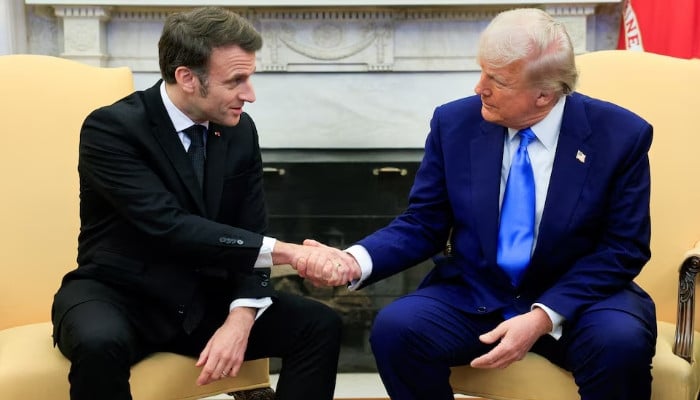
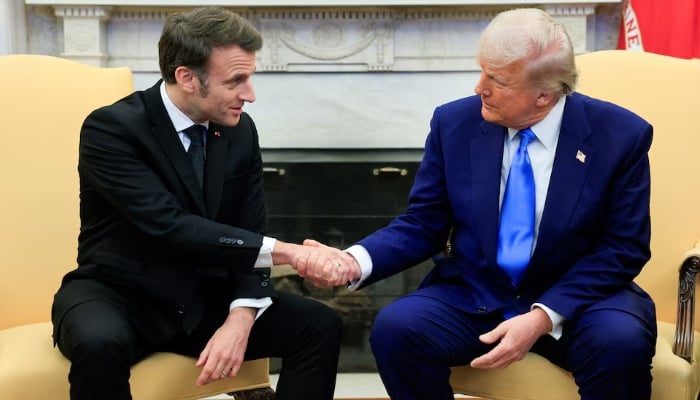
WASHINGTON: US President Donald Trump made fun of the French president and his wife during a private lunch Wednesday, as he lambasted Nato allies for not joining the war against Iran that has roiled the Middle East.
“We didn’t need them, but I asked anyway,” Trump told a private lunch in a video posted briefly on the White House YouTube channel before access was blocked.
“I call up France, Macron — whose wife treats him extremely badly. Still recovering from the right to the jaw,” Trump said.
He was referring to a May 2025 news video that appeared to show Brigitte Macron shoving the French president’s face on a trip to Vietnam, which Macron later rejected as part of a disinformation campaign.
“And I said, ‘Emmanuel, we’d love to have some help in the Gulf even though we’re setting records on knocking out bad people and knocking out ballistic missiles. We’d love to have some help. If you could, could you please send ships immediately,'” Trump continued.
He then mimics a French accent to give Macron’s alleged answer: “‘No no no, we cannot do that, Donald. We can do that after the war is won,'” he said.
“I said, ‘No no, I don’t need after the war is won Emmanuel,'” Trump said.
“So I learned about Nato — Nato won’t be there if we ever have the big one, you know what I mean by the big one,” Trump said, without elaborating.
He also branded Nato a “paper tiger,” the latest salvo by Trump and his top officials against the transatlantic alliance since he returned to the White House last year.
On Tuesday, Secretary of State Marco Rubio said the United States “is going to have to reexamine” its relationship with Nato once the war against Iran has concluded.
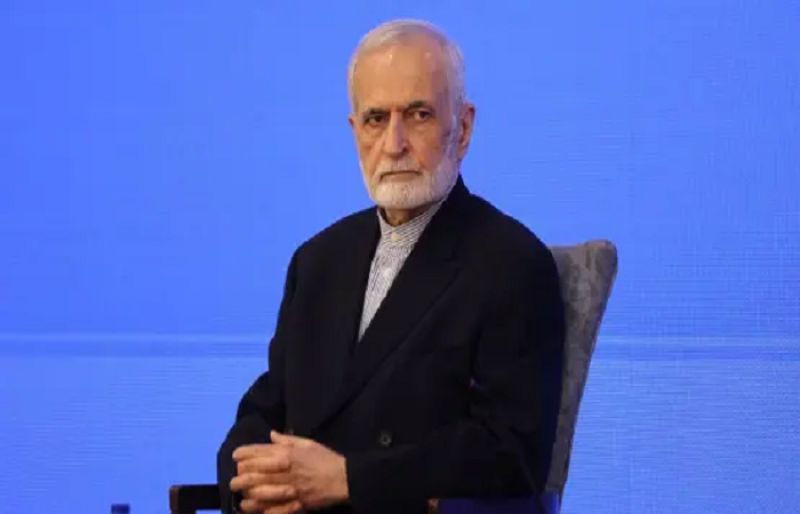
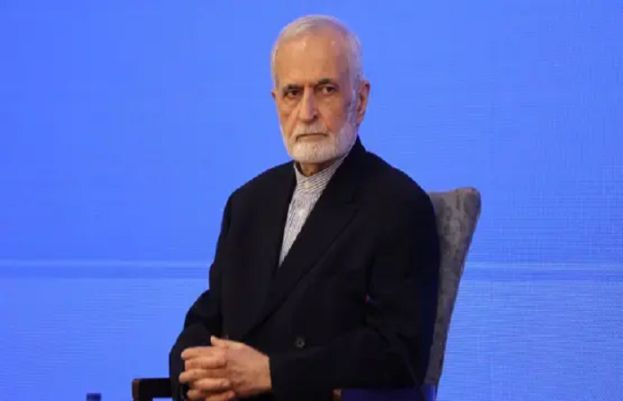
Former Iranian foreign minister Kamal Kharazi was seriously wounded in a strike that also claimed the life of his wife, Iranian media reported.
Still an adviser to the government, Kharazi had given an interview to CNN a few weeks ago.
According to the newspapers Shargh, Etemad and Ham Mihan, his home in Tehran was targeted on Wednesday in a US-Israeli strike.
He was badly injured and hospitalised following the attack, the outlets said.
Kharazi had served as foreign minister from 1997 to 2005 under reformist ex-president Mohammad Khatami.


Lightering vessel ops disrupted in Bangladesh amid fuel shortage

Judge dismisses Blake Lively’s sexual harassment claims against Justin Baldoni
Judge rules against Blake Lively’s major claim on Justin Baldoni

-
 Fashion1 week ago
Ho Chi Minh City bizs adjust production plans, seek new supply chains
-

 Entertainment7 days ago
Lee Sang-bo dies at 45: Funeral details revealed
-

 Fashion1 week ago
Japan’s apparel imports rise 22.9% to $2 bn in February 2026
-

 Fashion1 week ago
India’s Gen Z to drive half of fashion market by 2030: Reedseer
-

 Entertainment1 week ago
Andrew holds breath as King Charles plans bombshell move amid probe
-
 Business7 days ago
How do you spot a fake online review?
-

 Sports7 days ago
Illinois defense gets tough, ousts Houston to reach Elite Eight
-
 Fashion7 days ago
China rolls out tariff cuts on Congo imports from April 1