

Business
India’s Free Trade Deal With Europe To Take Effect From October 1, Says Piyush Goyal


Last Updated:
Goyal said the deal, which was finalised in March 2024, marks another major step in India’s global trade strategy

Union Commerce Minister Piyush Goyal (Image: PTI/File)
India’s Free Trade Agreement (FTA) with the European Free Trade Association (EFTA) countries — Switzerland, Liechtenstein, Norway and Iceland — will officially come into effect from 1 October 2025, Union Minister of Commerce and Industry Piyush Goyal announced on Monday.
Speaking at the valedictory session of the UP International Trade Show, Goyal said the deal, which was finalised in March 2024, marks another major step in India’s global trade strategy.
“Free Trade Agreement (FTA) with the EFTA countries (Iceland, Liechtenstein, Norway, and Switzerland), which was finalised in March 2024, will come into effect from October 1, 2025,” he said, referring to the EFTA bloc.
This agreement adds to a growing list of trade pacts signed by India in recent years, including with the UAE, Australia, and the UK. Goyal said India is currently negotiating similar agreements with 27 other countries, including the United States, the European Union and Peru. He also confirmed that terms for a pact with the Eurasian Economic Union have already been finalised.
“Countries around the world, including developed nations, are eager to sign free trade agreements with India,” he said.
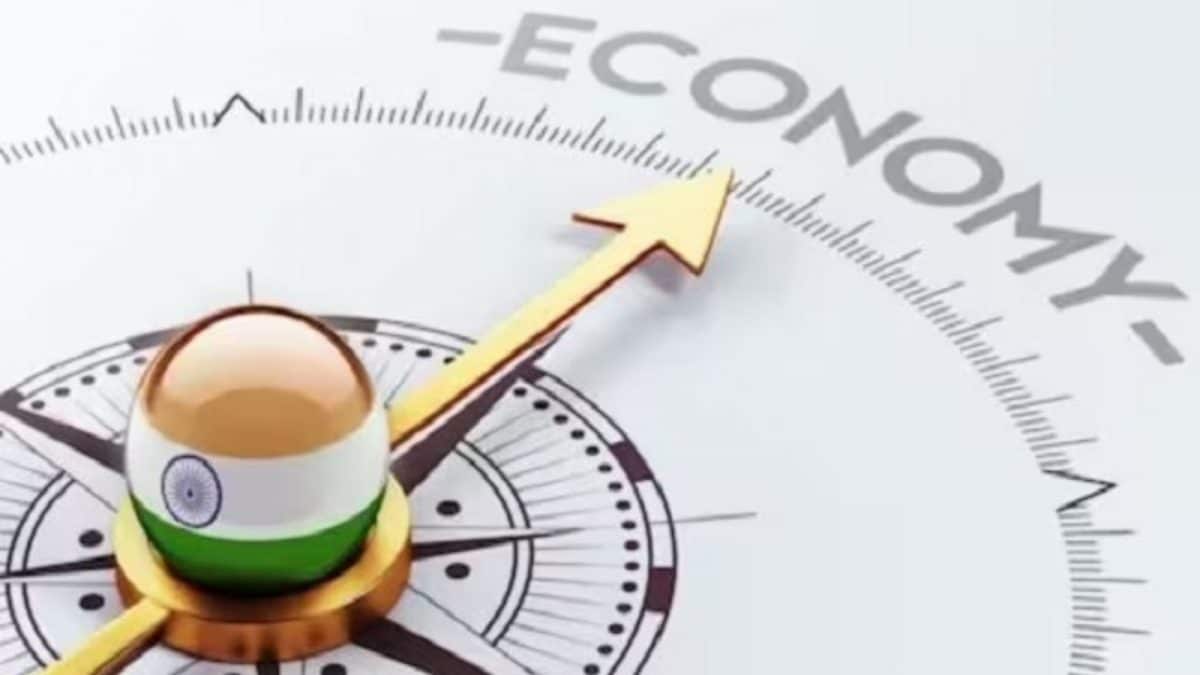
The minister also spoke about the transformation of India’s economy since 2014. He noted that foreign exchange reserves have reached USD 700 billion, nearly three times more than what the current government inherited. He predicted that within the next two years, India would become a USD 5 trillion economy, making it the third largest economy in the world.
Highlighting recent economic performance, Goyal said India’s GDP grew 7.8% in the last quarter, while inflation dropped to 2%, the lowest since independence. “In the last ten years under Prime Minister Modi, India has seen the lowest average inflation,” he said.
Reflecting on the state of the economy in 2014, he reminded the audience that India was once labelled as part of the “Fragile Five” economies.
“Earlier, government resources like 2G spectrum, coal mines, iron ore mines, contracts, used to be handed over to relatives, associates, or party members. Modi ji ensured that everything is now given only through transparent auctions,” Goyal added.
(With inputs from ANI)

The News Desk is a team of passionate editors and writers who break and analyse the most important events unfolding in India and abroad. From live updates to exclusive reports to in-depth explainers, the Desk d…Read More
The News Desk is a team of passionate editors and writers who break and analyse the most important events unfolding in India and abroad. From live updates to exclusive reports to in-depth explainers, the Desk d… Read More
September 29, 2025, 19:21 IST
Read More

The Reserve Bank of India (RBI) on Monday decided against activating the countercyclical capital buffer (CCyB), indicating that current financial and credit conditions do not warrant an additional capital requirement for banks, PTI reported.The central bank said the decision followed a review and empirical assessment of indicators used under the CCyB framework.“Based on review and empirical analysis of CCyB indicators, it has been decided that it is not necessary to activate CCyB at this point in time,” RBI said in a statement.Under the RBI (Commercial Banks – Prudential Norms on Capital Adequacy) Directions, 2025, the CCyB framework is activated when financial conditions indicate rising systemic risks linked to excessive credit growth.The framework primarily relies on the credit-to-GDP gap as a key indicator, along with supplementary metrics.According to the RBI, the CCyB mechanism is intended to serve two broad objectives.Firstly, it requires a bank to build up a buffer of capital in good times, which may be used to maintain the flow of credit to the real sector in difficult times.Secondly, it achieves the broader macro-prudential goal of restricting the banking sector from indiscriminate lending in the periods of excess credit growth that have often been associated with the building up of system-wide risk.The framework was introduced globally after the 2008 financial crisis as part of measures proposed by the Group of Central Bank Governors and Heads of Supervision (GHOS) under the Basel framework to strengthen financial system resilience.
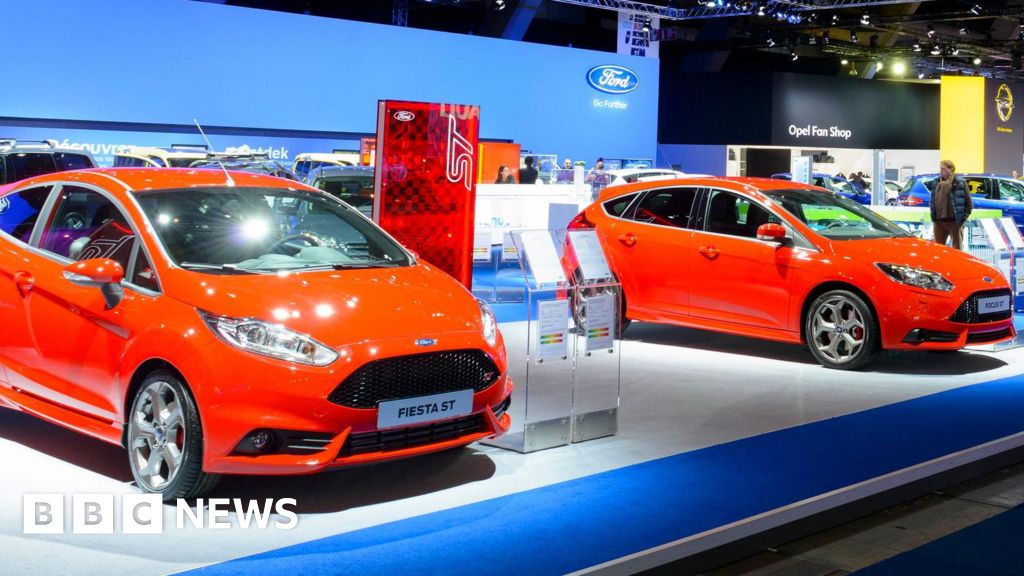
The company has announced plans to build seven new models in Europe including a small electric hatchback.
Source link
“Today’s policymaking is constrained by a more volatile external environment with more frequent and overlapping shocks, a rising public interest bill, in part reflecting market concerns with countries’ elevated debt, and the long-standing challenge of weak productivity growth,” he said.


Two Americans arrested at Japanese zoo

Turkiye’s current account deficit expected to widen in 2026: Minister

UK’s clothing imports fall 3% in Q1, sharply lower than Q4 2025

-

 Entertainment6 days ago
Conan O’Brien hat tricks as Oscar host
-

 Tech1 week ago
Could Contact-Tracing Apps Help With the Hantavirus? Not Really
-

 Fashion5 days ago
Italy’s Zegna Group’s Q1 growth boosted by strong organic performance
-

 Sports1 week ago
Bobby Cox, legendary Atlanta Braves manager who led 1995 World Series champions, dead at 84
-
 Entertainment1 week ago
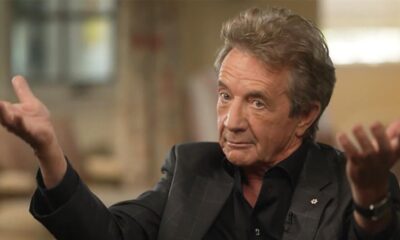
Martin Short: Facing tragedy with joy
-

 Entertainment1 week ago
Tom Brady gets back at Kevin Hart during Netflix roast
-

 Sports1 week ago
Jacob Fatu unleashes vicious assault on Roman Reigns after World Heavyweight Championship loss at WWE Backlash
-

 Entertainment1 week ago
Martha Stewart: How to make an omelet