

Fashion
India’s higher tax on clothing threatens setback for global fashion brands

By
Reuters
Published
September 4, 2025
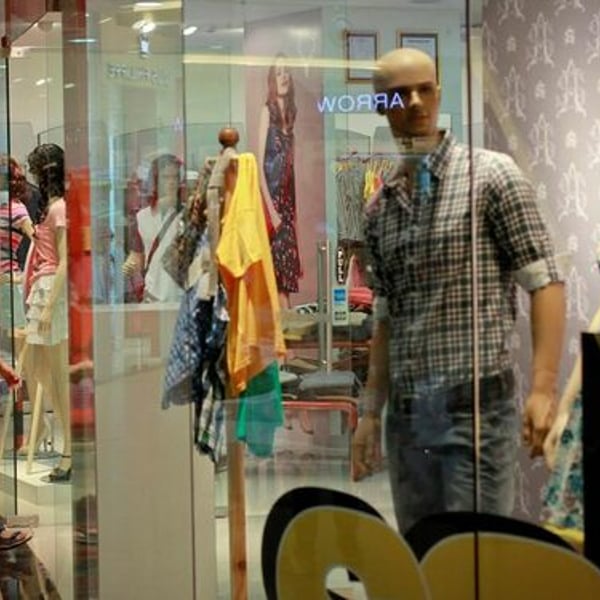
India’s overhaul of consumer tax stands to make everything from soaps to luxury SUVs cheaper, but global fashion brands such as Zara, Levi Strauss and Lacoste have been spooked by higher levies on all apparel priced at more than $29.
The premium wear segment accounts for about 18% of an apparel industry worth $70 billion, says Datum Intelligence, spurred by a growing number of nouveau riche and brand-conscious youngsters in India.
The biggest tax reform in eight years by Prime Minister Narendra Modi’s government cuts levies to 5% on garments costing less than 2,500 rupees ($29), but items priced above that figure now face a higher levy of 18%.
That will pile pressure on the likes of PVH Corp, Marks and Spencer, Gap Inc, Under Armour, Nike, H&M and Japan’s Uniqlo.
Fashion companies worry about the impact of higher taxes on sales, since aspirational young people consider such purchases as a lifestyle upgrade, but remain sensitive to price, said two Indian garment executives dealing in foreign brands.
“Retail works on wafer-thin margins, and overheads like rents are extremely high,” said the chief executive of a foreign garment brand operating in India, who sought anonymity for fear of government reprisal. “Growth that we were expecting earlier won’t come now.”
The official added, “This is not a luxury. The 2,500-rupee price point is basic now.”
The higher taxes are also a double whammy for domestic garment makers whose thriving U.S. exports business is also reeling from President Donald Trump‘s tariffs of 50%.
India’s reform has not only drastically cut consumption levies on daily essentials and consumer electronics, but dealt a surprise win on Wednesday for pricey SUVs, reducing their tax rate to a flat 40%, versus up to 50% earlier.
Carmaker Mercedes-Benz has been reporting record sales in recent months, as consumption surges.
The higher rate on apparel could spell the “death knell for the industry”, the Clothing Manufacturers Association of India has said, as items costing more than 2,500 rupees are “consumed in large numbers by the common man and middle class”.
Most of the 875 new arrivals listed on Superdry India’s website, for example, are subject to the new 18% tax, with many jackets on offer priced upwards of $170 and shirts at $60.
On the Lacoste India website, men’s T-shirts can cost as much as $99, with not one priced below $29, the new threshold for the higher tax, set to take effect on September 22.
In press statements, the Association has flagged worries about the impact of the higher tax adding to the fallout from Trump’s tariff salvo.
India’s Arvind Fashions for example, holds domestic franchisee rights for Tommy Hilfiger and Calvin Klein retail, but its affiliate, Arvind Ltd, makes foreign brands for export to destinations including the United States, which has a share of roughly 30%.
The Arvind Group did not respond to a request for comment.
In India, foreign premium brands have been luring affluent youngsters by adding retail outlets and e-commerce offerings. Lululemon Athletica plans to enter the market in 2026.
The tax hikes will also apply to apparel from luxury goods makers Louis Vuitton, Dior and Versace.
Some customers may opt for cheaper more tax-efficient purchases while travelling abroad, but the hike to 18% from an earlier slab of 12% will have limited impact on India’s rich, said one luxury industry executive.
Another area of expenditure set for a hit will be clothes bought for weddings. Lavish marriage celebrations are big business, and urban families can easily spend thousands of dollars on items from traditional sarees to men’s jackets.
“Putting these clothes in the 18% slab will result in parents compelled to make inferior clothing for their favourite child on their favourite day,” the clothing association said.
© Thomson Reuters 2025 All rights reserved.








Imports of knitted apparel and clothing accessories (Chapter **) were valued at $***.*** million in January ****, slightly lower than $***.*** million a year earlier. The imports of non-knitted apparel and clothing accessories (Chapter **) totalled $***.*** million, down *.** per cent from $***.*** million in January ****.
South Korea typically exports fabrics and textile materials while importing readymade garments. During January ****, exports of man-made filaments, strips and similar materials (Chapter **) were valued at $***.*** million, down *.** per cent from $***.*** million a year earlier. Exports of knitted or crocheted fabrics (Chapter **) reached $***.*** million, easing *.** per cent from $***.*** million.

The additional week in the fourth quarter of fiscal 2025, compared to the fourth quarter of fiscal 2024, contributed approximately $37.0 million in consolidated net sales. On a comparable week basis, net sales grew 3.4 per cent. On a reported basis including the extra week in fiscal 2025, the US retail, international, and US wholesale segments grew 9.4 per cent, 10.2 per cent, and 3.4 per cent, respectively. US retail comparable net sales increased 4.7 per cent. Changes in foreign currency exchange rates used for translation in the fourth quarter of fiscal 2025, as compared to the fourth quarter of fiscal 2024, had a favourable effect on consolidated net sales of approximately $3.0 million, or 0.3 per cent.
Carter’s reported Q4 fiscal 2025 sales of $925.5 million, up 7.6 per cent, boosted by a $37 million extra week; on a comparable basis, sales rose 3.4 per cent.
Growth spanned US retail, international, and wholesale segments.
Operating income edged up to $84.7 million, though margin dipped to 9.2 per cent.
Full-year sales increased 1.9 per cent to $2.9 billion.
Operating income increased $1.5 million, or 1.8 per cent, to $84.7 million, compared to $83.2 million in the fourth quarter of fiscal 2024. Operating margin decreased 50 basis points to 9.2 per cent, reflecting incremental tariff costs, investments in product mix and make, and higher performance-based compensation provisions, partially offset by higher pricing, lower corporate expenses, and an asset impairment charge in the prior year period.
“Carter’s delivered improved fourth quarter results with each of our business segments posting sales growth over last year. We see momentum building behind our products and demand creation initiatives, which have driven an improvement in the rate of traffic, new customer acquisition, higher realised pricing, and increased penetration of the best portions of our product assortments. All of this gives us confidence that our strategies are gaining traction,” said Douglas C Palladini, chief executive officer & president.
“2025 was a year of meaningful progress in stabilising our business while responding to significant new tariffs. We took actions to right-size our cost structure and we launched several important initiatives to improve the productivity of our merchandise assortments and store fleet. We also strengthened our balance sheet and liquidity with the successful refinancing of our long-term debt and a new asset-based revolving credit facility in place,” Palladini added.
Consolidated net sales increased $54.3 million, or 1.9 per cent, to $2.90 billion, compared to $2.84 billion in fiscal 2024, reflecting growth in our US retail and international segments that were partially offset by a decline in the US wholesale segment. The additional week in fiscal 2025, compared to fiscal 2024, contributed approximately $37.0 million in consolidated net sales. On a comparable week basis, net sales grew 0.6 per cent. On a reported basis including the extra week in fiscal 2025, the company’s US retail and international segments grew 3.5 per cent, and 6.3 per cent, respectively, while US wholesale net sales declined 2.0 per cent. US retail comparable net sales increased 1.4 per cent. Changes in foreign currency exchange rates used for translation in fiscal 2025, as compared to fiscal 2024, had an unfavourable effect on consolidated net sales of approximately $6.7 million, or 0.2 per cent, the company said in a press release.
“While we are encouraged by our progress, much work remains. Excluding the recent tariff developments, for 2026 we are planning growth in net sales as we build on the momentum of our product and demand creation strategies. We are also planning growth in operating income. We will remain focused and disciplined in our investments and overall spending and expect solid contributions from productivity initiatives. We believe the recent news regarding tariffs will be net positive for Carter’s, but it will take some time to fully understand the implications for our business and the broader marketplace. Our talented and dedicated teams and I are committed to returning Carter’s to long-term sustainable, profitable growth over time,” Palladini concluded.
Fibre2Fashion News Desk (RR)

The model will be fuelled by both domestic and foreign direct investment. The country’s tax-to-GDP ratio currently sits at the bottom level globally.
Rashed Al Mahmud Titumir, Prime Minister’s Adviser Finance and Planning, recently outlined a comprehensive road map to overhaul the country’s economic framework, setting a target to raise the tax-GDP ratio to 15 per cent by 2035, while taking the nation forward on a path of investment-led growth.
A key pillar of this transition is a significant increase in internal resource mobilisation, he said.
A key pillar of this transition is a significant increase in internal resource mobilisation, he said.
“The previous consumption-led growth model was unsustainable and had left the country burdened by a mountain of debt accumulated particularly between 2009 and 2024,” he told a recent roundtable on the government’s priorities in the short-to-medium term.
The roundtable was organised by the Centre for Policy Dialogue (CPD) and The Daily Star newspaper.
There is a need for a tax culture rooted in investment, production and employment, he was cited as saying by domestic media reports.
He identified several systemic maladies in the current revenue structure that require urgent reform.
The government intends to move from greenfield incentives (based on identity and influence) to performance-based subsidies (ex-post subsidies), he said, adding that this model, which proved successful in the garments sector, will reward actual results rather than potential.
Fibre2Fashion News Desk (DS)


Holly Willoughby spotted with Nicole Appleton as she prepares for Youtube comeback

Want To Buy A House In Karnataka? Know About The ‘Namma Mane’ Scheme With Affordable Housing & Subsidies

South Korea’s apparel imports slightly lower at $1 billion in January

-
 Business1 week ago
Attock Cement’s acquisition approved | The Express Tribune
-

 Fashion1 week ago
Policy easing drives Argentina’s garment import surge in 2025
-

 Politics1 week ago
What are Iran’s ballistic missile capabilities?
-
 Business1 week ago
India Us Trade Deal: Fresh look at India-US trade deal? May be ‘rebalanced’ if circumstances change, says Piyush Goyal – The Times of India
-

 Sports1 week ago
LPGA legend shares her feelings about US women’s Olympic wins: ‘Gets me really emotional’
-

 Entertainment1 week ago
Bobby J. Brown, “The Wire” and “Law & Order: SUV” actor, dies of smoke inhalation after reported fire
-

 Fashion1 week ago
South Korea’s Misto Holdings completes planned leadership transition
-

 Entertainment1 week ago
Pakistan’s semi-final qualification scenario after England defeat New Zealand