

Business
India’s Luxury Housing Market Spreading Beyond Metros As Tier-1 Cities Stabilise: Report


Last Updated:
The Magicbricks report comes amid higher overall premium spending as India’s luxury market likely to surge from $17 billion in 2024 to $103 billion by 2030, growing at CAGR of 35%.
The Rs 2-3 crore and Rs 3-5 crore price brackets account for a majority of luxury demand, with ultra-premium purchases above Rs 10 crore showing strong traction in Mumbai and Gurugram.
India’s luxury market is poised to surge from $17 billion in 2024 to $103 billion by 2030, growing at a CAGR of nearly 35%, according to a report by real estate portal Magicbricks. Jewellery, watches, and automobiles continue to lead luxury spending, but housing is increasingly becoming a key beneficiary of this shift.
The report, titled ‘India Luxury Housing Market Report 2025’ released on Wednesday, said India’s luxury residential segment is maturing while simultaneously spreading beyond traditional hubs like Mumbai, Delhi-NCR and Bengaluru. A key indicator of this transition is the Magicbricks Luxury Price Index (LPI), which measures the premium of luxury properties relative to mainstream housing. Tier-1 cities saw the LPI ease marginally from 2.32 in 2021 to 2.27 in 2025, suggesting that non-luxury home prices have risen steadily, narrowing the price gap.
Conversely, emerging luxury corridors witnessed sharper escalation, with the LPI rising from 1.00 to 1.44, fuelled by a 27% rise in demand and an 86% jump in supply. Cities such as Mumbai (Rs 9.66 crore median luxury price), Gurugram (Rs 5.46 crore), Bengaluru (Rs 2.91 crore) and Hyderabad (Rs 2.20 crore) continue to anchor the segment, but the ability of multiple locations to command premium valuations reflects a broadening market base.
Several micro-markets have recorded dramatic shifts in their luxury footprint over the past four years. Luxury’s share on the Noida Expressway grew from 10% in 2021 to 47% in 2025, Devanahalli in Bengaluru from 9% to 40%, Ballygunge in Kolkata from 12% to 50%, and Porvorim in Goa from 19% to 47%. The report attributes these changes to infrastructure upgrades, improved connectivity, and the emergence of integrated township developments.
Developers have responded to this surge by expanding premium offerings. Luxury homes now account for 27% of total housing supply, up from 16% in 2021, as developers focus on larger units, premium specifications and high-end amenities. Demand has also strengthened, rising from 14% to 18% of total home searches, led by buyers prioritising design, convenience and future-ready living environments.
The Rs 2-3 crore and Rs 3-5 crore price brackets account for a majority of luxury demand, with ultra-premium purchases above Rs 10 crore showing strong traction in Mumbai and Gurugram. Supply growth mirrors this split, with developers targeting both accessible luxury buyers and high-end aspirants in parallel.
Sudhir Pai, CEO of Magicbricks, said the momentum in luxury consumption is reshaping housing preferences. “Buyers are seeking not just larger spaces but future-ready, well-connected communities. What is striking is how quickly new corridors are emerging as credible luxury destinations, powered by infrastructure upgrades, better planning and rising affluence. These markets are no longer peripheral—they are becoming preferred choices for discerning, investment-aware buyers. This shift reflects a more confident premium homebuyer and will define how India’s luxury housing landscape evolves over the next decade.”
The report notes that premiumisation is transforming city markets. Bengaluru holds the highest premium share at 48%, followed by Gurugram (43%), Hyderabad (29%), Pune (24%) and Kolkata (19%). Mumbai remains the costliest market in absolute terms, but records a comparatively lower premium share of 13% due to widespread premiumisation of mainstream housing.
The changing landscape, according to the report, reflects a shift in what defines luxury—from exclusivity to a mix of design sophistication, sustainability features, technology integration and community-focused environments. As affluence deepens and urban aspirations evolve, India’s luxury housing market is expected to remain on a steep growth trajectory in the coming decade.
 Click here to add News18 as your preferred news source on Google.
 December 03, 2025, 12:58 IST
Read More


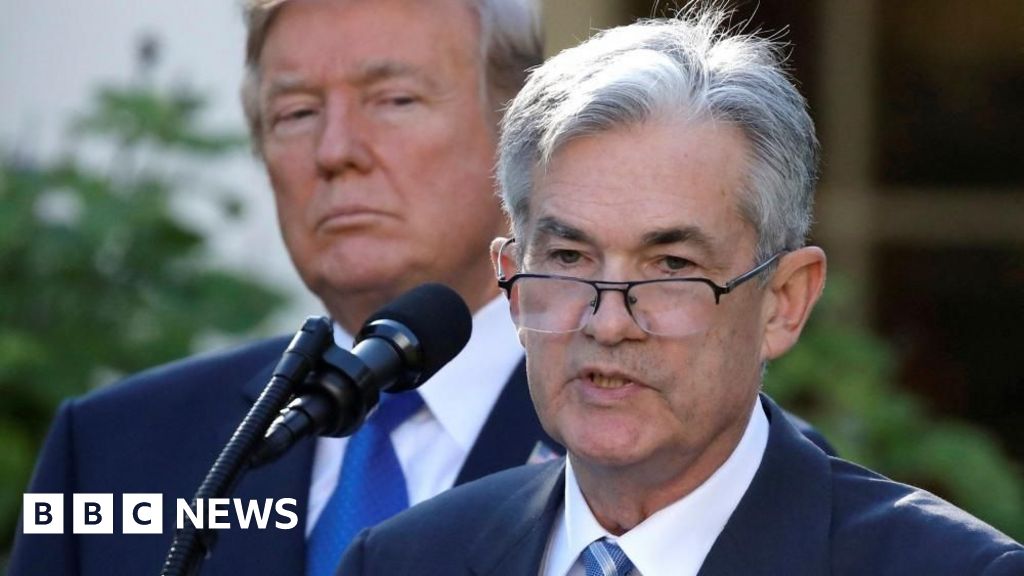
Powell’s term is nearing its end and the US Senate is considering Trump’s nominee for his replacement, Kevin Warsh. A key Republican, Thom Tillis, has withheld his support for Warsh unless the Trump administration would drop its investigation into Powell.
Business
Intel bags big gains! Chipmaker’s shares jump 26% on blockbuster results; how Trump admin benefits – The Times of India
Intel share price soared sharply on Friday after the chipmaker delivered a first-quarter performance that exceeded market expectations. And the win was not just for the chipmaker, but also the whole of US!The stock climbed 26.7% during trading on Friday, marking what could be its strongest single-day gain since 1987. Momentum continued after the closing bell, with shares rising a further 20% in after-hours trading as investors reacted to signs of a sustained turnaround driven by artificial intelligence.Intel reported revenue of $13.58 billion (€11.6bn) for the quarter, ahead of the $12.3 billion (€10.5 bn) forecast and up 7.2% from a year earlier. Adjusted earnings per share came in at $0.29, far exceeding expectations of $0.01.A key contributor to this performance was the company’s Data Centre and AI (DCAI) division, which delivered revenue of $5.05 billion (€4.2bn), up 22.4% year-on-year and well above analyst estimates of $4.41 billion (€3.77bn). The results indicate strong demand for Intel’s Xeon 6 processors and Gaudi 3 AI accelerators, particularly among enterprise clients and cloud service providers.Chief executive Lip-Bu Tan pointed to a broader shift in artificial intelligence usage as a major factor behind the growth. He said, “the next wave of AI will bring intelligence closer to the end user, moving from foundational models to inference to agentic.” He added, “This shift is significantly increasing the need for Intel’s CPUs and wafer and advanced packaging offerings.”The company also issued an upbeat outlook for the second quarter, forecasting revenue in the range of $13.8 billion (€11.8billion) to $14.8 billion (€12.6billion), surpassing investor expectations of $13 billion (€11.1billion).
But how is Washington winning?
The rally has had a direct impact on the US administration’s investment in Intel. In 2025, during a period of severe financial strain for the company, the administration of Donald Trump acquired a 9.9% stake in a move aimed at stabilising the business. The government invested $8.9 billion (€7.8bn) at a share price of $20.47 (€18.01), with $5.7 billion (€5bn) of that amount coming from previously approved but unpaid grants, according to the Euro News.At the time, Intel was facing multi-billion dollar losses and operational challenges, prompting concerns over its viability. As part of the intervention, the company cancelled planned factory projects in Germany and Poland, redirected focus towards US-based manufacturing, and reduced its global workforce by 25%, cutting around 25,000 jobs.Following the latest jump, Intel’s shares are now trading at $81.3 (€71.5), representing an increase of nearly 300% since the government first took its stake. The sharp rise highlights how the company’s improved financial performance has translated into substantial gains for the US administration.

Statistics Jersey says there have been “sharp increases” in some energy prices.
Source link


Charlie Sheen updates on relationship with old pal Jon Cryer

Iranian FM Abbas Araghchi lands in Pakistan ahead of renewed US talks

Mom’s Microwaved Coffee Won’t Stand a Chance With This Ember Smart Mug Deal

-

 Fashion1 week ago
France’s LVMH Q1 revenue falls 6%, shows resilience amid Iran war
-

 Tech1 week ago
CYBERUK ’26: UK lagging on legal protections for cyber pros | Computer Weekly
-

 Sports5 days ago
WWE WrestleMania 42 Night 2: Live match results and analysis
-

 Sports1 week ago
Faheem Ashraf backs Islamabad United’s push, calls league a ‘career-changing platform’
-

 Sports5 days ago
NCAA men’s gymnastics championship: All-time winners list
-
 Business1 week ago
PepsiCo earnings beat estimates as North American food business improves
-

 Tech1 week ago
Anthropic Plots Major London Expansion
-
 Business1 week ago
Oil prices fall again amid Middle East ceasefire hopes