

Business
India’s Luxury Housing Market Spreading Beyond Metros As Tier-1 Cities Stabilise: Report


Last Updated:
The Magicbricks report comes amid higher overall premium spending as India’s luxury market likely to surge from $17 billion in 2024 to $103 billion by 2030, growing at CAGR of 35%.
The Rs 2-3 crore and Rs 3-5 crore price brackets account for a majority of luxury demand, with ultra-premium purchases above Rs 10 crore showing strong traction in Mumbai and Gurugram.
India’s luxury market is poised to surge from $17 billion in 2024 to $103 billion by 2030, growing at a CAGR of nearly 35%, according to a report by real estate portal Magicbricks. Jewellery, watches, and automobiles continue to lead luxury spending, but housing is increasingly becoming a key beneficiary of this shift.
The report, titled ‘India Luxury Housing Market Report 2025’ released on Wednesday, said India’s luxury residential segment is maturing while simultaneously spreading beyond traditional hubs like Mumbai, Delhi-NCR and Bengaluru. A key indicator of this transition is the Magicbricks Luxury Price Index (LPI), which measures the premium of luxury properties relative to mainstream housing. Tier-1 cities saw the LPI ease marginally from 2.32 in 2021 to 2.27 in 2025, suggesting that non-luxury home prices have risen steadily, narrowing the price gap.
Conversely, emerging luxury corridors witnessed sharper escalation, with the LPI rising from 1.00 to 1.44, fuelled by a 27% rise in demand and an 86% jump in supply. Cities such as Mumbai (Rs 9.66 crore median luxury price), Gurugram (Rs 5.46 crore), Bengaluru (Rs 2.91 crore) and Hyderabad (Rs 2.20 crore) continue to anchor the segment, but the ability of multiple locations to command premium valuations reflects a broadening market base.
Several micro-markets have recorded dramatic shifts in their luxury footprint over the past four years. Luxury’s share on the Noida Expressway grew from 10% in 2021 to 47% in 2025, Devanahalli in Bengaluru from 9% to 40%, Ballygunge in Kolkata from 12% to 50%, and Porvorim in Goa from 19% to 47%. The report attributes these changes to infrastructure upgrades, improved connectivity, and the emergence of integrated township developments.
Developers have responded to this surge by expanding premium offerings. Luxury homes now account for 27% of total housing supply, up from 16% in 2021, as developers focus on larger units, premium specifications and high-end amenities. Demand has also strengthened, rising from 14% to 18% of total home searches, led by buyers prioritising design, convenience and future-ready living environments.
The Rs 2-3 crore and Rs 3-5 crore price brackets account for a majority of luxury demand, with ultra-premium purchases above Rs 10 crore showing strong traction in Mumbai and Gurugram. Supply growth mirrors this split, with developers targeting both accessible luxury buyers and high-end aspirants in parallel.
Sudhir Pai, CEO of Magicbricks, said the momentum in luxury consumption is reshaping housing preferences. “Buyers are seeking not just larger spaces but future-ready, well-connected communities. What is striking is how quickly new corridors are emerging as credible luxury destinations, powered by infrastructure upgrades, better planning and rising affluence. These markets are no longer peripheral—they are becoming preferred choices for discerning, investment-aware buyers. This shift reflects a more confident premium homebuyer and will define how India’s luxury housing landscape evolves over the next decade.”
The report notes that premiumisation is transforming city markets. Bengaluru holds the highest premium share at 48%, followed by Gurugram (43%), Hyderabad (29%), Pune (24%) and Kolkata (19%). Mumbai remains the costliest market in absolute terms, but records a comparatively lower premium share of 13% due to widespread premiumisation of mainstream housing.
The changing landscape, according to the report, reflects a shift in what defines luxury—from exclusivity to a mix of design sophistication, sustainability features, technology integration and community-focused environments. As affluence deepens and urban aspirations evolve, India’s luxury housing market is expected to remain on a steep growth trajectory in the coming decade.
 Click here to add News18 as your preferred news source on Google.
 December 03, 2025, 12:58 IST
Read More


Business
Top stocks to buy today: Stock recommendations for April 24, 2026 – check list – The Times of India

Stock market recommendations: Bharat Electronics, and Colgate-Palmolive (India) have been recommended as the top stocks to buy today (April 24, 2026) by Bajaj Broking Research. Take a look at the target prices and expected returns:Bharat ElectronicsBuy in the range of ₹ 440.00-450.00
The stock is in structural up trend forming higher high and higher low in all time frame signaling strength and continuation of the uptrend. The entire up move of the last 8 months is in a rising channel as can be seen in the chart highlighting sustained demand at an elevated level.On the smaller time frame, the stock is at the cusp of generating a breakout above the bullish Flag like formation as post a sharp up move in the first 3 weeks of April the stock went into a consolidation phase in the last four sessions. It is seen resuming up move and is at the cusp of generating a breakout above the bullish Flag formation highlighting continuation of the up move and offers fresh entry opportunity.We expect the stock to extend the up move and head towards 495 levels in the coming months being the confluence of the 123.6% external retracement of the previous decline 473 – 400 and the upper band of the rising channel of the last 8 months.Colgate-Palmolive (India)Buy in the range of 2120-2160
The share price of Colgate-Palmolive has generated a breakout above bullish Flag pattern signaling continuation of the up move and offers fresh entry opportunity.We expect the stock to head higher towards 2330 levels in the coming months being the measuring implication of the bullish flag breakout.The daily 14 periods RSI is in buy mode thus supports the positive bias in the stock.(Disclaimer: Recommendations and views on the stock market, other asset classes or personal finance management tips given by experts are their own. These opinions do not represent the views of The Times of India)
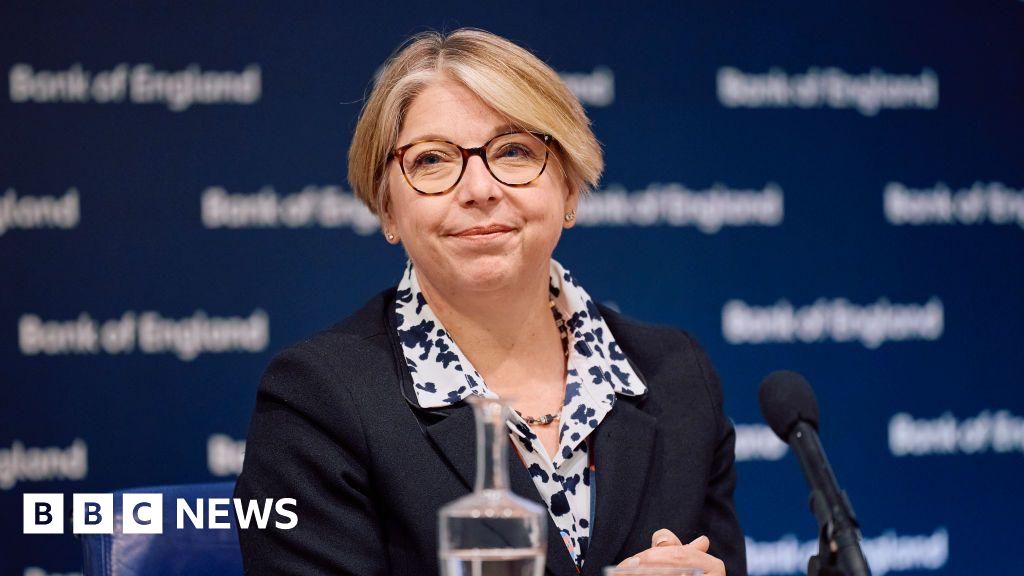
It is unusual for a senior figure at the Bank to be so forthright on market movements.
Source link

Consumer confidence has fallen for the third consecutive month amid household “jitters” over rapid price rises, figures show.
GfK’s long-running consumer confidence index fell four points to minus 25 in April, following falls of two points and three points in March and February respectively.
The deepening concern was driven by perceptions of the UK economy, with a six-point slide in confidence for the next 12 months to minus 43, its lowest level since February 2023.
Confidence in personal finances over the coming year fell five points to minus four – one point lower than this time last year.
The major purchase index – an indicator of confidence in buying big ticket items – held steady, albeit at minus 18 but one point better than last April.
The only measure to improve was the savings index – often an indication that households are concerned about their finances and looking to build contingency funds – which is up five points to 32.
Neil Bellamy, consumer insights director at GfK, said: “Consumers really do have the jitters now.
“It is a year since we last saw a monthly drop of this size, and we have to go back to October 2023 to find the last time consumer confidence was lower.
“Everyone is grappling with rapid price rises, especially at the fuel pumps, which are taking a dent out of household budgets, and people know further price hikes are coming.
“Consumer confidence is deteriorating sharply, with fuel prices and threats of more energy price increases acting as constant reminders of inflation.
“While the Gulf crisis is intensifying pressures, much of the current strain reflects earlier domestic cost increases.
“How long can all this disruption and pain continue?”


22 India-backed terrorists killed in Khyber intelligence-based operation, says ISPR

Former Giants co-owner Steve Tisch seen in team’s draft room

UK’s clothing exports down 7.6% to $293 mn in Jan-Feb

-

 Fashion1 week ago
France’s LVMH Q1 revenue falls 6%, shows resilience amid Iran war
-

 Entertainment1 week ago
Is Claude down? Here’s why users are seeing errors
-

 Sports1 week ago
PSL 11: Peshawar Zalmi win toss, opt to field first against Quetta Gladiators
-

 Tech1 week ago
The Deepfake Nudes Crisis in Schools Is Much Worse Than You Thought
-
 Business1 week ago
Standard Life buys rival in £2b deal to create savings giant
-

 Tech1 week ago
CYBERUK ’26: UK lagging on legal protections for cyber pros | Computer Weekly
-

 Fashion1 week ago
Raymond unveils luxury Chairman’s Collection Store in Mumbai
-

 Sports4 days ago
NCAA men’s gymnastics championship: All-time winners list