

Business
India’s MF industry profile: Rs 81.01 lakh crore AUM in January, up 20.5% – The Times of India


India’s mutual fund industry began 2026 on an optimistic note, with total assets under management (AUM) rising to Rs 81.01 lakh crore in January, up 20.5% from Rs 67.25 lakh crore a year earlier. Over the past 12 months alone, the industry has added more than Rs 13.8 lakh crore to its asset base.The long-term growth trend remains intact. Industry AUM has expanded at a compounded annual growth rate (CAGR) of 22% over five years and 20% over the past decade that ended in January 2026.
Equity-led expansion
Equity-oriented schemes continued to anchor growth, making 87% of individual investors assets. Their AUM rose to Rs 58.02 lakh crore from Rs 48.13 lakh crore a year ago, marking a 20.6% increase. Fixed income-oriented AUM also climbed 20.2% year-on-year to Rs 23 lakh crore.Equity’s share in total industry assets stood at 59.8% in January this year, hinging near the 59.7% recorded a year ago. Over the past year, equity AUM increased from around Rs 40.2 lakh crore to nearly Rs 48.5 lakh crore.Equity net sales have remained positive for 59 consecutive months. Net sales excluding SIPs and new fund offers (NFOs) also stayed in positive territory in January 2026 according to a recent report by Franklin Templeton.
SIPs continue momentum
Systematic Investment Plan (SIP) inflows reached Rs 31,002 crore in January 2026, up 17% from Rs 26,400 crore in January 2025. Meanwhile, monthly SIP flows have doubled in less than three years.SIP AUM rose to Rs 16.36 lakh crore, compared with Rs 13.20 lakh crore a year ago, reflecting 24% growth. SIP assets now account for 28.2% of total equity AUM, up from 27.4% last year.Total SIP accounts stood at 10.29 crore in January 2026. During the month, 74.11 lakh new SIP accounts were registered, an all-time high. Discontinued SIP accounts numbered 55.46 lakh, with discontinued SIPs as a percentage of registrations falling to 75% in January 2026 from 109% a year ago. The rise in discontinuations has been attributed to reconciliation of inactive SIP accounts between RTAs and exchanges.Over the last 12 months, aggregate SIP flows reached Rs 3.40 lakh crore, up from Rs 2.76 lakh crore in the previous year. Since FY17, aggregate SIP contributions have grown nearly seven times at a 24% CAGR. The average SIP ticket size increased to Rs 3,012 per month from Rs 2,571 a year earlier.
Investor base expands
The number of unique investor accounts rose to 6.02 crore in January 2026 from 5.33 crore a year ago, reflecting 12.8% growth. Around 12.14 lakh investors were added during January alone. Over the past year, 68 lakh new investors joined the fold, compared with 103 lakh in the same period last year.Individuals accounted for 60% of total AUM, while institutions held 40%. Direct plans represented 49% of total AUM, up from 46% a year ago. Direct individual investments comprised 29% of total individual AUM, compared with 27% last year.
Passive assets achieve record levels
Passive fund AUM reached Rs 15.02 lakh crore in January 2026, up 38% from Rs 10.91 lakh crore a year earlier. Passive strategies now form 19% of total AUM, compared with 16% last year and 12% in January 2022.Within passive funds, domestic equity passives accounted for 64.3% of passive AUM in January 2026, debt passives 13.3%, commodity passives 19.9%, international passives 2.2% and other index funds 0.3%.Equity-oriented ETFs made up 79% of domestic equity passive AUM, with index funds comprising 21%. In debt passives, target maturity index funds accounted for 48%, debt-oriented ETFs 49% and other categories 3%, the report said.
NFO flows and category trends
Aggregate NFO collections over the past year totalled Rs 65,100 crore. Equity funds contributed 61% of this amount, or Rs 39,433 crore. Among equity categories, flexi cap funds recorded the highest net sales over the last 12 months. Small cap, mid cap and large & mid cap funds also saw substantial inflows. Most equity categories posted positive net sales in January 2026.Debt categories witnessed positive net flows during the month, led by money market-oriented funds. Total net sales across open-ended debt categories stood at Rs 74,827 crore in January. Hybrid schemes saw strong activity as well, with arbitrage funds recording the highest gross and net sales over the past year.
Bank deposits on a rise
Mutual fund AUM as a percentage of bank deposits rose to 32.6% in January 2026, up from 30.4% a year earlier. Over the past decade, this ratio has tripled. While mutual fund AUM has grown at a 22% CAGR over five years, bank deposits have expanded at 11% over the same period.Geographically, assets continue to broaden beyond the largest cities. The share of B30 cities in industry AUM increased to 18% in January 2026 from 16% in December 2020, with B30 AUM growing at a 24% CAGR over five years compared with 20% for the top 30 cities.Mumbai, Delhi and Bengaluru remained the top three contributors to industry AUM as of December 2025.

Indians sharply cut back on overseas travel spending in March, with remittances for foreign trips dropping by more than $212 million from the previous month, according to Reserve Bank of India data. The fall in outbound travel expenditure came amid rising oil prices linked to the Middle East conflict and persistent pressure on rupee, even as travel remained the single largest component of outward remittances under the Liberalised Remittance Scheme (LRS).In March, travel-related remittances fell to $1.09 billion from $1.3 billion in February and $1.65 billion in January. The decline came at a time when the West Asia conflict pushed oil prices higher and weakened rupee to record lows. Amid the situation, Prime Minister Narendra Modi urged citizens to cut down on foreign travel and adopt measures such as carpooling. Lower overseas travel spending could reduce foreign exchange outflows and help ease pressure on rupee.According to the RBI’s data on outward remittances by resident individuals, travel continued to account for the largest share of money sent abroad under the LRS in March. Total remittances during the month stood at $2.59 billion.The RBI tracks overseas spending across categories including travel, studies abroad, maintenance of close relatives, overseas investments, and property purchases. Under the LRS framework, resident individuals, including minors, can remit up to $250,000 in a financial year for permitted current or capital account transactions.Within the travel segment, the biggest component remained the ‘other travel’ category, which covers holiday spending and international credit card settlements. Indians spent $623.05 million under this category in March, accounting for nearly 57 per cent of total travel-related remittances during the month.Expenditure linked to education travel, including hostel and fee payments, stood at $450.16 million. Business travel, pilgrimage, and overseas medical treatment together accounted for $21.39 million.The data also showed a rise in remittances meant for the maintenance of close relatives abroad. Such transfers increased to $389.78 million in March from $266.18 million in February.At the same time, spending under the ‘studies abroad’ category declined. This category includes payments made for educational services accessed remotely without travelling overseas, such as correspondence courses. Remittances under this head stood at $151.71 million in March, compared to $175.68 million in February and $267.42 million in January.For the financial year 2024-25, Indians remitted a total of $29.56 billion under the LRS. Travel made up the largest portion of this amount at $16.96 billion.The RBI figures further showed that investments by Indians in overseas equity and debt instruments rose significantly to $440.22 million in March from $265.99 million in February.Meanwhile, outward remittances for the purchase of immovable property overseas declined to $38.68 million in March, down from $51.36 million a month earlier.
Business
Stock market this week: Middle East tensions, oil prices, FII flows & more — what will guide Dalal Street

Dalal Street is heading into the new trading week with global uncertainty firmly in focus, as investors keep a close watch on the evolving situation in the Middle East, fluctuations in crude oil prices and the behaviour of foreign investors. Analysts said that sentiment is likely to remain fragile and heavily influenced by developments in negotiations between the United States and Iran, while movements in the rupee, global equities and the US dollar are also expected to shape market direction in the days ahead.Trading activity during the week is also expected to be shaped by the rupee’s movement against the US dollar, while investors continue to assess the impact of global uncertainty on risk appetite. Markets will remain closed on Thursday for Bakri Id.A key trigger for sentiment emerged over the weekend after US Secretary of State Marco Rubio said negotiations between Washington and Tehran had shown some progress, raising expectations that the ongoing conflict in West Asia could move closer to resolution.Ajit Mishra, SVP, Research at Religare Broking Ltd, said investors would closely track developments tied to crude oil, global currencies and bond markets. “This week is expected to remain highly sensitive to global macroeconomic developments and currency movements. Investors will also monitor crude oil prices, developments in US-Iran negotiations, and the trajectory of the US dollar and bond yields, all of which are expected to influence foreign flows and overall risk appetite,” he said.Apart from geopolitical developments, the Reserve Bank’s decision to transfer a record Rs 2.87 lakh crore dividend to the government for the year ended March 2026 is also expected to remain in focus. The announcement comes at a time when rising import costs and supply chain pressures linked to the West Asia conflict continue to weigh on the economy.According to Mishra, market participants are expected to evaluate how the RBI payout could affect liquidity conditions, fiscal flexibility and government spending in the months ahead.Ponmudi R, CEO of Enrich Money, said market behaviour in the coming sessions is expected to remain sensitive to fresh headlines surrounding diplomatic negotiations and oil prices. “Markets are expected to remain volatile and heavily headline-driven in the coming week, with investor attention firmly focused on developments surrounding the US–Iran situation, broader diplomatic negotiations and movements in crude oil prices,” he said.“While hopes of a diplomatic breakthrough and easing geopolitical tensions have improved sentiment modestly, investors continue to remain cautious as uncertainty surrounding the final outcome of the negotiations remains elevated,” Ponmudi added.He further said investors are expected to watch institutional flows, global equity trends, macroeconomic indicators and the rupee for further market cues. “With global uncertainty still elevated, market participants are likely to remain selective and cautious despite the recent improvement in sentiment,” he said.Vinod Nair, Head of Research at Geojit Investments Limited, said markets would require stronger support factors to build a more constructive setup. According to him, a meaningful decline in crude oil prices, steady foreign institutional investor flows and stable Q1FY27 earnings expectations without major downgrades would be important for sustained momentum.In the previous week, the BSE benchmark index rose 177.36 points, or 0.23%, while the NSE Nifty advanced 75.8 points, or 0.32%.
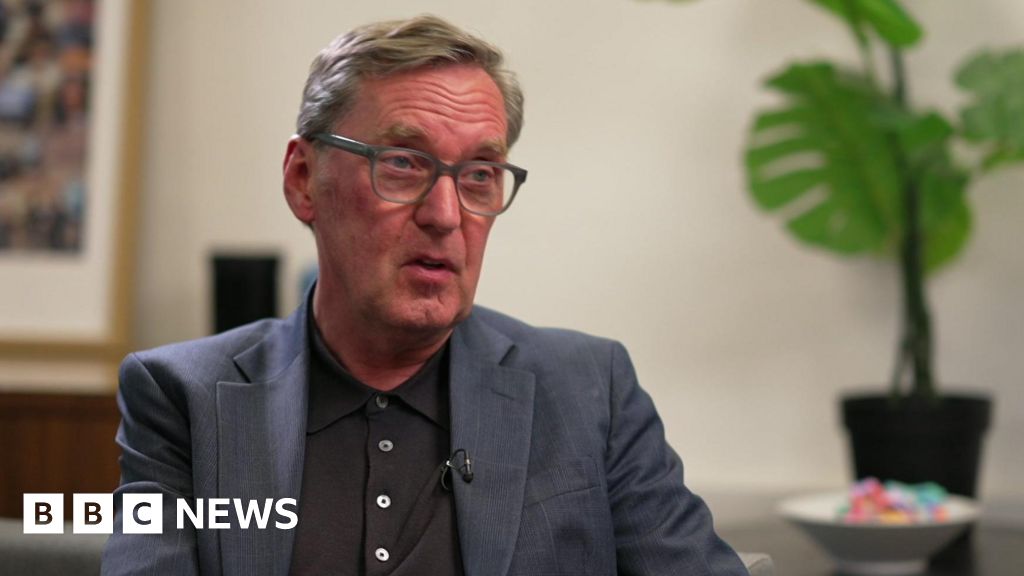
Reforms are needed of the welfare system to tackle the high numbers of young people not in work or education, says Alan Milburn.
Source link


2026 NASCAR Odds: Denny Hamlin Favored At Coca-Cola 600, Tyler Reddick Second

5/24: Sunday Morning
Indians cut overseas travel spending to $1.9 billion in March: RBI

-

 Entertainment1 week ago
Where Pete Davidson, Elsie Hewitt stand after breakup: Details revealed
-

 Politics1 week ago
Rising diesel costs from Iran war strain US school budgets
-

 Tech1 week ago
Why Is Your Grill So Dumb? The Best Grills Set Temp Like an Oven
-

 Fashion1 week ago
RMG trade bodies seek policy support from Bangladesh PM
-

 Tech1 week ago
This Solar-Powered Smart Sprinkler Keeps My Lawn Watered Without Any Power Cables
-

 Tech1 week ago
Tesla Reveals New Details About Robotaxi Crashes—and the Humans Involved
-

 Fashion6 days ago
Nigeria Kwara Garment Factory, KWS Garment Production Village ink pact
-

 Fashion7 days ago
India’s Pearl Global’s FY26 revenue crosses $521 mn milestone