

Business
IndiGo cancellations: How to track flight & refund status online; step-by-step guide – The Times of India


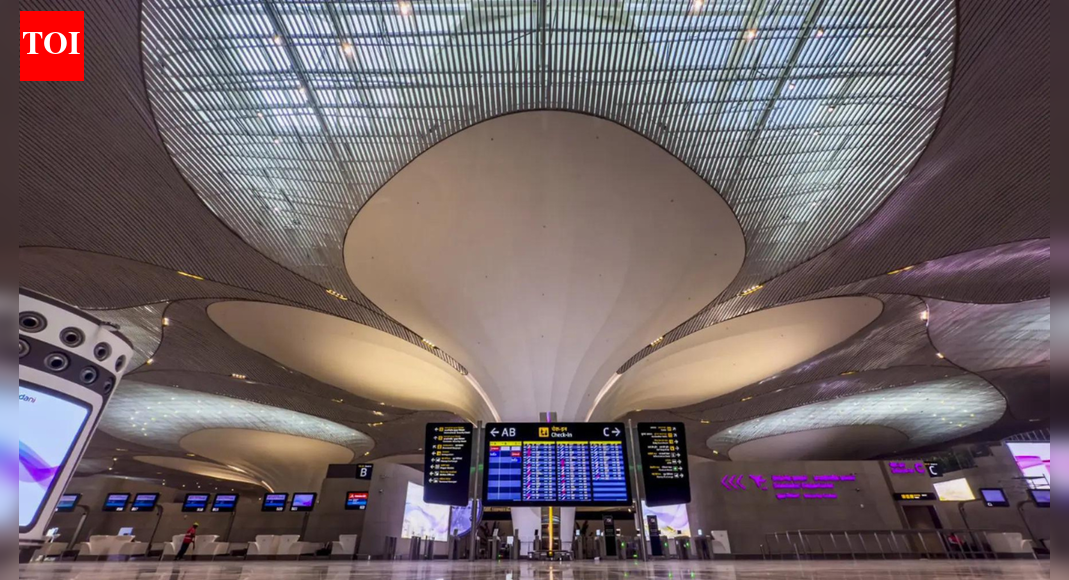
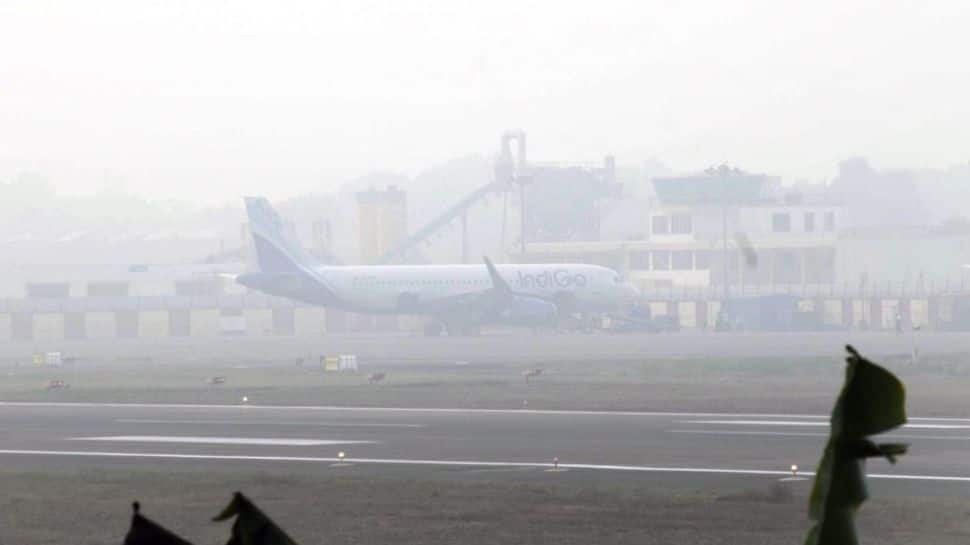
IndiGo flight cancellations latest news: IndiGo has said that it expects to operate more than 1500 flights by day’s end on Saturday, having restored over 95% of network connectivity by serving 135 out of 138 operational destinations. IndiGo typically operates 2300 flights daily. IndiGo has said that its personnel are working to normalise operations, minimise flight delays and assist passengers during this challenging period.IndiGo operated merely 700 flights on Friday, indicating 1,600 flight cancellations. IndiGo’s CEO Pieter Elbers acknowledged the extensive cancellations, confirming “over 1,000 flights” were cancelled on Friday.
The airline recorded the largest number of flight cancellations by an Indian carrier in the nation’s aviation history. Additionally, IndiGo’s on-time-performance plummeted to 3.7 per cent on Friday due to operational disruptions caused by the implementation of new pilot duty and rest period regulations, according to the Civil Aviation Ministry website.Starting November 1, the second phase of these regulations redefined night hours from 12am-6am, altered from the previous 12am-5am, and reduced permitted night landings from six to two. These changes affect all domestic airlines in India.The Gurugram-based carrier IndiGo, partly owned by Rahul Bhatia, has obtained temporary relief from DGCA, allowing them to revert to the previous night duty definition of 12am to 5am and permitting pilots to perform six night landings.“Addressing the recent disruptions in our network, we had cancelled a significant number of flights and operated little above 700 flights yesterday connecting 113 destinations. The main objective was to reboot the network, systems, and rosters so that we could start afresh today with a higher number of flights, improved stability, and there are some early signs of improvement. While we understand that we have a long way to go, we are committed to build back the trust of our customers….We apologise once again,” the airline said in a statement today.
How To Track IndiGo Flight Status ?
If you are planning to fly on an IndiGo flight over the next few days, it is important to check the flight status before heading to the airport. Here is a step-by-step guide to check IndiGo flight status:1. Go to goindigo.in/check-flight-status.html 2. Enter your PNR details and travel date, click on search flight to get the latest flight status
How To Track IndiGo Refund Status ?
The airline issued a statement confirming that it is handling all passenger refund requests with urgency.Here is a step-by-step guide how you can track your refund status on the IndiGo website:1. Go to goindigo.in/refund.html2. Enter PNR details — enter your PNR / booking reference number and your Email ID or last name.3. Click to view the “Refund Summary.” This will show you the current status of your refund — whether it’s still processing, completed, etc.According to the civil aviation ministry’s directive, all refunds for cancelled or disrupted flights must be processed by 8 pm on Sunday. The ministry has said, “Airlines have also been instructed not to levy any rescheduling charges for passengers whose travel plans were affected by cancellations.”The ministry has directed IndiGo to establish dedicated units for passenger assistance and refund processing.The statement noted, “These cells have been tasked to proactively contact affected passengers and ensure that refunds and alternative travel arrangements are processed without the need for multiple follow-ups. The system of automatic refunds will remain active until operations stabilise completely.”Additionally, the ministry has mandated that the airline must locate and return any misplaced luggage resulting from flight cancellations or delays to passengers within 48 hours.
Airfares capped
The aviation ministry has issued a two-page directive implementing fare restrictions due to capacity limitations and unjustified price increases across various routes. The civil aviation ministry’s order clarifies that business class and UDAN flights are exempt from these fare restrictions.The directive lacks specificity regarding the application of these limits to economy class tickets exclusively or their extension to premium economy seats as well.The prescribed fare structure sets maximum limits of Rs 7,500 for flights covering distances up to 500 kilometres, Rs 12,000 for 500-1,000 kilometres, Rs 15,000 for 1,000-1,500 kilometres, and Rs 18,000 for flights exceeding 1,500 kilometres.For illustration, on the Delhi-Mumbai route spanning over 1,300 kilometres, economy class fares cannot exceed Rs 18,000.The ministry’s statement indicates these restrictions will remain effective until conditions normalise.These caps exclude additional costs such as User Development Fee (UDF), Passenger Service Fee (PSF), and air ticket taxes.





Last Updated:
On International Women’s Day 2026, Equirus Wealth reports Indian women investors’ shift from fixed deposits and gold to equity mutual funds.




Women investors are steadily reshaping India’s financial landscape, with rising participation in stocks, mutual funds, and digital investing platforms.
On International Women’s Day 2026, a key trend of behavior change among female investors has emerged over the past five years, particularly in their investment choices across various financial products. Women are now more confident while investing in high risk but rewarding equity market, as the portfolio allocation in equity mutual funds surged from 10 per cent to 32 per cent, while down from 40 per cent to 20 per cent in Fixed Deposits (FDs).
The five-year study on women investors and relationship managers was conducted by Equirus Wealth Limited, and was published in a report titled “Expanding Horizons: Changing Wealth Management Behaviours of Indian Women – Qualitative Analysis of Investor Evolution Across Age and Affluence.”
The study reveals that women investors are increasingly moving away from episodic product purchases such as fixed deposits, gold and property towards diversified, allocation-driven portfolios anchored around long-term financial goals.
This reflects the major behavioural change from ‘safety-first’ investing to allocation-driven portfolio strategies.
Female Investors Adopting AI Cautiously
According to the report ,Artificial Intelligence may dominate global investment conversations, but Indian women investors are adopting it cautiously. They are using AI primarily as research and learning tool rather than for autonomous investment decisions.
Not Panicking During Corrections
Another interesting thing being revealed by the study is that 70-90% of investors hold or review their investments during market corrections rather than exiting in panic, showing maturity during market cycles.
At the same time, around 55% selectively add capital during market dips, reflecting growing conviction and a longer-term approach to investing.
Rise of “bucket investing”
Investors are increasingly dividing portfolios into buckets like safety, growth, liquidity and legacy instead of buying random financial products.
Risk is no longer seen only as loss of capital.
Investors now also consider inflation, goal failure, and portfolio drawdowns as risks.
75–90% are discussing intergenerational wealth transfer and financial discipline for the next generation.
 Click here to add News18 as your preferred news source on Google.
Follow News18 on Google. Join the fun, play games on News18. Stay updated with all the latest business news, including market trends, stock updates, tax, IPO, banking finance, real estate, savings and investments. To Get in-depth analysis, expert opinions, and real-time updates. Also Download the News18 App to stay updated.
March 08, 2026, 14:14 IST
Read More

Last Updated:
Gold is sold at a discount in Dubai due to Middle East conflict disrupting flights. Traders offer up to $30 per ounce less than London prices.
Dubai Gold Selling Cheaper As Iran War Grounds Flights
Gold is being sold at a discount in Dubai as the widening conflict in the Middle East disrupts flights and hampers the movement of bullion from one of the world’s key trading hubs.
According to a Bloomberg report, traders in Dubai are offering discounts of up to $30 per ounce compared to the global benchmark price in London. The unusual price cut comes as shipments remain stranded due to flight disruptions triggered by the escalating conflict involving Iran and Israel.
Dubai is a key global centre for refining and exporting gold to markets across Asia, including India. However, partial airspace restrictions and heightened security risks have slowed the movement of bullion out of the region.
Why Gold Is Being Sold Cheaper
Gold is typically transported in the cargo holds of passenger aircraft. With several flights from the UAE restricted amid regional tensions, traders are struggling to move bullion to international markets.
At the same time, insurance and freight costs have surged, making shipments more expensive and uncertain. Many buyers have therefore stepped back from placing new orders, unwilling to bear high logistics costs without assurance of timely delivery.
To avoid paying prolonged storage and financing costs while shipments remain stuck, some traders are offering gold at discounted prices.
Although transporting bullion by road to airports in neighbouring countries such as Saudi Arabia or Oman is theoretically possible, logistics firms are reluctant due to the risks and complications of moving high-value cargo across land borders during a conflict.
What It Means For India
India, one of the largest buyers of gold shipped from Dubai, could face short-term supply disruptions if the situation continues.
Renisha Chainani, head of research at Augmont Enterprises Ltd., said several cargo shipments have already been delayed, creating temporary tightness in the availability of physical bullion in India.
However, industry experts as reported by Bloomberg say the immediate impact may remain limited as domestic inventories are currently comfortable after heavy imports earlier this year.
Chirag Sheth, principal consultant for South Asia at Metals Focus, said Bloomberg that India has ample stocks for now, but warned that prolonged disruptions could eventually affect supply if the conflict continues for several months.
Meanwhile, global gold prices have surged this year amid geopolitical uncertainty, with spot gold recently trading above $5,000 per ounce.
Click here to add News18 as your preferred news source on Google.
Follow News18 on Google. Join the fun, play games on News18. Stay updated with all the latest business news, including market trends, stock updates, tax, IPO, banking finance, real estate, savings and investments. To Get in-depth analysis, expert opinions, and real-time updates. Also Download the News18 App to stay updated.
March 08, 2026, 10:03 IST
Read More

Some seven in 10 British adults without a full driving licence say learning to drive is currently unaffordable, according to a survey.
The figure is even higher among younger people, with 76% of 18 to 29-year-olds without a licence saying driving lessons are financially out of reach, the poll for car insurer Prima found.
Overall, 38% said the cost of driving lessons was the biggest deterrent to learning to drive.
Some 32% were put off by the price of buying a car and 15% said the cost of car insurance was the main barrier to learning to drive.
Almost half (45%) said they would consider learning to drive if it became significantly cheaper.
Nick Ielpo, UK country manager at Prima, said: “For a growing number of people, driving is no longer a symbol of freedom – it’s a financial stretch too far.
“Between lessons, buying a car and insuring it, the upfront and ongoing costs are pricing many people out before they even start.”
Find Out Now surveyed 1,134 adults who do not hold a full driving licence between January 21 and 23.


Left-Handed People Are More Competitive, Says Science
Women’s Day 2026: Female Investors Cut FD Allocation From 45% To 20%, Boost Equity Funds

Prince William, Kate declare distance from Beatrice, Eugenie at royal event

-

 Sports1 week ago
LPGA legend shares her feelings about US women’s Olympic wins: ‘Gets me really emotional’
-

 Entertainment1 week ago
Pakistan’s semi-final qualification scenario after England defeat New Zealand
-

 Fashion1 week ago
South Korea’s Misto Holdings completes planned leadership transition
-

 Entertainment1 week ago
Bobby J. Brown, “The Wire” and “Law & Order: SUV” actor, dies of smoke inhalation after reported fire
-
 Business1 week ago
Greggs to reveal trading amid pressure from cost of living and weight loss drugs
-
 Business1 week ago
CNBC To Merge TV And Digital News Operations, Nearly A Dozen Jobs To Be Cut: Report
-

 Entertainment1 week ago
What’s new in Pokémon? Every game, update, surprise from 30th anniversary event
-

 Fashion1 week ago
Italy’s Moncler FY25 revenue reaches $3.69 bn with resilient margins