

Fashion
Industry experts explore the opportunities and pitfalls of e-commerce exports at ‘Welcome on Board’


Published
December 11, 2025
“Testing the market digitally” has almost become a cliché. Where brands once opted for a selection of retailers or even a first store, digital is now seen as a gateway to international markets. But while online activity can be managed from the domestic market, turning it into a profit centre means sidestepping a few pitfalls. This was highlighted by Mathieu Grodner, president of Simone Pérèle, who shared his experience, alongside experts Rémy Daguillard of Stellae and Basile Ricordel of Global-e, at the Welcome on Board event, organised by the various federations and professional committees for economic development both in the fashion sector and dedicated to exports.
For the head of the premium lingerie brand, digital provided a complementary solution to its international brick-and-mortar presence. “We approached digital with our own platform,” said the grandson of the brand’s founder. “The question was how to develop our digital business in a way that was profitable, efficient, and compelling for our end customer. We were fortunate to have existing logistics flows in place to deliver a high-quality service to our customers wherever they are. We started with our core markets, the US and Australia, before expanding into other regions. You have to be able to adapt to different geographical areas and, increasingly, to the international context.”
Practically speaking, the brand had to deploy tools to clearly identify where its customers are located and offer an appropriate response in terms of language, currency, payment methods, taxes, customs duties, and even local logistical complexities.
“The complexity lies in removing all the barriers to purchase that may exist on the website,” said Rémy Daguillard, Stellae’s president for France, a logistics specialist for premium and luxury brands. “The aim is to ensure that the end consumer, whom you may have across the world, can enjoy the same customer experience as if your brand were domestic or local.”
“I would add that the question is not necessarily to sell everywhere in the world. Obviously that’s possible. Rather, can you do it and be profitable?” added Basile Ricordel, commercial director at Global-e, who recalls observing the digital expansion of the American brand Surface to Air. “E-commerce was seen as an El Dorado. But products were being shipped and customs duties and taxes were miscalculated. There was the issue of packaging, the choice of transport provider, or even the failure to take returns into account… In the end, costs can quickly stack up.”
Beware of hidden costs
The specialists emphasise that this accumulation rapidly erodes margins- and can even tip the business into the red. They therefore urge brands to scrutinise customs duties and taxes to avoid paying them several times over, and to right-size packaging to the actual dimensions of products, thereby reducing costs. They also recommend creating a returns collection point in certain markets to consolidate weekly or monthly returns and thus lower unit transport costs.
While e-commerce is a window into global markets, they nevertheless recommend a step-by-step approach to deployment. At Global-e, the company leverages its data to target potential markets in line with each brand’s needs. “We have insights into best practices, consumer habits, and macroeconomic trends, with the aim of improving conversion,” said Basile Ricordel. “In fact, given the international context, the US market is perhaps more complicated at the moment. Hence the idea of redirecting that investment budget towards other markets, such as Japan right now. But the idea is to focus on five to ten countries that warrant investment and work to generate margin.”
For his part, Rémy Daguillard also urges brands to avoid endless laundry lists and to take local and geopolitical realities into account. “Obviously, e-commerce in Russia right now is going to be tricky. But there are areas that aren’t closed and that require understanding. Mexico, for example, is a dynamic market for luxury goods, but it has specific features to take into account, with hidden costs.” The executive recounts the misadventure of customers who have to slip an extra note to couriers to be able to collect their parcels. “You can devise your best model; these things happen, and France doesn’t have the same norms as Mexico, Brazil, or Australia.”
“You can’t be adventurous on all fronts,” confirmed Mathieu Grodner, who pointed out that digital represents 20% of his business today. “You can’t be the best in every territory, and we’ve learned that the hard way. But we’re striving to be increasingly homogeneous worldwide, because today you can no longer claim to be an international brand if you have too much disparity, whether in your prices or in your offering.”

This prioritisation appears to be a key point, particularly in a geopolitical context that has been especially unstable in recent years, with the episode over US customs duties a notable flashpoint. The abolition of the de minimis exemption, which since 2016 had allowed brands to send parcels to the US without paying duties or taxes on products valued at under $800, has significantly disrupted export strategies for the US market.
“The question of the American market has indeed been top of mind for all our clients, who have been trying to adapt as best they can since August 29 to taxes and customs duties, particularly with the abolition of the de minimis rule. Since we developed a model that allows customs duties to be paid on the transfer price, this has reduced the impact,” said Rémy Daguillard.
“Throughout the debate on tariffs, brands were worried about how they would be affected,” agreed Basile Ricordel. “Questions are being asked about products made in Europe, but some brands also have products made in China. Brands are wondering whether they should hold local stock. And that raises questions such as appointing a fiscal representative… all while seeking the best option to avoid eroding profitability in the US.”
Opportunities therefore remain in the US, as in other markets, but the unstable economic and geopolitical context is prompting brands to take greater precautions when rolling out their digital business into new markets.
This article is an automatic translation.
Click here to read the original article.
Copyright © 2025 FashionNetwork.com All rights reserved.




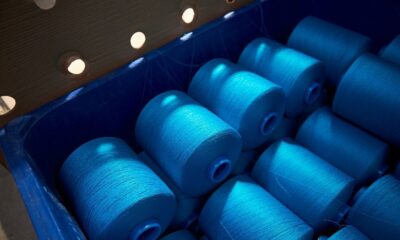








The facility will process natural fibres such as abaca, banana and pineapple into high-quality yarn, addressing long-standing challenges faced by local weavers who have relied on imported materials. This initiative is expected to create new markets for agricultural produce while providing additional income streams for farmers.
The DOST-PTRI, with DOST Region 12, will establish the Regional Yarn Production and Innovation Center in Philippine’s Cotabato to process natural fibres into yarn and support Mindanao’s textile industry.
The facility aims to boost farmer incomes, reduce reliance on imported yarn and strengthen local weaving communities through training, technology transfer and improved supply chain infrastructure.
During the first-quarter meeting of the Regional Research, Development, and Innovation Committee, Evangeline Flor P. Manalang, chief science research specialist of DOST-PTRI’s Technical Services Division, stated “The RYPIC will serve as a key facility to process our natural fibers into yarn and open opportunities for skills training among farmers and local stakeholders.” She also emphasised the project’s role in building a sustainable textile ecosystem in Soccsksargen.
The RYPIC complements existing facilities such as the Natural Textile Fiber Innovation Hub at Sultan Kudarat State University and forms part of broader national programmes including the Clothing and Textile Research Innovation and Investment Agenda (CATRINA) and the FRONTIER initiative. These efforts aim to strengthen the domestic textile value chain, reduce reliance on imports and support the government’s push to expand Telang Pinoy, as highlighted by President Ferdinand R. Marcos Jr. in his fourth State of the Nation Address.
Fibre2Fashion News Desk (JP)

International markets remained a key growth driver, with revenue rising 22 per cent, while the Americas saw a marginal 1 per cent decline. Comparable sales increased 2 per cent overall, with a 15 per cent rise internationally offset by a 3 per cent decline in the Americas.
Lululemon has reported revenue of $11.1 billion in FY25, up 5 per cent YoY, driven by 22 per cent international growth despite weak Americas sales.
Margins and profits declined, with EPS falling to $13.26.
The company expanded stores and repurchased shares.
Q4 showed modest growth but weaker profitability.
Lululemon expects FY26 revenue growth of 2-4 per cent amid ongoing macroeconomic challenges.
The gross profit remained flat at $6.3 billion, while gross margin contracted by 260 basis points to 56.6 per cent. Income from operations declined 12 per cent to $2.2 billion, with operating margin narrowing to 19.9 per cent. Diluted earnings per share (EPS) fell to $13.26 from $14.64 in FY24, Lululemon Athletica said in a press release.
The company continued to invest in expansion and shareholder returns, opening 44 net new stores to reach a total of 811 locations and repurchasing 5 million shares worth $1.2 billion. Lululemon ended the year with $1.8 billion in cash and cash equivalents, while inventories rose 18 per cent to $1.7 billion.
Andre Maestrini, interim co-CEO, president, and chief commercial officer at the company, stated, “Throughout 2025, we reported double-digit revenue growth in our international business and are taking action to incorporate learnings from across our regions to drive forward our strategies. Our teams are energised by the initial response to our recent product launches and continue to deliver successful guest activations globally. Looking ahead, we are encouraged by our opportunities in North America and around the world and are grateful to our teams for their commitment to delivering the products and experiences our guests love.”
In the fourth quarter (Q4) of FY25, revenue increased 1 per cent to $3.6 billion, with international growth of 17 per cent offsetting a 4 per cent decline in the Americas. However, profitability weakened, with operating income falling 22 per cent and gross margin declining by 550 basis points to 54.9 per cent. Quarterly diluted EPS dropped to $5.01 from $6.14.
Meghan Frank, interim co-CEO and chief financial officer at Lululemon, stated, “We are pleased to achieve fourth quarter revenue and EPS results ahead of our expectations. As we begin our new fiscal year, we are focused on executing on our action plan, offering new and differentiated products to our guests, and elevating their experiences with lululemon. Driving improvement in our full-price sales over the course of 2026 is also a key priority, particularly in North America, and will enable us to enhance our brand health and deliver long-term growth and value creation for shareholders.”
Looking ahead, Lululemon expects first-quarter FY26 revenue between $2.4 billion and $2.43 billion, with full-year revenue projected at $11.35 billion to $11.5 billion, representing growth of 2 per cent to 4 per cent. Diluted EPS is forecast in the range of $12.1 to $12.3 for FY26, as the company navigates macroeconomic uncertainties and evolving market conditions.
Fibre2Fashion News Desk (SG)

China’s shipment of garments and accessories increased **.* per cent year on year to $**.*** billion from $**.*** billion, driven by steady demand from key markets such as the US and EU, where retailers have begun restocking after cautious inventory management in ****. Meanwhile, exports of textile products, including yarns, fabrics and related articles, rose at a faster pace of **.* per cent to $**.*** billion from $**.*** billion, supported by stronger downstream manufacturing activity across Asia and improved order flows from emerging sourcing hubs.
In February **** alone, exports of textile yarns, fabrics and related articles were valued at $**.*** billion, while garment shipments stood at $**.*** billion, taking the combined monthly total to $**.*** billion. The relatively balanced contribution of textiles and apparel highlights a synchronised recovery across the value chain, from raw materials to finished goods.


Govt orders faster city gas project clearances, hikes commercial LPG allocation to ease supply stress – The Times of India

Transfer rumors, news: Liverpool eye Gordon to replace Gakpo

Prince William ‘finalises’ one crucial detail for coronation ceremony

Tips and Advice for Buying Used or Refurbished Electronics

UAE savings strategies 2026 explained: Best apps, tools, budget rules and smart money hacks to beat rising cost of living in emirates – The Times of India

Iran threatens US-linked oil facilities after Kharg Island bombed

-
 Tech1 week ago
Tips and Advice for Buying Used or Refurbished Electronics
-
Business1 week ago
UAE savings strategies 2026 explained: Best apps, tools, budget rules and smart money hacks to beat rising cost of living in emirates – The Times of India
-
 Politics1 week ago
Iran threatens US-linked oil facilities after Kharg Island bombed
-

 Entertainment7 days ago
Strategic oil stocks to be released ‘immediately’ in Asia and Oceania: IEA
-

 Entertainment1 week ago
Iran at war
-

 Entertainment1 week ago
Meet one of the last true paparazzi
-

 Sports1 week ago
College Basketball Invitational abruptly cancels 2026 tournament
-

 Tech1 week ago
An Air Fryer That Makes Juicy Steak? Yes. It’s Nearly Half Off