

Business
Inflation targeting-lite: strategic transition or operational stopgap? | The Express Tribune

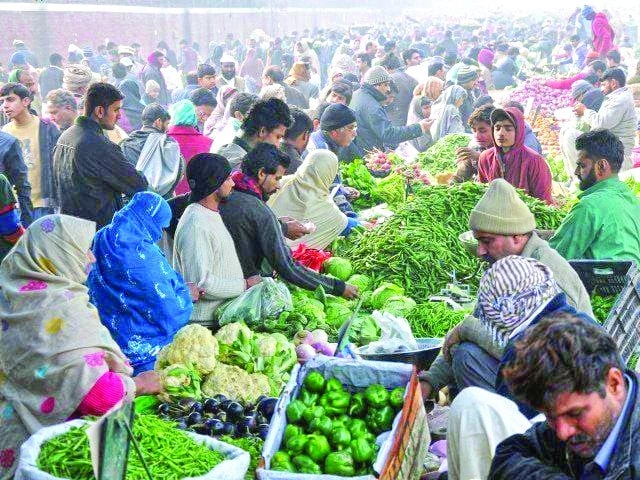
In Pakistan, tight monetary policy coincides with increasing inflation due to supply shocks, which undermine rate sign
Market analysts caution that IMF-related measures in the upcoming FY2026 budget—particularly new taxes and adjustments in energy prices—may lead to a renewed spike in inflation. PHOTO: FILE
MICHIGAN/KARACHI:
In August 2009, the State Bank of Pakistan (SBP) officially changed its monetary policy framework from monetary aggregate targeting to interest rate-based monetary policy framework called the inflation targeting-lite regime by introducing the interest rate corridor (IRC).
Within international systems, the adoption of IRC would be a transitional move for implementing a flexible or full-fledged inflation targeting monetary policy framework, where the policy rate is used as a primary tool for anchoring inflation expectations (Stone, 2003). Indeed, most of the inflation targeting central banks place corridor systems not only to stabilise overnight rates but to anchor these rates around a policy rate to strengthen monetary policy transmission and policy signalling. This has been quite contrary to the case of Pakistan, where a significant domestic literature and official SBP communication, such as working papers, research bulletin, and policy notes emphasise that the IRC was introduced as a means of reducing volatility in the weighted average overnight repo rate (repo), which has weakened policy signalling and disrupted money markets (Mahmood, 2016).
Moreover, the SBP’s working papers and policy notes also document how liquidity shocks, often driven by government cash flows and FX operations, caused overnight rates to deviate from the policymakers’ desired levels prior to 2009. The objective of reducing volatility in the repo, being operationally valid, goes against the global justification of inflation targeting-lite regime, that is, reduction in volatility is not an objective but a by-product of a smooth and coherent monetary system. Thus, the IRC was implemented into an economy where the macroeconomic conditions for interest rate-led inflation control were partially established.
It would not be the design of corridor which is challenging but the surroundings where it functions. The inflationary trends in Pakistan are heavily influenced by administered prices, especially energy, college tuition, and regulated food items, which can get adjusted through fiscal adjustments but not market forces. These non-continuous changes, which are frequently large and discrete, can undermine the relationship between policy rate and headline inflation. Consequently, the tight monetary policy coincides with increasing inflation due to supply shocks, which undermine interest rate signalling.
Pakistan is simultaneously experiencing the limitations of the monetary policy trilemma. External imbalances and exchange rate pressures are persistent, which often leads to the balance of payments conditioning of monetary policy decisions. Practically, this leads to the phases where interest rate is as influenced by external stability as it is influenced by domestic inflation and output growth. As a result, liquidity shocks are generated by FX interventions that the IRC must absorb to stabilise the money markets. This strengthens the IRC’s role as the stabiliser of money markets and not as an anchor of expectations.
Such limitations highlight why the inflation targeting regime, be it strict or flexible, has eluded it even though this has been expressed in terms of policy aspiration in the SBP’s Vision 2016-2020. Demand-driven inflation, flexible exchange rate, and limited fiscal dominance are the key elements required to stipulate inflation targeting. However, these conditions are fulfilled partially in Pakistan, which results in a system where the objective of inflation targeting exists but with a weak functional core.
Notably, this does not mean that Pakistan should drop the interest rate corridor or adopt monetary aggregates targeting. Neither does it imply that the targeting of inflation should be mechanically adopted and that structural reality be violated. The important step is to implement a transparent and flexible structure, which highlights and acknowledges Pakistan’s constraints and not obscure them.
This type of structural framework whose primary medium-term objective should be price stability, and policy is carried out with clear secondary constraints, the most important of which is external stability and administered price shocks. Rather than a point target, a medium-term inflation rate is announced by the central bank with special concentration on forecasts made publicly available. This will ensure transparency of the framework and add to the credibility stock of the central bank. Deviations that are temporary are acceptable, if they are well explained. This framework would ensure that instead of hidden goals, exchange rate pressures, reserve adequacy, and risk premium are treated as the conditioning variables. The decisions on policy rates have been explained as weighing between inflation stabilisation and external sustainability as a reminder of discretion with accountability. Credibility is anchored on transparency.
In this context, the policy rate role is re-defined. It is no longer supposed to tighten or loosen demand or to counteract the inflation produced by supply mechanisms. Rather, it pegs expectations over the medium term, constrains second-round effects and conveys commitment when the economy is under strain. The interest rate corridor appropriately works as a liquidity management tool, which ensures that there is smooth market functioning with operational control, without the strains associated with the responsibility of macroeconomic credibility, on its own.
In the long run, this structure enables sequencing as opposed to being subject to shock therapy. Reforms in administered pricing, improvement in exchange rate flexibility and reduction in fiscal dominance may relax the constraints on monetary policy over time. Flexible inflation targeting then develops naturally, as a matter of adaptation and not imitation. The introduction of the IRC to Pakistan provides more of a general lesson, that is, the sophistication of operations cannot replace the clarity of strategy.
By taking its monetary framework and its structural realities to be in accord with each other, and by ensuring the trade-offs are clear, the SBP can get closer to inflation targeting, not as an imported model, but rather as a nationally consistent policy regime.
Dr Ateeb Syed is a visiting professor of economics at Grand Valley State University, Allendale, Michigan and Tayyaba Kamran is a research assistant at the Economic Growth and Forecasting Lab, IBA








Business
Hormuz flashpoint: Why Indian-flagged ships are in focus as Middle East tensions hit global shipping – The Times of India
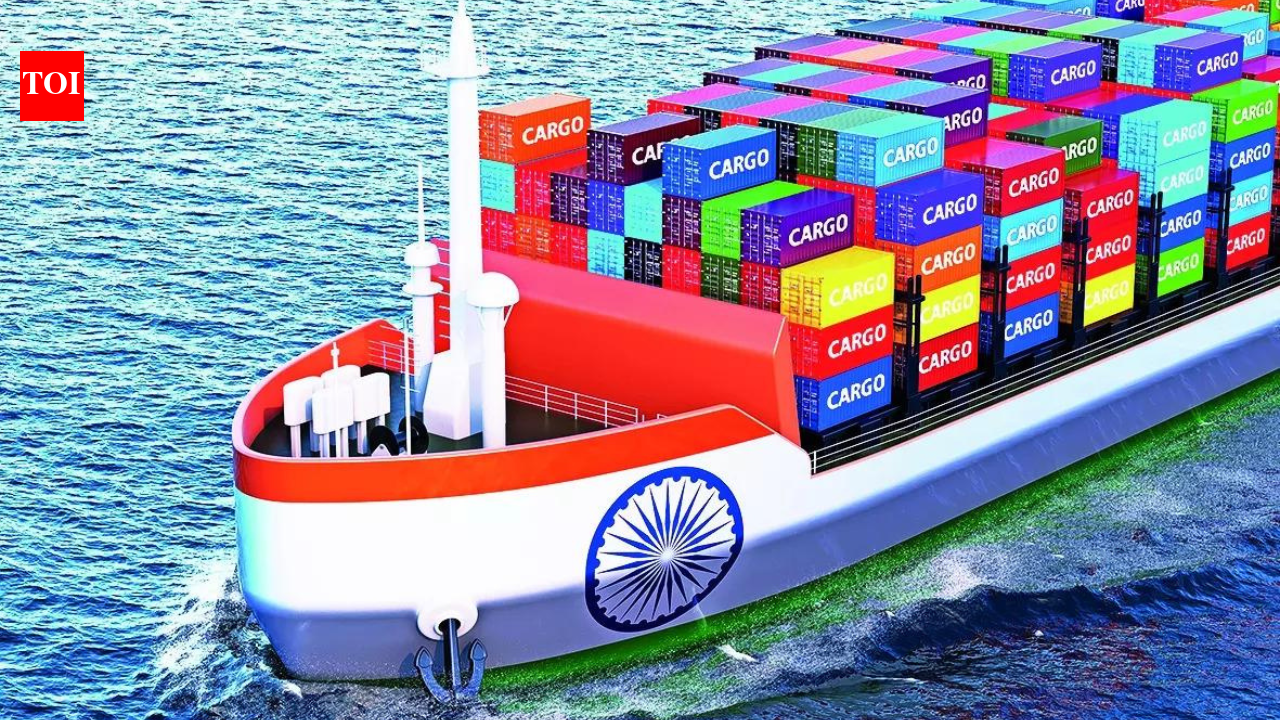
As tensions rise in Middle East and vessel safety in the Strait of Hormuz comes under renewed focus, the flag a ship flies has emerged as a key factor in maritime security, regulation and state protection.Flagging a vessel means it is registered with a country and must comply with that nation’s maritime laws and regulations. It also gives the flag state powers to investigate and penalise violations of domestic and international laws. Since regulations differ across countries, shipowners often choose jurisdictions that best suit operational and commercial needs, according to an ET report.An Indian-flagged vessel is a commercial ship registered with the Directorate General of Shipping and authorised to fly the national flag. Such vessels are governed by the Merchant Shipping Act and operate under Indian jurisdiction as a sovereign extension on the high seas.These ships are taxed by Indian authorities and must comply with Indian maritime safety, labour and environmental rules. To qualify for Indian flagging, vessels must come to domestic waters for registration and the owning company must be incorporated in India.Indian-flagged ships also receive strategic backing. India protects their interests through naval and diplomatic intervention when required. Experts say this creates a higher compliance burden than “Flag of Convenience” jurisdictions such as Panama and St Kitts.According to Rajeev Kumar Yadav, as quoted ET, director at Vertex Marine Services, Flag of Convenience systems allow vessels to be flagged from anywhere in the world within “3-4 days”.Indian-flagged ships calling at domestic ports can also benefit from lower port levies and tax liabilities, along with priority in government cargo movement and public sector charter contracts.During the Iran crisis, more than two dozen Indian ships were stranded west of the Strait of Hormuz after strict high-risk area classifications were imposed. The Indian Navy escorted several tankers to safety, though some vessels remain in the Persian Gulf.No direct attacks have been reported on Indian-flagged vessels so far, largely due to India’s balanced diplomatic approach in the crisis.However, being Indian-flagged does not give the government powers to decide freight rates or commercial destinations. The state’s role is limited to enforcing civil, criminal and regulatory laws onboard, along with international safety, environmental and labour compliance norms.India’s flagged fleet has been expanding. The Indian-flagged vessel fleet reached 14.2 million Gross Tonnage (GT) in March, with 92 vessels of 1.5 million GT joining during FY26.The long-term Maritime Amrit Kaal Vision 2047 aims to sharply raise India’s share of the global flagged fleet and increase utilisation of Indian-flagged ships from about 7 per cent currently to 30-40 per cent by 2047.
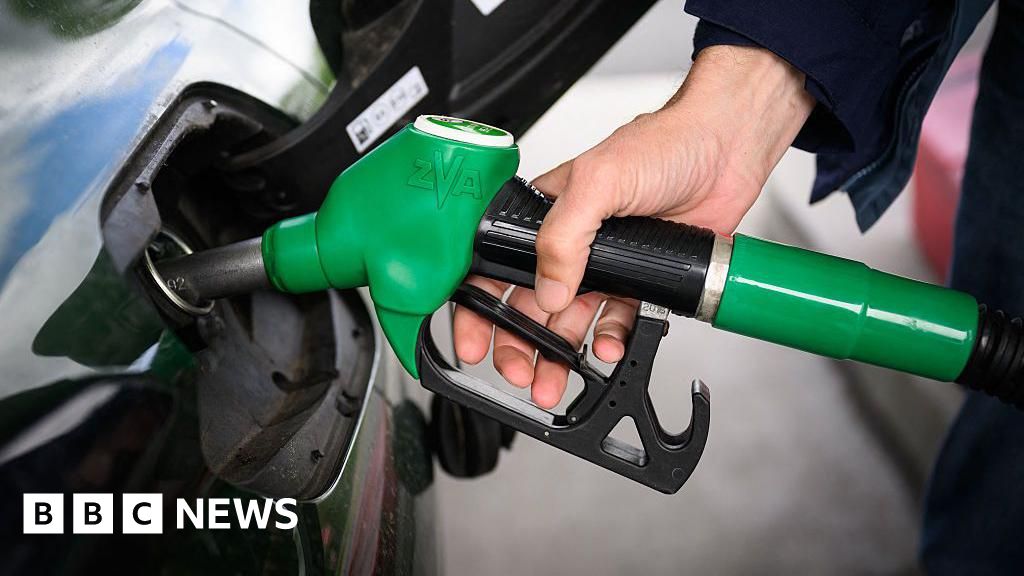
Brent crude sinks by a tenth after Iran says the key waterway is open for commercial ships for the rest of the ceasefire.
Source link

Oil prices tumbled on Friday after Iranian officials said they would allow commercial traffic to resume in the Strait of Hormuz. This lifted equity markets in Europe and New York, where major indices hit new records.
Citing the ceasefire between Israel and Lebanon, Iran’s Foreign Minister Abbas Araghchi said Tehran would lift its blockade on shipping through the key Gulf energy trade route.
“In line with the ceasefire in Lebanon, the passage for all commercial vessels through Strait of Hormuz is declared completely open for the remaining period of ceasefire,” Araghchi said.
Traffic in the strategic waterway, through which one-fifth of the world’s crude oil normally flows, has been disrupted by Iran since the US-Israeli offensive began on Feb. 28. At one point, this sent oil prices to a peak of nearly $120 a barrel and roiled the global economy.
Both Brent, the benchmark international contract, and its US equivalent WTI fell below $90 per barrel following Tehran’s announcement. Brent later cut its losses and finished at $90.38 a barrel, down 9.1%.
‘Immediate impact’
“This news is having an immediate impact on markets,” said Kathleen Brooks, research director at XTB.
The move also sent a jolt through equity markets, extending a rally in New York. There, equities have pushed ever higher since late March in anticipation of a breakthrough in the Middle East crisis.
“We had seen a big move the last two weeks, and now it’s just really pricing completely out the worst-case scenario, said Angelo Kourkafas, from Edward Jones.
Kourkafas also pointed to underlying strength in the US economy that should get more attention in the coming period as geopolitical concerns ebb.
“Geopolitical developments are moving in the right direction, and at the same time, the earning strength is hard to ignore,” Kourkafas said.
The broad-based S&P 500 finished at 7,126.06, up 1.2% for the day and 4.5% for the week.
‘Good news’
Earlier, European stocks closed higher, with both Frankfurt and Paris gaining 2%.
US President Donald Trump cheered the reopening of the Strait of Hormuz in an interview with AFP.
“We’re very close to having a deal,” Trump said in a brief telephone call with AFP from Las Vegas. He added there were “no sticking points at all” left with Tehran.
But Iran quickly pushed back on one key point.
Iran’s foreign ministry said Friday that its stockpile of enriched uranium would not be transferred “anywhere.” It rejected an earlier claim by Trump that the Islamic Republic had agreed to hand it over.
Shipping industry figures, meanwhile, gave a cautious welcome to Iran’s announcement.
A spokesman for German transportation giant Hapag-Lloyd, which has ships stuck in the Gulf, told AFP by phone that the reopening was “in general… good news.”
But he cautioned that shippers still needed details of what route vessels could take and in what order, citing fears of mines.
“One thousand ships cannot just go now to the entrance of the strait, that will be chaos. They (the Iranians) need to give clear orders,” said the spokesman, Nils Haupt.
“We would be ready to go very soon if some of these open questions can be solved within the weekend.”


‘The Naked Gun’ actor Paul Walter Hauser bloodies opponent at Maple Leaf Pro’s first US show

Iran says no date set for next round of negotiations with US
Hormuz flashpoint: Why Indian-flagged ships are in focus as Middle East tensions hit global shipping – The Times of India

-

 Politics1 week ago
Indian airlines hit hardest after Dubai limits foreign flights until May 31
-

 Entertainment5 days ago
Palace left in shock as Prince William cancels grand ceremony
-

 Sports5 days ago
The case for Man United’s Fernandes as Premier League’s best
-

 Politics1 week ago
Chinese, Taiwanese will unite, Xi tells Taiwan opposition leader
-

 Entertainment1 week ago
Dua Lipa hits major career high ahead of wedding with Callum Turner
-
 Business5 days ago
UK could adopt EU single market rules under new legislation
-
 Business1 week ago
He paid $248 in illegal tariffs for this coat. Will he ever get it back?
-

 Sports7 days ago
Lamar Jackson hits back at critics with faithful message on social media