

Tech
Infrastructure is back as Orange Business drives trusted agentic platforms | Computer Weekly


As it looks to address the changing needs of customers with four new applications driven by artificial intelligence (AI), Orange Business has clearly stated the importance and competitive differentiation nature of its core infrastructure to support digital transformation.
Unveiled at the Orange Business summit in Paris – where the enterprise arm of the global telco hosted more than 1,000 customers, developers and ecosystem partners – the new applications encompass Live Collaboration, a suite of collaboration tools; a reimagined enterprise voice communications system; an extension of the Live Intelligence platform to support enterprises with “trusted” AI agents; and the launch of Orange Drone Guardian, Europe’s first anti-drone as-a-service solution.
Putting the launches into perspective, Usman Javaid, Orange Business global chief product and marketing, observed that they come just as the company has got itself into the correct position to address the new demands of the workplace and help users employ agentic AI tools to evolve workflows and practices.
“If you go back three years, we were impacted by quite a change in the market in terms of products and services we offer. We had a lot of legacy business that was impacted by the move to cloud, and that was further accelerated with Covid. We saw that most of our portfolio was really shifting. Customers were moving from private connectivity, MPLS [multiprotocol label switching], to internet-based connectivity, from on-prem contact centres to cloud-based contact centres. AI was slowly coming in. Customers were expecting us to offer more digital, fully automated experiences, and to be honest, we were not ready for all that.
“This is where we started this massive transformation. We built a new operating model, which was based on centralised functions – one single product organisation, one single IT organisation, one single operational organisation, clear accountability. Then we looked at our portfolio and realised it was not ready for the change in time and the needs of customers. We realised that the way we serve our customers was able to [deliver] transformation, and we invested a lot in terms of our skills, our teams, to make sure [we met] the needs of our customers. Fast forward three years, and we already see the fruits of that transformation, so our customers really see the value that we bring for them.”
The plan, said Javaid, was to put Orange Business into the context of customers, who were facing increased cyber threats, where data sovereignty was becoming more important and where CEOs expected to drive new revenue and new business models from AI, and where CIOs were using AI for productivity gains and efficiency. And in this context, Javaid said it was essential to help customers be prepared for the unforeseen and offer choices so they could make decisions that would help them sustain business.
Collaboration tools for sovereign and secure solutions
The Live Collaboration tools fall in line with Orange Group’s overall strategic “Trust the Future” plan that was launched at MWC 2026, which places trust at the heart of its promise.
Live Collaboration is intended to provide a sovereign, controlled solution to reduce reliance on a single cloud collaboration provider, addressing a common challenge faced by many companies and public organisations. This can lead to unbalanced negotiation power during contract renewals and challenges in meeting the needs of employees with specialised roles, such as those handling highly sensitive data or managing business continuity contingencies.
The tools are hosted on Cloud Avenue SecNum in France, and are essentially designed to enable companies and public organisations to increase their technological independence, retain control of their sensitive data and rein in the costs of collaboration tools.
With a unified experience, the platform hosts professional collaboration systems, including email, calendars and directories, collaborative workspaces, co-editing of documents, videoconferencing, telephony and intranet, as well as enterprise integration functions, such as single sign-on, directory and calendar synchronisation, Outlook compatibility and interconnections with other communication tools.
Commercially available from March 2026 in France, the overall suite of tools is offered under a single contract and operated end-to-end by Orange Business, which is responsible for its performance, security and operations.
Key technology partners integrated for the launch of Live Collaboration include eXo Platform (digital workplace and collaborative portal), BlueMind (email), Pexip (videoconferencing), Mailinblack (email protection, antispam and antivirus), Linphone (telephony) and OnlyOffice (office suite and co‑editing).
Using agentic AI and voice to redefine customer experiences
Drawing on its vast experience in telephony, Orange Business said it is also ushering in a new era of communications with new trusted voice services powered by AI. It is looking to offer personalised, secure and more human-centric customer and employee experience, reinventing voice as the most efficient medium for employee and customer experience.
The company said that as digital engagement grows exponentially, businesses face mounting issues, such as a lack of trust in phone calls, rising impersonation fraud, overburdened customer support teams with long waiting times, and proliferating AI-generated content.
Orange Business said it is tackling these concerns strategically by expanding its enterprise communications capabilities to build trust, enhance productivity, and ensure authenticity across voice and digital channels. It noted that voice is still the preferred channel of both agents and customers for resolving complex issues, with as many as 80% of customer service agents regarding voice as their most used channel on a daily basis.
Orange Business claims to have “unparalleled experience” in operating voice and integrating telephony and customer experience (CX) solutions, with global assets that already serve over 7,000 enterprise customers and more than 100,000 customer locations across the world.
The new voice solutions have a number of key features, such as branded calling with trusted caller identity and elevated customer experience; deepfake detection to provide secure communications; Intelligent Together, AI-augmented customer care; and agentic telephony to make telephony more intelligent.
Authenticated voice communication, initially available in France and the US, allows enterprises to display their name, corporate logo and reason for calling directly onto a recipient’s mobile screen. This is designed to reduce unanswered calls, strengthen customer engagement and regain trust in the brands.
Orange Business is addressing the increasing threat of more sophisticated and accessible deepfakes by integrating advanced detection technologies to its collaboration and customer experience offers. It includes ecosystems of partners, such as Sensity and Reality Defender, for detecting fake audio, images, video and documents directly into its portfolio. This approach is intended to further help protect enterprises from fraud, impersonation and reputational damage.
Given that hallucinations and accuracy errors have to date seen many enterprises struggle with the risks of conversational AI, Orange Business said it is embedding generative AI directly into its contact centre and customer relationship management (CRM) environments, orchestrating its ecosystem of partners to automate entire customer experience (CX) interactions between enterprises and customers, from qualification to final problem solving. It said 80 million AI conversations were managed in 2025.
Agentic AI-powered cloud telephony creates an intelligent layer that optimises the outcome of calls for both callers and callees. It can understand context, provide a certain level of answers, plan the next action and autonomously manage the entire call journey.
Benefits are said to include faster response times, enhanced customer satisfaction through personalisation, and optimised costs via smarter resource planning. In collaboration with Microsoft, Orange Business is launching a co-innovation initiative to recruit customers to experience how Microsoft 365 Copilot agents in Teams, such as Interpreter, ultimately make Microsoft Teams Phone a lot smarter, saving time and making sure phone calls get the right outcome. Orange Business will be extending agentic telephony to other platforms, including Cisco Webex.
The voice solutions – relying on the Orange Business AI platform, Live Intelligence – also assist agents in real time with transcription, recommendations, sentiment analysis and post-call documentation, reducing handling times and boosting customer satisfaction.
Orange Business has also now announced a new capability within its Live Intelligence platform – Live Intelligence Studio – designed to help organisations step into the agentic AI era. As enterprises are moving beyond generative AI assistants, companies are now exploring agentic AI systems capable of autonomously executing complex, multi-step enterprise workflows, and the new platform is intended to enable enterprises and public sector organisations to design, deploy and govern autonomous AI agents securely within its trusted infrastructure.
By using Live Intelligence Studio, Orange Business said customers benefit from AI agents capable of handling intricate tasks in a secure and compliant environment. While the core Live Intelligence initially enabled simple agent creation for business users, Live Intelligence Studio now offers advanced features for developers and technical teams based on LangChain’s technology. This next level includes comprehensive tools such as end-to-end observability for monitoring performance, managing costs and ensuring output quality.
Anti-drone services to protect critical infrastructure
The new Orange Drone Guardian capabilities are seen as essential for combating a growing threat to critical national infrastructure (CNI), operators of vital importance (OIV), operators of essential services (OES), and major event organisers, public institutions and businesses.
The solution detects, identifies and classifies intrusive drones in low-altitude airspace across France, with the ability to extend coverage to other European countries. The technology is said to be capable of detecting, identifying and classifying drones, including in complex and interference-prone urban environments.
It is based on a sovereign infrastructure operated by Orange Business, including connectivity fully managed by Orange across France; a trusted cloud platform, Cloud Avenue SecNum, qualified SecNumCloud 3.2 by ANSSI and hosted in Orange Business’s sustainable datacentre in Grenoble, France; and a secure operations centre, located in France, with staff consolidating and processing field data in real time.
The service is also based on a footprint of 19,700 mobile cell sites across France operated by Totem, Orange’s TowerCo, which provides its rooftop and tower assets as strategic high points for detection sensors. This territorial coverage, said Orange Business, extends the reach of surveillance and improves detection quality, without requiring each customer to deploy and maintain its own infrastructure.
Offered on a subscription basis, the service allows organisations to receive real-time detection information without heavy upfront capital expenditure. It adapts to each customer’s specific context, such as industrial facilities, logistics platforms, ports, airports, major events and dense urban areas. Additional software modules and new types of sensors can be integrated if required, in particular, radio-sensing capabilities enabled by 5G networks. In future, modelling and analysis of sensor data over time is planned to be improved by the use of AI and digital twins.
Orange infrastructure provides a solid core for AI-powered business transformation
Yet while he noted the importance of creating applications based on AI to address customers’ needs, Orange Business CEO International Rob Willcock stressed just how vital the fundamental infrastructure that Orange offered was to coping with the demands of the new workloads that companies were facing. And that both Orange Business and its customers were focused on solving what the business problem actually is.
“If you think about most of the enterprises, they are not going to train models. They’re going to mostly infer models. And for inference, you need [fewer] GPUs [graphics processing units] and slightly different types of GPUs. The conversation with enterprises has always remained about, ‘What is the problem that we’re trying to solve? What is the use case?’ Let’s get together and build that use case.
“Now there is one condition here, in that as agentic AI kicks off … it will require more inference, compute closer to the edge. Also, this is down to what type of agentic use cases you will build, and what their latency budget is in terms of capability. One of the key strengths we bring is the mastery of our infrastructure, which means that we have more cell sites which are very close to any data source, and we have our points of presence in our fixed network. It’s also very close to any data source, and each of that infrastructure is virtualised, which means we can run any service in a point of presence.”
Willcock also stressed how the technologies that Orange Business offers can help create the required customer experiences, evolving from on-premise solutions to cloud-based ones that could offer richer and more personalised experiences to customers. These experiences are further enhanced with AI.
The Orange infrastructure, he noted, is core to all of this, and he highlighted how the company’s infrastructure definition was expanding to create layers of value to help customers stay relevant in their businesses.
Javaid added that the key point was how to ensure trust. “I believe the best place to ensure trust is the ownership of the infrastructure,” he remarked. “Once you own the infrastructure, you know where the data is, where you can access the rights to users to use [data] in a certain place. I think that is the core strength, which is where we would play. I think our customers realise the importance of infrastructure. Maybe that became old-fashioned three years ago. And if you think about our new competition, none of them has infrastructure.”

Meta is beefing up its age-verification mechanisms with an AI system that analyzes images and videos on Instagram and Facebook for “visual cues,” such as height and bone structure, to identify and delete accounts of users under the age of 13. The company announced the move amid a wave of cases in which hundreds of children have managed to evade social network access restrictions, even through simple tricks such as drawing on a mustache.
The new approach is part of a series of measures Meta adopted as part of an AI-based security strategy designed to correct the limitations of traditional methods, which rely heavily on self-reported age. With this change, the company seeks to reduce the ease with which minors access platforms that, in theory, are restricted to them.
In a press release, Meta explained that it is implementing several tools to identify contextual indicators that allow estimating a person’s age. This process includes the analysis of posts, comments, bios, and descriptions, with special attention to references related to school years or birthday celebrations—elements that can offer clues about the real age of the person who manages the account.
These tools are in addition to automated analysis techniques aimed at detecting physical traits from imagery shared to Meta’s social platforms. These include characteristics such as height and bone structure. Meta is careful to stipulate that this system is not face recognition, as it does not seek to identify specific individuals in images or videos. Instead, the company notes that, “by combining these visual insights with our analysis of text and interactions, we can significantly increase the number of underage accounts we identify and remove.”
If, based on these elements, Meta suspects that an account is managed by a child under 13, it will be suspended. The user will have to revalidate their age using the procedures established by the company to regain access; otherwise, the profile will be permanently deleted.
Meta also announced that it will expand the scope of its technology to detect users between the ages of 13 and 15 and automatically assign them teen accounts. This type of profile incorporates content restrictions and parental controls enabled by default, with the aim of providing a safer environment for this age group.
Meta began implementing age-verification tech in 2024 for Instagram users in the United States, Australia, Canada, and the United Kingdom. Now, the mechanism will be extended to Instagram accounts in Brazil and 27 European Union countries. In addition, these practices will be applied for the first time to Facebook users in the US, with plans to expand to the EU and UK next month.
Looking All Grown-Up
The new measures have been interpreted as a response to a preliminary ruling recently issued by the European Commission, which concluded that the company led by Mark Zuckerberg is in breach of the Digital Services Act for allegedly failing to effectively prevent children under 13 from using its platforms. The EU body found that the company lacks sufficiently effective mechanisms to block such access and that its current systems for identifying and suspending accounts below the age threshold are insufficient.
These criticisms are supported by the results of a survey conducted by the nonprofit Internet Matters. After surveying nearly 1,300 children and their parents in the UK, the study revealed that approximately one-third of children have successfully evaded government-imposed restrictions on access to social networking sites. In some cases, the methods employed are particularly striking.
The report, titled “The Online Safety Act: Are Children Safe Online?” showed that 46 percent of 9- to 16-year-olds believe that circumventing age controls is very easy. In total, however, only 32 percent admitted to breaking the rules.

President Donald Trump’s negotiators face the arduous task of trying to convince the president that a deal he previously rejected is their best option in Iran.
Last month, Trump initially gave his blessing for a so-called “cash for uranium” deal, under which the US would release around $20 billion in frozen funds in exchange for Iran handing over its stockpile of highly enriched uranium, sources familiar with the matter tell WIRED.
Trump’s negotiators, vice president JD Vance, special envoy Steve Witkoff and Jared Kushner, Trump’s son in law, received repeated approvals from the president while they were in Islamabad, giving them confidence a deal was close.
But the deal unraveled, in part because Trump was warned by his team that there was a risk he could be seen as giving Iran “pallets of cash”—an echo of his own oft-stated criticism of Barack Obama’s Iran deal—and he pulled the plug, the sources said.
Except now, that’s once again the cornerstone of the current proposal.
The current negotiations for a memorandum of understanding that could guide talks on a nuclear deal center on Iran handing over its stockpile of highly enriched uranium, and a moratorium on further uranium enrichment for somewhere around 12 to 15 years, Axios earlier reported.
In exchange, the US would offer a combination of billions in sanctions relief and the gradual release of frozen funds after gaining control of the enriched uranium, in order to destroy it or blend it down so it cannot be used for a nuclear weapon.
While a memorandum of understanding might get Iran to the table, that framework is not materially different from what was discussed previously in Islamabad and rejected by Trump, who has repeatedly told advisers in recent weeks he is against sending money to Iran, sources tell WIRED.
Some of Trump’s advisers say the decision of whether Trump ultimately blesses the framework is likely to come down to how badly he wants a deal. There are few options to incentivize Iran, they add, and financial aid has been the most compelling.
“They are going to have to do something like that, and it’s better than the Obama deal, so he should take it,” one Trump adviser said on the condition of anonymity, referring to the Joint Comprehensive Plan of Action. Trump has long criticized that deal for having provisions similar to ones currently under discussion, like a sunset clause on nuclear enrichment and the US lifting some sanctions.
For all the machinations in the West Wing, it has not gone unnoticed by Trump’s orbit that some of his top players have been conspicuous in their absence on Iran, according to two administration officials familiar with the matter.
Marco Rubio, the secretary of state and national security adviser, has been part of the group advising Trump on Iran and, physically speaking, spends most of his time in his West Wing office overlooking West Executive Avenue instead of at the State Department.
Rubio was happy to brief reporters on Tuesday, but he only did so at the request of the White House, a person familiar with the matter said, with his advisers wary of him getting involved in Iran negotiations that could as easily unravel as succeed.
In fact, given the downside risk, Rubioworld has been saying they were surprised that Vance asked to be a part of the Iran talks—a contention denied by people close to the vice president, who said he was ordered to by Trump.
Rubio instead has been more focused on Cuba, and on Venezuela, where assistant secretary of state Caleb Orr has been involved in overseeing new private equity investment to rebuild the country’s oil infrastructure.
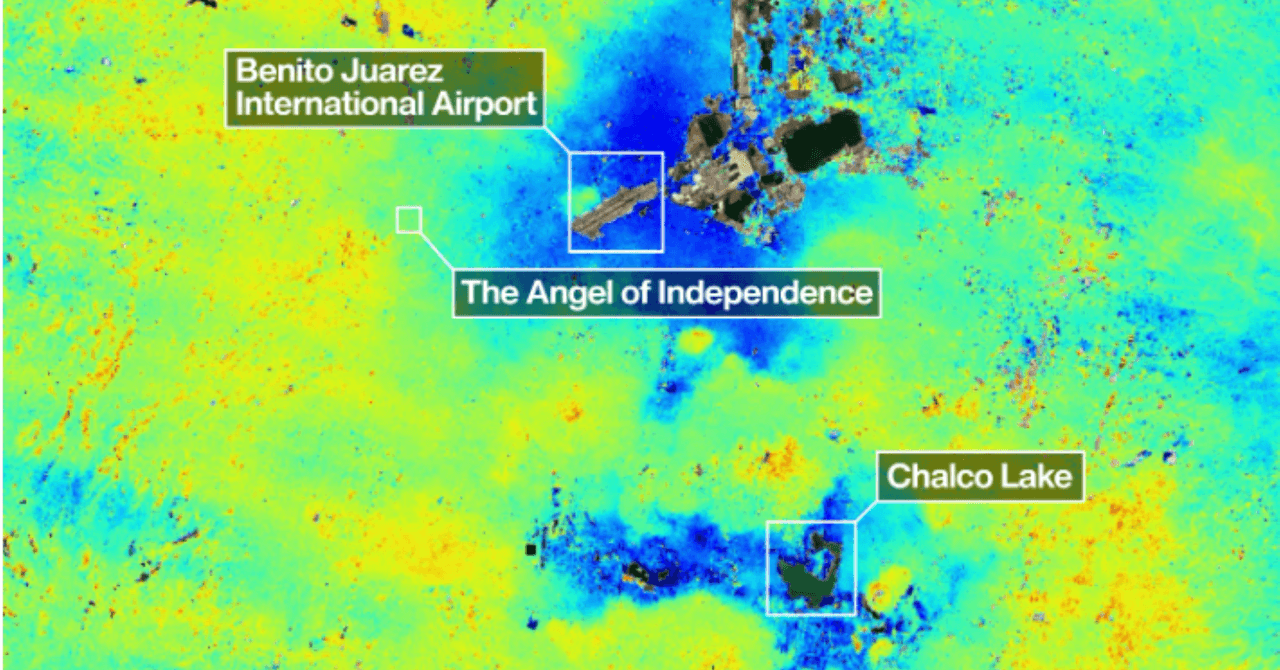
Mexico City is one of the fastest sinking cities in the world. Now, a powerful satellite from the US National Aeronautics and Space Administration (NASA) confirms the accelerated advance of this silent threat that puts nearly 20 million people at risk.
The satellite designed by NASA and the Indian Space Research Organization (ISRO), known as NISAR (NASA-ISRO Synthetic Aperture Radar), was able to capture with unprecedented precision the magnitude and evolution of this phenomenon in different areas of the Mexican capital. The analysis is based on preliminary measurements taken from space between October 2025 and January of this year, during the dry season in Mexico City.
Their findings were captured in a map that shows how the subsurface of the metropolis is shifting. In the map, NASA identified areas with subsidence greater than 2 centimeters per month (marked in dark blue). The agency specifies that the areas marked in yellow and red could correspond to background signals (or noise) that are expected to diminish as the satellite instrument collects more data.
The image also highlights the location of Benito Juarez International Airport, located near Lake Nabor Carrillo, which operates in the middle of an area with accelerated subsidence. “Images like this confirm that the NISAR measurements are in line with expectations,” said Craig Ferguson, deputy director of the project.
Mexico City sits atop the clay and lake bed of ancient Lake Texcoco. NASA explains that this process is a consequence of intense groundwater pumping and the increasing weight associated with urban development. Both factors have caused the compaction of the ancient lake soil for more than a century.
The phenomenon was first documented in 1925 by engineer Roberto Gayol. Between the 1900s and 2000s, some areas experienced a drop of nearly 35 centimeters per year, causing damage to infrastructure such as the Metro, one of the largest mass transit systems in the Americas.
A study conducted in 2024 by Dario Solano-Rojas, a remote-sensing specialist at the National Autonomous University of Mexico, found that subsidence is not uniform. After analyzing changes in the city’s elevation between 2011 and 2020, the researcher and his team concluded that subsidence rates are highly variable: While some areas register up to 50 centimeters per year, in others the phenomenon is almost imperceptible.
This creates “differential subsidence,” where the ground sinks unevenly not only across square kilometers or city blocks, but even on a meter scale. When a street, railway, or building sinks differently at one end compared to the other, its stability is compromised.


Dave Chappelle clarifies his intentions with Trans jokes

Warner Bros. Discovery books $2.9 billion net loss tied to Paramount deal, restructuring costs

Jane Fonda breaks silence after ex-husband Ted Turner’s death

-

 Sports1 week ago
Pro wrestling star Steph De Lander reveals how colleague’s advice helped lead her to title triumph at ACW
-
 Business7 days ago
PSX plunges over 4,800 points | The Express Tribune
-

 Tech1 week ago
This Ambitious Laptop Doesn’t Leave Much Room for Your Hands
-

 Tech6 days ago
Almost half of UK businesses hit by cyber attacks | Computer Weekly
-

 Fashion1 week ago
Egypt’s SCZONE signs $8-mn Turkish textile project in Qantara West
-
 Business1 week ago
BP profits more than double as oil trading booms amid Iran war
-

 Fashion6 days ago
Canada’s Lululemon appoints Esi Eggleston Bracey to board of directors
-
Uncategorized1 week ago
[CinePlex360] Some plugins have failed to updat