As a play on the word “genesis”, the company’s brand evokes beginnings and new life, but for chief sustainability officer (CSO) Bridgette McAdoo, arriving at Genesys was founded in a series of roles and achievements, delivering broad and deep knowledge and experience.
McAdoo started as an engineer at Nasa before moving into sustainability via pivotal roles at Yum! Brands and the Worldwide Fund for Nature (WWF, formerly the World Wildlife Fund). She joined Genesys in 2020.
With her engineering degree supplemented by a master’s in business administration (MBA) from the Drucker School of Management, she understands challenges and devises solutions from practical, empirical, science-based and business perspectives.
At Genesys, she has worked on integrating sustainability into business key performance indicators (KPIs) with transparency and measurable outcomes, embedding sustainability into innovation and operations. Indeed, McAdoo emphasises an evolution towards formalised strategies and concrete practice since 2008.
“Back then, they had constraints, where people did not feel it was a business imperative. You didn’t understand how to move the needle, versus today we have established what we think ‘good’ looks like, what the need is, and why it’s such a value driver,” she tells Computer Weekly.
“And the unfortunate reality is now you’re facing a different battle of how to work with the inconsistencies across different regions on the importance of this space,” she says. “There’s so much misinformation now around sustainability.”
By the time McAdoo was finishing her MBA in 2010, she had been working as a contractor at Nasa for almost 10 years. That had included “good core engineering work” on the space programme for different companies, including Hamilton engineering and aerospace firms Sundstrand and United Technologies. The latter is now merged with Raytheon.
“Once I was taking my MBA classes, I really got into social responsibility and principles from Peter Drucker,” she says.
A 20th-century academic, Drucker became known for a human-oriented approach to organisational thinking and management science.
“I fell in love with this idea that my work could be my legacy, working to benefit society,” McAdoo confirms.
A taste of the supply chain
After a chance meeting for the National Black MBA Association at a conference, Yum! Brands’ then chief sustainability officer put to McAdoo that her specific background was valuable.
“He wanted me to come in and focus on the supply chain and the ops part of sustainability for them globally. So that’s what I did,” she says.
PepsiCo spin-off Yum! includes fast food giants KFC, Taco Bell and Pizza Hut. McAdoo was tasked with looking at ways to ensure the company examined the sourcing for its products, including how foodstuffs were grown. In addition, she had a focus on external relations on sustainability issues.
“I got into social responsibility and principles from Peter Drucker. I fell in love with this idea that my work could be my legacy, working to benefit society”
Bridgette McAdoo, Genesys
McAdoo “kind of fell in love” with the topic. One partner was the WWF, so she followed that up with the non-profit role at WWF eight years later.
“They were such a strong partner,” she says. “I loved working with WWF on that intersection between the food and water organisations. So all the restaurants, hotels, anything you can think of that has a large supply chain and food and water code, Pepsi had worked with them.”
The mission was partly to help WWF counter the fact that a lot of the time, while conservation organisations want conversations and want to work with businesses, they’re deep into the science – as they should be – it can come across to profit-driven entities as impractical, she explains.
Of course, science done right is not based on flights of fancy. It can be the most practical thing ever.
But McAdoo points out that sometimes science-based organisations, perhaps especially non-profits, can include stakeholders who have never been in a business environment. There’s not a shared language to have productive conversations about how to drive practical changes or integrate them into a business.
That can end up being seen as a utopian perspective with little reference to the day-by-day realities of earning revenues and staying sustainable in the business sense.
“That’s where the disconnect happens,” she says. “So you still have to show that there’s a business case behind it. Most companies want to do the right thing, but they also have to make a profit. You have to show them that you can do both. And that’s the power of the sustainability role.”
Onwards and upwards
Moving to Genesys in late 2020 realised a new opportunity for McAdoo to progress her mission.
You have to show that there’s a business case behind [sustainability]. Most companies want to do the right thing, but they also have to make a profit. You have to show them that you can do both. And that’s the power of the sustainability role Bridgette McAdoo, Genesys
“It’s been an absolutely beautiful ride. Night and day, people ask how you go from space shuttles to tacos and pizzas, to ‘being a panda’ (referencing the WWF logo), and into the AI [artificial intelligence] space and tech, and I always tell them it’s very intentional,” she says.
Regardless of product or sector, the overarching goals have been about ensuring knowledge and applying it. Organisations must have proper protocols and processes in place to scale responsibly. At the same time, they need to understand how employees can have a place where they feel seen and belong, while ensuring societal impacts do not hinder or harm the workplace or its growth.
“That’s the same, regardless. I’m just blessed that I get to do it at Genesys, a company 100% committed to it, top down and bottom up,” says McAdoo.
Every month or year, there’s something new to talk about when it comes to sustainability. At the same time, the role reinforces her “unwavering commitment to the work” of leaving society better than she found it.
McAdoo emphasises the need for transparency coupled with good, accurate, appropriate data, especially throughout the supply chain. For years, obtaining reliable data and information on which to base sustainability decisions, that don’t also harm a business in a two steps forward, three steps back kind of way, has been challenging. Only now is sustainability coming to the fore for many, if not all, businesses, partly as a result of CSO efforts.
It’s harder than it might sound. It’s about getting everyone to make sure they are being transparent and that the necessary supply chain information is available. It includes doing all diligence around developing and implementing guidelines that facilitate information sharing that ultimately feeds sustainability initiatives and environment, social and governance (ESG) audits.
“For any organisation, supply chain data is always going to be the hardest part, getting that transparency for your ecosystem,” says McAdoo.
Genesys has been reporting on its related strategy and measurable outcomes for almost five years now, showing “progress and momentum year on year”. That includes emissions reduction, growth in volunteerism, sustainable scalability, and sustainable design implementation and practices. This, too, has been quite intentional – it doesn’t occur by accident, she emphasises.
“We’ve integrated sustainability into our business KPIs. It’s become just an organic extension of how we work and how we grow. And it’s a passion for me whenever I get to merge my personal and professional values because of Genesys,” she says. “Because sustainability hasn’t just been an add-on. We’re not checking boxes.”
Sustaining the energy
McAdoo also says that, despite the politics of the past nine months or so – especially, as a casual observer might note, in the US – “the energy was already there” and has been sustained. The task of embedding and sustaining better policy and practice, setting goals and reporting on those goals continues. It was already embedded into how Genesys innovates and how it operates and grows.
We’ve integrated sustainability into our business KPIs. It’s become just an organic extension of how we work and how we grow Bridgette McAdoo, Genesys
Its sustainable supply chain initiatives continue, therefore, including the implementation of strategies to tackle Scope 3 emissions and green events and internal emissions management. The work of implementing and enhancing procurement guidelines in line with ESG audits, overseen by Leadership in Energy and Environmental Design (LEED)-certified offices across the globe, also continues. Three new such offices have opened in the past year – in Budapest, Riyadh and Manila.
McAdoo adds that it also means thinking seriously about AI, working with the engineering and product teams on sustainable AI by design, to avoid wasting energy, including in the cloud.
“There’s a multi-layered approach. Different things that happen across our business and across our ecosystem to ensure that we continue to reduce our emissions,” she says. “Every decision we make is measured, not just by our business outcomes, but also the impact that’s going to have, with the future in mind.”
Regional differences in applicability remain, of course, not least with respect to inconsistent or patchy regulatory frameworks. Politics does and will likely always influence reporting requirements, including around climate and the environment.
McAdoo agrees that regions and governments could work together better sometimes, accelerating emissions reduction and sustainability. But that doesn’t mean companies are taking their eyes off the ball or expect to relax their commitments. Apart from anything else, sustainability remains a differentiator for Genesys, not least because that matters to customers.
There’s often a “very precarious balance” to strike, especially for global entities that must meet the needs of customers worldwide. And there have been headwinds. Rollbacks and dilutions thus far include anticipated US Securities Exchange Commission (SEC) climate rules and European Union Corporate Sustainability Reporting Directive (CSRD) guidelines, she notes.
“I think that’s what people were hoping was going to happen with the CSRD, and then that got rolled back with all the political changes around climate reporting and just climate in general, whether it’s in the US or the UK,” says McAdoo. “But we’re going to continue to do the work.”
Oil prices surged on Monday following the United States and Israel’s attacks on Iran this weekend, as some analysts predict that it could soon reach over $100 a barrel. Amid escalating attacks on oil and gas infrastructure in the region and stopped traffic in a crucial shipping route, experts tell WIRED that how the White House directs the conflict over the coming week—as well as Iran’s and other oil producers’ responses—will be key in determining just how high prices eventually climb.
The price of Brent crude jumped to almost $80 a barrel—a nearly 13 percent increase over Friday’s prices—when markets opened Sunday evening. The market has been pricing in the risk of the US’s aggressive stance toward Iran for months, says Tyson Slocum, the director of the energy program at the progressive think tank Public Citizen, insulating prices from an even more severe jump. But the disorganized US follow-through to the initial attack—which killed Ayatollah Ali Khamenei, Iran’s supreme leader—is introducing much more uncertainty.
“For all of Trump saying, ‘Hey, you know, we took out Khamenei, we knew exactly where he was,’—apparently we didn’t do the same for Iran’s attack capabilities,” Slocum says. “It seems like our plan was to take out Khamenei and then hope for the best.”
Iran controls the Strait of Hormuz, one of the most important shipping routes in the world. One out of every five barrels of oil travels through the strait. Major members of the Organization of the Petroleum Exporting Countries (OPEC), the world’s dominant oil and gas cartel, rely almost entirely on the strait to get their product out of the region.
“As long as I have been in the oil market, Iran and the closure of the Strait of Hormuz has been kind of the ultimate risk scenario for prices,” says Canadian oil market researcher Rory Johnston. Usually, he says, OPEC would respond to an international crisis that involves oil by increasing production. “But if OPEC’s emergency production is on the other side of the problem area, it doesn’t do as much good.” Johnston compares the region to a garden hose, where a kink in one section can decrease output.
Throughout the weekend, while Iranian officials sent mixed messages on whether the strait is formally closed, traffic through the strait dropped to near zero. Insurance companies have jacked up policies on ships traveling through the strait, while some ships have been hit by drone strikes. What seems to be happening, Johnston says, is more of a “voluntary closure” than an official one.
There are worse scenarios for oil prices that could unfold in the coming days than just the closure of the strait. In September of 2019, drones hit major oil production facilities east of the Saudi Arabian capital of Riyadh. While the Houthi rebel movement in Yemen publicly claimed responsibility for the attack, US officials blamed Iran. The attack temporarily shot oil prices up 15 percent.
On Monday, Saudi officials said that they had closed a major domestic refinery following drone strikes, while a few other oil and gas fields across the region were also shut down. Qatar LNG, the country’s state-run liquefied natural gas producer, said Monday it was shutting down production due to drone strikes, sending gas prices in Europe spiking. Johnston says that continued, serious strikes like these could have a massive impact on prices.
“Going back to the garden hose thing … [that would be] more like taking a gun and blasting off the faucet,” Johnston says.
Clayton Seigle, a senior fellow at the Center for Strategic and International Studies, a think tank based in Washington, DC, agrees. “The more desperate Iran becomes, the greater likelihood for it to use energy as leverage to advance its interests,” he says. “If tankers abandon the Gulf trade in large numbers, and certainly if major oil infrastructure is damaged, we’re likely to see triple-digit crude prices again.”
Apple’s first hardware launch of 2026—not counting the second-generation AirTag it debuted at the end of January—is the next iteration of the price-friendly iPhone: the iPhone 17e. The company announced the handset via an online press release, ahead of its “Special Apple Experience” in New York City this Wednesday.
The iPhone 17e opens for preorder today and will be widely available on March 11.
E for Effort
Apple has stuck with the same 6.1-inch OLED display as the iPhone 16e, down to the same old-school notch design. That means you won’t get the sleek look of the Dynamic Island, which also doubles as a live notifications display. Thankfully, if you’re worried about durability, this iPhone has the same Ceramic Shield 2 front glass protecting the display as its pricier siblings, giving it a nice strength boost from the previous generation.
Apple did not upgrade the screen with its ProMotion refresh rate tech, as it’s stuck at 60 Hz. This capability is the number of times the screen refreshes with images—the higher the better, as your display will appear smoother, with interactions feeling more fluid. It’s something the company has offered in the iPhone Pro models, and finally enabled in 2025 with its entire iPhone 17 range, but you’ll have to upgrade for the luxury. It’s a shame, as most budget Android phones offer 120 Hz as standard, even devices as cheap as $200. That also means the iPhone 17e doesn’t have the option to enable an always-on display.
Arguably, the best upgrade is the addition of MagSafe, the magnetic ring that has been embedded in the back of mainline iPhones since the iPhone 12. Apple confusingly didn’t include it with the iPhone 16e despite a healthy accessory market that would have made the iPhone 16e a little more versatile. While the 16e still had basic wireless charging, with the iPhone 17e, you can take advantage of faster magnetic wireless charging at 15 watts (plus access to MagSafe accessories).
This iPhone is powered by the A19 chipset, which debuted on the iPhone 17, though there’s one less graphics core, so graphics performance is a small step below. That’s in line with what Apple did with the iPhone 16e and the iPhone 16 that came before. Apple didn’t share RAM details yet, but it’s likely that the iPhone 17e has 8 GB of RAM like its predecessor, whereas the rest of the iPhone 17 lineup has 12 GB.
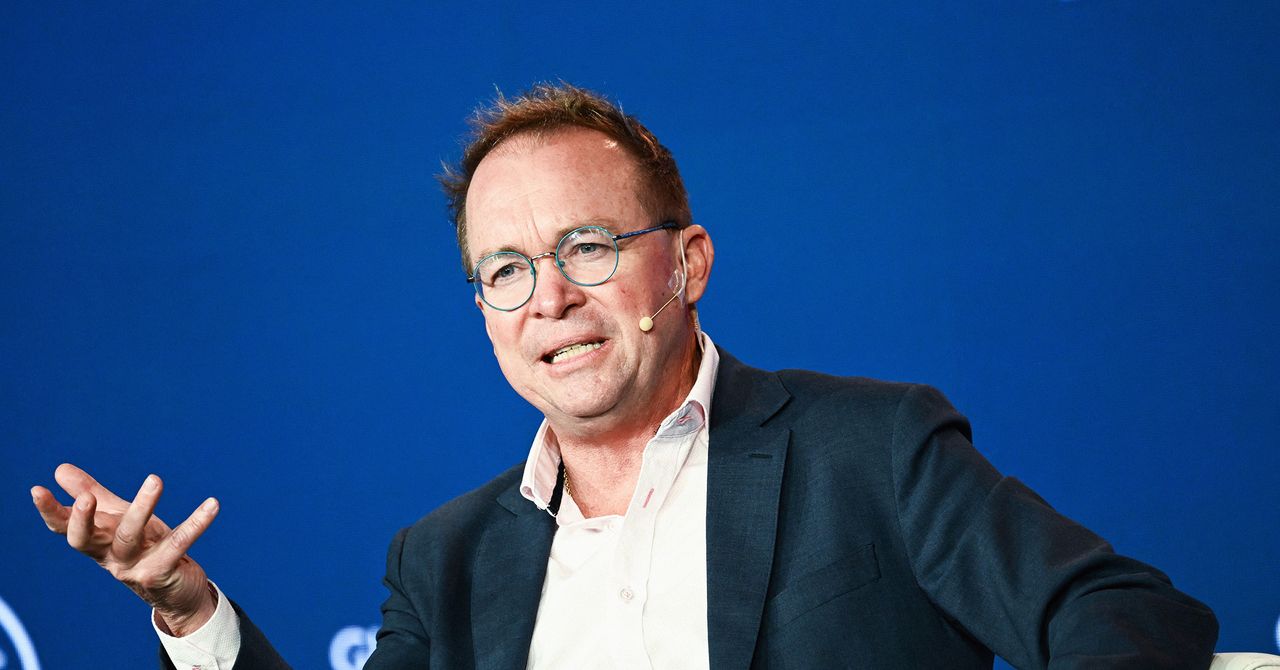
Mick Mulvaney wants to be clear: He really likes gambling. “You’re talking to the only former member of Congress who’s won a poker tournament in Las Vegas,” he tells WIRED. When he was representing South Carolina in the US House of Representatives, he pushed for the state to allow sports betting.
Because of his background, Mulvaney, a former Trump administration official, says he can tell when something is gambling—and that the sports contracts on prediction markets fit the bill. “You know the old saying, if it walks like a duck and quacks like a duck, it’s a duck?” he asks. “If it looks like a sports bet, if it sounds like a sports bet, if it pays off like a sports bet, if it’s on a sporting event—it’s a sports bet.”
Mulvaney, who was President Trump’s acting White House chief of staff from 2019 to 2020, is now leading a new advocacy coalition called Gambling Is Not Investing, which will lobby for prediction markets to be regulated by state gambling laws. He joins a number of other prominent Republicans calling for similar rules. Earlier this month, former New Jersey Governor Chris Christie and current Utah Governor Spencer Cox both spoke out against the current federal approach to regulating prediction markets. (Christie also used the “quack like a duck” line.)
These developments are part of a fierce political battle over how prediction markets are regulated. On the federal level, the Commodity Futures Trading Commission (CFTC) oversees these platforms, which are currently classified as derivatives markets. While a traditional sportsbook will offer customers a chance to place a bet on which team will win or lose a game, a prediction market will offer an “event contract” on the outcome. Critics view the difference as little more than a loophole, and state authorities from across the country are currently pursuing lawsuits against prediction market companies like Kalshi, alleging that they violate state gambling laws. (While these markets offer event contracts on a wide variety of topics, sporting events are their most popular offerings.) “I love the CFTC, but they’re not set up to do this,” says Mulvaney.
Recently, a group of 23 Democratic Senators sent the CFTC a letter urging it to allow these court cases to play out. It did not appear to go over well; CFTC head Michael Selig insists that prediction markets are correctly classified, and that his agency has jurisdiction over the industry. After Selig released a video promising to see those who “challenge our authority” in court, the CFTC even took the unprecedented step of filing a brief in support of the cryptocurrency platform Crypto.com, which faces a lawsuit from Nevada regulators over its prediction market offering.
During the Biden Administration, the CFTC took a notably different approach to prediction markets, even fining Polymarket $1.4 million for failing to register as a derivatives market and temporarily blocking it from operating in the US.
Now, though, the agency’s friendlier approach appears to dovetail with the White House’s interest in the industry. The Trumps have numerous ties to the prediction market world. Truth Social, the social media platform majority-owned by President Trump and his family, is planning its own prediction market offering, reportedly called Truth Predict. Donald Trump Jr is an advisor to both Kalshi and Polymarket, and his venture capital firm has invested in the latter.
But the launch of Gambling Not Investing demonstrates that there is a growing wing of the Republican party that feels the prediction markets need more guardrails. Its founding member organizations include a number of conservative consumer advocacy groups, including Moms for America, Consumer Action for a Strong Economy, and Frontiers of Freedom.
Mulvaney is hopeful that he can make his case to the current White House. “Their default position is going to be to regulate less, not more. And I respect that,” he says. “But I also know that in the first Trump administration, when there were common sense reasons to do some regulation, that we did that.”










 Politics1 week ago
 Tech1 week ago
 Sports1 week ago
 Entertainment1 week ago

 Entertainment1 week ago