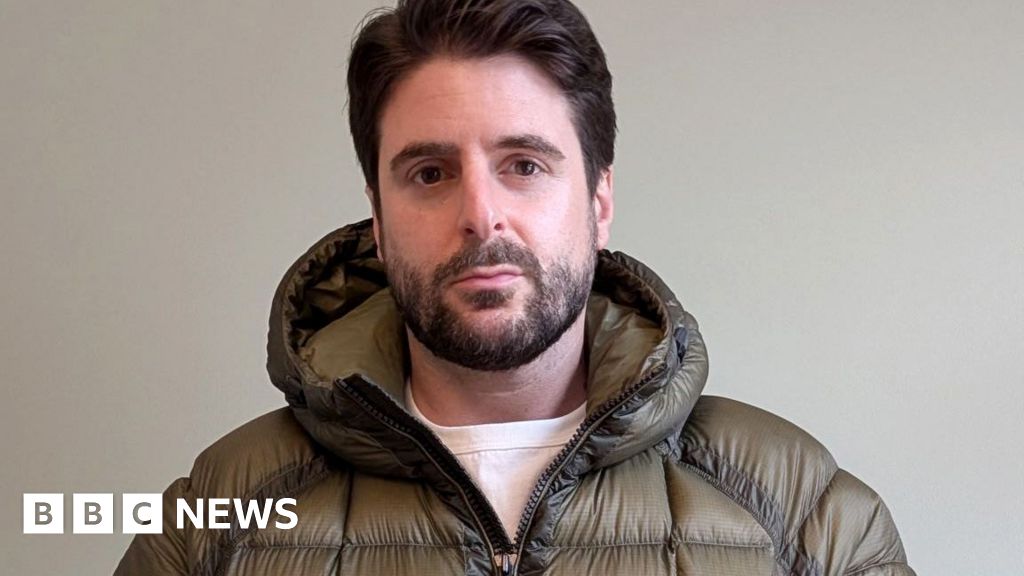
As a play on the word “genesis”, the company’s brand evokes beginnings and new life, but for chief sustainability officer (CSO) Bridgette McAdoo, arriving at Genesys was founded in a series of roles and achievements, delivering broad and deep knowledge and experience.
McAdoo started as an engineer at Nasa before moving into sustainability via pivotal roles at Yum! Brands and the Worldwide Fund for Nature (WWF, formerly the World Wildlife Fund). She joined Genesys in 2020.
With her engineering degree supplemented by a master’s in business administration (MBA) from the Drucker School of Management, she understands challenges and devises solutions from practical, empirical, science-based and business perspectives.
At Genesys, she has worked on integrating sustainability into business key performance indicators (KPIs) with transparency and measurable outcomes, embedding sustainability into innovation and operations. Indeed, McAdoo emphasises an evolution towards formalised strategies and concrete practice since 2008.
“Back then, they had constraints, where people did not feel it was a business imperative. You didn’t understand how to move the needle, versus today we have established what we think ‘good’ looks like, what the need is, and why it’s such a value driver,” she tells Computer Weekly.
“And the unfortunate reality is now you’re facing a different battle of how to work with the inconsistencies across different regions on the importance of this space,” she says. “There’s so much misinformation now around sustainability.”
By the time McAdoo was finishing her MBA in 2010, she had been working as a contractor at Nasa for almost 10 years. That had included “good core engineering work” on the space programme for different companies, including Hamilton engineering and aerospace firms Sundstrand and United Technologies. The latter is now merged with Raytheon.
“Once I was taking my MBA classes, I really got into social responsibility and principles from Peter Drucker,” she says.
A 20th-century academic, Drucker became known for a human-oriented approach to organisational thinking and management science.
“I fell in love with this idea that my work could be my legacy, working to benefit society,” McAdoo confirms.
A taste of the supply chain
After a chance meeting for the National Black MBA Association at a conference, Yum! Brands’ then chief sustainability officer put to McAdoo that her specific background was valuable.
“He wanted me to come in and focus on the supply chain and the ops part of sustainability for them globally. So that’s what I did,” she says.
PepsiCo spin-off Yum! includes fast food giants KFC, Taco Bell and Pizza Hut. McAdoo was tasked with looking at ways to ensure the company examined the sourcing for its products, including how foodstuffs were grown. In addition, she had a focus on external relations on sustainability issues.
“I got into social responsibility and principles from Peter Drucker. I fell in love with this idea that my work could be my legacy, working to benefit society”
Bridgette McAdoo, Genesys
McAdoo “kind of fell in love” with the topic. One partner was the WWF, so she followed that up with the non-profit role at WWF eight years later.
“They were such a strong partner,” she says. “I loved working with WWF on that intersection between the food and water organisations. So all the restaurants, hotels, anything you can think of that has a large supply chain and food and water code, Pepsi had worked with them.”
The mission was partly to help WWF counter the fact that a lot of the time, while conservation organisations want conversations and want to work with businesses, they’re deep into the science – as they should be – it can come across to profit-driven entities as impractical, she explains.
Of course, science done right is not based on flights of fancy. It can be the most practical thing ever.
But McAdoo points out that sometimes science-based organisations, perhaps especially non-profits, can include stakeholders who have never been in a business environment. There’s not a shared language to have productive conversations about how to drive practical changes or integrate them into a business.
That can end up being seen as a utopian perspective with little reference to the day-by-day realities of earning revenues and staying sustainable in the business sense.
“That’s where the disconnect happens,” she says. “So you still have to show that there’s a business case behind it. Most companies want to do the right thing, but they also have to make a profit. You have to show them that you can do both. And that’s the power of the sustainability role.”
Onwards and upwards
Moving to Genesys in late 2020 realised a new opportunity for McAdoo to progress her mission.
You have to show that there’s a business case behind [sustainability]. Most companies want to do the right thing, but they also have to make a profit. You have to show them that you can do both. And that’s the power of the sustainability role Bridgette McAdoo, Genesys
“It’s been an absolutely beautiful ride. Night and day, people ask how you go from space shuttles to tacos and pizzas, to ‘being a panda’ (referencing the WWF logo), and into the AI [artificial intelligence] space and tech, and I always tell them it’s very intentional,” she says.
Regardless of product or sector, the overarching goals have been about ensuring knowledge and applying it. Organisations must have proper protocols and processes in place to scale responsibly. At the same time, they need to understand how employees can have a place where they feel seen and belong, while ensuring societal impacts do not hinder or harm the workplace or its growth.
“That’s the same, regardless. I’m just blessed that I get to do it at Genesys, a company 100% committed to it, top down and bottom up,” says McAdoo.
Every month or year, there’s something new to talk about when it comes to sustainability. At the same time, the role reinforces her “unwavering commitment to the work” of leaving society better than she found it.
McAdoo emphasises the need for transparency coupled with good, accurate, appropriate data, especially throughout the supply chain. For years, obtaining reliable data and information on which to base sustainability decisions, that don’t also harm a business in a two steps forward, three steps back kind of way, has been challenging. Only now is sustainability coming to the fore for many, if not all, businesses, partly as a result of CSO efforts.
It’s harder than it might sound. It’s about getting everyone to make sure they are being transparent and that the necessary supply chain information is available. It includes doing all diligence around developing and implementing guidelines that facilitate information sharing that ultimately feeds sustainability initiatives and environment, social and governance (ESG) audits.
“For any organisation, supply chain data is always going to be the hardest part, getting that transparency for your ecosystem,” says McAdoo.
Genesys has been reporting on its related strategy and measurable outcomes for almost five years now, showing “progress and momentum year on year”. That includes emissions reduction, growth in volunteerism, sustainable scalability, and sustainable design implementation and practices. This, too, has been quite intentional – it doesn’t occur by accident, she emphasises.
“We’ve integrated sustainability into our business KPIs. It’s become just an organic extension of how we work and how we grow. And it’s a passion for me whenever I get to merge my personal and professional values because of Genesys,” she says. “Because sustainability hasn’t just been an add-on. We’re not checking boxes.”
Sustaining the energy
McAdoo also says that, despite the politics of the past nine months or so – especially, as a casual observer might note, in the US – “the energy was already there” and has been sustained. The task of embedding and sustaining better policy and practice, setting goals and reporting on those goals continues. It was already embedded into how Genesys innovates and how it operates and grows.
We’ve integrated sustainability into our business KPIs. It’s become just an organic extension of how we work and how we grow Bridgette McAdoo, Genesys
Its sustainable supply chain initiatives continue, therefore, including the implementation of strategies to tackle Scope 3 emissions and green events and internal emissions management. The work of implementing and enhancing procurement guidelines in line with ESG audits, overseen by Leadership in Energy and Environmental Design (LEED)-certified offices across the globe, also continues. Three new such offices have opened in the past year – in Budapest, Riyadh and Manila.
McAdoo adds that it also means thinking seriously about AI, working with the engineering and product teams on sustainable AI by design, to avoid wasting energy, including in the cloud.
“There’s a multi-layered approach. Different things that happen across our business and across our ecosystem to ensure that we continue to reduce our emissions,” she says. “Every decision we make is measured, not just by our business outcomes, but also the impact that’s going to have, with the future in mind.”
Regional differences in applicability remain, of course, not least with respect to inconsistent or patchy regulatory frameworks. Politics does and will likely always influence reporting requirements, including around climate and the environment.
McAdoo agrees that regions and governments could work together better sometimes, accelerating emissions reduction and sustainability. But that doesn’t mean companies are taking their eyes off the ball or expect to relax their commitments. Apart from anything else, sustainability remains a differentiator for Genesys, not least because that matters to customers.
There’s often a “very precarious balance” to strike, especially for global entities that must meet the needs of customers worldwide. And there have been headwinds. Rollbacks and dilutions thus far include anticipated US Securities Exchange Commission (SEC) climate rules and European Union Corporate Sustainability Reporting Directive (CSRD) guidelines, she notes.
“I think that’s what people were hoping was going to happen with the CSRD, and then that got rolled back with all the political changes around climate reporting and just climate in general, whether it’s in the US or the UK,” says McAdoo. “But we’re going to continue to do the work.”
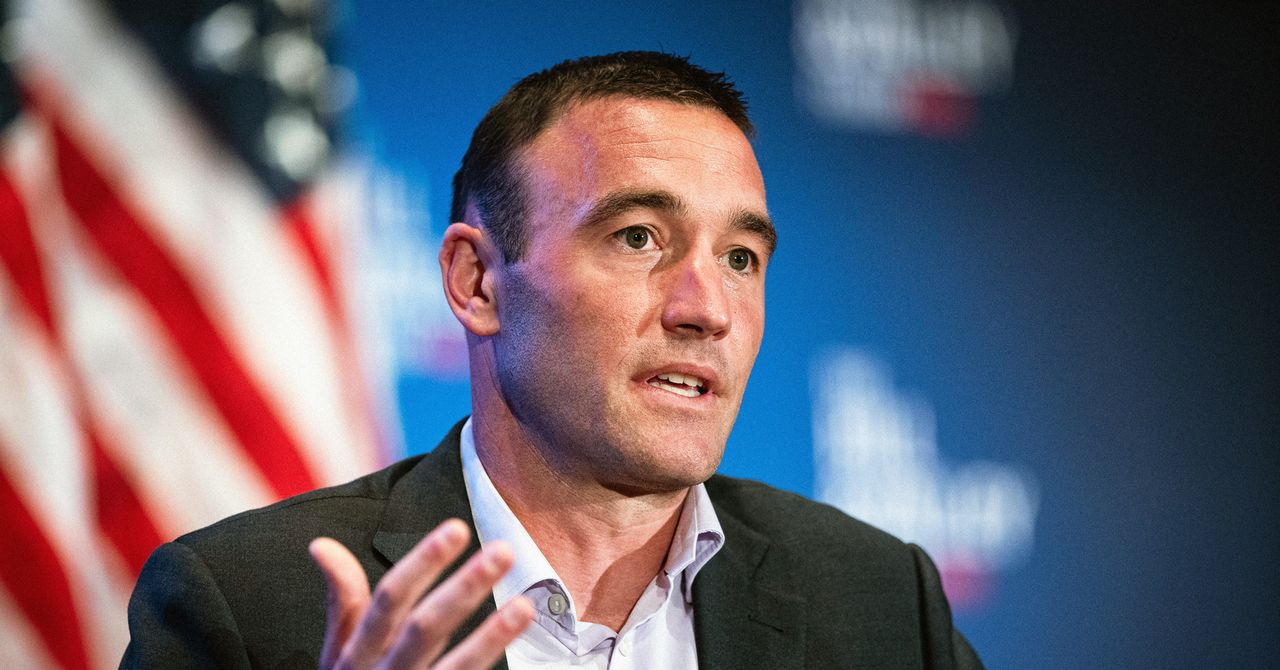
Kevin Weil, OpenAI’s former chief product officer who was recently tapped to build a new AI workspace for scientists, Prism, is leaving the company, WIRED has confirmed. Weil was previously an early executive leading product at Instagram.
OpenAI is also sunsetting Prism, which the company launched as a web app in January this year to give scientists a better way to work with AI. The company is folding the roughly 10-person team behind it into Thibault Sottiaux’s Codex team. An OpenAI spokesperson confirmed the changes, and tells WIRED this is part of the company’s effort to unify its business and product strategy. OpenAI has broader ambitions to turn Codex, its AI coding application, into an “everything app.”
Weil, who joined OpenAI in June 2024, announced last September that he would be starting a new initiative inside of the company called “OpenAI for Science.” Now, OpenAI is dispersing those employees throughout the company’s product, research, and infrastructure teams. An OpenAI spokesperson reiterated the company’s commitment to accelerating scientific discovery, and says it’s one of the clearest ways AI can benefit humanity.
OpenAI is currently trying to refocus the company around a few key areas, such as enterprise offerings and coding. Last month, OpenAI’s CEO of AGI deployment Fidji Simo told staff that the company needs to simplify its product offerings. The push to divert resources to more consequential efforts resulted in OpenAI discontinuing its Sora video-generation app.
This is a developing story. Please check back for updates.
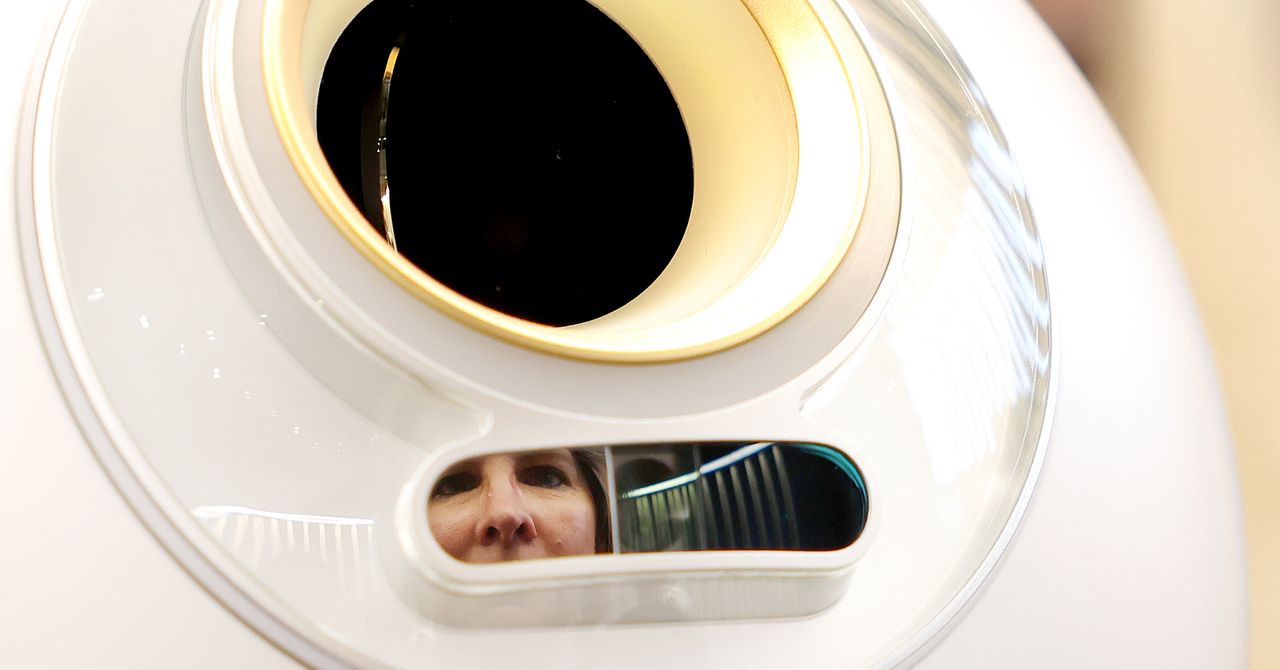
Sam Altman’s iris-scanning, humanity-verifying World project announced at an event in San Francisco on Friday that Tinder users around the globe can now put a digital badge on their profiles signaling to potential suitors that they’re a real human, provided they’ve already stared into one of World’s glossy white Orbs and allowed their eyes to be scanned. The announcement follows a pilot project for Tinder verification that World previously conducted in Japan.
The global Tinder expansion is one of the biggest tests yet for World, and the company’s bet that everyday consumers will be willing to sign up for biometric verification services to use internet applications. Founded in 2019 by Altman and Alex Blania, the World project was designed for a future where the internet is overrun with highly capable AI agents that make it incredibly difficult, if not impossible, to tell who is really human. As companies like OpenAI—where Altman is CEO—and Anthropic push AI agents into the mainstream, the problem World was built to solve feels increasingly urgent.
But World has struggled to achieve mainstream adoption, and it has encountered resistance from governments around the globe that have probed the company over suspected violations of data protection laws. The company says 18 million people have now been verified with an Orb, up from 12 million last year.
In addition to the Tinder global expansion, Tools for Humanity, the company behind World, announced a number of other consumer and enterprise partnerships on Friday at its Lift Off event in San Francisco. The startup says Tinder users who verify with their World ID will receive five free “boosts,” typically a paid feature that increases the number of users who see a profile by up to 10 times for 30 minutes. The videoconferencing platform Zoom also says that users can now require other participants to verify their identity with World before joining a call. Docusign, the contract signing software, will allow users to require World’s identity verification technology.
Tiago Sada, Tools for Humanity’s chief product officer, tells WIRED the company sees major platform partnerships as key to helping World become a mainstream identity-verification technology. Sada said he’s especially interested in working with social media companies in the future, and was encouraged to see that Reddit has started testing World as a solution to help users distinguish bots from real people.
World is also launching a tool called Concert Kit, which lets artists reserve concert tickets for verified humans, a pitch aimed squarely at the bot-driven scalping problem that critics say has plagued sites like TicketMaster. World will test the feature on the upcoming Bruno Mars World Tour featuring Anderson .Paak, who is scheduled to play a verified-humans-only show under his alias DJ Pee .Wee in San Francisco on Friday night.
No new hardware announcements or updates were made at Friday’s event. World first launched the iris-scanning Orb back in 2023, alongside a mobile app that contains “mini apps” for different verification and blockchain-related programs. After a person scans their eyeball with one of World’s Orbs, the startup creates a unique cryptographic key for each person—their World ID. This creates a private, decentralized way to verify people online, without requiring them to upload their government ID all over the internet.
The project was initially called Worldcoin, and in the early days the startup offered people free cryptocurrency to scan their irises. World still offers a cryptocurrency token and a wallet for digital currencies, but dropped the “coin” from its name in 2024 and has since shifted its focus to identity verification for the AI era. Jess Montejano, a spokesperson for Tools for Humanity, says the company still offers crypto as an incentive when new users sign up, but has also expanded its offerings to include Netflix and Apple TV subscription trials.
Previously, the NVD programme aimed to analyse all CVEs received to add details – like severity scores and affected product lists – to help cyber teams prioritise and mitigate relevant vulnerabilities. It terms this process ‘enrichment’.
However, going forward, it will enrich only those CVEs that meet a predefined set of criteria – those flaws that don’t mean this bar will still be listed but will be marked as lower priority issues.
“This change is driven by a surge in CVE submissions, which increased 263% between 2020 and 2025. We don’t expect this trend to let up anytime soon. Submissions during the first three months of 2026 are nearly one-third higher than the same period last year,” NIST said in a statement.
“We are working faster than ever. We enriched nearly 42,000 CVEs in 2025 – 45% more than any prior year. But this increased productivity is not enough to keep up with growing submissions. Therefore, we are instituting a new approach.”
The authority hopes that these changes will enable it to stabilise its programme and buy some time to help it develop new automated systems and workflow enhancements.
Priorities
The new criteria went into effect on Wednesday 15 April, with the following CVEs prioritised:
“This will allow us to focus on CVEs with the greatest potential for widespread impact. While CVEs that do not meet these criteria may have a significant impact on affected systems, they generally do not present the same level of systemic risk as those in the prioritised categories,” said NIST.
The organisation acknowledged that the new criteria may not catch every potentially high-impact flaw, so users will be able to request reviews of lower priority CVEs for enrichment.
At the same time, NIST will no longer routinely provide a separate severity score for CVEs that have already been assigned one by the CVE Numbering Authority – firms such as Microsoft, etc – that submitted it. It said this was an effort to reduce duplication of effort and better focus its resources, although users are also able to request reviews of specific CVEs if wanted.
NIST is also changing how it goes about reanalysing enriched CVEs that have been modified after enrichment. Previously it had reanalysed all modified flaws but it will now only do so if it becomes aware of a modification that materially impacts its enrichment data. Again, a user-requested review system will be put in place.
The backlog
In relation to a significant backlog of unenriched CVEs that started to develop two years ago, NIST stated that it has not been able to clear this down and so all backlogged CVEs with an NVD publish date before 1 March 2026 will be moved into the ‘Not Scheduled’ category. CVEs falling into this bucket will be considered for enrichment provided they meet the new prioritisation criteria.
Finally, NIST is updating CVE status labels and descriptions, and making changes to the NVD Dashboard to accurately report these.
The organisation said it recognised it was making big changes that will affect everyday users, however, it reiterated, adopting a risk-based approach is necessary to manage the surge in submissions and buy it time to build new systems that will ensure the sustainability of its offering going forward.
Danis Calderone, principal and chief technology officer at Suzu Labs, said NIST had probably taken the right decision.
“An overhaul was certainly needed and probably inevitable given the volume of new CVE submissions, and we suspect that AI-assisted discovery is probably already pushing that number higher. After all, Microsoft just had its second-largest Patch Tuesday ever, and even ZDI says their incoming submissions have tripled thanks to AI tools,” said Calderone.
“We are excited to see NIST making Kev the top priority tier. That is the right call and something we’ve been doing with our clients for some time now, so we’re very happy to see that becoming the official model.”
However, Calderone criticised some perceived gaps in NIST’s new methodology, specifically the ending of CVE scoring when the submitting authority has already scored it.
“That sounds efficient until you remember that the submitting authority is often the vendor, and vendors don’t always get their own bugs right,” he said. “We just went through this with F5. A recent BIG-IP vulnerability was scored 8.7 HIGH as a denial-of-service issue for five months before it got reclassified as a 9.8 RCE. For organisations using CVSS to drive patching priority, that miscategorisation meant the real risk sat in the wrong queue for five months while attackers were already exploiting it.”
“The other thing missing here is that NIST addressed the processing volume problem but didn’t touch the scoring methodology. CVSS still scores vulnerabilities in isolation. It doesn’t model chainability, where an attacker combines a medium-severity information disclosure with a medium-severity privilege escalation and ends up with critical impact. Neither bug scores as urgent on its own, but together they give you full system compromise.”
Calderone said that for security leaders who have relied on NVD as their go-to for vulnerability context, the time was nigh to build their own prioritisation stack. This could incorporate data from Cisa’s Kev catalogue, Exploit Prediction Scoring System (EPSS) information, and their organisation’s own environmental context.
“The days of waiting for NIST to tell you what matters are over,” he remarked.








 Tech1 week ago
 Politics1 week ago
 Entertainment5 days ago
 Politics1 week ago
 Sports5 days ago
 Entertainment7 days ago