Sustainability and strategy don’t always seem like natural bedfellows in a profit-driven world, but Simon Ninan, global head of strategy at Hitachi Vantara, wants to make it a reality, finding fresh approaches that deliver for customers, products, profit and the planet together.
He says that if you want to see something better tomorrow, you have to start today. And for Ninan, it’s about finding a way through conflicting requirements. His core strategy team aims to combine knowledge, experience and ideas so that “one plus one equals five” and solves sustainability and business challenges together.
“I grew up in Bangalore, India,” he says. “Bangalore has changed a lot. It used to be known as green – now there’s so much traffic, a lot of the greenness is gone. It’s a shame.”
In India, there’s still “incredibly intense” competition for resources as the country races to catch up, but in a “fair” way. Ideas around balancing those issues are often inculcated as you grow up, says Ninan.
Similarly, it seemed to him that the longevity of companies and the “hardiness or value” embedded in their vision can be deeply connected.
Comparisons with the US, where he arrived after studying computer science and engineering, were stark. Growth delivered clear benefits to the population, but at the same time, he saw “a land of excess”, where resources were often wasted.
“I have continued consistently to think about how a little can potentially go a long way. How can we drive better decisions, and avoid innovation for innovation’s sake, technology for technology’s sake?” he says. “It’s about fusing business and technology. And there’s opportunity in that.”
Long-term vision shapes sustainability strategy
Ninan joined Hitachi Vantara in 2019, following seven years as an executive at Japan-headquartered parent Hitachi, and before that at Monitor Deloitte.
At the board and corporate levels, Hitachi has a culture of going beyond short-term strategic planning.
“I have continued to think about how a little can potentially go a long way. How can we drive better decisions, and avoid innovation for innovation’s sake, technology for technology’s sake? It’s about fusing business and technology. And there’s opportunity in that”
Simon Ninan, Hitachi Vantara
That begins by asking how the world might look 30, 50 or even 70 years from today, and planning for “mega-trends”, such as in terms of productivity and artificial intelligence (AI), socio-politics and climate change. The strategic time frame is the next two generations at minimum, including innovating around products and solutions that benefit society at large.
That long-term focus is “very interesting and unique”, says Ninan.
“We also talk about ageing demographics, or changing demographics. Emerging markets, availability of resources, productivity, the digital divide,” Ninan says. “Big hurdles that society will face. Then, working backward as it were, Hitachi asks what we can do today.”
Japanese principles guide collaborative approach
Hitachi founder Namahei Odaira originally tied the company philosophy to the Japanese principles of “wa”, “makoto” and “kaitakusha-seishin”.
At Hitachi, the harmony-related concept of “wa” encourages respect for others’ opinions and promotes open, fair and impartial discussion. In sustainability, this translates into a highly collaborative, cross-functional approach that connects efforts across the full lifecycle of products and operations, and to ensure impacts are understood holistically, says Ninan.
“Makoto” is about sincerity – approaching issues with openness, honesty and respect, “in the spirit of true teamwork”.
“In sustainability, this is reflected in transparency, proactive data collection and reporting, and a commitment to go beyond simply meeting requirements to delivering on the spirit of our goals,” says Ninan.
“Kaitakusha-seishin” may be best translated as “pioneering spirit”. Ninan says that at Hitachi, this emphasises a striving for leadership through pursuing new challenges and higher goals, but building on a commitment to innovation that goes beyond mere compliance, to driving positive impacts for society and the planet. That mission is now being extended to other parts of the world where Hitachi operates.
“I find that really powerful, because it says you can make trade-offs in your bottom line for a bigger goal,” he adds. “It’s very ambitious. We have a double bottom line. Every company tries to make sure it delivers profit, but the double bottom line means it’s not just about the shareholders; it’s about the stakeholders and the value you’re delivering – your customers, your partners, your employees.”
Tackling Scope 3 emissions in datacentres
Today’s sustainability challenges for the team include weighing up the challenges and potential benefits of AI enablement, for example. Also, there’s a need to rethink the value of hybrid cloud data solutions versus the return on investment in data, says Ninan.
The most recent “major strategy refresh” with a medium- to long-term perspective at Hitachi Vantara was three years ago. It involved “extensive embedding” of Hitachi’s sustainability reporting into Hitachi Vantara, with Ninan as one of the executives presiding.
That challenge had become “a huge proposition” with related opportunities around green IT and sustainability. Ninan had noticed that while Scope 1 and Scope 2 emissions were handled quite well, Scope 3 emissions accounting still needed work.
Sustainability is also important because so many datacentre projects are being cancelled. Ninan says that trend will increase, not least because people often don’t want datacentres in their backyard, whether for environmental reasons or otherwise.
“They’re now leery about the effects of AI. They’ve also seen bills go up, and they worry about water resources,” he adds.
Cross-functional teams drive sustainability goals
Ninan’s team includes one other person, plus four entirely focused on product sustainability, helped by another sustainability director and the sustainability lead analyst at Hitachi Digital, which is a centre of excellence shared across multiple Hitachi divisions.
Also, Ninan’s team works bi-weekly with people who have a 20% or so commitment to sustainability in addition to their day jobs in finance, HR, logistics, operations and the like. Formal executive committee governance meetings happen quarterly.
Hitatch Vantara has reported multiple sustainability awards for its tech, including around AI, and high ratings from the likes of EnergyStar and EcoVadis. It launched a sustainability service level agreement (SLA) last year.
Hitachi Vantara’s net-zero target is 2040, following the Science-based Targets Initiative (SBTi) – a “more aggressive” target than its parent’s 2050.
“And we have our state-of-the-art distribution centres, particularly one in the Netherlands, that have launched a whole bunch of new initiatives around logistics, distribution, biodiversity and so on,” he says.
Ninan points out that customers today are more often “buying outcomes”, rather than being 100% focused on product. And he suggests that if more tech companies don’t wake up, poor sustainability can and will hit profits – if it hasn’t already.
IT companies will lose customers and their credibility. In his view, datacentre operators could “make or break” sustainability goals, and it’s crucial for those in the industry to lead the way.
Which is also an opportunity, not just for marketing narratives or even benchmarking, but to drive innovation, he says.
So that’s what Ninan and his cross-functional team does – sponsoring and overseeing strategy and building sustainability together. Not least because it often takes people a long time to appreciate the importance of sustainability.
“I make a lot of noise about that,” he says. “I’ve had to become a real champion for sustainability.”
Bridging US and European sustainability narratives
In the US, especially, narratives on sustainability can differ from those in many other regions and markets. In Europe, sustainability is seen as crucial simply because the planet depends on it.
I’ve had to become a real champion for sustainability Simon Ninan, Hitachi Vantara
However, US arguments typically must be formulated in dollars and cents. In the US, if you can’t make the economics work, if you can’t show how profits will be realised, it’s much more difficult to reach a consensus.
Europe sometimes creates burdensome regulations and reporting requirements in an effort to get everyone on board, but that’s seen as a necessary evil.
“You can’t have that ‘necessary evil’ conversation in the US. They say, ‘Tell me how it’s going to improve my revenue, and profits, and maybe then I’ll pay attention to it’,” says Ninan.
“Then, of course, you have changing political administrations – and you hear they want to deregulate, as a matter of national competitiveness and innovation, with greenness potentially coming in at some future date or time.”
Making the business case for green technology
The challenge – and partly the fun – for Ninan and his team is to keep figuring out how to straddle the different narratives, to explain how sustainability is good for businesses that are governed quarter to quarter by the markets. That includes via outreach, with public relations activities such as podcasts or thought leadership articles also a really interesting part of his job.
“That’s where I talk about Hitachi Vantara products a bit, and that datacentres are about 3% of greenhouse gas emissions globally, of power consumed, and how that’s multiplying with the AI and internet of things revolutions,” says Ninan.
Then his strategy might include pointing out projections for datacentre growth. If datacentre footprints triple in the next five years, as some estimates suggest, that will create problems for businesses.
Power grids can’t handle it. They’re not ready, and resources such as energy and water are lacking. Economies can’t currently sustain that sort of datacentre demand; investment is required to meet the “real value” proposition, which typically boils down to cost savings, he says.
“So, we explain that if you deploy our storage and data solutions in datacentres, because of the proprietary technology, we can optimise how data is moved, stored and processed. We can reduce power consumption in datacentres by 30% to 60% compared to the average,” he says. “Forget the cost of buying the bits. Sure, we’ll do a great job for you there, but we’ll save you longer-term costs.”
Conspiracy theorists, wellness influencers, and grifters have already started promoting wild claims about the hantavirus outbreak that began aboard the MV Hondius, a cruise ship on the Atlantic.
In more recent days, many of these same people spreading conspiracy theories have promoted the baseless and antisemitic claims that the entire incident is a false flag orchestrated by Israel.
“One of the most striking shifts since the Covid pandemic is how rapidly misinformation narratives now organize themselves around emerging outbreaks,” Katrine Wallace, an epidemiologist at University of Illinois Chicago School of Public Health, tells WIRED.
“Within hours of the first hantavirus headlines, social media accounts were already promoting ivermectin, attributing the outbreak to Covid vaccines, and warning about a hantavirus vaccine that does not exist. The claims themselves were often contradictory, but that contradiction no longer appears to limit their spread.”
Once the hantavirus outbreak started making headlines around the world, conspiracy theorists and grifters jumped into action, spreading dangerously ill-informed claims and, of course, trying to sell people ivermectin.
“Ivermectin should work against it,” Mary Talley Bowden wrote on X. Bowden, a doctor, is a prominent promoter of medical misinformation who has promoted ivermectin as a treatment for Covid-19 and prescribed ivermectin to a Covid-19 patient. Hours after her first post on Hantavirus went viral, she followed up to say that she is selling ivermectin to Texans. Bowden did not respond to a request for comment.
Her post, which has been viewed 4 million times, was shared by former Congresswoman Marjorie Taylor Greene, who added that vitamin D and zinc would help fight the infection. Greene even claimed that not getting the Covid-19 vaccine had somehow allowed her to “develop natural immunity” against hantavirus.
Greene separately claimed, without evidence, that the pharmaceutical company Moderna had purposely manipulated the virus in order to allow them to cash in by developing a hantavirus vaccine. Greene did not respond to a request for comment.
Other prolific health disinformation promoters boosted the ivermectin claims, including Simone Gold, the founder of Covid denial group America’s Frontline Doctors, and Peter McCullough, a disinformation peddler who promoted the “sudden death” conspiracy theory about the Covid-19 vaccine, which falsely claimed that those who received the shot were at risk of dropping dead without any warning.
McCullough is also the chief scientific officer for The Wellness Company, which has been described as “Goop for the GOP.” The company has used the hantavirus outbreak to promote a $325 “Contagion Emergency Kit” which includes both ivermectin and hydroxychloroquine.
All the false claims and posts about ivermectin gained enough traction online that the World Health Organization responded to say that there is no research to suggest ivermectin is an effective treatment for hantavirus.
Conspiracy theorists have, meanwhile, been pushing the baseless idea that a side effect of Covid vaccines includes a hantavirus infection.
For the past two years, the 29-year-old dancer from Ohio had been dealing with severe pelvic pain and vaginal odor. “It was like 8/10, horrible core pain,” she says. “I couldn’t lie down. I couldn’t even work an office job. It was bad.”
When she visited doctors, she told them what she thought the culprit was: an allergic reaction to soy oil in a vat of water she’d swam in during a pirate-themed dinner theater performance. But they didn’t believe her. “They attempted to fix it with antibiotics,” she says. “And they just did nothing.”
So Farrah (who requested we withhold her full name to speak freely about health matters) started Googling her symptoms. That’s how she stumbled on Neueve, a vaginal health company that provides supplements, suppositories, and at-home vaginal microbiome testing kits.
She ordered a test from the company for $150, and it came back with a diagnosis: aerobic vaginitis (AV), a bacterial infection caused by an overgrowth of E. coli or streptococcus. She ordered supplements the company recommended, and she says the pain abated almost immediately. “I was just so glad to actually know what was wrong,” she says.
Farrah is one of a growing number of women who have used at-home tests to self-diagnose issues with the vaginal microbiome—an ecosystem of bacteria growing inside the vagina; the presence of “good” bacteria correlates with lower risk of STIs and other types of infections, according to numerous studies. The industry got a shoutout when the Silicon Valley entrepreneur Bryan Johnson recently posted on X that he had just given oral sex to his girlfriend, Kate Tolo, then followed up with a screengrab of her TinyHealth vaginal microbiome report. He proclaimed that she scored “100/100” and that hers was in the “top 1% of all vaginas” due to the dominance of Lactobacillus crispatus, a type of “good” bacteria found in the vagina.
Johnson’s thread garnered widespread mockery, with many questioning why Johnson would publicly quantify his partner’s vaginal health in such a fashion. But it also received replies from women online who are tracking their own vaginal microbiomes to treat their bacterial infections, to boost fertility, or just out of interest. Some even posted their results.
The market for at-home vaginal microbiome tests is growing—TinyHealth, the startup Tolo used, claims vaginal health testing sales spiked 2,000 percent within the first 48 hours of Johnson’s post—and similar companies include Juno Bio, which partners with Neueve; the UK-based Daye, and Evvy. But some experts believe there’s not yet enough research to support the long-term validity of such tests. None of the at-home kits on the market are approved by the FDA. There are also questions as to whether they empower women to take their health care into their own hands or simply create more anxiety for them.
Twenty-eight-year-old Samantha (she also requested a pseudonym given the sensitive nature of this topic) developed an interest in vaginal microbiome testing after experiencing a bout of bacterial vaginosis, or BV. She ordered a testing kit from Evvy upon the recommendation of the Facebook group Beyond BV, which offers support for women with recurring vaginal infections, and where they often post their own results.
Samantha found her test results useful, but she also noticed a distinct strain of paranoia within the group. For instance, when many women receive their results, they tend to focus on whether they have enough Lactobacillus crispatus, or “good” bacteria, in the vagina. “I’ll read posts where women are freaking out if they have like 97 percent crispatus and then they’ll retest and they’ll have like 60 percent and be really disappointed and scared,” she says. The opposite also holds true. “Women will post about having 100 percent crispatus and other women in the comments will just be like, ‘Oh, I’m so jealous, I’m having so many issues, I hope to be you one day.’”
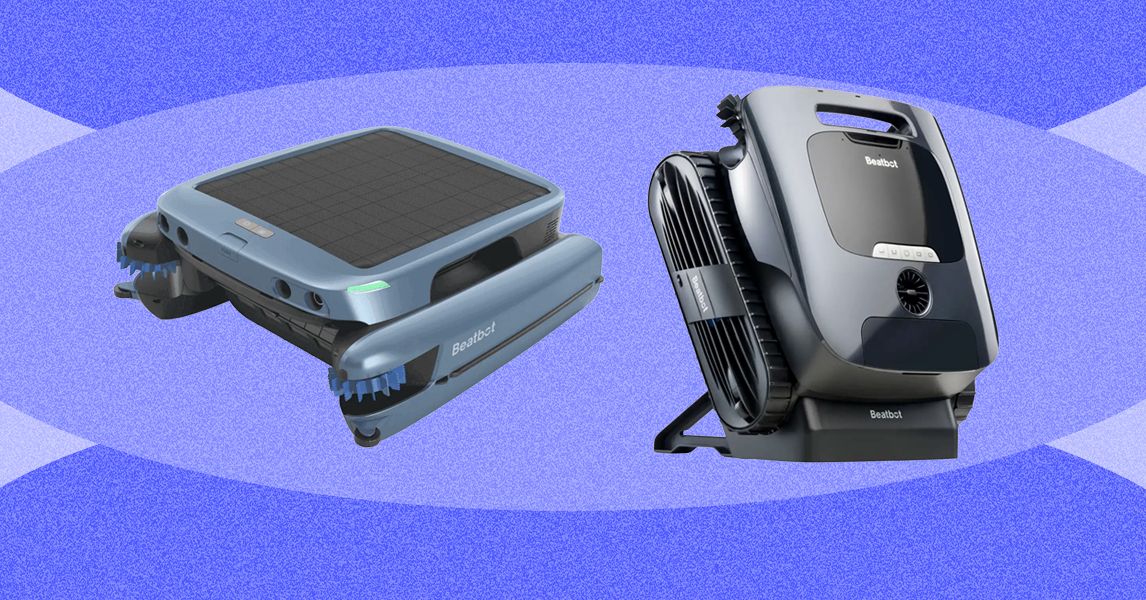
Just in time for summer, Beatbot’s pool-cleaning robots are on sale through the end of the month. If you’re on the hunt for smarter pool care, these are some of the best pool-cleaning robots on the market, and we haven’t seen them sell for less. Whether you’re tired of paying the pool guy or just don’t want to deal with whatever scary stuff is floating in the water, these robots can help.
Beatbot iSkim Ultra Robotic Pool Skimmer for $599 ($400 off)
Beatbot
iSkim Ultra Robotic Pool Skimmer
This surface skimmer is slow and methodical with its approach, which means it won’t slam into your pool’s walls while doing its job. Use the app to set schedules, monitor the temperature, dock the unit, adjust its speed, and more. It has a 9-liter basket that holds a ton of crud and features both solar and magnetic wireless charging. If you care mostly about surface cleaning, this deal is solid.
Beatbot Sora 30 for $699 ($300 off)
The middle-of-the-line Beatbot Sora 30 scrubs the walls, waterline, shallow areas, and floor of your pool for up to five hours at a time. It also returns to the surface on its own when the job is done or when its battery is low, minimizing the amount of effort you have to put in. You can retrieve it with one tap in the app, which also allows you to select a cleaning mode, monitor the bot’s progress, and more. It doesn’t have surface-skimming capabilities, but if you don’t mind handling that part manually, this is a handy device that takes care of your other pool-cleaning needs without any hassle.
Beatbot AquaSense 2 Ultra for $2,649 ($500 off)
If only the best pool-cleaning robot will do, this is the model you want. This top-shelf robot can do it all: skim the surface, scrub your floors, walls, and waterline with its five cleaning brushes, and even detect debris with AI. It can run for up to six hours at a time and will return to the surface and float when your pool is squeaky-clean (or when the battery gets low). It’s a little heavy at 29 pounds, but the trade-off is never having to manually clean your pool again.
Additional Beatbot Deals
Almost the entire Beatbot lineup is on sale. Here are a few more discounts on models that differ slightly from the versions we linked above.












 Politics1 week ago
 Tech1 week ago

 Entertainment1 week ago

 Tech4 days ago
 Tech4 days ago
 Tech5 days ago