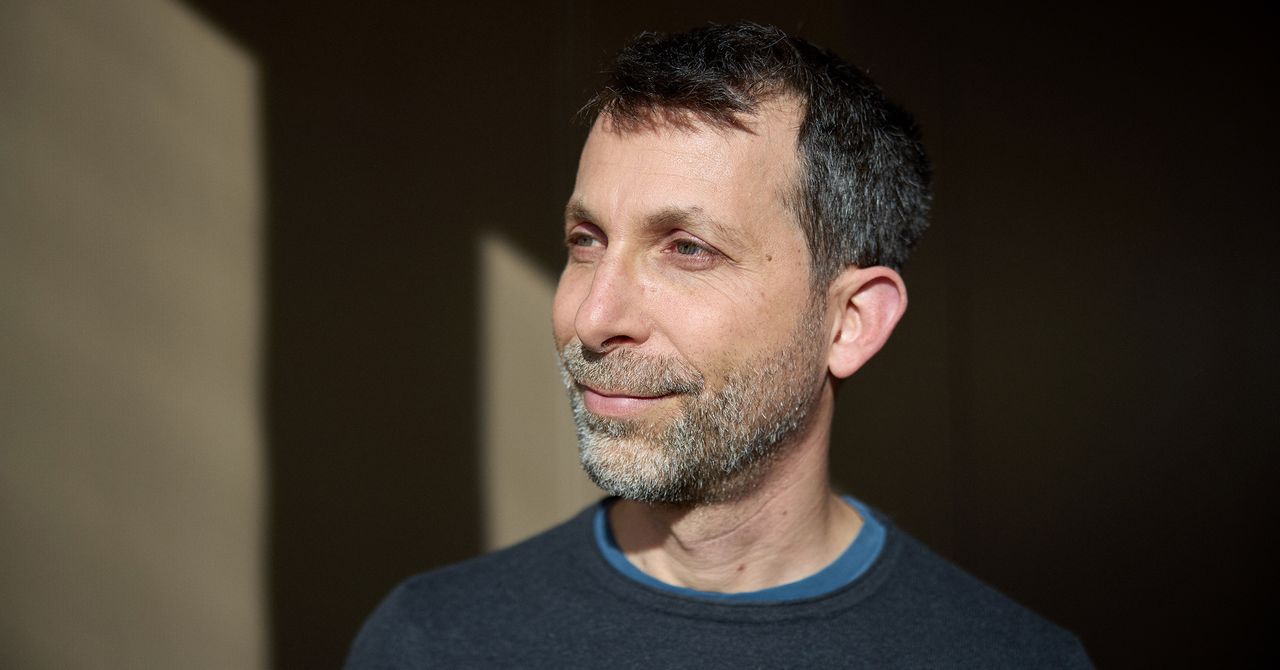
Nick Pearson, CIO at Ricoh Europe, describes his job as energising. The company’s shift in business model presents challenges and significant opportunities for him to draw on previous experience at other blue-chip firms.
Pearson joined the printer and tech services supplier in December 2023. He was previously head of IT platforms at Vodafone and held senior tech roles at RS Group and PepsiCo, where he spent almost a decade and was latterly UK IT director. In his role as CIO at Ricoh, Pearson is a member of the European executive board engaged in business transformation.
“We’re going through a seismic change that pivots Ricoh from a device and manufacturing company – an asset-based firm – into a services organisation,” he says.
“That shift on all levels – the way people think, the way we build systems, the way we sell, the way we operate, and the way we deliver – is energising. And that change is occurring against the backdrop of everything happening in the wider technology space.”
Assuming responsibility
Tokyo-listed Ricoh employs close to 80,000 people globally across three core divisions: Japan and Asia-Pacific, EMEA and North America. Pearson reports to the European CEO, who reports to the global CEO.
Pearson says the company runs a federated business across its three regions, loosely coupled back to its Tokyo headquarters. The European division employs about 17,000 people and boasts annual revenues of more than £3bn.
“For me, it’s a nice opportunity in a chunky organisation,” he says.
One element of the loosely coupled relationship with the Japan headquarters is that the company doesn’t have a global IT organisation. Pearson is part of a board in Japan that governs technology and creates a strategy across North America, Europe and Japan. This IT leadership approach was one of the major attractions of the role.
“There wasn’t a CIO [at Ricoh] before me. Running technology was a role someone adopted as part of their C-suite responsibilities. Now, a big part of my role is talking about the benefits of technology”
Nick Pearson, Ricoh Europe
“This model allows us to operate a fairly autonomous but linked IT estate, without over-globalising platforms and services. At PepsiCo, we pushed globalisation to the extent where, as a CIO or IT director, your role shifted at a regional level into more of a business relationship – you were the director of how you provide those globalised services,” he says.
“Ricoh is loosely coupled. And that setup excited me as a CIO, because it gives you the innovation space and the opportunity to deliver solutions that are ultimately closer to the customers here in Europe, rather than a global standard becoming the accepted index.”
Pearson says another appealing factor was that he knew Ricoh and respected its work. He had partnered with the firm at PepsiCo, where the technology specialist ran his helpdesk. Pearson recognised from initial discussions with senior executives at Ricoh that reporting directly to the European CEO would allow him to showcase the crucial role of digitisation.
“The conversations were about putting technology at the very heart of the business,” he says. “Before I joined, we never really had an IT leadership voice on the board. There wasn’t a CIO before me. Running technology was a role someone adopted as part of their C-suite responsibilities. Now, a big part of my role is talking about the benefits of technology.”
Shifting priorities
Pearson’s role has two main components. First, he assumes a traditional CIO position, overseeing artificial intelligence (AI), data, digital transformation, cyber security and business applications, while managing an internal team and a growing network of partners.
“I provide technology services to 17,000 people in Europe, about 200 applications, and all the services that run enterprise IT,” he says. “That’s my CIO stomping ground where I’m feeding, watering, supporting and operationally running IT.”
The other half of Pearson’s role is external facing. As a technology company, Ricoh sells products and services to CIOs. His conversations with his digital peers focus on his company’s developments across a range of areas, from private cloud to software that supports customers to technologies that form part of the company’s internet of things (IoT) platform.
“I am not the product owner of those end-solutions,” he says. “That responsibility sits in the commercial business. But the platforms and the technologies that support our solutions are a thread of mine that we’re growing. We’re moving away from just being a back-office function and looking at those front-office solutions that we’re providing.”
In short, suggests Pearson, some of the products and services his team develops in the back office might become front-office solutions for the firm’s customers. He describes this approach as a customer-zero strategy, where Ricoh Europe uses its own technologies before releasing them to the public.
“I’m trying to bring that approach through,” he says. “So, for instance, what are we doing for workplace experience? What are we building out in terms of capabilities, and where do they land? Private clouds are a good example. Our customers need a private cloud solution, and so do I. It’s about building something that’s a scalable solution and a win/win for us.”
Enabling transformation
Pearson says the broad aspiration is to use technology to help power the company’s business transformation from products to services. This shift is already underway. He estimates that about 55% of the company’s revenue now comes from services.
Some growth has come from the development of new services in key areas, such as cyber security, cloud, document management and meeting room spaces. Another key growth factor has been acquisitions, including the 2023 purchase of digital infrastructure and managed services company PFH Technology Group.
“My job collectively is to look at some decent growth, some declining growth, and explore opportunities to pivot,” says Pearson, reflecting on the transformation. “I need to consider how we run a model for everything from acquisitions through to manufacturing and print, our distribution business, while also growing our IT services organisation.”
Pearson says his IT strategy to enable this effort has “two brains” – a fit-for-growth element for internal IT and a second part that focuses on growth. When it comes to internal IT, Pearson is striving for operational excellence. He is working to speed up day-to-day technology delivery, and that’s meant taking a detailed look at the underlying architecture.
“Ricoh was on a journey, using quite monolithic stacks around Oracle and big back-office systems,” he says.
“We need to get to a more agile model, so we’ve got choices and flexibility. So, for example, we’re driving a dual strategy in an area like ERP [enterprise resource planning]. We’ve got Oracle, but we don’t want to slow the business down. We want to offer choice.”
When it comes to the second part of his strategy, supporting growth, Pearson says the organisation needs to ensure that cyber security awareness becomes a key part of its DNA, particularly on the manufacturing and distribution side of the business. Meanwhile, continuing to grow the services side of the business means giving people secure access to data-enabled platforms, such as the internet of things (IoT), private cloud and automation.
“Our approach to emerging technology is that we’re using AI where it matters,” he says. “We are a very much taking an ‘N-minus-one’ view in the sense that we say, ‘Let’s leverage, let’s partner, let’s scale, let’s use what’s working for our customers and for us internally,’ and we think that’s the best way we’re going to get value from this technology.”
Driving growth
Pearson has developed Ricoh Europe’s AI strategy over the past 12 months. He’s set up a tri-party AI council alongside the head of service operations and the commercial manager in Spain, which is one of the company’s most progressive businesses.
This council explores opportunities to buy, build and reuse emerging technologies operationally and commercially. Internally, the company is investigating how to use Microsoft Copilot technologies to boost operational productivity. Externally, the organisation considers how data can be used to improve customer processes, such as using AI to boost room-booking capabilities and exploit office space more effectively.
We’ll be doing AI where it matters, people will understand where it matters, and they’ll be using it where it matters, not because of the fear of missing out Nick Pearson, Ricoh Europe
Pearson is eager to make some key developments through 2026. His team is rolling out ServiceNow field service management technology to about 2,000 engineers across Europe.
“That means we can get better engineer automation, better fixed rates for when people visit clients, and we’ve got a lot of work we’re doing to automate our helpdesk facilities as customers call contact centres to get better problem resolution,” he says.
Another priority relates to an overarching initiative called One Ricoh, where his team ensures acquired businesses and their staff can benefit from using a standardised application estate.
“We’re looking at our back-office systems, especially around ERP, where we’re bringing companies across Europe into a consolidated solution set. That’s driving efficiency,” he says.
Pearson also wants to drive business growth by exploiting information. Ricoh Europe uses the Snowflake data platform and has invested in Microsoft technologies, such as Power BI and Fabric.
“We want to power a step change in business capabilities,” he says. “We’re setting up a data factory, which hopefully helps our AI journey as well, with more employees shifting into becoming data product owners on that side.”
Looking forward, Pearson suggests the platform he’s building will deliver a strong, digitally enabled business two years from now.
“Number one, we will have capabilities in data and applications that mean, whether you’re a small or a big business in Ricoh, selling a single line or every line of our portfolio, you’ll have standard tooling to enable you to do that,” he says.
Second, he expects his customer-zero strategy to produce big benefits. “We’ll be out there, proud and innovative in the way we run our company, and showing our workplace experience outside-in.”
Finally, Pearson says the organisation will have established a clear data and AI strategy that is recognised by internal staff and external customers.
“We’ll be doing AI where it matters, people will understand where it matters, and they’ll be using it where it matters, not because of the fear of missing out,” he says.
David Silver gave the world its very first glimpse of superintelligence.
In 2016, an AI program he developed at Google DeepMind, AlphaGo, taught itself to play the famously difficult game of Go with a kind of mastery that went far beyond mimicry.
Silver has since founded his own company, Ineffable Intelligence, that aims to build more general forms of AI superintelligence. The company will do this, Silver says, by focusing on reinforcement learning, which involves AI models learning new capabilities through trial and error. The vision is to create “superlearners” that go beyond human intelligence in many domains.
This approach stands in contrast to how most AI companies plan to build superintelligence, by exploiting the coding and research capabilities of large-language models.
Silver, speaking to WIRED from his office in London, says he thinks this approach will fail. As amazing as LLMs are, they learn from human intelligence—rather than building their own.
“Human data is like a kind of fossil fuel that has provided an amazing shortcut,” Silver says. “You can think of systems that learn for themselves as a renewable fuel—something that can just learn and learn and learn forever, without limit,” he says.
I’ve met Silver a few times and—despite this proclamation—he’s always struck me as one of the more humble people in AI. Sometimes, when talking about ideas he considers silly, he flashes a puckish grin. Right now, though, he’s deadly serious.
“I think of our mission as making first contact with superintelligence,” he says. “By superintelligence I really mean something incredible. It should discover new forms of science or technology or government or economics for itself.”
Five years ago, such a mission might have seemed ridiculous. But tech CEOs now routinely talk about machines outpacing human intelligence and replacing entire categories of workers. The idea that some new technical twist might unlock superhuman AI capabilities has recently spawned a raft of billion-dollar startups.
Ineffable Intelligence has so far raised $1.1 billion in seed funding at a valuation of $5.1 billion—an enormous sum by European AI standards. Silver has also recruited top AI researchers from Google DeepMind and other frontier labs to join his endeavor.
Silver says he will give all of the money he makes from equity in Effable Intelligence—a sum that could amount to billions if he is successful—away to charity.
“It’s a huge responsibility to build a company focusing on superintelligence,” he tells me. “I think this is something that has to be done for the benefit of humanity, and any money that I make from Ineffable will will go to high-impact charities that save as many lives as possible.”
Total Focus
Silver met Demis Hassabis, the CEO of Google DeepMind, at a chess tournament when they were kids, and the pair later became lifelong friends and collaborators.
They remained close after Silver left Google DeepMind, which he did only because he wanted to chart a completely new path. “I feel it’s really important that there is an elite AI lab that actually focuses a hundred percent on this approach,” he says. “That it’s not just a corner of another place dedicated to LLMs.”
The limits of the LLM-based approach can be seen, Silver says, with a simple thought experiment. Imagine going back in time and releasing a large language model in a world that believed the world was flat. Without being able to interact with the real world, the system, he says, would remain an avid flat-earther, even if it continued to improve its own code.
An AI system that can learn about the world for itself, however, could make its own scientific discoveries.
The best iPhone charger depends on several factors. Are you topping off your battery on the go? Do you want to charge your iPhone as quickly as possible? Are you charging it overnight on your nightstand? The best gear recommendation is going to change with the situation. Luckily, the WIRED Reviews team tests iPhone chargers in the field all year long. There’s not a day that goes by that at least one of us is not assessing at least one iPhone charger. I’ve gathered up our favorite picks for every scenario.
This Anker charger is slick and has folding prongs so it’s easy to travel with, but the best part is that it can charge your phone at 40 watts (average is 20 to 27 watts). That means you can get up to 50 percent battery life in only 20 minutes. Not all iPhone models support charging this fast—it’s limited to iPhone 17, iPhone 17 Pro, and iPhone 17 Pro Max—but you may as well future-proof your gear if you’re shopping for a wall charger, even if your phone can’t take full advantage of those speeds yet.
Best Power Bank for iPhone
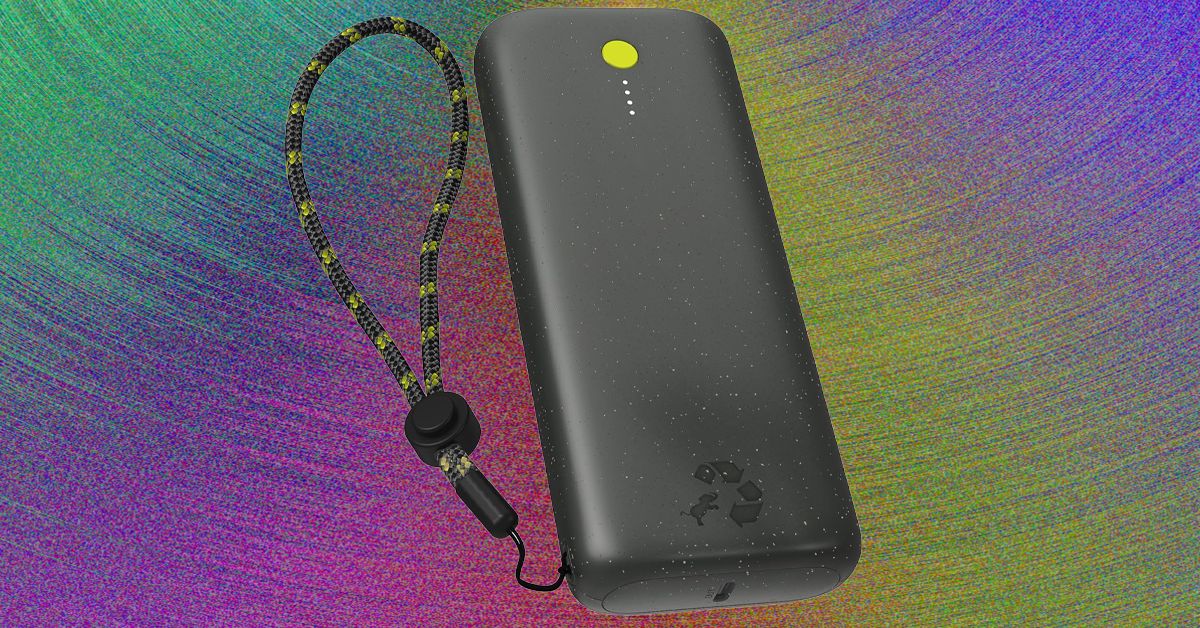
We do recommend the Anker Laptop Power Bank as our top-pick power bank, but if you’re only trying to top off your iPhone, this is a very reliable and neat-looking power bank. It’s svelte, smaller than a deck of cards, and can deliver 20 watts to two devices at once. Nimble also makes a slightly larger version, which has a larger capacity and can charge at up to 65 watts. Aside from the cool design featuring speckled colors and a lanyard loop, Nimble also uses bioplastics, recycled materials, and minimal packaging. A USB-C charger is included in the box.
Best MagSafe Portable Charger for iPhone
Anker
MagGo Power Bank (10K) (Qi2)
This 10,000-mAh power bank can charge your device at up to 15 watts, but it’ll also charge older devices at a slower rate. It has a built-in kickstand and an LED display that lets you know how much power is left at a glance. It works in portrait or landscape modes. Be aware that it won’t be able to charge most phones fully more than once, but it’s hard to beat if you’re seeking wireless charging on the go. If you want a bigger capacity or faster charging, you don’t want MagSafe.
Best 3-in-1 Charger for iPhone
Belkin
3-in-1 Qi2 Charging Stand
The Belkin 3-in-1 can charge your compatible iPhone at 15 watts, plus your AirPods and your Apple Watch at the same time. The charging pad can be tilted to your preferred angle, including in landscape orientation if you want to watch a video or put your phone in StandBy mode. The USB-C cable is permanently attached, which you may or may not like. Check our best 3-in-1 chargers buying guide for additional picks.
Best 2-in-1 Charger for iPhone
Photograph: Louryn Strampe
Mophie
2-in-1 Wireless Charging Stand
I love a 3-in-1 charger as much as the next tech nerd, but sometimes they’re overkill. My Apple Watch battery usually lasts all day long, but I can chew through my older AirPods battery before my lunch break hits, and my iPhone battery might be depleted too, depending on whether or not I’m streaming Max Velocity off to the side. This 2-in-1 charger has been my steadfast desktop companion. Mophie makes another version that tops off your Apple Watch and iPhone instead of your headphones, which might be what you want if you’re rocking wired headphones or you’re making intense use of a walking pad throughout the day. There’s a 40-watt wall charger in the box—a rarity these days!—plus a USB-C cable that winds neatly into the base. It’s easy to adjust the angle of your iPhone as well, and I’ve found the base very sturdy. If you want to charge, but not necessarily all of the possible devices simultaneously, these might be what you seek.
Anker
Prime USB-C to USB-C Cable
This braided nylon USB-C cable has a durable exterior made from recycled plastic. The cable is rugged, with Anker promising that it can operate in temperatures ranging from negative 40 degrees to 176 degrees Fahrenheit. It’s backed by a lifetime warranty. It’s got a built-in cable management loop. It’s more than enough cable for your iPhone. Read our guide to the Best USB-C Cables for more picks.
Ugreen
USB-C to Lightning Cable
If your iPhone is still rocking the Lightning cable, this is gonna be way better than whatever shoddy cable Apple sent you. It’s durable and is Made for iPhone-certified, so you won’t have any problems getting it to work. It comes in 3-, 6-, or 10-foot lengths with a two-year warranty. Best of all, the exterior casing will stay intact, unlike what you’d probably get with Apple’s cables.
Government figures for projected carbon footprint for datacentres have been miscalculated. New figures for the likely carbon output resulting from electricity use by datacentres published last week have been revised upwards by around 100x for the minimum and maximum projected.
Last July, the Department for Science, Innovation & Technology (DSIT) published its Compute evidence annex, which set out the future for AI, compute demand and implications for carbon footprint. The DSIT has since unpublished the original report, but it can still be found here.
The document said: “We estimate that by 2035, the UK’s greenhouse gas emissions from AI compute could range from 0.025 to 0.142 MtCO₂ [millions of tonnes of CO₂] – this is below 0.05% of the UK’s projected total emissions.”
But in a correction to that document, the DSIT said last week: “The UK’s cumulative 10-year greenhouse gas emissions from AI compute could range from 34 to 123 MtCO₂ – this is around 0.9-3.4% of the UK’s projected total emissions over the 10-year period.”
The figures were miscalculated to a staggering degree. The earlier numbers appear to have been annual and the recent revision a 10-year figure, which makes an increase in the estimate of around 100x.
Meanwhile, analysis by climate change science and policy research group Carbon Brief suggests even those figures might be optimistic. Core to that belief is that the government aim is for 50gCO2/kWh by 2030. That figure is what can be achieved by “clean” sources of energy, such as wind, nuclear, hydro and solar.
But figures from last month – researched by Carbon Brief and published with environmental campaigners Foxglove – suggest that is a wildly optimistic estimate if any of that power generation needs to be powered by gas, as gas-powered electricity generation comes with a carbon intensity of around 10x that of clean sources.
Carbon Brief has calculated that emissions could in fact be somewhere between 3.4 MtCO₂ using 5% gas, and 68.1 MtCO₂ if electricity was 95% gas-generated. The higher figure – not far off the annual carbon emissions of Sweden – comes from an estimate based on a recent Ofgem projection of 20GW of future datacentre electricity demand. The same document illustrated the scale of demand by reference to actual peak demand in February 2026 of 45GW.
Ofgem’s 20GW is a projection based on National Energy System Operator research that asked customers about future grid connection requirements.
Foxglove head of strategy Tim Squirrell said: “The government has a legally binding commitment to reach net zero by 2050. This already sat awkwardly alongside its hell-for-leather embrace of a hyperscale AI datacentre buildout, which unchecked could double the electricity consumption of the entire country.
“The situation has now been revealed to be much, much worse, given the fact the government doesn’t seem to have done even the most basic arithmetic needed to measure the potential new carbon emissions of these datacentres. The government urgently needs to confront the reality that it can’t rubber stamp hundreds of new datacentres, whilst keeping its manifesto promise to the country – and legal obligation – to combat the climate crisis.”
Computer Weekly has calculated that there is currently around 1.6GW of datacentre capacity in the UK, with just over 8GW currently in planning or under construction.




-Portable-Charger-Reviewer-Photo-(no-border)-SOURCE-Simon-Hill.jpg)
.jpg)







 Sports1 week ago
 Sports1 week ago
 Fashion1 week ago
 Politics6 days ago
 Entertainment7 days ago