

Business
Investors are packing up; Pakistan must ask why | The Express Tribune

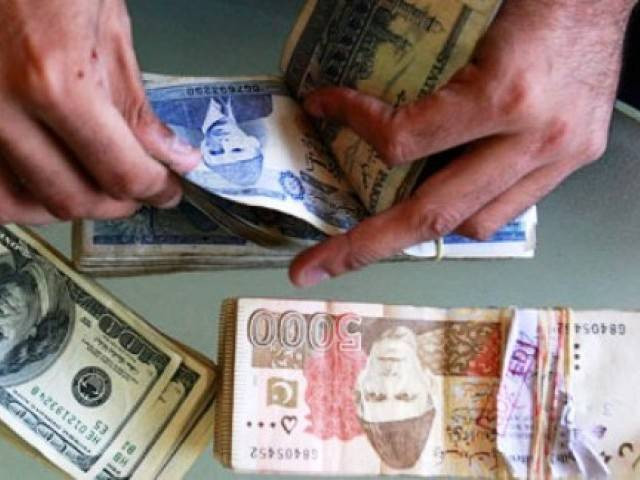
KARACHI:
Pakistani citizens and policymakers are rightly excited. Not only is Pakistan getting into the good books of President Trump, but the economy also seems to be moving in the right direction.
Inflation is back in single digits, the currency has remained stable for two and a half years, interest rates are down to 10-11%, industries are finally expanding, remittances are growing phenomenally, and the Pakistan stock market is booming at the 165k level of the KSE-100. These are all great indicators on the surface.
But beneath the optimism lies a troubling undercurrent. Between the lines, there is growing pessimism and a foreign investor exodus. Over the past decade, nearly all foreign banks have exited Pakistan. Just last week, Gillette Pakistan decided to close operations.
Add to that the exits or partial divestments of Telenor Pakistan, Rafhan Maize, Sanofi, Pfizer, Lotte Chemical, VavaCars, TotalEnergies, Shell Pakistan, Uber, Swvl, Microsoft, Virgin Atlantic, and Yamaha Motors, and it paints a sobering picture. These are not isolated incidents tied to a few years of misgovernance, but rather the symptom of a long-term decay in economic policies that has dissuaded global investors. Why are they leaving? Because Pakistan’s economic cycle keeps breaking trust. The answer isn’t singular, but the biggest culprit is Pakistan’s boom-and-bust cycle. The rupee repeatedly sinks to new lows, high interest rates choke growth, and import restrictions strangle both demand and the ability to expand or export.
While law and order has improved drastically over the past decade – except in K-P and Balochistan – these economic shocks have proved decisive in driving investors away.
Meanwhile, some investors are still coming, but mostly from the East. On the flip side, there are success stories. Under CPEC and other bilateral arrangements, Pakistan has welcomed investment from BYD, Changan, Kia, Hyundai, Geely, MG, Mashreq Bank, Aramco, Reko Diq (Barrick Gold), Gunvor, AD Ports, and e& (which acquired Telenor Pakistan).
New entrants from China, the Middle East, and regional players are stepping in. But the overall tilt has become more East-centric, with Western incumbents exiting. Ideally, foreign players should not leave at all or should at least exit on a high note after earning strong profits, transferring technology, generating jobs, exports, and tax revenues.
To retain investors, Pakistan must fix its cost of doing business. The cost has simply become too high. Pakistan needs a credible long-term economic roadmap with statutory protection, so no government can casually change core fiscal rules. That includes reducing corporate tax rates from 35-40% to 22.5-30% over five years, tied to incentives for job creation, exports, and import substitution.
Monetary and exchange rate policy must also be depoliticised: interest rates should remain stable in the 10-12% range for five years, with the SBP offering forward guidance, while the currency should be allowed to depreciate moderately at 4-5% annually to balance external accounts.
Only stability, not tinkering, will build investor confidence. Pakistan must also focus on primary and current account surpluses, embedding these commitments in a higher-level statutory or constitutional framework, with penalties for governments that derail them. A country of 250 million cannot create enough jobs through the public sector. Nor can it afford to keep tens of millions out of school and hundreds of millions away from respectable employment. If left unaddressed, Pakistan risks losing an entire generation.
By 2047, Pakistan must be educated, developed, debt-free, export-driven, and led by domestic private investors. Everyone must pay fair taxes, wealth must be more equitably distributed, and governance must be restructured to keep capital at home. People must feel confident to live, invest, and travel here.
The steady exit of foreign investors requires an emergency response: a dedicated cabinet committee, a revamped SIFC agenda, and even a new ministerial-level team focused solely on attracting and retaining FDI in value-added sectors.
The writer is an independent economic analyst


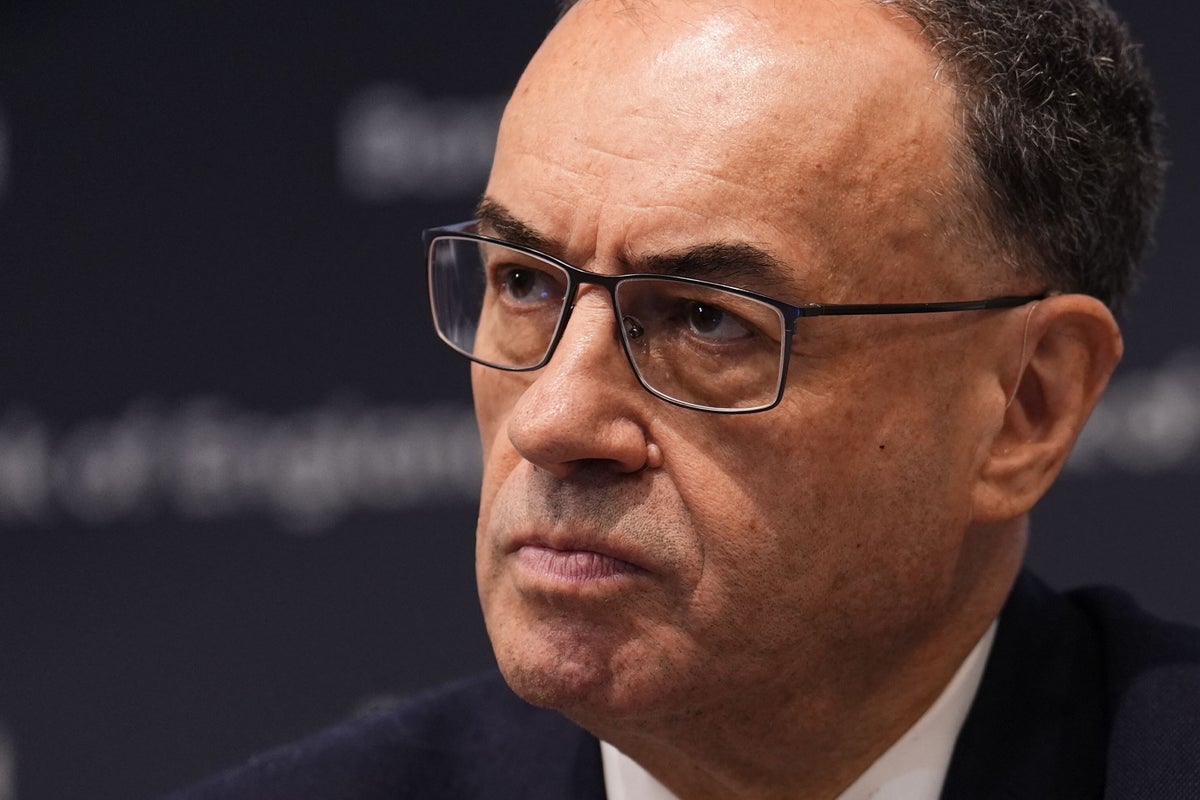
Bank of England governor Andrew Bailey has warned the global economy is set for a “very big energy shock” that will lead to surging inflation, but said policymakers would not rush to hike interest rates.
Speaking at the International Monetary Fund (IMF) spring meeting in Washington DC, Mr Bailey told the BBC the Bank is facing a “very, very difficult” decision on rates at its meeting on April 30.
The Middle East conflict has sent oil prices surging by around 60% since the start of the year, at one stage hitting nearly 120 US dollars a barrel, which is pushing up fuel and energy costs.
This is expected to feed through to wider prices, with forecasts for UK inflation to jump higher in the coming months and Britain’s growth outlook sharply downgraded.
But official figures on Thursday, which were released after Mr Bailey’s comments, showed the UK economy was far stronger than expected at the start of the year, with growth of 0.5% in February following upwardly revised expansion of 0.1% in January.
Experts said while welcome, UK activity is still set to slow sharply as higher energy prices weigh on spending and hamper growth.
Mr Bailey told the BBC: “There’s really difficult judgments to be made.
“We’re not going to rush to judgments on those things, because there are a lot of uncertainties around this, not just how it’s going to play out, but also how it’s going to pass through into the UK economy.”
The IMF’s economic outlook report earlier this week showed the UK facing the biggest downgrade to growth among the G7 group of countries, with 0.8% forecast for 2026, down sharply from the 1.3% predicted in January.
The influential financial body said the spike in energy prices caused by the war will help push UK inflation towards 4% – double the Bank of England’s target.
But the IMF cautioned central banks about making hasty decisions on interest rates.
The Bank of England had previously been expected to cut rates further this year, down from 3.75% currently, but the predicted inflation surge caused by the Iran war has led to forecasts that hikes could be on the way.
Mr Bailey said the Bank is taking the IMF’s “serious advice” into account.
On fears over supply shortages caused by the Iran war disruption and blockage of the crucial Strait of Hormuz shipping route, Mr Bailey said there is “a certain amount of resilience in the system” but that will only last so long.
He added: “The faster there is a resolution to this situation – I particularly mean in terms of the supply of energy coming out of the Gulf – the easier and better the outcome will be.
“That’s really critical at this moment.”

The economy saw its biggest monthly rise in more than two years just before the outbreak of the US-Israeli war with Iran.
Source link
Business
Asian stocks today: Markets inch higher on US-Iran peace hopes; Nikkei jumps 2%, HSI adds 360 points – The Times of India

Asian stocks edged higher on Thursday, as investor sentiments were lifted by hopes of United States and Iran extending their ceasefire and moving a step closer to reopening the crucial Strait of Hormuz. The gains were led by Japan’s Nikkei, which was up 1,214 points or 2% to 59,348. In South Korea, Kospi jumped 1.7% to 6,195. Hang Seng Index of Hong Kong, followed the rally, adding, 360 points. Shanghai and Shenzhen were also trading in green, up 0.5% and 1%. Meanwhile, Singapore’s benchmark STI recorded a marginal dip, down 1 point as of 10:30 am IST.The broader rally across the region came after a strong session on Wall Street, where benchmark indices touched all-time highs. While S&P 500 closed above the 7,000 mark, Nasdaq ended higher than 24,000.Attention is pinned on diplomatic efforts to end the Middle East conflict, which is now nearing its seventh week. Officials from Washington and Tehran are expected to convene in Islamabad for a second round of talks, with both sides exploring a pathway to de-escalation.White House Press Secretary Karoline Leavitt said that further negotiations “would very likely” take place in the Pakistani capital. “Those discussions are being had,” she noted, adding that “we feel good about the prospects of a deal”.US Vice President JD Vance, who led the earlier round of negotiations, described the proposal on the table as a “grand bargain” aimed at ending the conflict.A Pakistani delegation has arrived in Tehran carrying a fresh communication from Washington, after US President Donald Trump indicated talks could restart this week. An Iranian foreign ministry spokesman said “several messages” had been exchanged through Islamabad since discussions concluded on Sunday.However, tensions have not eased entirely as Iran warned it could extend disruptions beyond the Gulf by shutting down the Red Sea and the Sea of Oman unless the United States removes a naval blockade imposed on its ports after last weekend’s failed negotiations.On the economic front, IMF Managing Director Kristalina Georgieva cautioned that “tough times ahead” could follow if the conflict continues and energy prices remain high, adding that inflation risks may begin to affect food costs.In commodities, oil prices remained largely unchanged and stayed below $100 per barrel, as traders continued to watch developments around the Strait of Hormuz, a crucial route for around a fifth of global oil and gas supplies that has effectively been closed by Iran.


France’s LVMH Q1 revenue falls 6%, shows resilience amid Iran war

Grades for all 30 NBA teams after the 2025-26 regular season
Bank will not rush into moving rates despite ‘big energy shock’, says Bailey

-

 Fashion1 week ago
India’s exports face reset as EU links trade to carbon metrics: EY
-

 Entertainment1 week ago
Queen Elizabeth II emotional message for Archie, Lilibet sparks speculation
-

 Tech1 week ago
Azure customers up in arms over ‘full’ UK South region | Computer Weekly
-

 Tech1 week ago
As the Strait of Hormuz Reopens, Global Shipping Will Take Months to Recover
-

 Fashion1 week ago
CII submits 20-pt agenda to Indian govt to back firms hit by Iran war
-

 Tech1 week ago
This AI Button Wearable From Ex-Apple Engineers Looks Like an iPod Shuffle
-
 Politics6 days ago
Indian airlines hit hardest after Dubai limits foreign flights until May 31
-

 Fashion1 week ago
ICE cotton hits 11-month high on drought concerns, demand boost