

Business
IPO Explained: Meaning, Process, Benefits, Risks


In the world of finance, few events generate as much excitement as an Initial Public Offering (IPO). For companies, it marks the transition from private ownership to public trading. For investors, it opens the door to participate in the growth of a business from an early stage. IPOs are often seen as milestones that signal a company’s maturity, ambition, and readiness to expand. (Image: Pexels)

An Initial Public Offering (IPO) is the process by which a private company offers its shares to the public for the first time. By listing on a stock exchange, the company transitions into a publicly traded entity. This move allows the firm to raise capital, expand its operations, and gives early investors and employees the opportunity to sell their shares. For the wider public, it opens up a chance to own a stake in the company and participate in its growth journey. (Image: Pexels)

Companies choose to launch IPOs for several reasons. The most obvious is capital raising, as funds generated from the sale of shares can be used to expand operations, invest in new technology, or reduce debt. Going public also enhances visibility and credibility, since listed companies must adhere to strict disclosure norms. For founders, venture capitalists, and employees, an IPO provides liquidity, enabling them to monetize their holdings. Moreover, access to capital markets creates opportunities for mergers, acquisitions, and global expansion. (Image: Pexels)
The IPO process itself is structured and involves multiple steps. It begins with the company’s board and management deciding to go public. Investment banks, known as underwriters, are then appointed to manage the offering, set the price, and market the shares. (Image: Pexels)

The company must file regulatory documents; in India, this is the Draft Red Herring Prospectus (DRHP) with SEBI, while in the US it is filed with the SEC. These filings disclose financials, risks, and business plans to potential investors. To generate interest, the company and its bankers conduct roadshows, presenting the IPO to institutional investors. (Image: Pexels)
Based on demand, the final price of shares is determined, and allocations are made to both institutional and retail investors. Finally, the shares are listed on exchanges such as NSE, BSE, or NYSE, where they can be freely traded. (Image: Pexels)
There are two main types of IPOs. In a fixed price issue, the company sets a predetermined price for its shares before the offering. In a book building issue, investors bid within a specified price range, and the final price is decided based on demand. Both methods aim to balance investor interest with the company’s capital requirements. (Image: Pexels)
Investing in IPOs can be rewarding but also carries risks. On the positive side, early investment in a promising company can yield significant returns, and IPOs diversify the opportunities available to investors. However, risks include market volatility, overvaluation, or poor company performance after listing. Not every IPO guarantees success, and careful research is essential before investing. (Image: Pexels)



Oil prices fell and Asian stock markets surged to record highs on Wednesday after Donald Trump said negotiations with Iran were making “great progress” toward a final agreement and announced a brief pause in US operations escorting ships through the Strait of Hormuz.
Brent crude tumbled 1.2 per cent to $108.51 a barrel, still well above its roughly $70 price before the war began, but lower than the highs of recent weeks.
Wall Street had already set records on Tuesday, with the S&P 500 rising 0.8 per cent to a new all-time high and the Nasdaq gaining 1 per cent, as oil pulled back sharply after briefly crossing $115 on Monday.
Strong corporate earnings underpinned the Wall Street rally. DuPont surged 8.4 per cent after the chemical giant reported better-than-expected first-quarter profits and raised its full-year forecasts, even as it acknowledged some impact from logistics disruptions in the Middle East.
Pinterest jumped 6.9 per cent after its number of active monthly users rose 11 per cent to 631 million, beating Wall Street’s sales and profit targets. AB InBev climbed 8.7 per cent after topping profit forecasts on growth for its Corona, Stella Artois and Michelob Ultra brands. “Cheers to beer,” chief executive Michel Doukeris said.
Palantir fell 6.9 per cent despite beating expectations, as its stock continued to struggle on worries about increased competition. American Electric Power rose 1.8 per cent and Cummins added 2.8 per cent after both reported stronger-than-expected results.
In Europe, markets were mixed. The CAC 40 rose 1.1 per cent in Paris while the FTSE 100 fell 1.4 per cent in London. Hong Kong’s Hang Seng fell 0.8 per cent. Many Asian markets were closed for holidays.
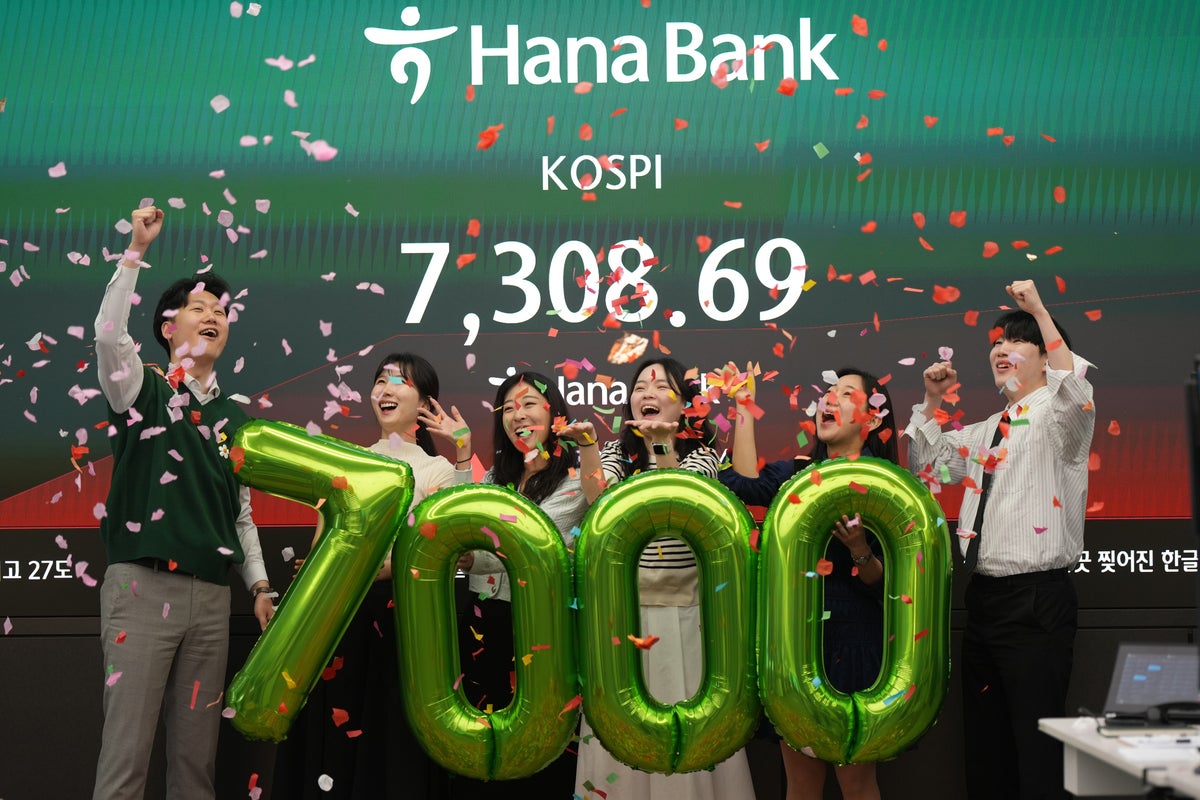
The momentum carried into Asia on Wednesday, where MSCI‘s broadest index of Asia-Pacific shares outside Japan jumped 2.3 per cent to a fresh all-time high. South Korea’s Kospi surged 5.1 per cent, clearing the 7,000 mark for the first time, as Samsung Electronics jumped 12 per cent and crossed a $1 trillion market valuation, overtaking Berkshire Hathaway.
The AI trade drove much of the enthusiasm. Advanced Micro Devices jumped 16.5 per cent in extended trading after forecasting second-quarter revenue above Wall Street expectations on strong demand from cloud computing companies accelerating spending on AI infrastructure.
“Due to the capital expenditure we are seeing from hyperscalers in the US, the earnings growth trajectory for sectors such as semiconductors, tech hardware, industrials and materials in Asia exceeds anything I have seen in a long time,” Rushil Khanna, head of equity investments for Asia at Ostrum, an affiliate of Natixis Investment Managers, told Reuters. “This capex is leading to material value creation in Asia as the provider of the picks and shovels to the AI ecosystem.”
The diplomatic backdrop of US-Iran talks also helped the markets. Mr Trump said he would briefly pause US operations escorting ships through the strait, which has been effectively closed since Iran blockaded it in late February, triggering a global energy shock. US defence secretary Pete Hegseth confirmed the ceasefire remained in place despite the US and Iran exchanging fire the previous day.
“Markets embraced a sense of calm and stability overnight, with the risk of escalation in the Middle East conflict viewed as having diminished,” analysts from Westpac wrote in a note.
Despite the optimism, analysts cautioned that significant uncertainties remained this week.
“A fragile ceasefire, a novel blockade, Friday’s NFP and diminishing odds of a US-Iran peace deal are all converging this week,” said Lukman Otunuga, head of market research at trading broker FXTM.
“Gold may find itself on the losing end of conflict-induced inflation fears, even as uncertainty grips markets.”
Gold rose 1.2 per cent to $4,609.59. The dollar index slipped 0.1 per cent, snapping a three-day winning streak, with the euro rising to $1.1724 and sterling to $1.3577.
The Australian dollar climbed 0.6 per cent to its highest since June 2022, buoyed by improved risk appetite and underpinned by a third consecutive interest rate rise from the Reserve Bank of Australia, which cited the Middle East conflict’s impact on fuel and commodity prices. The ten-year US Treasury yield held flat at 4.424 per cent.

Josh D’Amaro, chairman of Disney Experiences, speaks during the grand opening ceremony of Shanghai Disney Resort’s Zootopia-themed land on December 19, 2023 in Shanghai, China.
Vcg | Visual China Group | Getty Images
Disney will release its fiscal second-quarter results before the bell Wednesday. It will mark the first earnings call led by Josh D’Amaro since the former parks executive took over as CEO in March.
Under the new CEO, who replaced Bob Iger after his two turns at the helm totaling roughly 20 years, Disney has already been through a round of layoffs and has faced mounting political pressure surrounding its late night TV host Jimmy Kimmel.
“This earnings call marks Disney’s first real gut‑check under D’Amaro’s leadership, and a test of how his theme‑parks roots translate, or don’t, into the rest of the business,” said Mike Proulx, research director at Forrester. “Streaming is still the main event, but the market is consolidating. A potential combination of Paramount+ and HBO Max would reset the competitive calculus for Disney+.”
Streaming and TV results have gobbled up much of the focus for media investors across the board as the industry faces significant upheaval and consolidation.
Here’s how Disney is expected to perform in its fiscal second quarter, according to LSEG:
- Earnings per share: $1.49 expected
- Revenue: $24.78 billion expected
Last quarter Disney stopped reporting some details for the entertainment segment — which is comprised of its traditional TV, streaming and theatrical releases — including the breakdown of revenue and operating income for each segment. The company has also stopped reporting quarterly streaming subscriber numbers.
The consumer shift from pay TV bundles to streaming has weighed on media companies for years, with both distribution and advertising profits continuously decreasing. Still, traditional TV remains a cash cow, and investors have been keen to see how and when streaming can make up for the declines.
Updates on the state of Disney’s theme parks, which are part of its experiences unit and the profit driver of the company, will also be of particular interest on Wednesday.
In February, Disney provided second-quarter guidance that called for “modest” growth in operating income for the experiences division due to international visitation headwinds at domestic parks. That forecast was issued before the U.S. and Israel launched attacks on Iran roughly two months ago, causing a surge in oil prices.
This story is developing. Please check back for updates.
Business
Top stocks to buy today: Stock recommendations for May 6, 2026 – check list – The Times of India
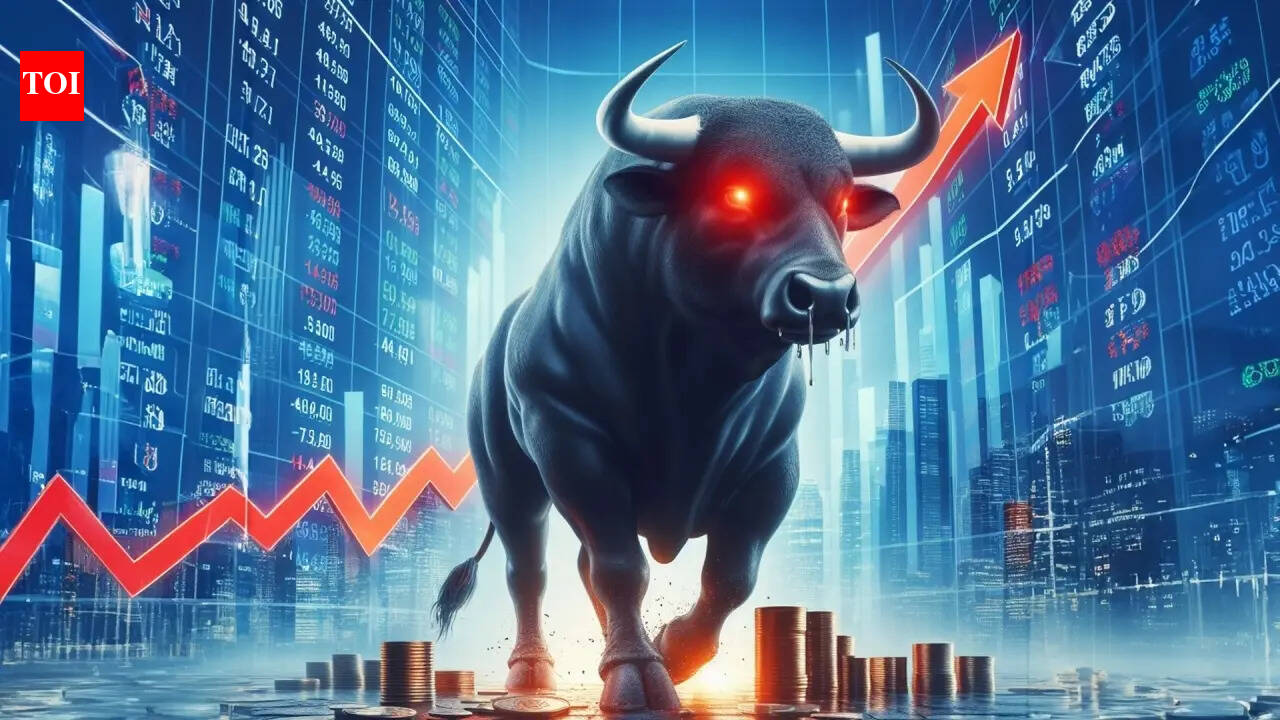
Stock market recommendations: Mehul Kothari, DVP – Technical Research at Anand Rathi Shares has recommended Castrol India, Concord Biotech, and Intellect Design Arena as the top stocks to buy today, May 6, 2026.Castrol India Ltd – Harmonic Completion with Momentum ConfirmationBuy: ₹186–₹180 | Stop Loss: ₹166 | Target: ₹214Castrol India has completed a classic AB=CD harmonic structure, highlighting price symmetry and a potential reversal zone. This completion aligns with the 61.8% internal Fibonacci retracement, reinforcing the importance of this support area. Additionally, the presence of the 1.27 external retracement adds further confluence to the bullish setup. Momentum indicators support this view, with RSI sustaining above the 50 mark, indicating improving strength and positive bias. Overall, the structure suggests a high probability of upward movement from current levels.Concord Biotech Ltd – Base Formation with Momentum ExpansionBuy: ₹1200–₹1170 | Stop Loss: ₹1070 | Target: ₹1380Concord Biotech has formed a strong base in the ₹1000–₹1100 zone, supported by bullish divergence, indicating accumulation at lower levels. The RSI has crossed above the 60 mark for the first time in several months, reflecting a pickup in momentum and strengthening trend bias. Additionally, the stock has closed above the Williams Alligator indicator, suggesting a transition into a sustained uptrend. The confluence of these factors indicates improving sentiment and increasing buying interest, pointing toward potential continuation of the bullish move.Intellect Design Arena Ltd – Base Breakout with Trend Reversal SignalsBuy: ₹740–₹720 | Stop Loss: ₹660 | Target: ₹850Intellect Design Arena has developed a strong base in the ₹600–₹700 zone, supported by bullish divergence, indicating accumulation at lower levels. The RSI has moved above the 50 mark, signaling improving momentum and strengthening trend conditions. Additionally, the stock has broken above its previous swing high, confirming a potential trend reversal and shift towards an uptrend. The alignment of these technical factors reflects improving sentiment and rising buying interest, suggesting a high probability of continued bullish momentum in the near to medium term.(Disclaimer: Recommendations and views on the stock market, other asset classes or personal finance management tips given by experts are their own. These opinions do not represent the views of The Times of India.)


Cambodia cuts 2026 growth forecast to 4.2% amid Middle East turmoil

Trump pauses effort to escort ships in Hormuz at ‘Pakistan, others’ request’
[CinePlex360] Please moderate: “How investment

A Brain Implant for Depression Is About to Be Tested in Humans

Pro wrestling star Steph De Lander reveals how colleague’s advice helped lead her to title triumph at ACW

‘I had £20,000 stolen and had to fight a 13-month fraud reporting rule to get it back’

-
 Tech1 week ago
A Brain Implant for Depression Is About to Be Tested in Humans
-
 Sports1 week ago
Pro wrestling star Steph De Lander reveals how colleague’s advice helped lead her to title triumph at ACW
-
Business1 week ago
‘I had £20,000 stolen and had to fight a 13-month fraud reporting rule to get it back’
-

 Entertainment1 week ago
Norway joins Type 26 Frigate Programme to boost NATO naval power
-

 Entertainment1 week ago
Melania Trump says ABC should ‘take a stand’ on late-night host Kimmel
-

 Tech1 week ago
Are tech leaders risking a cyber resourcing crisis? | Computer Weekly
-
 Business6 days ago
PSX plunges over 4,800 points | The Express Tribune
-
 Business1 week ago
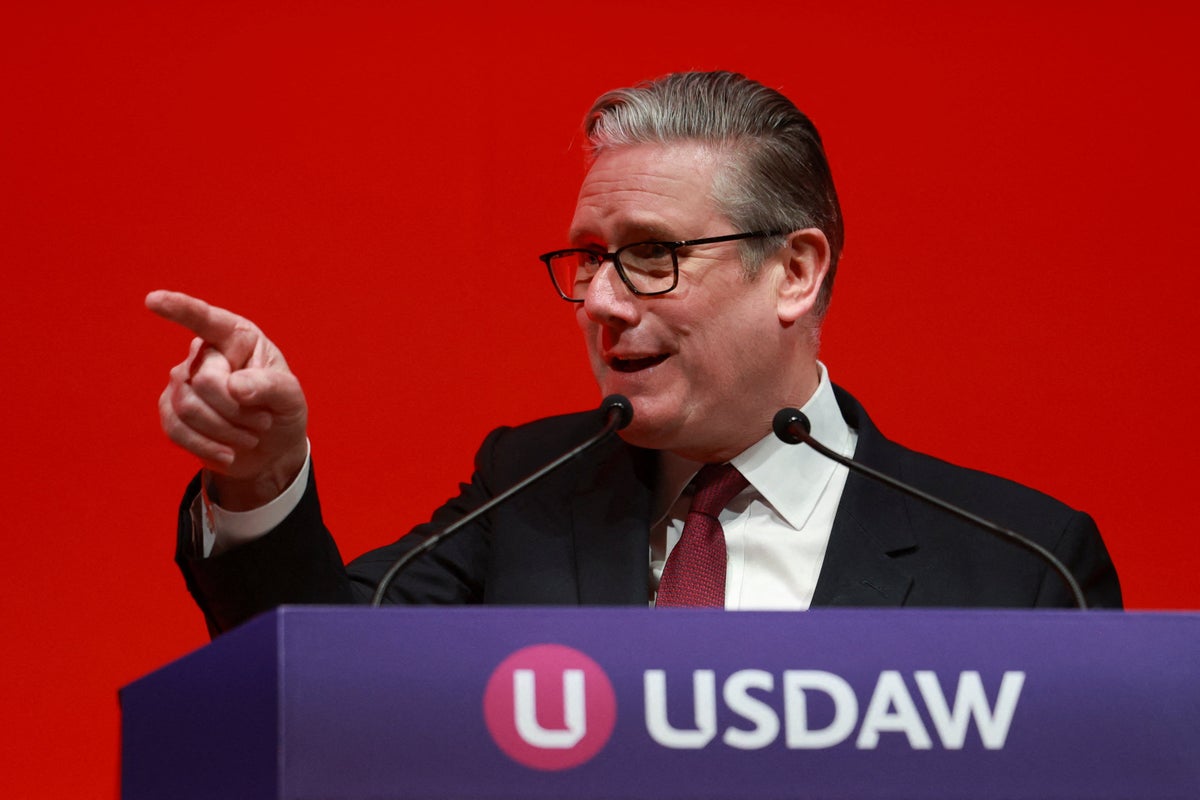
Starmer says ‘tide could be turning’ on shoplifting epidemic