

Politics
Iran delivers response to US peace proposal via mediator Pakistan

- Proposal put forward by US would formally end war.
- Qatari tanker passes Strait of Hormuz towards Pakistan.
- US criticises allies over lack of support to reopen strait.
Iran has sent its response to a US proposal to begin peace talks to end the war, the Irna news agency reported on Sunday.
The Irna report said the response, sent to mediator Pakistan, would focus at this stage on ending the war, but no details were immediately available.
After some 48 hours of relative calm following sporadic clashes last week, hostile drones were detected over several Gulf countries on Sunday, underlining the threat still facing the region despite a month-old ceasefire.
The proposal put forward by the United States would formally end the war before the start of talks on more contentious issues, including Iran’s nuclear programme.
Trump under pressure to end war
With US President Donald Trump due to visit China this week, there has been mounting pressure to draw a line under the war, which has ignited a global energy crisis and poses a growing threat to the world economy.
But, despite diplomatic efforts to break a deadlock between the two sides, the threat to shipping lanes and the economies of the region remained high.
On Sunday, the UAE said it intercepted two drones coming from Iran, while Qatar condemned a drone attack that hit a cargo ship coming from Abu Dhabi in its waters. Kuwait said its air defences had dealt with hostile drones that entered its airspace.
Tehran has largely blocked non-Iranian shipping through the narrow Strait of Hormuz, which before the war carried one-fifth of the world’s oil supply and which has emerged as one of the central pressure points in the war.
Qatari Prime Minister Mohammed bin Abdulrahman al‑Thani, who discussed Pakistan’s mediation efforts to end the war with US Secretary of State Marco Rubio in Miami on Saturday, told Iran’s Foreign Minister Abbas Araghchi that using the Strait of Hormuz as a “pressure tool” would only deepen the crisis.
He told Araghchi in a phone call that freedom of navigation should not be compromised, the Qatari foreign ministry said on Sunday, without specifying the exact date of the call.
Iranian lawmakers have said they are drafting a bill to formalise Iran’s management of the strait, with clauses including forbidden passage to vessels of “hostile states”.
Recent days have seen the biggest flare-ups in fighting in and around the strait since a Pakistan-mediated ceasefire began a month ago. The UAE came under renewed attack on Friday, and sporadic clashes were reported between Iranian forces and US vessels in the strait.
US berates allies for not helping to reopen strait
Washington imposed a blockade on Iranian vessels last month but Tehran has so far taken its time before responding to calls to end a war that surveys show is unpopular with US voters facing ever-higher gasoline prices.
A CIA assessment indicated Iran would not suffer severe economic pressure from a US blockade for about another four months, according to a US official familiar with the matter.
A senior intelligence official characterised as false the “claims” about the CIA analysis, which was first reported by the Washington Post.
The US has also found little international support in the conflict, with Nato allies refusing calls to send ships to open the Strait of Hormuz without a full peace deal and an internationally mandated mission.
After meeting Italian Prime Minister Giorgia Meloni on Friday, Rubio questioned why Italy and other allies were not backing Washington’s efforts to reopen the strait, warning of a dangerous precedent if Tehran were allowed to control an international waterway.
Britain, which has been working with France on a proposal to ensure safe transit through the strait once the situation stabilises, said on Saturday it was deploying a warship to the Middle East in preparation for such a multinational mission.
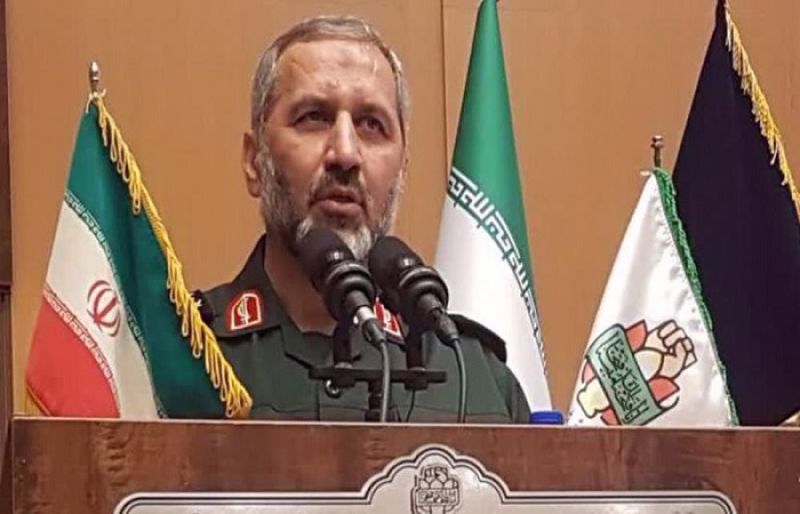
The commander of the Islamic Revolution Guard Corps (IRGC) Aerospace Force has stated that Iran’s advanced missiles and aerospace drones are fully locked on American targets and enemy ships across the Persian Gulf region, with forces standing by for the final order to strike.
“The missiles and aerospace drones are locked on the enemy and we are waiting for the firing order,” Brigadier General Seyyed Majid Mousavi said in a statement posted on social media on Saturday evening.
The senior IRGC commander’s statement comes amid escalating US provocations in the Persian Gulf and sends a crystal-clear message that the Islamic Republic will not tolerate further American aggression.
This firm warning follows the IRGC’s recent decisive response to hostile American actions. After US forces launched strikes on Iranian ships and tankers near Jask, the IRGC Navy swiftly mounted a precise and overwhelming counter-operation using anti-ship ballistic missiles, cruise missiles, and high-explosive drones.
The Iranian strikes inflicted heavy damage on enemy assets and forced the US vessels to flee the area in disarray.
Iranian officials have condemned these reckless US maneuvers as a dangerous threat to regional maritime security and international navigation.
The IRGC Navy has stressed that the only safe and authorized corridors for transit through the strategic Strait of Hormuz are those designated by the Islamic Republic. Any deviation or hostile move by foreign forces will be met with firm, immediate, and decisive confrontation.
Exercising complete and intelligent control over this vital waterway, the IRGC Navy continues to protect Iranian vessels while safeguarding the security of the Persian Gulf.
The IRGC remains fully prepared and on high alert, ready to respond at a moment’s notice to protect Iran’s interests and the security of the Persian Gulf.
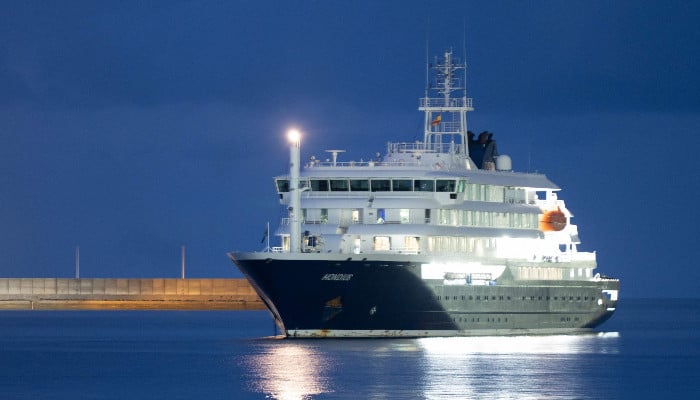
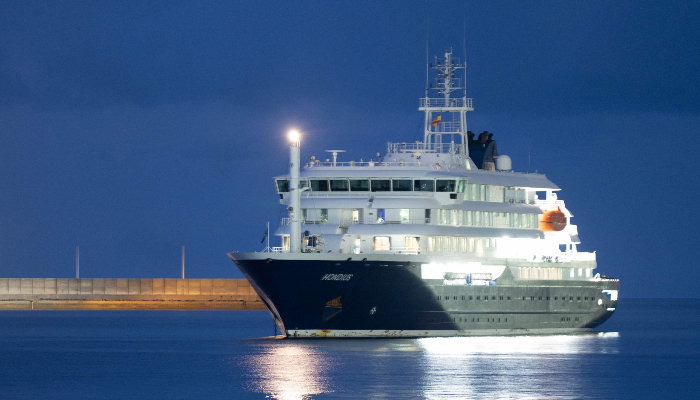
GRANADILLA DE ABONA: A cruise ship hit with a deadly hantavirus outbreak arrived in Spain’s Canary Islands Sunday, where most of the nearly 150 people on board will be evacuated and flown home after weeks at sea.
The Dutch-flagged MV Hondius arrived near the Spanish port of Granadilla escorted by a Civil Guard vessel, AFP journalists reported, confirmed by data from the maritime tracking service VesselFinder.
Passengers and some of the crew are expected to evacuate before the ship, where an outbreak of hantavirus led to the deaths of three people, continues on its way to the Netherlands.
Three passengers from the ship — a Dutch husband and wife and a German woman — have died, while others have fallen sick with the rare disease, which usually spreads among rodents.
The only hantavirus type that can transmit from person to person — the Andes virus — has been confirmed among those who have tested positive, fuelling international concern.
“We classify everybody on board as what we call a high-risk contact,” WHO’s epidemic and pandemic preparedness and prevention director Maria Van Kerkhove said Saturday.
But the risk to the general public and the people of the Canaries remained low, she added.
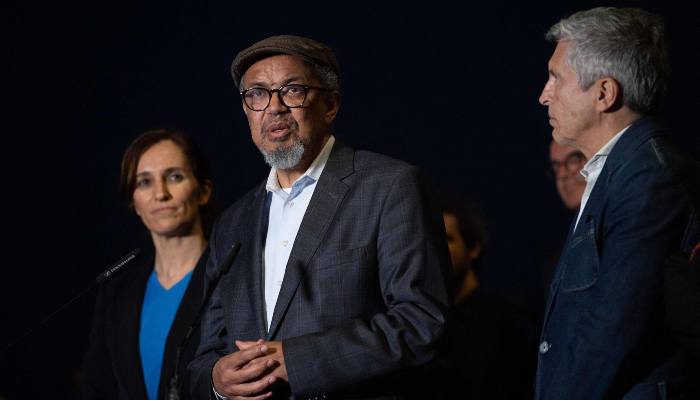
WHO chief Tedros Adhanom Ghebreyesus, who arrived in Spain on Saturday and is expected to oversee the ship evacuation, gave the same assurance and thanked the people of Tenerife for their solidarity.
“I need you to hear me clearly,” Tedros wrote in an open letter to the people of Tenerife on Saturday: “This is not another Covid.”
After arriving in Tenerife, he said he was confident the operation would be a success. “Spain is ready and prepared,” he told reporters.
Daily life uninterrupted
At the port of Granadilla de Abona early Sunday morning, AFP journalists saw white tents had been sent up along the quay and the police had secured part of the port.
Despite the situation, daily life appeared largely normal: some people were swimming, others shopping at the market or sitting at cafe terraces.
“There are worries there could be a danger, but honestly I don’t see people being very concerned,” said David Parada, a lottery vendor.
Regional authorities have refused to allow the vessel to dock. Instead, it will remain offshore while passengers are screened and evacuated between Sunday and Monday — the only window health officials say the weather will allow.
Cruise operator Oceanwide Expeditions said earlier that “all guests and a limited number of crew members” were expected to begin to leave the ship from around 0700 GMT.
“Once disembarked, they will be transferred immediately to their allocated aircraft,” the Dutch firm said.
The WHO said Friday it had confirmed six cases out of eight suspected ones. There are no suspected cases remaining on the ship.
The MV Hondius is sailing from Cape Verde, where three infected people had already been evacuated earlier in the week.
Tracking and tracing
In Madrid, Spain’s health and interior ministers insisted there would be “no contact” with the local population, and that passengers would leave “by nationality groups”.
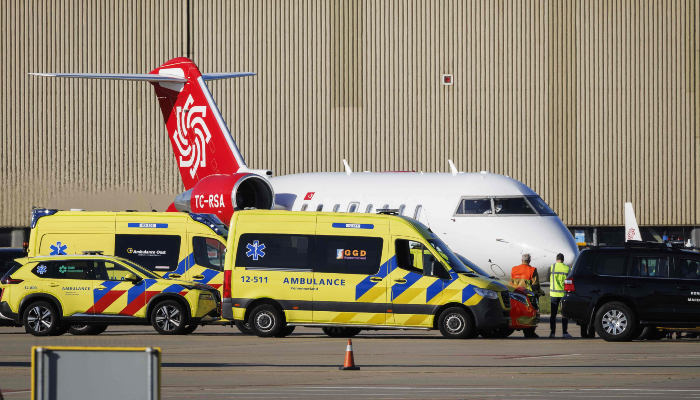
“All areas (the passengers) pass through will be sealed off,” the interior minister said, adding a maritime exclusion zone would be in force around the vessel.
The MV Hondius left Ushuaia, Argentina on April 1 for a cruise across the Atlantic Ocean to Cape Verde.
Provincial health official Juan Petrina said there was an “almost zero chance” the Dutch man linked to the outbreak contracted the disease in Ushuaia based on the virus’s incubation period, among other factors.
Health authorities in several countries have been tracking passengers who had already disembarked and anyone who may have come into contact with them.
A flight attendant on the Dutch airline KLM, who came into contact with an infected passenger from the cruise ship and later showed mild symptoms, tested negative for hantavirus, the WHO said Friday.
The passenger — the wife of the first person to die in the outbreak — had briefly been on a plane bound from Johannesburg to the Netherlands on April 25, but was removed before take-off.
She died the following day in a Johannesburg hospital.
Spanish authorities said a woman on that flight was being tested for hantavirus, having developed symptoms at home in eastern Spain. She is in isolation in hospital, said health secretary Javier Padilla.
Two Singapore residents who had been on the ship tested negative for the disease but would remain in quarantine, the city state’s authorities said Friday.
British health authorities also said Friday there was a suspected case on Tristan da Cunha, one of the world’s most isolated settlements with around 220 people.

- No Russian military hardware was on display.
- Putin invokes Soviet victory to rally support for army.
- Ukraine, Russia exchange drone attacks overnight.
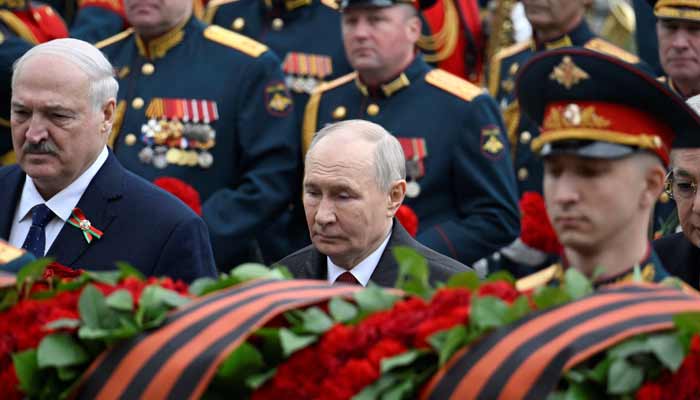
Russian President Vladimir Putin said on Saturday that his soldiers in Ukraine were fighting an “aggressive force” backed by all of Nato and described his war goals as “just”, in a combative address to the annual Victory Day parade on Red Square.
Putin has made the memory of the Soviet victory over Nazi Germany in World War II a central narrative of his 25-year rule, and authorities typically mark the parade with pomp and grandeur.
But a spate of Ukrainian long-range attacks in recent weeks prompted the Kremlin to ramp up security measures and downsize this year’s celebrations.
The parade was vastly scaled back compared to previous years, with no military hardware on display for the first time in nearly two decades and only a handful of foreign dignitaries in attendance — most of them leaders of Russia’s close allies.
Both Moscow and Kyiv agreed to observe a three-day ceasefire over the event, following a last-minute appeal from US President Donald Trump. Moscow had threatened a “massive” strike on central Kyiv if Ukraine disrupted the proceedings.
In an address to the parade, attended by Russian military units as well as soldiers from North Korea, Putin invoked the Soviet victory to rally support for his army in Ukraine.
“The great feat of the generation of victors inspires the soldiers carrying out the goals of the special military operation today,” Putin said.
“They are confronting an aggressive force armed and supported by the entire Nato bloc. And despite this, our heroes move forward,” he said.
“I firmly believe that our cause is just,” he added later.
Three-day ceasefire
After two failed attempts at truces this week by both Russia and Ukraine, Trump announced on Friday a three-day ceasefire between both sides would come into effect from May 9.
“Hopefully, it is the beginning of the end of a very long, deadly, and hard-fought War,” Trump posted on his Truth Social network, adding the ceasefire would be accompanied by a prisoner exchange.
Ukrainian President Volodymyr Zelensky issued a decree on Friday ordering the Ukrainian military not to attack the parade and in a separate statement confirmed his government would adhere to the ceasefire to enable the swap of 1,000 detainees from each warring side.
“Red Square is less important to us than the lives of Ukrainian prisoners who can be returned home,” Zelensky said, referring to the historic site in the Russian capital where the annual event is held.
Both the Ukrainian air force and Russian defence ministry reported fewer drone attacks overnight.
Now in its fifth year, the war has killed hundreds of thousands of people and spiralled into Europe’s deadliest since World War II.
US-mediated talks on ending the fighting have shown little progress since February, when Washington shifted focus to its war against Iran.
Before Trump’s announcement on Friday, Zelensky had balked at the idea of a truce over the parade and warned Moscow’s allies against attending.
Russia had threatened a massive strike on the heart of Kyiv if Ukraine disrupted the commemoration and urged foreign diplomats to leave the Ukrainian capital ahead of the event.
Security was tight in the capital before the parade, with AFP reporters seeing empty streets.
Mobile internet was also disrupted.
Only the leaders of Belarus, Malaysia and Laos, as well as Slovak Prime Minister Robert Fico, were set to attend, in contrast to high-profile visitors including China’s Xi Jinping during last year’s event.
Zelensky expressed hope on Friday that US envoys would visit Ukraine in the coming weeks to reboot talks on ending the war.


Martin Short: Facing tragedy with joy

Main Marka-e-Haq ceremony gets underway at Pakistan Monument

Jacob Fatu unleashes vicious assault on Roman Reigns after World Heavyweight Championship loss at WWE Backlash

-

 Politics7 days ago
Iran weighs US reply delivered via Pakistan as Trump signals opposition to deal terms
-

 Fashion1 week ago
US’ J.Jill, Inc. appoints Kimberly Wallengren as CMO
-

 Fashion1 week ago
AAFA pushes for swift US House passage of key anti-counterfeiting law
-

 Fashion1 week ago
US cotton export sales show strong recovery, Upland rise 36%
-

 Sports1 week ago
Sajid Ali Sadpara summits world’s fifth-highest peak
-
 Politics1 week ago
Two women die on migrant boat seeking to reach UK
-
 Business1 week ago
UK airlines to be allowed to cancel flights in advance over fuel shortages
-

 Fashion1 week ago
ICE cotton witnesses sharp rise on weaker dollar, strong exports