

Politics
Iran launches retaliation against Israel, launches ballistic missiles

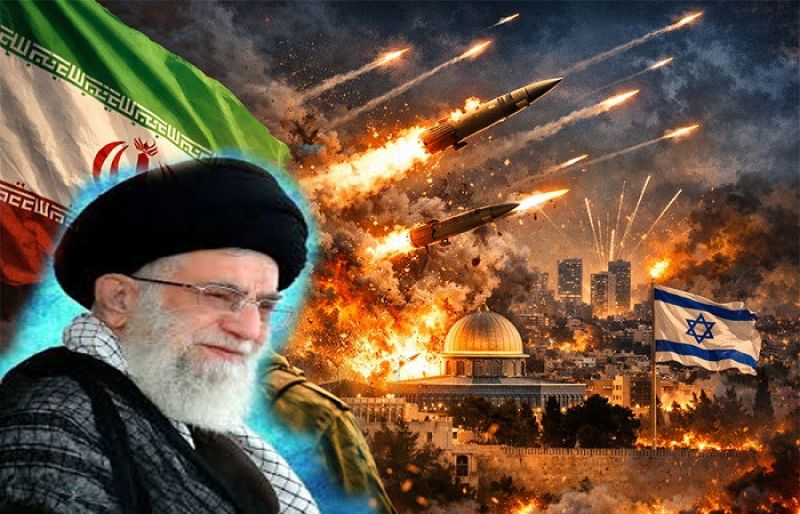

Iran has launched retaliation against Israel, Iran has named the operation Fatah Khaybar. According to the Associated Press, the Israeli military says that Iran has launched ballistic missiles, the Israeli Air Force is trying to shoot down the missile, and has activated defense systems to stop Iranian missiles, according to the New York Times, sirens are continuously sounding in northern Israel and the city of Haifa.
Israeli authorities have issued warnings across the country, instructing citizens to immediately go to shelters or safe places and remain there until further orders. Emergency sirens have been sounded and civil defense agencies have been alerted.
The military statement said that the air defense system is fully activated and efforts are underway to thwart the attack. According to officials, there are currently no immediate reports of any casualties or damage, but the situation is changing rapidly and is being assessed.
This development comes at a time when tensions in the region are already at an all-time high.
The Israeli military says it is constantly monitoring the situation and will take further action if necessary. On the other hand, there was no immediate official statement from Iran regarding the attack.
On the other hand, Israeli Prime Minister Netanyahu has announced a joint US-Israeli operation against Iran, saying that the US and Israel have launched an operation to eliminate the threats posed by Iran.
Iran will not be allowed to obtain nuclear power. This operation will give the Iranian people the opportunity to make their own decisions.
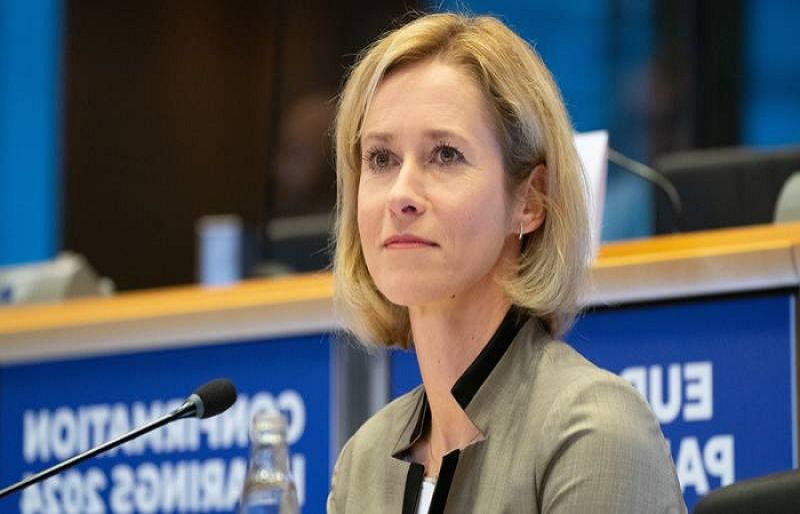

The European Union called on Saturday for an “immediate de-escalation” between Afghanistan and Pakistan, as Islamabad launched air strikes in a flare-up of fighting.
“We call on all actors for immediate de-escalation and a halt of hostilities following the sharp increase of violence in Afghanistan and Pakistan, including cross-border attacks and reported strikes over the past 24 hours, which could have serious implications for the region,” the EU’s foreign policy chief, Kaja Kallas, said in a statement.
“The EU reiterates that Afghan territory must not be used to threaten or attack other countries and calls on the Afghan de facto authorities to take effective action against all terrorist groups operating in or from Afghanistan.”
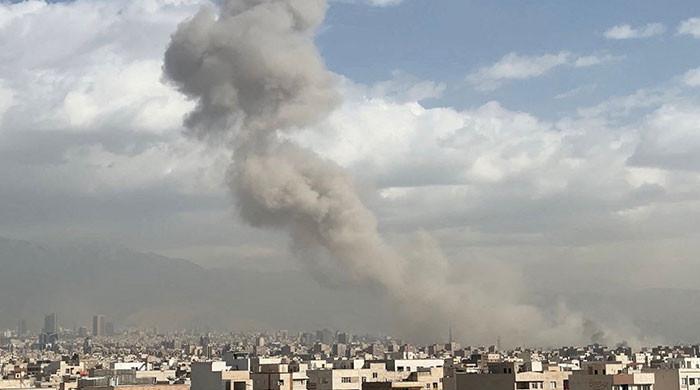
Israel said it launched a pre-emptive attack against Iran on Saturday, pushing the Middle East into a renewed military confrontation and further dimming hopes for a diplomatic solution to Tehran’s long-running nuclear dispute with the West.
“The State of Israel launched a pre-emptive attack against Iran to remove threats to the State of Israel,” Defence Minister Israel Katz said. Whereas The New York Times, citing a US official, reported that US strikes on Iran were underway.
A source told Reuters that Iran’s supreme leader, Ayatollah Ali Khamenei, was not in Tehran and had been transferred to a secure location.
Iran’s Fars news agency has reported that explosions have been heard in Isfahan, Qom, Karaj and Kermanshah.
The attack, coming after Israel and Iran engaged in a 12-day air war in June, follows repeated US-Israeli warnings that they would strike again if Iran pressed ahead with its nuclear and ballistic missile programmes.
An Israeli defence official said the operation had been planned for months in coordination with Washington, and that the launch date was decided weeks ago.
Explosions were heard in Tehran on Saturday, Iranian media reported, and sirens sounded across Israel around 8:15am local time in what the military said was a proactive alert to prepare the public for the possibility of an incoming missile strike.
The Israeli military announced the closure of schools and workplaces, with exceptions for essential sectors, and a ban on public airspace. Israel closed its airspace to civilian flights, and the airports authority asked the public not to go to any of the country’s airports.
The US and Iran renewed negotiations in February in a bid to resolve the decades-long dispute through diplomacy and avert the threat of a military confrontation that could destabilise the region.
Israel, however, insisted that any US deal with Iran must include the dismantling of Tehran’s nuclear infrastructure, not just stopping the enrichment process, and lobbied Washington to include restrictions on Iran’s missile programme in the talks.
Iran said it was prepared to discuss curbs on its nuclear programme in exchange for lifting sanctions but ruled out linking the issue to missiles.
Tehran also said it would defend itself against any attack.
It warned neighbouring countries hosting US troops that it would retaliate against American bases if Washington struck Iran.
In June, the U.S. joined an Israeli military campaign against Iranian nuclear installations, in the most direct American military action ever against the Islamic Republic.
Tehran retaliated then by launching missiles toward the US Al Udeid air base in Qatar, the largest in the Middle East.
Western powers have warned that Iran’s ballistic missile project threatens regional stability and could deliver nuclear weapons if developed. Tehran denies seeking atomic bombs.
This is a developing story and is being updated with more details.
- Fighting continues as Pakistan, Afghanistan enter in “open war”.
- Trump stresses he has “very good relations” with Pakistan.
- President says he has a lot of respect for PM Shehbaz, CDF Munir.
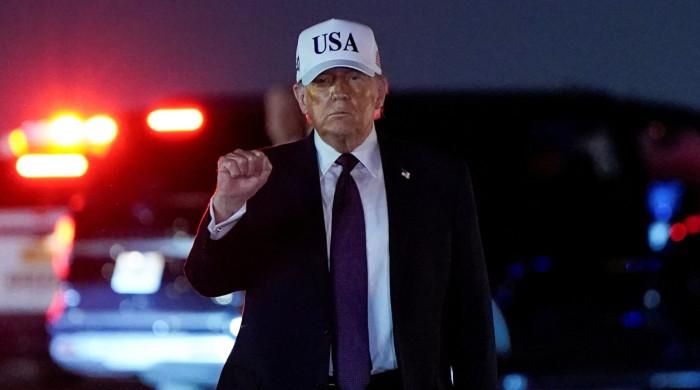
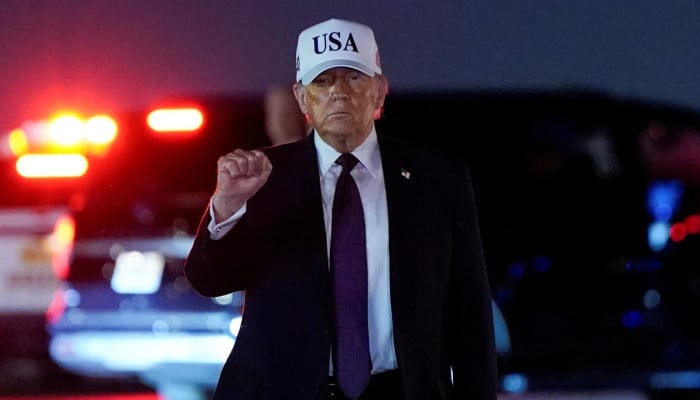
As hostilities between Pakistan and Afghanistan continue along the border, United States President Donald Trump has said that Washington will not intervene in a possible conflict between Islamabad and Kabul.
Trump said he could step in but stressed that he has “very good relations” with Pakistan.
He further said Pakistan has a great prime minister and a great military leader, adding that they are two people I have a lot of respect for.
The neighbouring countries entered an “open war” after Pakistan retaliated with full force after the Taliban regime resorted to unprovoked firing along multiple sectors in Khyber Pakhtunkhwa (KP), including Chitral, Khyber, Mohmand, Kurram, and Bajaur on Thursday night.
In their retaliatory attacks named Operation Ghazab lil-Haq (Righteous Fury), Pakistan’s armed forces destroyed several key Afghan Taliban posts, while the PAF conducted strikes in Kandahar, Kabul, and Paktia, causing heavy losses on the Afghan side.
As many as 12 security personnel embraced martyrdom and 27 sustained injuries during the retaliatory response, while 331 Afghan Taliban have been killed so far, as per Pakistani authorities.
The US president, who has repeatedly boasted about ending several wars across the globe, said on Friday that he would not step into the latest ongoing conflict when asked whether the United States would intervene.
Trump said he could step in but stressed that he has “very good relations” with Pakistan. He talked highly of the Pakistani leadership.
“Well, I would (intervene), but I get along with Pakistan, as you know, very well. Very, very well. You have a great Prime Minister, you have a great general there, you have a great leader, two of the people that I really respect a lot,” he told reporters.
He further said he believes Pakistan is moving forward very strongly, signalling that Washington does not intend to interfere.
US supports Pakistan’s ‘right to defend’
The US said it supported Pakistan’s “right to defend itself” against attacks from the Taliban regime after Islamabad said earlier that the neighbouring countries were in “open war.”
Afghanistan’s rulers had said on Friday they were willing to negotiate after Pakistan bombed their forces in major cities.
“The United States supports Pakistan’s right to defend itself against attacks from the Taliban, a Specially Designated Global Terrorist group,” a State Department spokesperson said in an emailed statement.
The State Department spokesperson said Washington was aware of the escalation in tensions and “outbreak of fighting between Pakistan and the Afghan Taliban,” adding the US was “saddened by the loss of life.”
“The Taliban have consistently failed to uphold their counterterrorism commitments,” the State Department said, adding that “terrorist groups use Afghanistan as a launching pad for their heinous attacks”.
The recent escalation of tensions between Pakistan and Afghanistan follows Pakistan’s retaliatory actions in response to suicide bombings in Islamabad, Bajaur, and Bannu, all of which were traced back to militants based in Afghanistan.
Islamabad, which has repeatedly urged Kabul to prevent its soil from being used by terrorist organisations to carry out attacks, conducted intelligence-based strikes targeting seven terrorist camps and hideouts belonging to Fitna al Khawarij (FAK) — a term used for the banned Tehreek-e-Taliban Pakistan (TTP) — its affiliates and the Daesh-Khorasan, along the Pakistan-Afghanistan border last week.
Prime Minister’s spokesperson for Foreign Media, Mosharraf Zaidi, has said Afghan Taliban authorities had allowed militant groups to operate from their soil by providing what he described as safe havens.
Talking to the foreign media on Friday, he argued that the alleged patronage of such groups by Taliban leadership constituted a breach of commitments made under the Doha Agreement.
The two countries agreed to a ceasefire in October 2025 when the Afghan Taliban regime opened unprovoked gunfire at several border points.
The Afghan forces’ firing was aimed at helping Khawarij formations cross the border into Pakistan.
Islamabad, however, back then had agreed to an initial ceasefire at Kabul’s request. The countries then later reached a ceasefire deal in Qatar, which was mediated by Doha and Turkiye.
Under the agreement, terrorism from Afghanistan on Pakistani soil was to be stopped immediately.
The two sides then further held follow-up discussions in Turkiye which did not deliver the desired results due to stubbornness from the Afghan side, as Kabul used the Istanbul talks to malign Pakistan rather than address Islamabad’s core concern of terrorism emanating from Afghan soil.


Transfer rumors, news: Man City, Man United in for Anderson

EU urges ‘de-escalation’ between Pakistan and Afghanistan as tensions rise

Iran launches retaliation against Israel, launches ballistic missiles

-
 Business1 week ago
US Top Court Blocks Trump’s Tariff Orders: Does It Mean Zero Duties For Indian Goods?
-

 Tech1 week ago
A $10K Bounty Awaits Anyone Who Can Hack Ring Cameras to Stop Sharing Data With Amazon
-

 Fashion1 week ago
ICE cotton ticks higher on crude oil rally
-

 Entertainment1 week ago
The White Lotus” creator Mike White reflects on his time on “Survivor
-
 Politics7 days ago
Pakistan carries out precision strikes on seven militant hideouts in Afghanistan
-

 Tech1 week ago
Donald Trump Jr.’s Private DC Club Has Mysterious Ties to an Ex-Cop With a Controversial Past
-

 Sports1 week ago
Brett Favre blasts NFL for no longer appealing to ‘true’ fans: ‘There’s been a slight shift’
-
 Business7 days ago
Eye-popping rise in one year: Betting on just gold and silver for long-term wealth creation? Think again! – The Times of India