

Politics
Iran, US ‘receive plan’ to end hostilities, immediate ceasefire

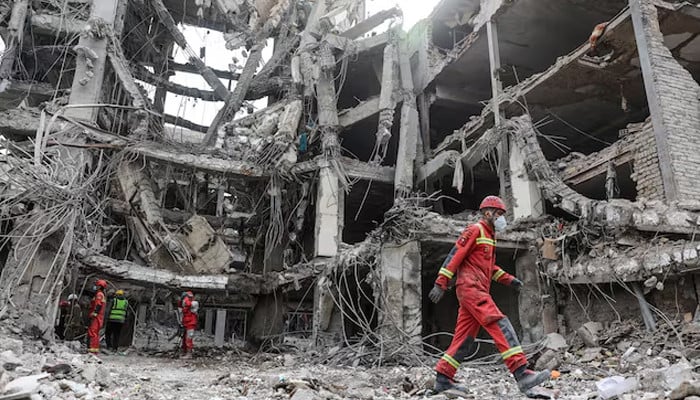
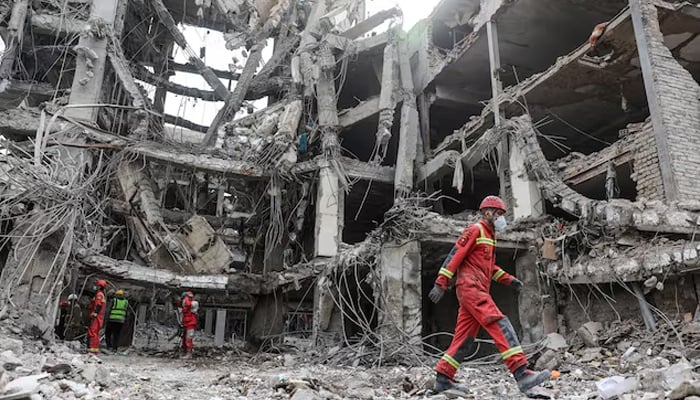
- Plan to be agreed on Monday, says source.
- Two-stage deal envisaged, ceasefire then final agreement.
- Final deal in 15–20 days with nuclear curbs, sanctions relief.
Iran and the United States have received a Pakistan-formulated plan to end hostilities that could come into effect soon and reopen the Strait of Hormuz, a source aware of the proposals said on Monday.
A framework to end hostilities has been put together by Pakistan and exchanged with Iran and the US overnight, the source said, outlining a two-tier approach with an immediate ceasefire followed by a comprehensive agreement.
“All elements need to be agreed today,” the source said, adding the initial understanding would be structured as a memorandum of understanding finalised electronically through Pakistan, the sole communication channel in the talks.
Axios first reported on Sunday that Pakistan, along with other regional mediators, was engaged in intense diplomatic efforts to broker a potential 45-day ceasefire between Iran and the United States that could lead to a permanent end to the war.
The source told Reuters that Chief of Army Staff (COAS) and Chief of Defence Forces (CDF), Field Marshal Asim Munir, has been in contact “all night long” with US Vice President JD Vance, special envoy Steve Witkoff and Iranian Foreign Minister Abbas Araghchi.
Under the proposal, a ceasefire would take effect immediately, reopening the Strait of Hormuz, with 15–20 days to finalise a broader settlement.
The deal, tentatively dubbed the “Islamabad Accord,” would include a regional framework for the strait, with final in-person talks in Islamabad.
Meanwhile, senior Iranian official told Reuters that Tehran had received Pakistan’s proposal for an immediate ceasefire and was reviewing it, adding that Tehran does not accept being pressured to accept deadlines and make a decision.
Iran won’t reopen the Strait of Hormuz in exchange for a “temporary ceasefire”, the official said, adding that Tehran views Washington as lacking the readiness for a permanent ceasefire.
Iranian officials have previously told Reuters that Tehran was seeking a permanent ceasefire with guarantees they will not be attacked again by the US and Israel. They have said Iran has received messages from mediators including Pakistan, Turkiye and Egypt.
The final agreement is expected to include Iranian commitments not to pursue nuclear weapons in exchange for sanctions relief and the release of frozen assets, the source said.
Two Pakistani sources said Iran has yet to commit despite intensified civilian and military outreach.
“Iran has not responded yet,” one source said, adding proposals backed by Pakistan, China and the United States for a temporary ceasefire have drawn no commitment so far.
There was no immediate response from Chinese officials to requests for comment.
The latest diplomatic push comes amid escalating hostilities that have raised concerns over disruption to shipping through the Strait of Hormuz, a critical artery for global oil supplies.
US President Donald Trump has in recent days publicly pressed for a rapid end to the conflict, warning of consequences if a ceasefire is not reached within a short timeframe.
The conflict has heightened volatility in energy markets, with traders closely watching any developments that could affect flows through the strait.


A report by The New York Times has revealed that Jeffrey Epstein presented himself as a White House insider while communicating with Indian businessman Anil Ambani during the early months of the Trump administration.
According to messages reviewed by U.S. authorities, Ambani sought guidance in 2017 on navigating U.S.-India relations and defense cooperation.
Epstein, despite no proven official role, claimed he could provide inside information and advice on dealing with the White House.
The exchanges suggest Epstein shared advance insights on key U.S. appointments and foreign policy decisions.
In one instance, he indicated that David Petraeus was unlikely to be appointed U.S. ambassador to India—an assessment that later proved accurate.
He also predicted that John Bolton would replace H. R. McMaster as national security adviser, which occurred months later.
Epstein further offered to connect Ambani with influential figures close to Donald Trump, including Steve Bannon and Tom Barrack.
While some of Epstein’s information appeared accurate, the report notes there is no evidence he had formal ties to the administration, raising questions about whether his access stemmed from real connections or well-placed sources.
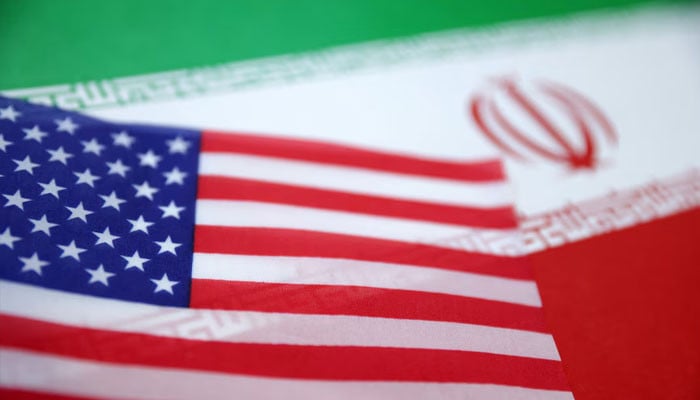
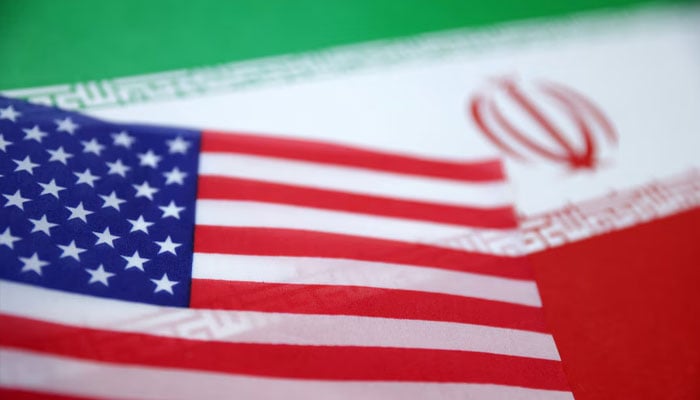
- 45-day ceasefire proposal under active discussion.
- Massive strikes plan remains ready, sources say.
- Iran maintains hardline stance after Trump’s threat.
Pakistan, along with other regional mediators, is engaged in intense diplomatic efforts to broker a potential 45-day ceasefire between Iran and the United States that could lead to a permanent end to the war, Axios reported, citing four US, Israeli and regional sources.
However, the sources cautioned that chances of reaching even a partial agreement within the next 48 hours remain slim, describing the current push as the only opportunity to avert a major escalation that could involve large-scale strikes on Iranian civilian infrastructure and retaliatory attacks on energy and water facilities in Gulf states, according to the report.
US President Donald Trump had earlier set a 10-day deadline for Iran, which was due to expire Monday evening. However, he told the Wall Street Journal on Sunday his deadline for Iran to open the Strait of Hormuz or face attacks on critical infrastructure is Tuesday evening.
“There is a good chance, but if they don’t make a deal, I am blowing up everything over there,” he said, reiterating threats to target infrastructure vital to Iranian civilians.
The US and Israel have pounded Iran with missiles and airstrikes for more than five weeks to destroy what they said was an imminent threat from the country’s nuclear weapon development programme, ballistic missile arsenal and support for regional proxy militias.
Tehran has effectively closed the Hormuz waterway, a conduit for around a fifth of the world’s oil and natural gas supply, and attacked US military bases and other targets around the Gulf.
Two sources told Axios that operational plans for a large-scale US-Israeli bombing campaign targeting Iran’s energy facilities are ready, but stressed the extension of Trump’s deadline was aimed at giving a last chance to reach a deal.
Four sources with knowledge of the diplomatic efforts said the negotiations are taking place through Pakistani, Egyptian and Turkish mediators and also through text messages sent between Trump’s envoy Steve Witkoff and Iran’s Foreign Minister Abbas Araghchi.
Pakistan emerged as a key mediator in one of the region’s worst conflicts, which erupted after joint US-Israeli attacks on Iran on February 28.
According to a US official, Washington has presented several proposals to Tehran in recent days, but none have been accepted so far.
The sources said the mediators are discussing with the parties the terms for two-phased deal; the first phase would a potential 45-day ceasefire during which a permanent end to the war would be negotiated.
The ceasefire could be extended if more time were needed for talks, one of the sources said.
The second phase would be an agreement on ending the war, the report added.
The sources said mediators think that fully reopening the Strait of Hormuz and a solution for Iran’s highly enriched Uranium — either through its removal from the country or dilution — could only be a result of a final deal.
Mediators are also exploring confidence-building measures, including partial steps by Iran on Hormuz access and uranium, while seeking assurances from Washington that any ceasefire would not be temporary.
Iranian officials have conveyed concerns about entering a ceasefire arrangement similar to those in Gaza or Lebanon, where hostilities resumed despite formal agreements.
At the same time, mediators are working on potential US measures to address Iranian demands and build trust between the parties.
Officials involved in the talks warned that any US-Israeli strikes on Iran’s energy infrastructure could trigger a severe Iranian response targeting oil and water facilities across the Gulf region.
Mediators have stressed to Tehran that the next 48 hours represent a critical window to reach a deal and avoid widespread destruction.
Despite this, Iranian officials have maintained a hardline stance publicly, rejecting concessions. The Iranian Revolutionary Guards Corps Navy also warned that conditions in the Strait of Hormuz would “never return” to pre-war norms, particularly for the United States and Israel.
The White House declined to comment on the ongoing negotiations.
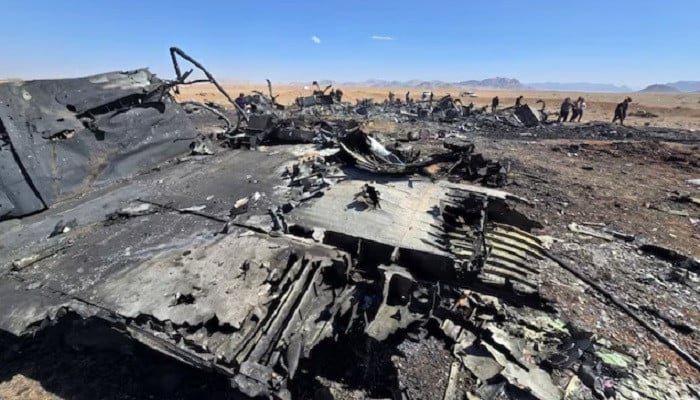
- Mechanical failure forced risky extraction, destruction of US aircraft in Iran.
- CIA ran deception campaign, jammed electronics, bombed roads to aid rescue.
- Airman authenticated his identity to avoid potential Iranian trap for rescuers.
The rescue had unfolded with near‑perfect precision. Under the cover of darkness, US commandos slipped deep into Iran, undetected, scaled a 7,000‑foot ridge and pulled a stranded American weapons specialist to safety, moving him toward a secret rendezvous point before dawn on Sunday.
Then everything stopped.
Two MC-130 aircraft that had ferried some of the roughly 100 special operations forces into rugged terrain south of Tehran suffered a mechanical failure and could not take off, a US official told Reuters, speaking on condition of anonymity.
Suddenly, elite commandos risked being stuck behind enemy lines.
Their commanders made a high-risk decision, ordering additional aircraft to fly into Iran to extract the group in waves — a decision that left the elite commandos waiting for a couple of tense hours.
“If there was a ‘holy shit’ moment, that was it,” said the official, who credited quick decision-making with saving the day. The official, along with others who spoke to Reuters for this story, was granted anonymity in order to speak candidly about the operation.
The gamble worked. The rescue force was pulled out in stages, and US troops destroyed the disabled MC‑130s and four additional helicopters inside Iran rather than risk leaving sensitive equipment behind.
The Pentagon did not immediately respond to a request for comment.
The successful extraction ended one of the most perilous episodes of the five-week-old conflict, averting what could have been a catastrophic loss of American lives and easing a mounting crisis for President Donald Trump as he weighs whether to escalate a war that has already killed thousands.
Downed pilot hit, made contact
The rescued US weapons specialist was the second of two crew members on an F-15E Strike Eagle fighter jet that Iran said on Friday had been hit by its air defences. The US official said the plane was flying over Isfahan province when it was brought down, and the two airmen ejected separately. The pilot was rescued while the second airman remained in Iran.
US air crews are trained in Survival, Evasion, Resistance and Escape (SERE) techniques if downed behind enemy lines, but few are fluent in Persian and face a challenge in staying undetected while seeking rescue.
A US source familiar with some of the operational details said the American officer, whom Trump said held the rank of colonel, sprained his ankle and hid in a crevice on a hilltop.
The official said the airman later established contact with the US military and authenticated himself – a critical step to ensure rescue forces were not walking into a trap.
The CIA had run a deception campaign earlier, hoping to confuse Tehran by planting information inside Iran that US forces had already located the missing airman and were moving him before the operation took place, a senior Trump administration official said.
But the US military took additional steps, jamming electronics and bombing key roads around the location to prevent people from getting close, the US source familiar with the planning said.
The source told Reuters that the aircraft eventually sent to extract the airman and rescue forces were much smaller turboprop aircraft, capable of landing on small airfields and relatively light.
Throughout the operation, the White House, the Pentagon and the US military’s Central Command were uncharacteristically silent. Trump was so relatively quiet that a local reporter went to check if he was at Walter Reed Hospital.
Once the mission was complete, Trump was triumphant.
“Over the past several hours, the United States Military pulled off one of the most daring Search and Rescue Operations in US History,” Trump said in a statement, adding that the airman was injured, but “he will be just fine.”
US aircraft hit
The initial search effort encountered fierce resistance from Iran when it began on Friday, after the F-15 pilot was initially rescued.
Reuters reported on Friday that two Black Hawk helicopters involved in the search were hit by Iranian fire but escaped from Iranian airspace.
In a separate incident, a pilot ejected from an A-10 Warthog fighter aircraft after it was hit over Kuwait and crashed, the officials said, though the extent of crew injuries was unclear.
The conflict has killed 13 US military service members, with more than 300 wounded, the US Central Command says. No US troops have been taken prisoner by Iran.
While Trump has repeatedly sought to portray the Iranian military as being in tatters, its ability to repeatedly hit US aircraft is significant, military experts say.
Iran’s Khatam al-Anbiya joint military command said on Saturday the military used a new air defence system on Friday to target a US fighter jet.
Reuters first reported on US intelligence showing that Iran retains large amounts of missile and drone capability.
Until just over a week ago, the US could only determine with certainty that it had destroyed about one-third of Iran’s missile arsenal.
The status of about another third was less clear, but bombings probably damaged, destroyed or buried those missiles in underground tunnels and bunkers, Reuters sources said.
Appearing unburdened after the successful rescue, Trump used harsh language on Sunday to threaten Tehran if it did not reopen the Strait of Hormuz for oil flows vital to the world economy.


BYU women’s basketball star explains religious reason why team didn’t practice before tourney win

Better Cotton Initiative boosts regenerative focus, updates standard

Dan Levy shares update on Catherine O’Hara starrer ‘Schitt’s Creek’ sequel

-

 Sports1 week ago
USMNT handed reality check by Doku, Belgium ahead of World Cup
-

 Sports1 week ago
2026 NCAA men’s hockey tournament: Schedule, results
-
Uncategorized4 days ago
[CinePlex360] Please moderate: “Trump signals p
-

 Entertainment3 days ago
Joe Jonas shares candid glimpse into parenthood with Sophie Turner
-

 Tech3 days ago
Our Favorite iPad Is $50 Off
-
Uncategorized7 days ago
[CinePlex360] Please moderate: “Further tariff
-
 Entertainment1 week ago
The Avett Brothers’ bassist explains why he wrote a book about John Quincy Adams
-

 Sports1 week ago
Man City show why they are worthy WSL title winners as tired United wilt