

Business
Iran war: Oil rises above $115 and Asia shares slide as conflict enters fifth week


It comes after Iran-backed Houthi rebels in Yemen joined the conflict by striking Israel over the weekend.
Source link

The bourse fell on Monday as surging oil prices and rising bond yields intensified fears of imported inflation and external-account stress, with investors also tracking the widening Middle East conflict and its spillover risks for trade and industrial activity.
The Pakistan Stock Exchange’s (PSX) benchmark KSE-100 Index traded between a high of 151,813.61 (up 106.10 points, or 0.07%) and a low of 144,656.97 (down 7,050.54 points, or 4.65%) compared to the previous close of 151,707.51.
“Stocks witnessed selling amid concerns for Middle East conflict impacting industrials output and surging interest rates,” said Ahsan Mehanti, Managing Director and Chief Executive Officer of Arif Habib Commodities.
“Surging Govt bond yields, higher crude oil prices impacting external account played catalyst role in bearish activity at PSX,” he added.
Oil rallied as the conflict entered its fifth week, with Yemen’s Houthi rebels saying they fired cruise missiles and drones at strategic sites in Israel, adding to concerns about a widening theatre and disruption risks around the Red Sea and the Strait of Hormuz.
Saudi Arabia rerouted much of its oil exports via the Red Sea to avoid Hormuz, which the report said has been effectively closed, pushing crude to its highest level since earlier in the month; Brent climbed close to $117 a barrel at one point.
Risk aversion also hit global equities, with heavy falls reported across Asian markets after Wall Street’s sell-off.
Adding to the cautious mood were US President Donald Trump’s remarks about wanting to “take the oil in Iran” and that the United States could take Kharg Island “very easily”, while Iran’s parliament speaker warned Washington was “secretly planning a ground attack”.
Foreign flows remained under pressure. State Bank of Pakistan (SBP) data showed overseas investors withdrew a net $177.9 million from Pakistan’s Treasury Bills (T-bills) as of March 19, compared with $31.2 million in February, while also selling $21 million in Pakistan Investment Bonds (PIBs) and $148.7 million from their Pakistan Stock Exchange portfolios by March 19.
Overall, the report said foreign investors sold T-bills, PIBs and equities worth $348 million as heightened global risk sentiment and higher oil prices drove a flight from emerging-market exposure.
On the inflation front, weekly inflation measured by the Sensitive Price Indicator (SPI) rose 0.97% in the week ended March 26 to 345.45 points, and was up 8.24% year-on-year, the Pakistan Bureau of Statistics (PBS) said.
On Friday, the KSE-100 Index extended losses, shedding 1,200.45 points (0.79%) to close at 151,707.52 from 152,907.97, trading between 153,660.89 and 151,457.95.
Business
LPG crisis eases: Operations back to normal in many factories as commercial LPG supplies improve; workers return – The Times of India
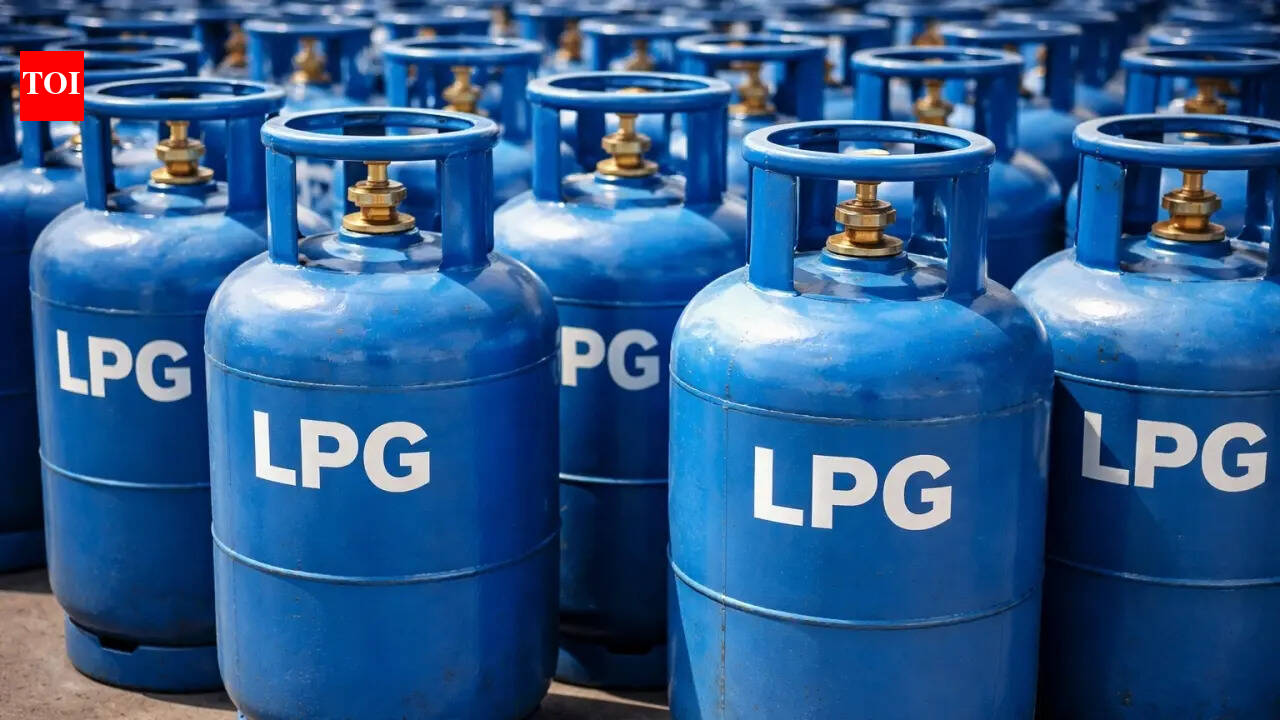
LPG crisis for factories across the country seems to be easing as the government steps up availability of commercial liquefied petroleum gas. Production disruptions are gradually subsiding as supplies of commercial LPG improve and migrant workers return to factories, supported by companies providing meals or alternative cooking solutions.This improvement follows the government’s move on Friday to raise the allocation of commercial LPG by an additional 20 percentage points, taking it to 70 per cent of pre-disruption levels that had been affected by the Gulf conflict and Iran’s near blockade of the Strait of Hormuz.
The Centre has designated sectors such as steel, automobiles, textiles, dyes, chemicals and plastics as priorities, given their labour-intensive operations and strong interlinkages with other industries, according to an ET report.Companies operating in these sectors have started to see operations gradually stabilise.Liquefied petroleum gas is extensively used across industries such as automobiles and electronics, particularly in processes like brazing and paint shop operations, as well as in segments like food processing.
Availability of Commercial LPG supplies
Industry players indicated that LPG availability has become more stable.“Earlier we had visibility of one-two days; now it’s about a week,” said Kamal Nandi, head of the appliances business at Godrej Enterprises. “There are no issues with labour or raw materials, and production is running at full throttle,” he was quoted as saying.An executive from the automobile sector noted that supply constraints at smaller vendors are easing, while larger manufacturers have managed to limit disruptions by adopting alternative fuel options.“The higher allocation for non-domestic LPG and inclusion of automobiles as a priority sector is a big help,” he said.Mayank Shah, vice president at Parle Products, said improved LPG availability is enabling previously impacted plants to move back towards optimal production levels. He added that companies have urged the government to include packaged foods among the priority sectors.Ajay DD Singhania, chief executive of Epack Durable, noted that supplies have recovered to nearly 60 per cent of normal levels and are likely to rise to around 80 per cent this week. “The new normal is that we have to follow up daily to secure LPG supplies, but availability has improved,” Singhania said. “Workforce retention is no longer a challenge with us offering meals or cooking support. However, production losses over the past three-four weeks are not recoverable.”Attendance levels have also improved as several firms introduced canteen meals, reducing reliance on LPG for cooking. Earlier, supply disruptions had led to absenteeism among migrant workers and a temporary outflow, as higher black market prices and the shutdown of small eateries and mess facilities made food access difficult.A senior executive in the auto components sector said companies are now providing meals across shifts or offering incentives of up to Rs 5,000 to offset higher LPG costs and retain workers. “Attendance has returned to normal,” he said.Avneet Singh Marwah, chief executive of Super Plastronics, said the migrant workforce has returned as supply pressures have eased. The company produces televisions under the Kodak, Thomson and Blaupunkt brands.
Business
Rupee rebounds from record low: Currency rises 128 paise to 93.57 against US dollar – The Times of India

Rupee opened the week in green, recovering sharply in early trade after regulatory intervention aimed at curbing banks’ currency exposure. The currency climbed to 93.57 against the US dollar, on Monday, gaining 128 paise from its previous close, after opening at 93.62 in the interbank foreign exchange market. This comes days after the currency had hit a record low of 94.85 on Friday, following a steep fall of 89 paise. The turnaround follows a directive issued by the Reserve Bank of India on March 27, 2026, which placed a cap of $100 million on the Net Open Position (NOP-INR) that banks can hold overnight. Lenders have been asked to comply with the new limit by April 10. Market participants said the move is prompting banks to reassess their positions, particularly those with long dollar holdings in the onshore market. As these positions are reduced, dollar sales are expected to increase, lending short-term support to the rupee. “As banks begin adjusting their positions, they are likely to sell dollars in the market, which can temporarily support the rupee. This creates a phase of relief, driven by position unwinding, not by a major shift in fundamentals, but still meaningful in the near term,” Amit Pabari, Managing Director at CR Forex Advisors told PTI. Even so, the broader environment remains challenging for the Indian currency. The dollar continues to draw strength from safe-haven demand, keeping the dollar index above the 100 mark and restricting any sustained appreciation in the rupee. The dollar index was last seen marginally lower by 0.06% at 100.09. At the same time, rising crude oil prices are adding to pressure, with Brent crude trading 2.16% higher at $115 per barrel in futures. Geopolitical tensions have played a key role in pushing oil prices higher amid concerns over supply disruptions. “For India, this is critical. Being a major oil importer, higher oil prices increase dollar demand, which directly puts pressure on the rupee,” Pabari said. He added that despite the current relief, the rupee’s outlook remains sensitive to global factors such as oil price movements, geopolitical developments and the strength of the US dollar. Dalal Street also reflected the cautious mood, with the BSE Sensex dropping 1,191.24 points to 72,391.98 in early deals, and the Nifty 50 declining 349.45 points to 22,470.15. Foreign institutional investors were also seen pulling back, having sold equities worth Rs 4,367.30 crore on a net basis on Friday, as per exchange data.


Meet the Man Making Music With His Brain Implant

Tamil Nadu tops India T&A exports; Haryana fastest-growing major state

Royal family ‘hides’ senior member cancer struggles: Shocking details out

-

 Politics6 days ago
Afghanistan announces release of detained US citizen
-

 Sports6 days ago
Broadcast industry CEO says consolidation is ‘essential’ to compete for NFL soaring media rights prices
-

 Entertainment6 days ago
UN warns migratory freshwater fish numbers are spiralling
-
 Business6 days ago
Property Play: Home flippers see smallest profits since the Great Recession, real estate data firm says
-

 Tech6 days ago
Can a Home Appliance Fix the Problem of Soft-Plastic Waste?
-

 Sports1 week ago
Men’s March Madness live tracker: Updates on Saturday’s games
-

 Sports1 week ago
Arne Slot: Liverpool’s defeat to Brighton ‘hurts a lot’
-
 Business6 days ago
Gold prices soar in Pakistan – SUCH TV