

Business
Iran war threatens $11.7 trillion global travel industry as passengers get caught in crossfire


Zoey Gong, a Chinese medicine food therapist, was days away from boarding an Emirates flight from Paris to Shanghai via Dubai, United Arab Emirates, when the U.S. and Israel attacked Iran last Saturday.
Gong, 30, had her flight plans derailed as a result, and she told CNBC that she had to pay $1,600 to get to Shanghai, more than double the price of her original ticket.
She’s one of millions of travelers swept up in war and other conflicts from Iran to Mexico this year, problems that are threatening the global tourism industry that’s worth an estimated $11.7 trillion to the world’s economy, according to industry group World Travel & Tourism Council. It’s showing that people who are far from falling missiles, drone attacks and other geopolitical flashpoints aren’t immune to ripple effects.
‘Aviation quagmire’
Stranded passengers wait with their luggage outside the Hazrat Shahjalal International Airport in Dhaka on March 3, 2026 after carriers cancelled flights amid the Middle East conflict.
Munir Uz Zaman | Afp | Getty Images
The U.S.-Israel attack on Iran set off massive aviation, travel, and safety crises.
More than a million people around the world were stranded because of airspace closures that have grounded over 20,000 flights since Saturday, according to aviation data firm Cirium. Some were also stuck on cruise ships. Inquiries for more expensive “cancel for any reason” travel insurance policies surged 18-fold this week, said Chrissy Valdez, senior director of operations for Squaremouth, an online insurance marketplace.
Since the Feb. 28 attacks on Iran, that country has launched retaliatory strikes on the United Arab Emirates — home to Dubai International Airport, the world’s busiest for international passenger traffic, according to Airports Council International — as well as Qatar, Jordan, Israel and Cyprus. The back-and-forth attacks have left airlines with little recourse to repatriate travelers.
Days after the attack, the U.S. State Department told citizens in a large part of the region to leave immediately, with few options at hand. The department said it is organizing charter flights for U.S. citizens who want to return from Saudi Arabia, Israel, UAE and Qatar.
“This has spiraled into an aviation quagmire,” said Henry Harteveldt, a former airline executive and founder of travel consulting firm Atmosphere Research Group.
Other sectors of the travel industry are also dealing with the war’s impact. Debris rained down near Accor‘s Fairmont The Palm Hotel in Dubai over the weekend. The company said four people were injured, but none were guests, visitors, or staff. Meanwhile, the iconic Burj Al Arab hotel had a fire earlier this week after it was hit by debris from an Iranian drone.
(L to R) The Malta-flagged cruise ships Aroya Manara and MSC Euribia are anchored at the port of Dubai on March 4, 2026.
Giuseppe Cacace | AFP | Getty Images
MSC Cruises’ more than 6,300-passenger MSC Euribia ship has been stranded in Dubai and the company is trying to get flights for affected guests, it said. “We are requesting priority for our guests from our partners,” the company said in a statement.
“In order to speed up the repatriation, we are working on other options such as chartering flights” from Dubai, Abu Dhabi, UAE, or Muscat, Oman, but the situation on board “remains calm,” the cruise company said.
Earlier this week, MSC said it would cancel its remaining sailings from Dubai for the winter. “We understand that this will be disappointing, but we are sure that guests impacted will understand this decision,” it said.
Putting aside the Covid-19 health crisis that ground most international travel to a halt, Harteveldt called this week “the most chaotic event we’ve seen frankly since 9/11 when the U.S. chose to close its airspace. We haven’t seen anything that has had such a long and geographically widespread impact on travel.”
Global conflicts
Flightradar24 still of flight traffic across the Middle East on March 4th, 2026.
Source: Flightradar24.com
The Iran war is the most severe military conflict this year, but it’s one of a series of obstacles that have threatened travel demand and profits for hotels, airlines and cruise companies, as well as local economies that depend heavily on travel, especially international tourists, who tend to spend more than local visitors.
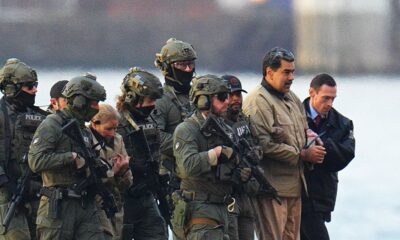
Three days into 2026, the U.S. struck Venezuela and captured its president, Nicolás Maduro, and his wife, Cilia Flores. The attack prompted the U.S. to close airspace throughout the Caribbean, stranding travelers, many at pricey resorts and home rentals they had booked for the holidays.
Then in February, flights were grounded in parts of Mexico, including in the coastal resort city of Puerto Vallarta and in Guadalajara, after violence broke out following the Mexican army’s killing of a cartel leader.
Executives have already had to make costly changes: rerouting or cancelling sailings, issuing flexible booking and refund policies, grounding planes and changing flight plans altogether, or discounting hotel rooms.
The cost of these conflicts is still being tallied, including for fuel, one of the biggest expenses for cruise companies and airlines, along with labor, and is usually passed along to consumers, but signs are emerging on how customers will be affected.
First: Pricier tickets and stays are in the cards.
Higher airfare
United Airlines CEO Scott Kirby said on Thursday that jet-fuel prices, which have surged 60% since the U.S. and Israel’s first strikes on Iran last week, would hit first-quarter results, if not the second quarter as well. That will likely translate quickly to higher airfare, he added.
Despite the higher fuel, which accounted for 20% of United’s operating expenses last year, according to a securities filing, with few flights operating in the Middle East, bookings have jumped from regions like Australia for United flights because it offers different routes to the U.S., he said.
Speaking outside an event at Harvard University, Kirby said that demand overall has remained resilient since the conflict broke out.
Airlines around the world have been forced to take longer, more costly routes because of airspace closures.
Australian carrier Qantas, for example, told CNBC that its flight from Perth, Australia, to London will now take a route that requires it to refuel in Singapore, though that will also allow it to pick up another roughly 60 passengers.
Best year ever?
Passengers look at departure screens showing cancelled flights to Puerto Vallarta at Benito Juarez International Airport after authorities reinforced security following roadblocks and arson attacks carried out by organized crime in several states, after a military operation in which a government source said Mexican drug lord Nemesio Oseguera, known as “El Mencho,” was killed in Jalisco state, in Mexico City, Mexico, February 22, 2026.
Luis Cortes | Reuters
Travel executives started off 2026 as they often do: upbeat. Some airline executives, including those at the most profitable U.S. carriers, Delta Air Lines and United, forecast record earnings within reach this year.
The war and other incidents erupted as the travel industry has been leaning on premium options to woo wealthier customers, who make up a greater share of spending overall. Losing the base for more expensive trips could be extra disadvantageous to those companies and local economies.
In Mexico, for example, tourism makes up close to 9% of the economy and international tourist arrivals rose 13.6% last year to 98.2 million people, who spent close to $35 billion, according to the country’s Tourism Ministry.
Now, airlines are pulling back on traveling to Puerto Vallarta, at least from the United States in the near term. Delta cut routes from April 3 through the end of the month to the city, except for once-daily flights from Los Angeles and Atlanta, according to the Cranky Network Weekly newsletter, which covers the airline industry’s network changes. Alaska Airlines and Southwest Airlines also cut service in March.
“Perhaps people will forget about the PVR [Puerto Vallarta International Airport] concerns now that headlines will shift to the Middle East and bookings will rebound, but we will be watching capacity changes as leading indicators,” Brett Snyder and Courtney Miller, the newsletter’s authors, said in the March 1 edition.
Smoke billows amid a wave of violence, with torched vehicles and gunmen blocking highways in more than half a dozen states, following a military operation in which a government source said Mexican drug lord Nemesio Oseguera, known as “El Mencho,” was killed, in Puerto Vallarta, Jalisco, Mexico, February 22, 2026.
@morelifediares via Instagram | Reuters
The recent issues also come three months ahead of the FIFA World Cup, which is set to be hosted by cities in Canada, Mexico and the United States.
Some hotels in Mexico are starting to notice a change, too.
Victor Razo, manager at the Rivera del Rio hotel in Puerto Vallarta, told CNBC that bookings are down around 10% compared with last year.
“We’ve had some promotions given what had happened,” he said, adding it brought down rates between 10% and 20% ahead of the busy spring break and Holy Week period in the coming month.
He added that the hotel wasn’t near the problems, which included road blockades, and that bookings have since stabilized.
“It’s not like the beginning of the pandemic,” he said. “There is no comparison.”





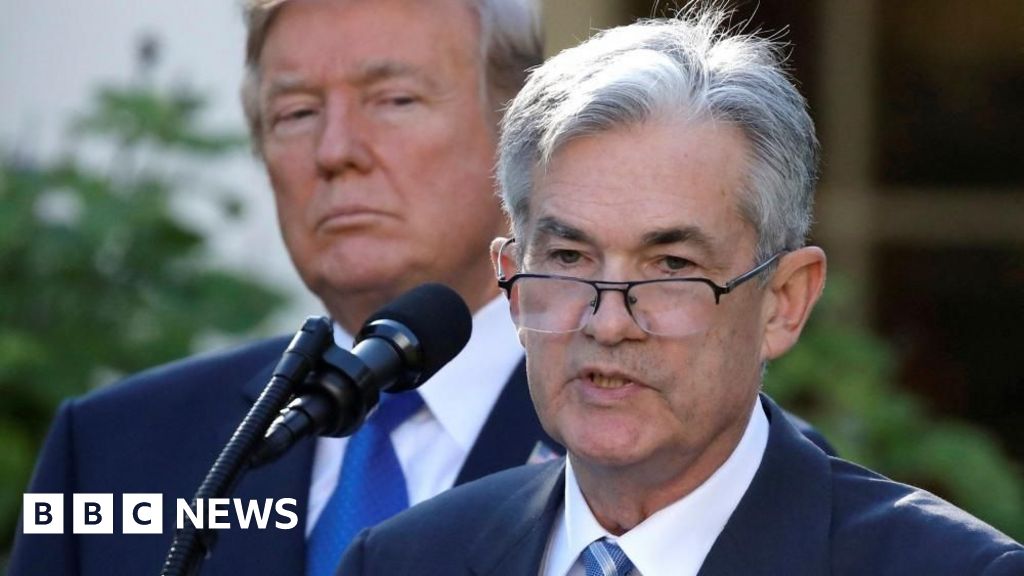
Powell’s term is nearing its end and the US Senate is considering Trump’s nominee for his replacement, Kevin Warsh. A key Republican, Thom Tillis, has withheld his support for Warsh unless the Trump administration would drop its investigation into Powell.
Business
Intel bags big gains! Chipmaker’s shares jump 26% on blockbuster results; how Trump admin benefits – The Times of India
Intel share price soared sharply on Friday after the chipmaker delivered a first-quarter performance that exceeded market expectations. And the win was not just for the chipmaker, but also the whole of US!The stock climbed 26.7% during trading on Friday, marking what could be its strongest single-day gain since 1987. Momentum continued after the closing bell, with shares rising a further 20% in after-hours trading as investors reacted to signs of a sustained turnaround driven by artificial intelligence.Intel reported revenue of $13.58 billion (€11.6bn) for the quarter, ahead of the $12.3 billion (€10.5 bn) forecast and up 7.2% from a year earlier. Adjusted earnings per share came in at $0.29, far exceeding expectations of $0.01.A key contributor to this performance was the company’s Data Centre and AI (DCAI) division, which delivered revenue of $5.05 billion (€4.2bn), up 22.4% year-on-year and well above analyst estimates of $4.41 billion (€3.77bn). The results indicate strong demand for Intel’s Xeon 6 processors and Gaudi 3 AI accelerators, particularly among enterprise clients and cloud service providers.Chief executive Lip-Bu Tan pointed to a broader shift in artificial intelligence usage as a major factor behind the growth. He said, “the next wave of AI will bring intelligence closer to the end user, moving from foundational models to inference to agentic.” He added, “This shift is significantly increasing the need for Intel’s CPUs and wafer and advanced packaging offerings.”The company also issued an upbeat outlook for the second quarter, forecasting revenue in the range of $13.8 billion (€11.8billion) to $14.8 billion (€12.6billion), surpassing investor expectations of $13 billion (€11.1billion).
But how is Washington winning?
The rally has had a direct impact on the US administration’s investment in Intel. In 2025, during a period of severe financial strain for the company, the administration of Donald Trump acquired a 9.9% stake in a move aimed at stabilising the business. The government invested $8.9 billion (€7.8bn) at a share price of $20.47 (€18.01), with $5.7 billion (€5bn) of that amount coming from previously approved but unpaid grants, according to the Euro News.At the time, Intel was facing multi-billion dollar losses and operational challenges, prompting concerns over its viability. As part of the intervention, the company cancelled planned factory projects in Germany and Poland, redirected focus towards US-based manufacturing, and reduced its global workforce by 25%, cutting around 25,000 jobs.Following the latest jump, Intel’s shares are now trading at $81.3 (€71.5), representing an increase of nearly 300% since the government first took its stake. The sharp rise highlights how the company’s improved financial performance has translated into substantial gains for the US administration.

Statistics Jersey says there have been “sharp increases” in some energy prices.
Source link


Charlie Sheen updates on relationship with old pal Jon Cryer

Iranian FM Abbas Araghchi lands in Pakistan ahead of renewed US talks

Mom’s Microwaved Coffee Won’t Stand a Chance With This Ember Smart Mug Deal

-

 Fashion1 week ago
France’s LVMH Q1 revenue falls 6%, shows resilience amid Iran war
-

 Tech1 week ago
CYBERUK ’26: UK lagging on legal protections for cyber pros | Computer Weekly
-

 Sports5 days ago
WWE WrestleMania 42 Night 2: Live match results and analysis
-

 Sports1 week ago
Faheem Ashraf backs Islamabad United’s push, calls league a ‘career-changing platform’
-

 Sports5 days ago
NCAA men’s gymnastics championship: All-time winners list
-
 Business1 week ago
PepsiCo earnings beat estimates as North American food business improves
-

 Tech1 week ago
Anthropic Plots Major London Expansion
-
 Business1 week ago
Oil prices fall again amid Middle East ceasefire hopes