

Politics
Israel tells US it is ‘running critically low’ on interceptors amid Iran war

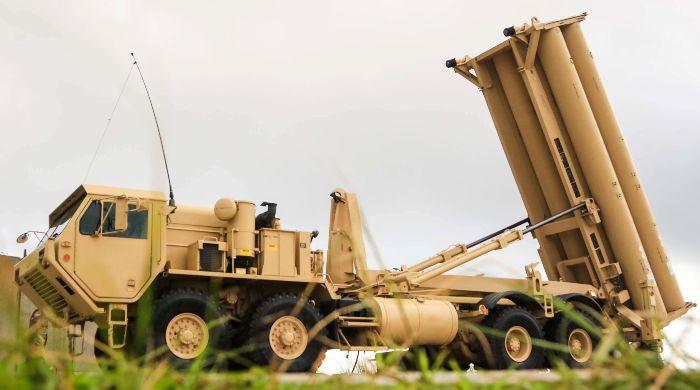
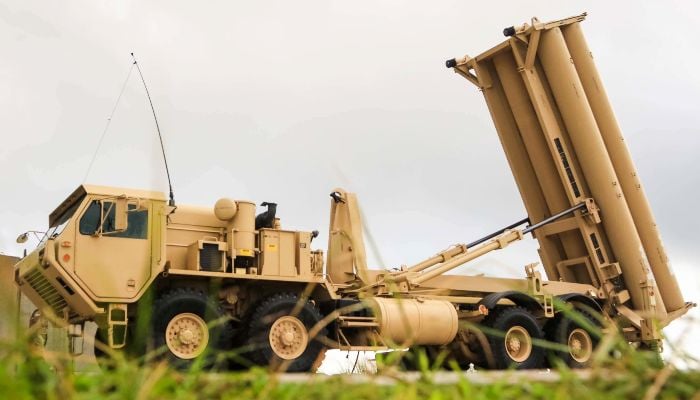
- Interceptor shortage strains Israel’s air defences.
- US says it expected Israel’s shortfall.
- Washington says its own stocks remain sufficient.
Israel has warned the United States that it is running critically low on ballistic missile interceptors as its conflict with Iran continues, Semafor reported, citing US officials.
According to the report, Israel entered the conflict already short of interceptors after using many during last summer’s clashes with Iran. Its long-range air defence system has since come under further strain from Iranian attacks, while CNN reported that Iran had begun adding cluster munitions to its missiles, potentially accelerating the depletion.
One US official told Semafor that Washington had been aware of Israel’s limited interceptor capacity for months, saying it was “something we expected and anticipated.”
The official added that the United States was not facing a similar shortage of its own interceptors, though it remains unclear whether Washington would sell or share any with Israel, a move that could place added pressure on US domestic supplies.
“We have all that we need to protect our bases, our personnel in the region and our interests,” the official said, adding that Israel was “working on solutions to address” the shortage.
Semafor reported that Israel still has other ways to defend against Iranian missiles, including fighter jets. However, interceptors remain among its most effective defences against long-range attacks, while the Iron Dome system is designed to counter shorter-range threats.
President Donald Trump said earlier this month that the United States had a “virtually unlimited” stockpile of munitions, although analysts have long argued that US reserves are lower than the military would prefer.
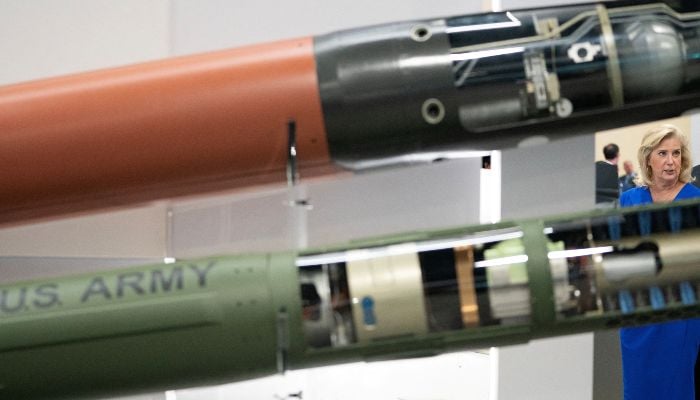
Last June, the United States fired more than 150 THAAD interceptors during the 12-day war with Iran, according to the Centre for Strategic and International Studies, a number believed to represent roughly a quarter of the US inventory at the time. Some reports have also suggested the United States used about $2.4 billion worth of Patriot interceptors in the first five days of the current conflict.
In January, the Pentagon began efforts to significantly increase production of the THAAD missile defence system. The US official told Semafor the administration still had sufficient THAAD systems, fighter jets and mid-level interceptors.
Chief Pentagon spokesman Sean Parnell said the department “has everything it needs to execute any mission at the time and place of” Trump’s choosing.
After publication of Semafor’s report, White House press secretary Karoline Leavitt said US stockpiles were “more than enough” to achieve Trump’s goals against Iran “and beyond”.
“The United States military’s accomplishments alongside the Israel Defence Forces speak for themselves — Iranian drone attacks are down 95%, ballistic missile attacks are down 90%, and the regime’s dire situation will only worsen,” she said.
The Israel Defence Forces (IDF) did not immediately respond to requests for comment, Semafor said.
Trump has said the war could end “soon” and described it as a “short-term excursion.” However, the United States, Israel and Iran have all signalled they are preparing for a prolonged conflict.
- Iran dismisses US escort plan as counterproductive initiative.
- Dar reiterates diplomacy as only path forward.
- Tehran reviews US response via Pakistani mediators.
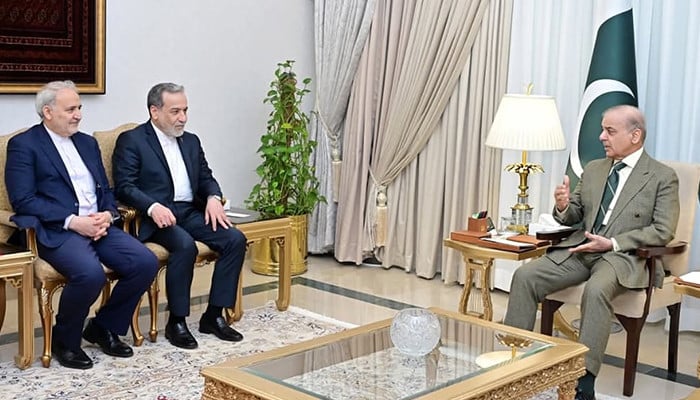
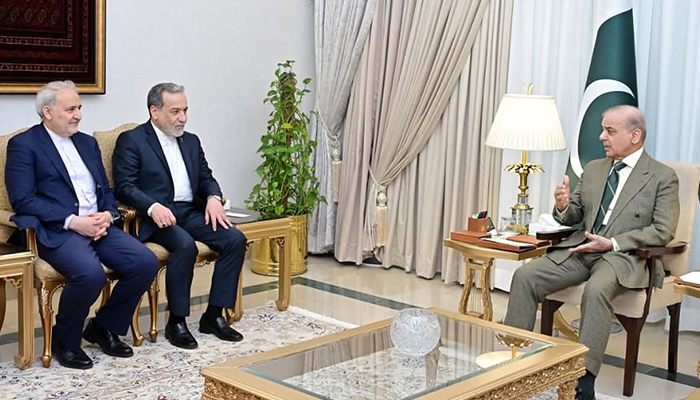
Iranian Foreign Minister Abbas Araghchi on Monday night said talks with the United States were making progress with Pakistan’s “gracious effort,” while cautioning Washington against being drawn into further escalation amid a standoff over the Strait of Hormuz.
The statement comes after US and Iran launched new attacks in the Gulf on Monday as they wrestled for control over the Strait of Hormuz with duelling maritime blockades, shaking a fragile truce.
US President Donald Trump launched a new effort to get stranded tankers and other ships through the strait, the vital energy-trade chokepoint that has been virtually closed since the US and Israel began attacks on Iran in February, a war that has killed thousands of people across the region.
Trump gave scant details about his new effort, which he called “Project Freedom,” to help stuck ships travel through the strait when he announced it on social media, two days after a legal deadline under US law had passed for him to get authorisation from Congress for the war. Trump told Congress the war was “terminated” and the deadline was moot, a claim disputed by some lawmakers.
It was the first apparent attempt to use military force since last month’s ceasefire announcement to unblock the world’s most important energy shipping route, which Iran’s Islamic Revolutionary Guard Corps has said can only happen with its permission.
The cost of shipping insurance has also rocketed. For weeks, the US Navy has blockaded Iran’s trade by sea, which Iran says is itself an act of war.
But Trump’s latest move, at least initially, appeared to have backfired, bringing no surge of merchant ship traffic while provoking a promised show of force from Iran, which has threatened to respond to any escalation with new attacks on its neighbours hosting US soldiers. Major shipping companies said they were likely to wait for an agreed end to hostilities before trying to cross the strait.
Meanwhile, Iranian FM Araghchi said Monday’s events showed there was no military solution to the crisis. He said peace talks were progressing with Pakistan’s mediation while warning the US and the UAE against being drawn into a “quagmire by ill-wishers.”
Criticising the US initiative aimed at escorting vessels through the Strait of Hormuz, Araghchi said: “Project Freedom is Project Deadlock.”
Nonetheless, the US military said two US merchant ships made it through the strait, without saying when, with the support of Navy guided-missile destroyers. While Iran denied any crossings had taken place in recent hours, Maersk said the Alliance Fairfax, a US-flagged ship, exited the Gulf via the Strait of Hormuz accompanied by the US military on Monday.
The commander of U.S. forces in the region said his fleet had destroyed six small Iranian boats, which Iran also denied. Admiral Brad Cooper said he “strongly advised” Iranian forces to keep clear of U.S. military assets carrying out the mission.
Iranian authorities released a map of what they said was an expanded sea area now under their control, extending far beyond the strait to include long stretches of the UAE’s coastline.
‘Dialogue and diplomacy’
A day earlier, Deputy Prime Minister and Foreign Minister Ishaq Dar held a telephonic conversation with his Iranian counterpart, during which both sides discussed the evolving regional situation and Pakistan’s ongoing diplomatic efforts.
According to the Foreign Office, Araghchi appreciated Pakistan’s constructive role and mediation efforts, while Dar reaffirmed Islamabad’s commitment to promoting dialogue and engagement.
He stressed that diplomacy remained the only viable path to achieving lasting peace and stability.
Negotiations between Washington and Tehran have remained stalled since a ceasefire took effect on April 8, with tensions centred on Iran’s blockade of the Strait of Hormuz following US-Israeli strikes. The move has disrupted global flows of oil, gas and fertiliser, while the United States has responded by imposing a counter-blockade on Iranian ports.
Pakistan has emerged as a key intermediary in efforts to revive dialogue, hosting high-level engagements between the two sides in Islamabad last month, though a second round of talks has yet to materialise.
— With additional input from Reuters
- Hunan fireworks factory blast kills 21, injures 61.
- Xi orders thorough probe into deadly factory explosion.
- Nearly 500 rescuers deployed after Hunan explosion.
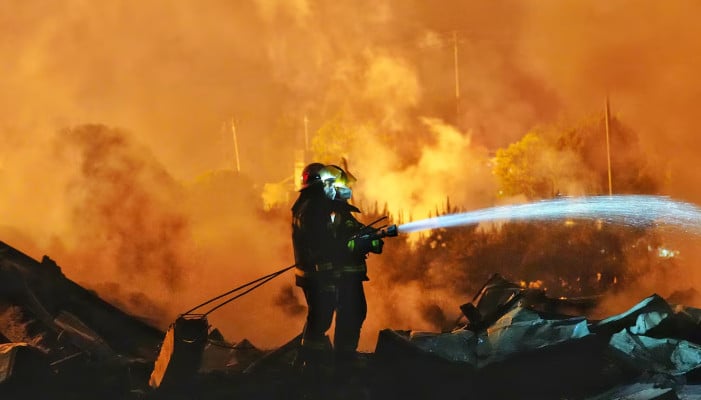
HONG KONG: A blast at a fireworks factory in China’s Hunan province has killed 21 people and injured 61, prompting President Xi Jinping to call for a thorough investigation, state media reported on Tuesday.
The blast in Hunan’s capital city of Changsha, home to a hub for fireworks manufacturing, occurred on Monday around 4:40pm (0840 GMT), according to reports by CCTV and Xinhua.
Videos on Chinese internet platforms showed thick smoke billowing from a large site with collapsed buildings and debris strewn around the area. Reuters could not verify the footage.
Nearly 500 firefighters, rescuers and medical personnel attended the scene, according to the South China Morning Post.
The blast happened at Huasheng Fireworks Manufacturing and Display Company, media said. Reuters could not find a telephone listing for the company to seek comment.
Xi called for a speedy investigation to determine the cause of the blast and strict accountability for the incident, Xinhua reported.
Last year, China exported $1.14 billion worth of fireworks, more than two-thirds of global sales, data from the Observatory of Economic Complexity shows.
Xi also ordered authorities to strengthen risk screening and hazard control in key industries, enhance public safety and ensure the safety of people’s lives and property.
Last week, he urged a nationwide upgrade in China’s disaster response capacity.
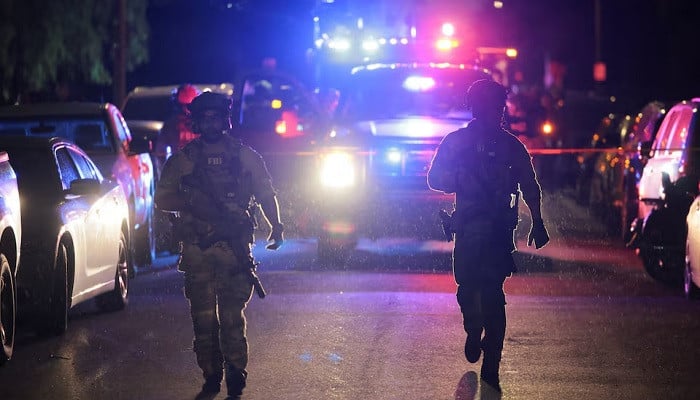
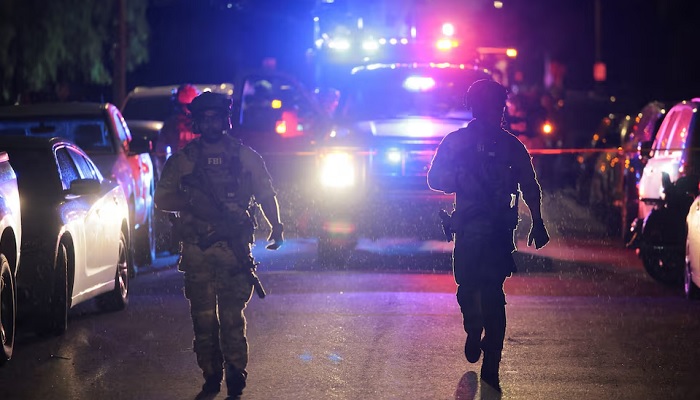
The US Secret Service said on Monday it was on the scene of an officer-involved shooting in Washington in which one person was shot by law enforcement.
“US Secret Service personnel are on the scene of an officer-involved shooting at 15th Street and Independence Avenue in Washington, D.C. One individual was shot by law enforcement; their condition is currently unknown,” the Secret Service said in a statement on X. The White House was briefly locked down on Monday afternoon.
The DC Police Department said police were on the scene of the probe.
“The scene is secure. Avoid the area as roads will be closed for several hours,” police said in a statement.
Law enforcement agents have been on alert in recent days in the US capital following a shooting at the White House Correspondents’ Association Dinner late last month, over which a suspect has been arrested.
This is a developing story, and it is being updated with new developments.


He Couldn’t Land a Job Interview. Was AI to Blame?

North India cotton yarn prices rise despite weak domestic demand

India among most resilient large EMs, better placed for future global shocks; policy reforms & strong buffers help: Moody’s – The Times of India

-

 Tech1 week ago
A Brain Implant for Depression Is About to Be Tested in Humans
-
 Business1 week ago
‘I had £20,000 stolen and had to fight a 13-month fraud reporting rule to get it back’
-

 Tech1 week ago
Almost 90% of women leave tech industry within 10 years | Computer Weekly
-

 Sports7 days ago
Pro wrestling star Steph De Lander reveals how colleague’s advice helped lead her to title triumph at ACW
-
 Business1 week ago
Pakistan’s oil market is fuelling the crisis | The Express Tribune
-

 Entertainment1 week ago
Norway joins Type 26 Frigate Programme to boost NATO naval power
-

 Entertainment1 week ago
Melania Trump says ABC should ‘take a stand’ on late-night host Kimmel
-

 Tech1 week ago
This Ambitious Laptop Doesn’t Leave Much Room for Your Hands