

Fashion
Italian group Prada’s retail sales up 9% in 9 months of 2025


Prada achieved double-digit growth in Asia Pacific (10 per cent), with improving trends in Mainland China. Europe rose 6 per cent, supported by resilient local demand and steady tourism. The Americas advanced 15 per cent, showing sequential acceleration in the third quarter. Japan grew 3 per cent, with stronger local and traveller demand after exceptional tourism in 2024. The Middle East delivered robust 21 per cent growth, moderating slightly in the third quarter.
Prada Group’s retail sales increased 9 per cent to €3,647 million (‘$4.26 billion) in the nine months to September 2025, with the third quarter up 8 per cent.
Asia Pacific grew 10 per cent, the Americas 15 per cent, Europe 6 per cent, Japan 3 per cent, and the Middle East 21 per cent.
Miu Miu surged 41 per cent, while Prada remained resilient.
“The consistency of our results, in a complex macroeconomic environment, confirms the strength of our brands and the validity of our strategy. With the one just closed, the group has delivered 19 quarters of uninterrupted growth. We continue to focus on creativity, product excellence and craftsmanship as foundations for enduring relevance and long-term development. These principles guide us as we navigate an evolving landscape with confidence, discipline and responsibility,” Patrizio Bertelli, Prada Group chairman and executive director, said.
Prada showed good resilience, with retail sales at -1.6 per cent over the nine-month period and -0.8 per cent in Q3. The brand continued to express its creative dynamism, driving a well-balanced product category mix and a consistent focus across strategic price points. The Womenswear SS26 fashion show offered a unique reflection on the role of clothes in reaction to the overloaded contemporary culture, the company said in a press release.
Miu Miu progressed on a healthy growth trajectory at 41 per cent y-o-y, with the third quarter at 29 per cent, driven by widespread appreciation across categories and geographies, as its captivating aesthetics continued to nurture the global influence of the brand. The SS26 fashion show underlined the social importance of work in women’s life. The FW25 campaign re-imagined wardrobe archetypes through a fluid interplay of tailoring and feminine silhouettes, while the Atheneum pop-up initiative embedded collegiate codes with the brand’s irreverence.
“Our performance confirms the health of our brands and further solid, diligent execution by our teams. Prada accelerated versus the previous quarter; Miu Miu has maintained a sustained growth trajectory for 4 years, including in this quarter that was facing triple-digit comps. Despite a still challenging environment, we remain confident in our trajectory, focusing on products and experiences that spark emotional engagement, while further improving our speed and flexibility,” Andrea Guerra, group chief executive officer, said.
Fibre2Fashion News Desk (RR)










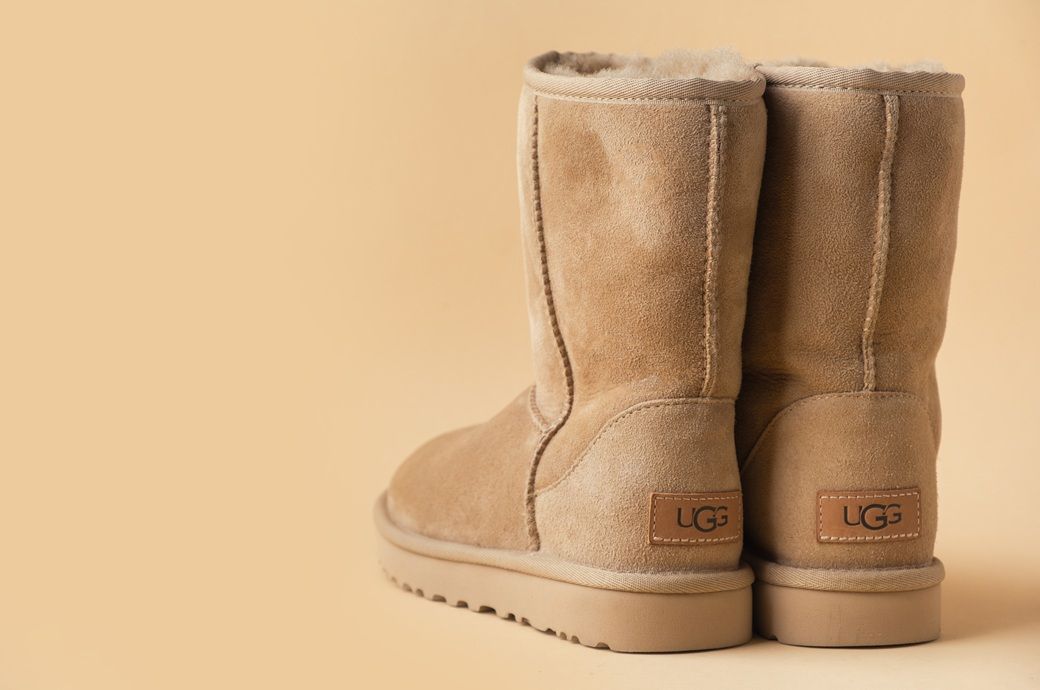
Kenneth Straka, Senior Product Development Manager at Deckers Outdoor Corporation, said that Deckers places strong emphasis on sustainability, noting that founder John Luke often reminded the team that the French word for sustainability is durability. This idea aligned with discussions at the Global Fashion Summit, where the theme centred on “Building Resilient Futures” in the sustainable and circular economy.
Durability has helped UGG become one of the most sought-after boot brands and a key sales driver for Deckers, alongside its sportswear brand Hoka. “One of the things we think about in terms of circularity is making products that last a long time and remain with consumers throughout their lives. We want products that consumers can wear for ** or ** years,” Straka said in an interview with Fibre*Fashion on the sidelines of the Global Fashion Summit in Copenhagen.
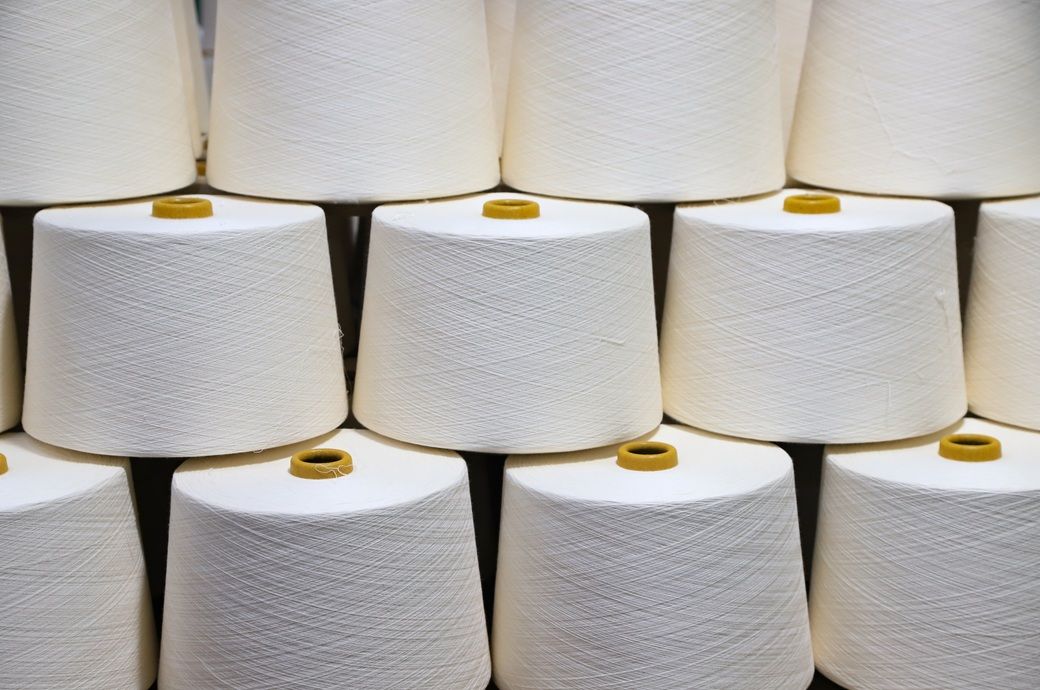
In the Tiruppur market, cotton yarn prices increased by ****;*–* per kg in this week despite sluggish local demand. Prices were quoted higher because of limited supply from spinning mills. A trader from the Tiruppur market told Fibre*Fashion, “Domestic demand remained limited, but spinning mills are not relying solely on the domestic market for cotton yarn sales. They are focusing more on exports, where demand and prices remain attractive. Mills have raised yarn prices following higher ICE cotton prices and the CCI’s increase in auction base prices, although ICE cotton has witnessed a sharp decline over the past two days.”
In Tiruppur, knitting cotton yarn prices were noted as: ** count combed cotton yarn at ****;***–*** (~$*.**–*.**) per kg (excluding GST), ** count combed cotton yarn at ****;***–*** (~$*.**–*.**) per kg, ** count combed cotton yarn at ****;***–*** (~$*.**–*.**) per kg, ** count carded cotton yarn at ****;***–*** (~$*.**–*.**) per kg, ** count carded cotton yarn at ****;***–*** (~$*.**–*.**) per kg, and ** count carded cotton yarn at ****;***–*** (~$*.**–*.**) per kg.
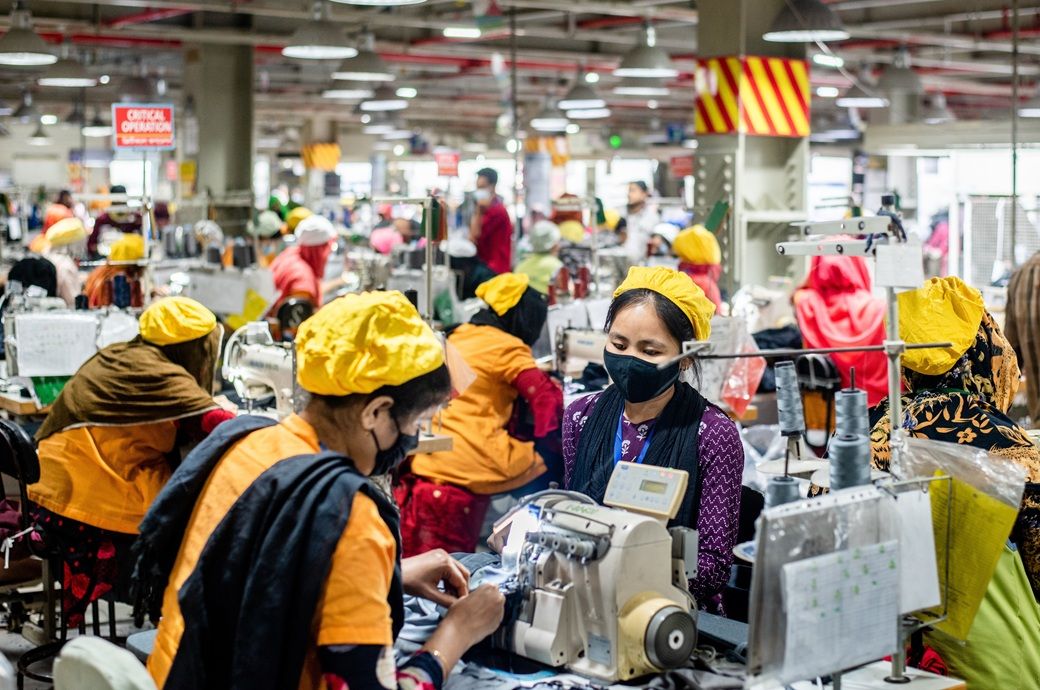
BGMEA president Mahmud Hasan Khan said they discussed export diversification within the garment sector, reopening of closed factories and many factories’ struggle for survival.
Representatives of two top Bangladesh garment trade bodies recently met PM Tarique Rahman and urged him to ensure uninterrupted power and energy supply, quick release of export receipts from banks, reopening of closed factories and easing of customs regulations.
BKMEA raised concerns about misuse of the bond facility and urged action against violators of bond licences.
104 factories have informed the BGMEA about their closure till now, Khan said. BGMEA will scrutinise these cases to identify the genuine reasons for the closures.
Following the scrutiny, the association will send recommendations for reopening these factories, as the government is working to open a Tk 200-billion fund to assist their revival.
BKMEA president Mohammad Hatem said some 400 factories closed in the last three years—nearly 300 of them due to non-cooperation from banks. He said banks release export receipts to exporters’ lien accounts, but delays in payment often force loans into default, leaving exporters unable to pay suppliers on time.
He also demanded uninterrupted supply of power and gas to industrial units as recent shortages of fuel oil have severely affected productivity, according to domestic media ooutlets.
Hatem raised concerns about misuse of the bond facility and urged action against violators of bond licences.
He also called for easing the rules of the National Board of Revenue, particularly customs procedures, to smoothen export and import processes and reduce lead times.
Fibre2Fashion News Desk (DS)


Military jets’ crew members safely eject after Idaho air-show collision

Pete Davidson’s friends support comic against ex Elsie Hewitt allegations

Indy 500: Counting Down The 10 Best Finishes In Race History

-

 Entertainment5 days ago
Conan O’Brien hat tricks as Oscar host
-

 Tech1 week ago
Could Contact-Tracing Apps Help With the Hantavirus? Not Really
-

 Tech1 week ago
I Tried the Best Captioning Smart Glasses, and Only One Leads the Pack
-
 Fashion5 days ago
Italy’s Zegna Group’s Q1 growth boosted by strong organic performance
-

 Sports1 week ago
Bobby Cox, legendary Atlanta Braves manager who led 1995 World Series champions, dead at 84
-

 Entertainment1 week ago
Martin Short: Facing tragedy with joy
-

 Entertainment1 week ago
Tom Brady gets back at Kevin Hart during Netflix roast
-

 Entertainment1 week ago
Martha Stewart: How to make an omelet