

Tech
It’s Not About the Bike: The Jackets and Lights to Keep You Cycling All Year Round

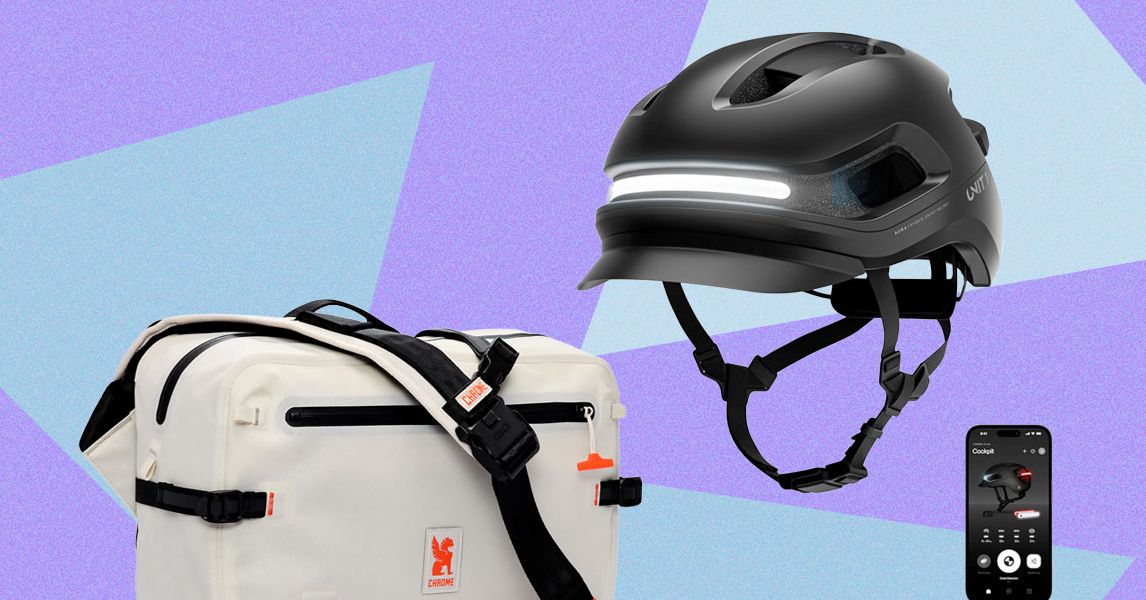
FAQs
We asked Joshua Hale, general manager of commuter bike specialists Quella, to answer all our questions on how to get your bike ready for winter and keep it running smoothly all year long.
How can cyclists stay visible to drivers without turning into a rolling Christmas tree?
It is not just the quantity of lights that’s important. Placement also makes a huge difference. A bright front and rear light are essential—ideally one steady and one flashing—to help you stand out without dazzling anyone on the road. Reflective details on moving parts like your jacket, ankles, or pedals also catch drivers’ eyes naturally. Good quality lights and reflective accents do a lot more than overloading on LEDs.
What’s the smartest way to layer clothing for warmth without overheating?
Layer clothing with breathability in mind. Start with a moisture-wicking base layer to keep sweat off your skin, add an insulating layer like a fleece or thermal jersey, and finish with a windproof or waterproof shell. You’ll warm up fast once you’re moving, so it’s better to start slightly cool. Zips and vents that can be opened on uphill climbs and closed on descents will come in handy. Other lightweight accessories such as gloves, a buff, and overshoes can also increase your comfort without adding bulk.
How can you adjust your tire size or pressure to ride safely on wet or icy roads?
In winter, opt for wider tires with a grippier tread—28 mm or more, if your bike allows it. The extra width increases contact with the road, giving better stability and traction. Lowering your pressure slightly (by around 10–15 psi) also improves grip on slippery surfaces without feeling sluggish. Avoid slick tires when it’s icy, and check your tires regularly, as wet roads pick up more glass and grit.
What are the easiest and most effective upgrades for commuters?
Mudguards are top of the list. They keep both you and your bike cleaner and drier. Good-quality lights with USB charging make daily use simpler, and winter-specific gloves can save your fingers on frosty mornings. Wider handlebars and padded bar tape also add comfort when the roads get rough. It’s all about small upgrades that make you want to keep riding, even when it’s cold and dark.
Why does your bike need more maintenance in the winter, and what quick maintenance tips can you suggest?
Winter is tough on bikes, with grit, salt, and moisture working their way into every moving part. Regular cleaning is the single best thing you can do, even if it’s just a quick rinse and wipe-down after wet rides. Keep your chain clean and lightly oiled, check brake pads more often, and make sure cables or hydraulic lines aren’t sticking. A few minutes of care each week prevents costly repairs later, and your bike will feel smoother and quieter every ride.









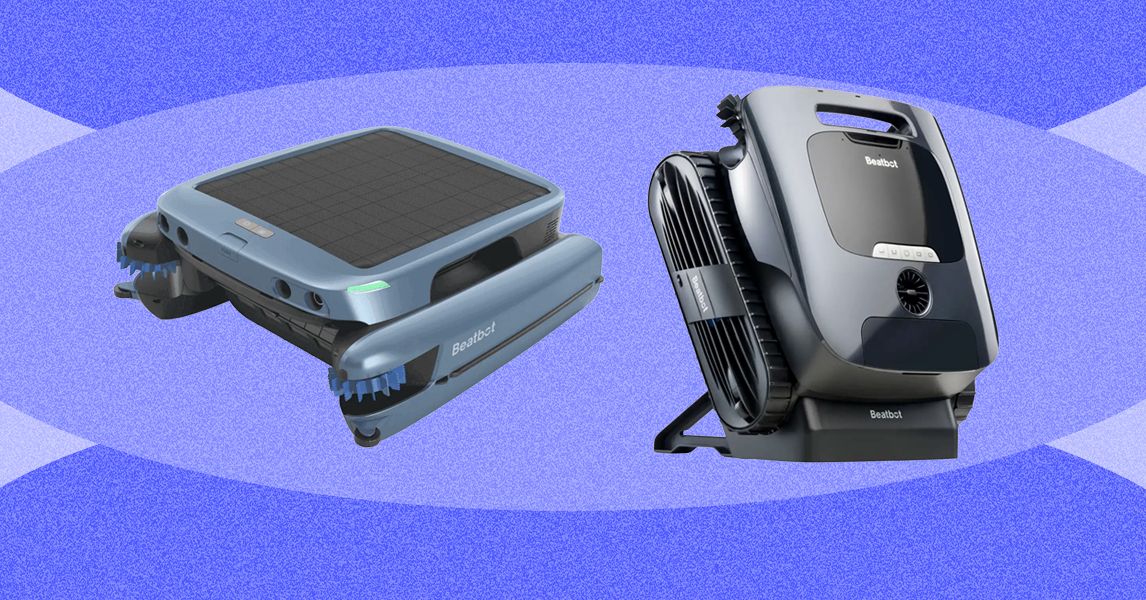
Just in time for summer, Beatbot’s pool-cleaning robots are on sale through the end of the month. If you’re on the hunt for smarter pool care, these are some of the best pool-cleaning robots on the market, and we haven’t seen them sell for less. Whether you’re tired of paying the pool guy or just don’t want to deal with whatever scary stuff is floating in the water, these robots can help.
Be sure to check out our related buying guides for more summer outdoors coverage, including the best bug sprays, the best sunscreens, and the best fitness trackers.
Beatbot iSkim Ultra Robotic Pool Skimmer for $599 ($400 off)

Beatbot
iSkim Ultra Robotic Pool Skimmer
This surface skimmer is slow and methodical with its approach, which means it won’t slam into your pool’s walls while doing its job. Use the app to set schedules, monitor the temperature, dock the unit, adjust its speed, and more. It has a 9-liter basket that holds a ton of crud and features both solar and magnetic wireless charging. If you care mostly about surface cleaning, this deal is solid.
Beatbot Sora 30 for $699 ($300 off)


The middle-of-the-line Beatbot Sora 30 scrubs the walls, waterline, shallow areas, and floor of your pool for up to five hours at a time. It also returns to the surface on its own when the job is done or when its battery is low, minimizing the amount of effort you have to put in. You can retrieve it with one tap in the app, which also allows you to select a cleaning mode, monitor the bot’s progress, and more. It doesn’t have surface-skimming capabilities, but if you don’t mind handling that part manually, this is a handy device that takes care of your other pool-cleaning needs without any hassle.
Beatbot AquaSense 2 Ultra for $2,649 ($500 off)


If only the best pool-cleaning robot will do, this is the model you want. This top-shelf robot can do it all: skim the surface, scrub your floors, walls, and waterline with its five cleaning brushes, and even detect debris with AI. It can run for up to six hours at a time and will return to the surface and float when your pool is squeaky-clean (or when the battery gets low). It’s a little heavy at 29 pounds, but the trade-off is never having to manually clean your pool again.
Additional Beatbot Deals
Almost the entire Beatbot lineup is on sale. Here are a few more discounts on models that differ slightly from the versions we linked above.
Power up with unlimited access to WIRED. Get best-in-class reporting and exclusive subscriber content that’s too important to ignore. Subscribe Today.

Alwin Bakkenes, head of software engineering at Volvo Cars, reckons that leading a team to develop the technology stack powering the next generation of mobility at the automotive giant is one of the best jobs you can imagine.
“I’m not saying it’s always easy, but it’s incredibly rewarding and great fun,” he says. “People are passionate about our products, and you get instant feedback on the quality of what you do from consumers – whether that’s from friends, family or a community like Reddit. There’s just so much feedback, and that motivates and makes us better.”
Bakkenes reports to Volvo CTO Anders Bell and is a member of the extended executive management team that oversees operational governance. “I’m part of that group because software, of course, has a massive transformational impact on the company,” he says.
On a day-to-day basis, Bakkenes’ team works closely with technology and content partners to deliver customer experiences, with innovations in safe automation, core computing architecture and Android-based infotainment services. His team manages technology associated with Volvo’s advanced driver assistance systems (ADAS) and an in-house artificial intelligence (AI) factory.
“We also manage mobile network contracts because we operate in 85-plus countries globally,” he says. “So, we have a large scope, and our work defines a big part of how the vehicles behave and helps us to create different types of relationships with our customers.”
Connecting vehicles
Bakkenes joined Volvo in November 2022, having previously been vice-president at Aptiv, chairman of the board of directors at Smashing Ideas, and executive vice-president for automotive at Luxsoft.
One of his big achievements at Volvo has been leading the digital transformation that accompanied the unveiling of the EX60, the first car designed to launch with Google Gemini AI assistant and connectivity delivered by the Snapdragon Auto Connectivity Platform from Qualcomm Technologies.
As Computer Weekly discovered in January, the EX60 is the most intelligent Volvo and can travel 810km on a single charge. The car also has the latest iteration of HuginCore, the manufacturer’s in-house-developed core system for its software-defined vehicles (SDVs).
“Volvo Cars has always been known for safety,” says Bakkenes, referring to the journey the in-house software team has taken during its digital transformation. “Over the years, after we started to do innovations in terms of collision avoidance – because, of course, avoiding a collision is better than protecting people in a collision – we started to bring computer vision and radar into cars.”
Bakkenes says the software team learned that getting data from cars digitally would enable them to do even more. “So, we started making every single car connected and started doing more in-house development. We built an AI factory and built an in-house team of some 3,000 developers that build this software stack for us,” he says.
“One of our biggest accomplishments with the optimisation work that we did for the EX60, where we did our second-generation zonal architecture, was that we really simplified the approach. We reduced weight, a lot of packaging space, we made the technology much more efficient and made it applicable to every single car in our cycle plan.”
Digitising the stack
Bakkenes says the result of this digital transformation is that Volvo has transitioned from a mechanically oriented company to an organisation that successfully manages its technology base, with HuginCore sitting at the heart of its future automotive innovations.
“We now have a single tech stack strategy for our cars, which ultimately gives us more time to spend on building fantastic customer features and experiences,” he says. “And that’s one of the biggest parts of the journey that we’ve been on over the past few years.”
HuginCore features an electrical architecture, a core computer, zone controllers and software. The name Hugin comes from Nordic mythology – Odin had two ravens, Hugin and Munin. Bakkenes says Hugin was the raven who flew to scout and then whispered in Odin’s ear about everything in the vicinity.
“We now have a single tech stack strategy for our cars, which ultimately gives us more time to spend on building fantastic customer features and experiences”
Alwin Bakkenes, Volvo Cars
“That’s like what we are doing with the core system,” he says. “HuginCore perceives the world around it and gives us the right information to make decisions on avoiding collisions and more. It’s the core system and tech stack that we’re standardising on. And, of course, it’s much more than a piece of compute. It’s vehicle architecture, cloud infrastructure and factory infrastructure.”
Beginning with the EX60 implementation, Bakkenes says the aim is to ensure the company builds its innovations around this stack, rather than using multiple platforms. “Which is ultimately not how modern tech companies, like Apple, would do things,” he says, referring to the company’s shift to becoming a company that manages its technology foundation.
“For example, we have a partnership with a UK company called Brief that is really good at database analytics on battery cells and how you store energy as fast as possible. So, not only do we have a good, robust 800-volt system, we’re able to push a lot of energy into the cells for a prolonged period of time, meaning that we avoid the standard curves of charging cars.”
Delivering innovation
The progress made by Bakkenes and his team was recognised recently, with Volvo achieving S&P Global Mobility Level 5 capability in SDVs, the highest category in its assessment of automotive software maturity. Notably, Volvo is the only legacy manufacturer to have achieved this rating.
“They looked at what we were doing,” says Bakkenes, referring to the evaluation process. “We explained to them how we work and what the architecture looks like. Having a fully software-defined architecture means we should create significant customer benefits. So, we’re proud. It’s recognition that we’re doing good work.”
The recognition from S&P Global highlights Volvo’s attempts to improve vehicle functionality through software, including over-the-air updates to add safety features, unlock faster charging speeds, increase driving range and enhance user experiences. Bakkenes says the company’s digitisation is all about leaving behind traditional domain-based architectures.
The new approach being pioneered by Volvo focuses on three levels: a high-performance compute cluster where the team works with key partners, such as Nvidia and Qualcomm; zonal architecture with high-integrity applications that require low latency and fast response times, such as for safety-critical functions, including brakes and acceleration; and infotainment, where Volvo works closely with Google and its Android operating system (OS).
“We work very heavily with partners to build the foundations for that strategy. We work with Nvidia on developing the safety-critical, high-performance execution environment, so we can execute high-integrity applications on compute clusters, such as ADAS,” he says.
“We also work with Google deeply and closely, because the Android platform creates an openness and an ecosystem that is a fantastic foundation to build a modern infotainment system, which has customer-facing functionality, such as Gemini for conversational AI and Google Maps, and an open app store that we use to bring in massive amounts of content.”
Embracing AI
Volvo continues to hone its approach to SDVs. As Computer Weekly reported at the time, the company extended its partnership with Google in May 2025. Volvo believes that with Gemini in the car, drivers can better understand what they want through natural conversations.
As well as using AI services to boost internal operational efficiency, Bakkenes says the company uses emerging technology in two key product areas.
First, in collision-avoidance systems. With a strong heritage in vehicle safety, Volvo has collected millions of data points since 2020, all with customer consent, to improve ADAS.
“We’ve seen that building AI models that we train on what happens and what will go wrong – thereby preventig things from happening – is incredibly valuable,” he says. “So, we literally built a company, a subsidiary called Zenseact, which is part of my scope. I’m the chairman of the company, and it’s deeply integrated into our way of working in engineering.”
Second, Bakkenes says his team is focused on customer-oriented, AI-enabled products. Using tools such as Gemini, drivers will use in-car systems to plan routes, help schedule activities and organise their lives. “AI is not just about telling you things,” he says. “It’s about becoming more agentic and taking care of tasks in your life.”
While Volvo has made significant advances in AI with the launch of the EX60, the company is eager to ensure that drivers of older vehicles can also benefit from its data-powered services. To that end, the company recently announced that Google Gemini is rolling out to Volvo vehicles dating back more than five years. Bakkenes suggests this decision is a step change in how drivers interact with cars and how manufacturers support them.
“We’re bringing Gemini to every car we’ve produced since 2020,” he says. “Six years ago, we had no idea what a transformer-based conversational assistant was or would become. So, the fact that we can bring Gemini to those cars is fantastic.”
Scaling improvements
Bakkenes reflects on the digital transformation changes he’s overseen during the past few years and suggests his team is approaching what he calls “harvest time”.
“We now have a foundation where we have a good architecture,” he says. “We have a large amount of high-performance computing to grow and develop in the future. The foundation of the technology is there, and it’s about applying and scaling it.”
Bakkenes says the desire to push Gemini-powered services to older vehicles shows that his team’s efforts aren’t just focused on tomorrow’s technology – they’re also focused on supporting long-standing customers who have committed money to the car company.
“The harvesting part is about us saying, ‘OK, so now we can put more energy into enhancing the experiences’, and that means refining the user interface implementation, and tweaking and optimising it until you get a product that fits day-to-day usage perfectly,” he says. “We want our cars to keep improving over time.”
Tech
Ilya Sutskever Stands by His Role in Sam Altman’s OpenAI Ouster: ‘I Didn’t Want It to Be Destroyed’
Elon Musk’s trial against OpenAI and Microsoft entered its final stretch on Monday, with testimony from Microsoft CEO Satya Nadella, former OpenAI chief scientist Ilya Sutskever, and current OpenAI chairman Bret Taylor.
Sutskever drew the spotlight, revealing an ownership stake in OpenAI’s $850-billion for-profit arm that is currently worth about $7 billion. That makes him one of the largest known individual shareholders of OpenAI. Earlier in the trial, OpenAI president Greg Brockman acknowledged for the first time that he has around $30 billion worth of OpenAI shares.
Brockman was one of the research lab’s original cofounders, and Sutskever joined shortly afterward, turning down a $6 million annual compensation offer from Google. Brockman said he and Sutskever were “joined at the hip,” until Sutskever helped lead Sam Altman’s brief removal as OpenAI CEO in 2023. Sutskever had helped collect evidence to show Altman’s alleged history of deception, and even assisted in drafting a memo to the board. Though they tried to repair the relationship, Sutskever has been estranged from Brockman and Altman ever since, a lawyer for OpenAI said on Monday.
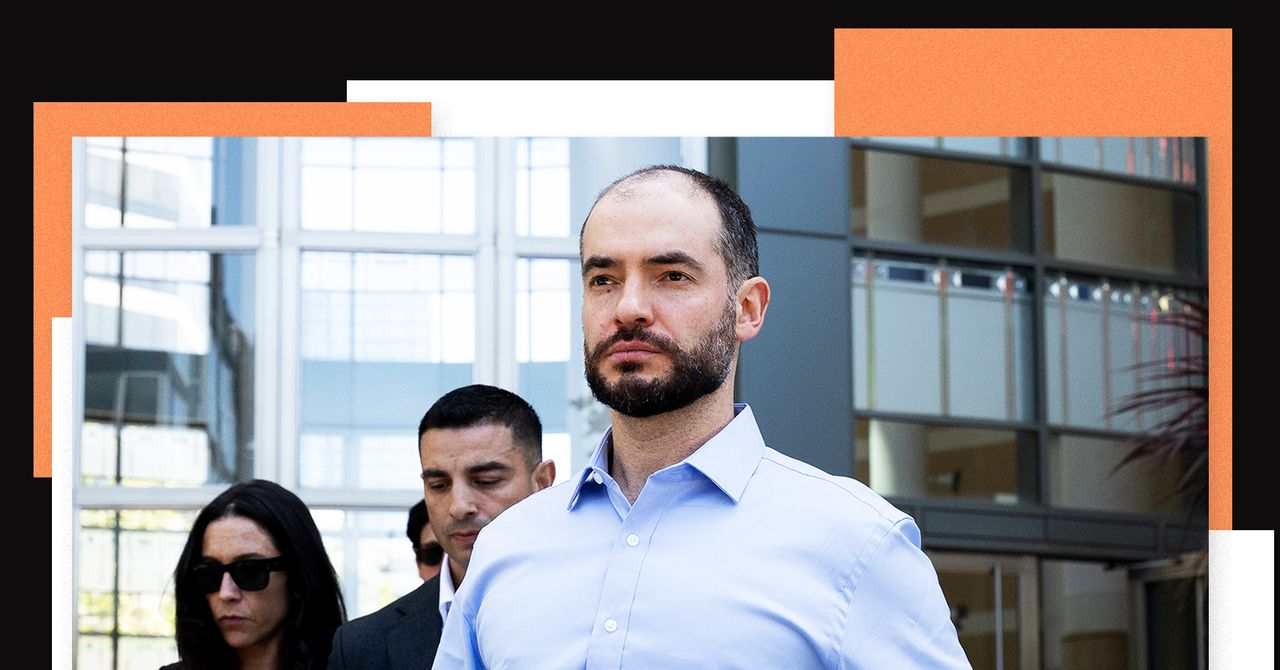
Sutskever, who arrived in the courtroom wearing a dress shirt and slacks, the first male witness to testify without a suit jacket, appeared to be dejected about no longer being involved with OpenAI. (He left and formed a competing AI lab in 2024.) “I felt a great deal of ownership of OpenAI,” he said at one point Monday. “I felt like I put my life into it, and I simply cared for it, and I didn’t want it to be destroyed.”
Sutskever’s testimony bolstered Musk’s contention that Altman is not the right person to lead an AI lab that could create artificial general intelligence. In addition, Sutskever mentioned how the superalignment team he helped lead, which focused on the safety of future models, was doing the most important work at OpenAI “for the long term.” The team was disbanded in May 2024, shortly after Sutskever left the company.
But Sutskever also added to OpenAI’s defense that Musk never negotiated any special promises when funding the OpenAI nonprofit. Musk’s allegation that such commitments existed and that Altman and Brockman violated them by pursuing a lucrative for-profit arm are the core of his claims in the lawsuit. Sutskever said OpenAI needed “a lot of dollars” to build a computer as big as the human brain, and while seeking donations had some “reasonable success,” becoming a for-profit was the consensus way forward.
“I would describe it as the difference between an ant and a cat,” Sutskever said in response to a question from US district judge Yvonne Gonzalez Rogers about how more computing helped OpenAI level up. “If there’s no funding, there is no big computer.”
In the end, Sutskever, a prominent AI scientist who paints in his spare time, testified for about an hour, barely making eye contact with anyone during his time on the witness stand.
Musk’s legal team had unsuccessfully sought to treat Sutskever as a hostile witness because of his financial stake in OpenAI. But Gonzalez Rogers agreed to give attorneys for both Musk and OpenAI extra leeway in their questioning of Sutskever due to what she described as his “unique position” in the case.
The Blip
Much of Monday’s testimony centered around the well-covered events of Altman’s ouster and reinstatement as CEO in November 2023. Nadella described Sutskever and other board members firing Altman as “amateur city” and reiterated that he “never got clarity” about the lack of candor that led to their decision. Nadella also acknowledged during his testimony that he and colleagues discussed 14 potential board members who would join OpenAI if Altman returned, including at least two whom the Microsoft group vetoed and one who later joined. Nadella described Microsoft’s input as suggestions.
Sutskever said he supported firing Altman because an “environment where executives don’t have the correct information” is not “conducive to reach any grand goal.” But he criticized his board colleagues for rushing the process, lacking experience, and accepting “legal advice that wasn’t very good.”
Microsoft’s Bet
In his lawsuit, Musk accused Microsoft of helping to transform OpenAI into a moneymaking machine beyond what Musk intended. Nadella testified that Microsoft had first supported OpenAI with discounted cloud computing but it could no longer afford to do so “once the bill started going up.” A for-profit arm that Microsoft could invest in, in exchange for a potential financial return, was more palatable.
But as the years progressed and the bills kept rising, Microsoft wanted more out of the partnership. Microsoft “will lose 4 bil next year!!!” Nadella exclaimed in an email in 2022 to his lieutenants about the OpenAI partnership. He called for a new agreement ensuring Microsoft would also get AI “know-how” from the startup, which he kept spelling as “Open AI.”


India’s Arvind Fashions reports strong FY26 growth across channels

German exports rises 0.5% in March, imports up 5.1% MoM: Destatis

These Discounted Pool-Cleaning Robots Free Up Time for Actually Swimming

-

 Politics1 week ago
Iran weighs US reply delivered via Pakistan as Trump signals opposition to deal terms
-

 Tech1 week ago
DHS Demanded Google Surrender Data on Canadian’s Activity, Location Over Anti-ICE Posts
-
 Business1 week ago
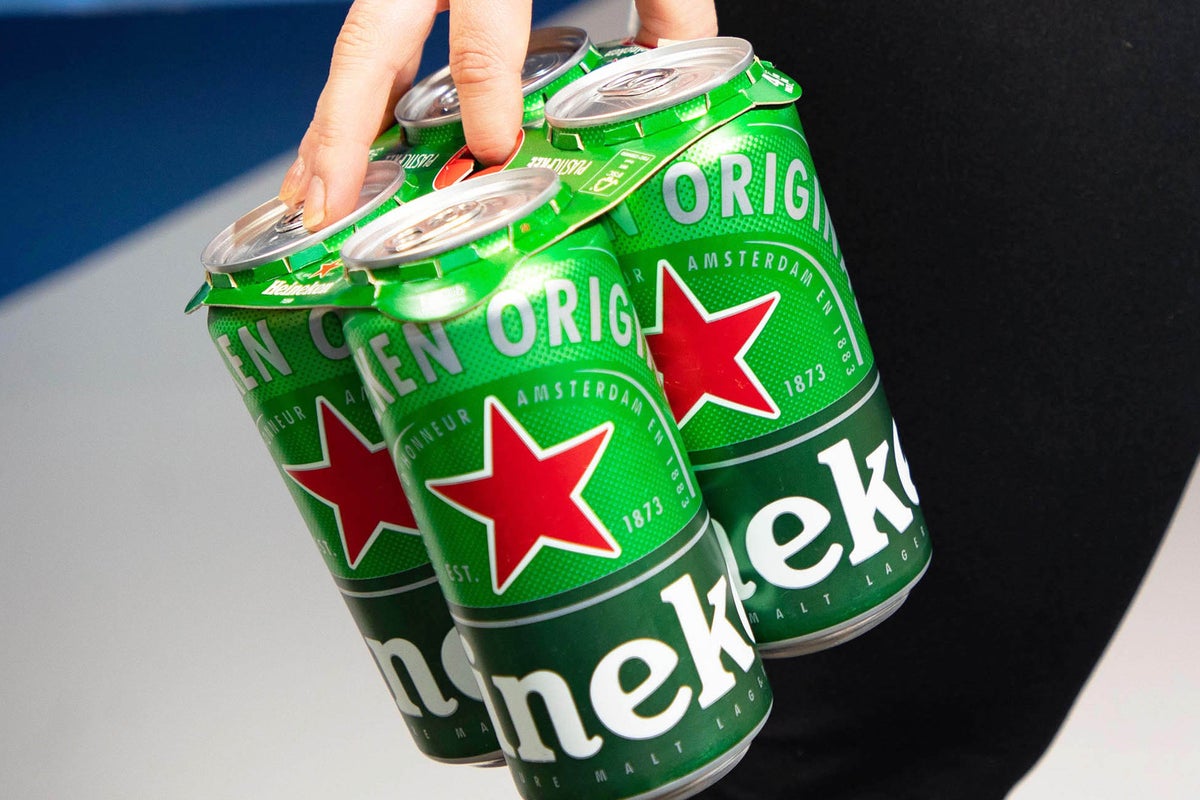
Heineken to invest £44.5m in hundreds of pubs creating 850 jobs
-

 Entertainment1 week ago
Jelly Roll reacts to daughter Bailee Ann’s major life milestone
-

 Entertainment1 week ago
Passage: In memoriam
-

 Tech4 days ago
‘Orbs,’ ‘Saucers,’ and ‘Flashes’ on the Moon: Pentagon Drops New UFO Files
-
 Business1 week ago
Heineken plans huge investment in hundreds of UK pubs ahead of World Cup
-

 Tech4 days ago
A new frontier: Identity stack evolves for agentic systems | Computer Weekly