

Business
Jaguar Land Rover staff to stay at home after cyber attack

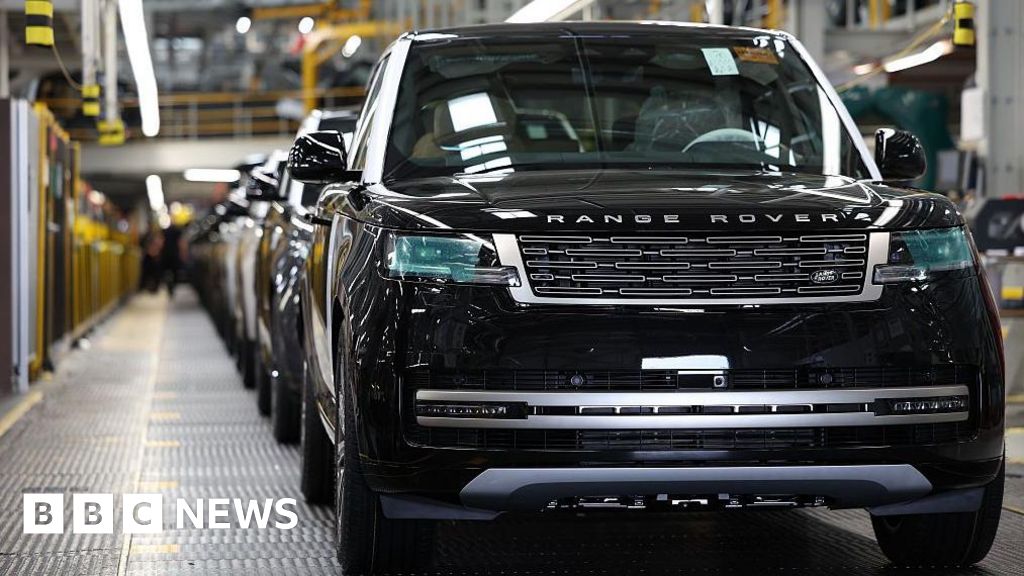
Jaguar Land Rover (JLR) has instructed factory staff to stay at home until at least Tuesday as the company continues to grapple with the fallout from a cyber attack.
The attack at the weekend forced the company to take vital IT systems offline, which has affected car sales and production.
Production remains halted at car factories in Halewood on Merseyside and Solihull in the West Midlands, as well as at its engine manufacturing centre in Wolverhampton.
The situation remains under review and output could remain suspended for longer.
Car sales have also been heavily disrupted, although the BBC understands some transactions have been able to take place.
JLR, which is owned by India’s Tata Motors, shut down its systems on Sunday in order to limit potential damage from the cyber attack.
It is now working to restore them in a controlled manner, but this is understood to be a highly complex process. It is also introducing work-arounds for systems that remain offline.
The attack occurred at what is traditionally a popular time for consumers to take delivery of a new vehicle. The latest batch of new registration plates became available on 1 September.
The disruption extends well beyond JLR’s own production lines, with its network of parts suppliers also forced to restrict their operations. Some have complained of a lack of transparency from the company.
Some repair garages have also warned that existing Jaguar or Land Rover owners may face delays if their cars need new parts.
James Wallis of Nyewood Express, an independent garage in West Sussex that repairs and services Land Rovers, told the BBC’s Today programme that he “can’t look up what I need to repair cars”.
“Essentially the parts list is a giant database of items that relates to every single car,” he said. “And if I can’t find the parts, I can’t buy them. I can’t fix the car.”
He added: “If you need parts which come from just one source and you can’t find them, you can’t order them. The job stops. You cannot repair the car. The car sits idle, and the poor old customer has to wait.”
On Wednesday a hacker group which was also responsible for a highly damaging attack on Marks and Spencer earlier in the year said it had infiltrated JLR’s systems.
The group of young English-speaking hackers – who are thought to be teens calling themselves “Scattered Lapsus$ Hunters” – told the BBC how they allegedly accessed the car maker but have not revealed if they successfully stole private data from JLR or installed malicious software onto the company’s network.
The group posted two images, which showed apparent internal instructions for troubleshooting a car charging issue and internal computer logs.
A security expert said those screenshots suggested the group had access to information they should not have.
JLR says it is investigating the hack, but there is no evidence at this stage any customer data has been stolen.
In 2023, as part of an effort to “accelerate digital transformation across its business”, JLR signed a five-year, £800m deal with corporate stablemate Tata Consultancy Services to provide cybersecurity and a range of other IT services.
The halt in production is a fresh blow to the firm which recently revealed a slump in profits attributed to an increase in costs caused by US tariffs.
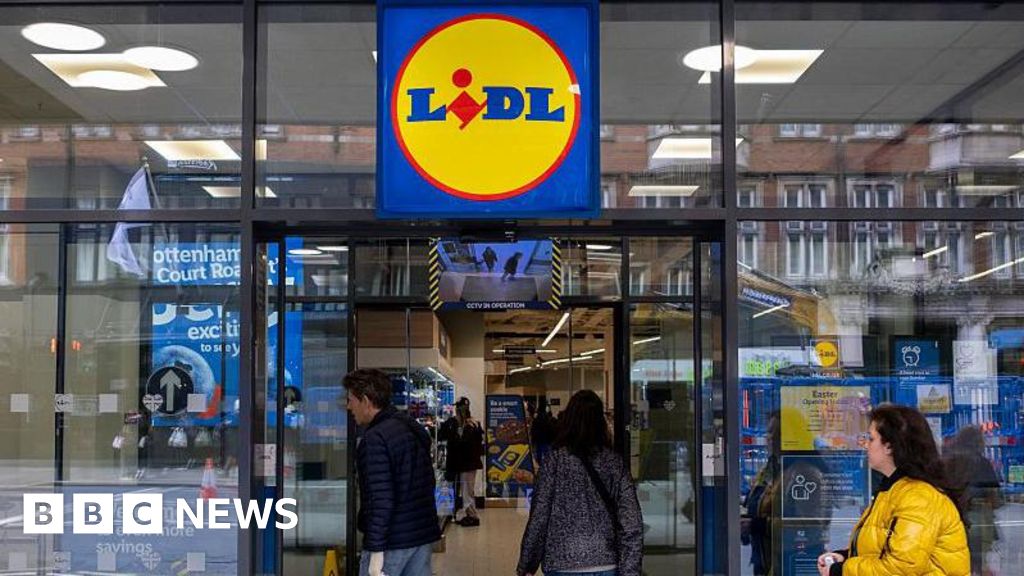
Under the changed system customers collect points rather than reward coupons, with £1 spent equalling one point.
Source link

There have been extra jitters in UK government debt markets ahead of Thursday’s local and national elections.
Source link
Business
Sugarcane price hike: Govt raises FRP to Rs 365/quintal for 2026-27, farmers to benefit from higher returns – The Times of India
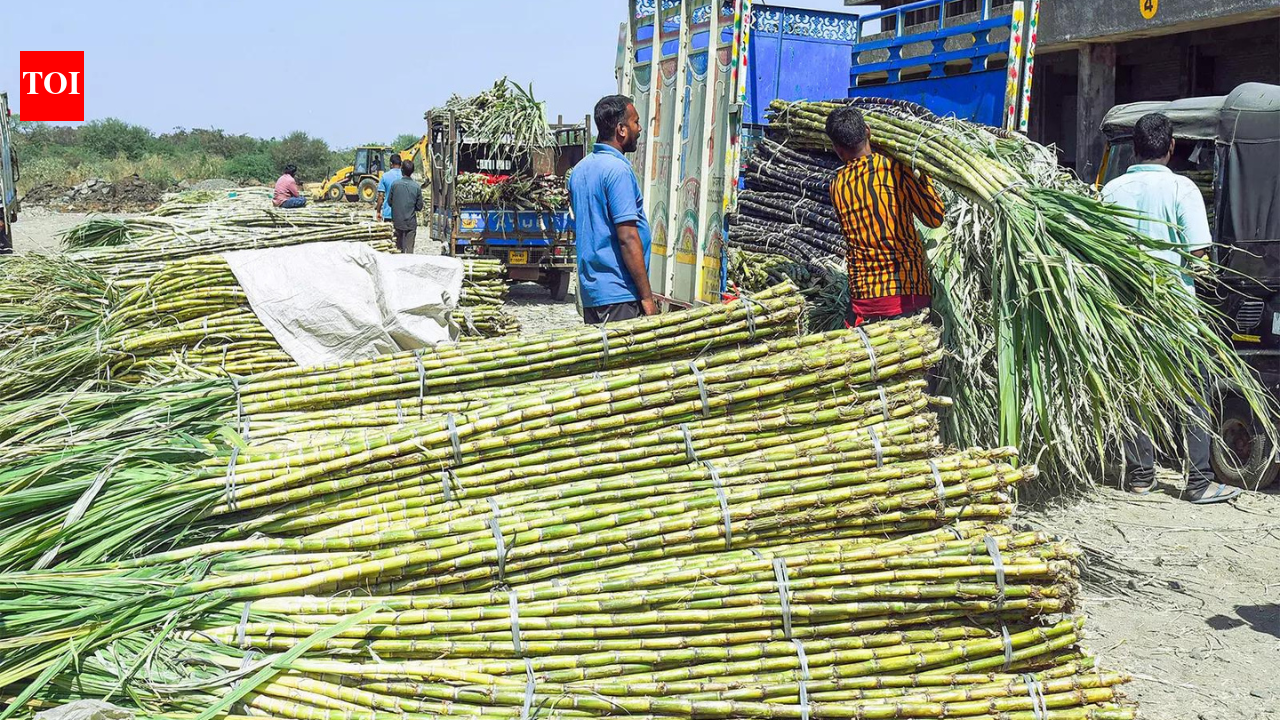
The government has increased the fair and remunerative price (FRP) of sugarcane by Rs 10 to Rs 365 per quintal for the 2026-27 season beginning October, PTI reported.The decision was approved by the Cabinet Committee on Economic Affairs (CCEA), chaired by Prime Minister Narendra Modi.“The FRP will be Rs 365/quintal for a basic recovery rate of 10.25 per cent,” Union Minister Ashwini Vaishnaw said after the meeting.The revised FRP is 2.81 per cent higher than the current rate of Rs 355 per quintal for the 2025-26 season.For every 0.1 per cent increase in sugar recovery above 10.25 per cent, the FRP will rise by Rs 3.56 per quintal, providing an incentive to mills for higher efficiency.To safeguard farmers supplying to mills with lower recovery rates, the government has decided that there will be no deduction in FRP for recovery below 9.5 per cent. In such cases, farmers will receive Rs 338.3 per quintal in the 2026-27 season.The production cost of sugarcane for 2026-27 has been estimated at Rs 182 per quintal, making the FRP 100.5 per cent higher than the cost.“Farmers are expected to get more than Rs 1 lakh crore,” Vaishnaw said.The move is expected to benefit nearly one crore sugarcane farmers, along with farm labourers and workers engaged in sugar mills.The FRP has been fixed based on recommendations of the Commission for Agricultural Costs and Prices (CACP) and consultations with state governments and stakeholders.The sugar sector supports the livelihoods of around five crore farmers and their families, and about five lakh workers directly employed in sugar mills, besides those involved in related activities such as transportation.Sugar mills are required to purchase sugarcane from farmers at the FRP or higher.Vaishnaw said the FRP has been increased every year over the past decade, and the latest revision will also support ethanol production from surplus sugarcane.On cane dues, he said that in the 2024-25 season, about Rs 1,02,209 crore, or nearly 99.5 per cent, of the total payable dues of Rs 1,02,687 crore had been cleared as of April 20, 2026.For the ongoing 2025-26 season, Rs 99,961 crore, or 88.6 per cent, has been paid out of total dues of Rs 1,12,740 crore.


AS-level Business Studies paper allegedly leaked online

Italy’s Meloni warns over AI deepfakes after false photos circulate

Oprah’s Book Club: Author Douglas Stuart reads “John of John” excerpt

-

 Tech1 week ago
A Brain Implant for Depression Is About to Be Tested in Humans
-

 Sports1 week ago
Pro wrestling star Steph De Lander reveals how colleague’s advice helped lead her to title triumph at ACW
-

 Tech1 week ago
Almost 90% of women leave tech industry within 10 years | Computer Weekly
-
 Business1 week ago
‘I had £20,000 stolen and had to fight a 13-month fraud reporting rule to get it back’
-

 Entertainment1 week ago
Norway joins Type 26 Frigate Programme to boost NATO naval power
-

 Entertainment1 week ago
Melania Trump says ABC should ‘take a stand’ on late-night host Kimmel
-

 Tech1 week ago
This Ambitious Laptop Doesn’t Leave Much Room for Your Hands
-
 Business6 days ago
PSX plunges over 4,800 points | The Express Tribune