

Business
Jaguar Land Rover to restart production on Wednesday after cyber-attack

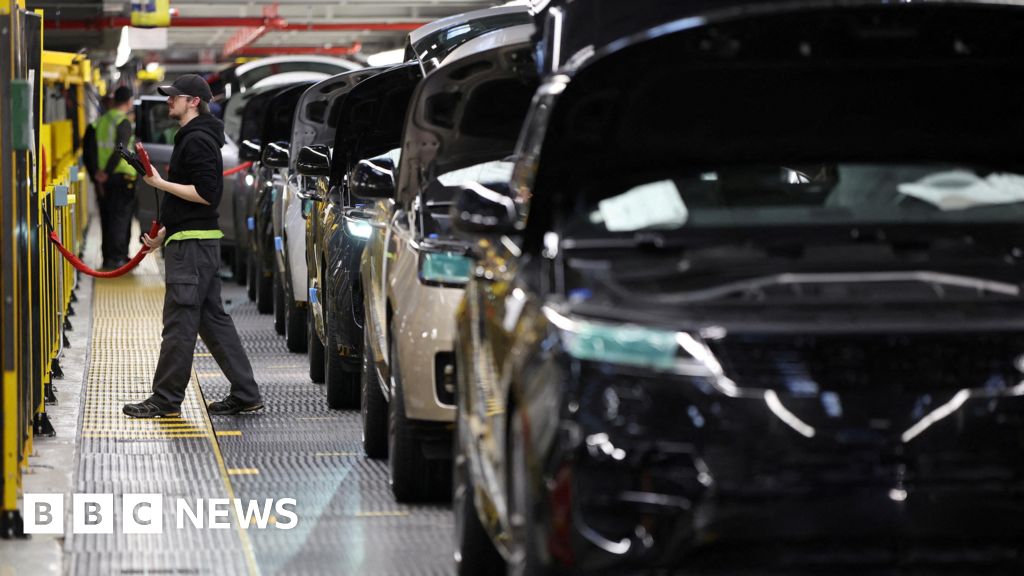
Carmaker Jaguar Land Rover (JLR) has confirmed that output at some of its manufacturing sites will resume on Wednesday, as it continues to recover from a serious cyber-attack.
Its production lines have been at a standstill since the start of September, following the attack.
The phased return of staff will begin at some sites in the West Midlands and Merseyside.
JLR has also announced a programme to fast-track payments to its direct suppliers, some of which had laid off workers after their revenues dried up following the hack.
Initially the scheme will be confined to the most critical suppliers needed for restarting production, but it will be expanded at a later date.
JLR says the phased restart will begin at its Wolverhampton engine plant in Wolverhampton and its battery assembly centre in Hams Hall.
Employees who work in facilities which prepare pressed metal bodywork at the company’s sites in Castle Bromwich, Halewood and Solihull will also be brought back in – as will those who work in the Solihull car plant’s body shop and paint shop.
JLR says this move will be “closely followed” by the resumption of vehicle manufacturing in Nitra, Slovakia. The Range Rover and Range Rover Sport production lines in Solihull are expected to restart later in the week.
It is not yet clear when output will resume at JLR’s Halewood plant on Merseyside.
Experts have warned that it is still likely to be several weeks before the production lines are running as normal.
JLR has also outlined an accelerated-payment scheme to help its suppliers, many of whom have been struggling financially.
So-called Tier 1 suppliers, with which the company has a direct relationship, will be able to get paid for new orders shortly after they have been placed, rather than up to two months after delivery. JLR says this will enable them to get funding up to 120 days earlier than normal.
There is an expectation that these companies will then offer similar terms to their own suppliers, allowing funding to flow rapidly down the supply chain.
The scheme is being funded by JLR itself, using credit provided by a commercial bank. It is not linked to the £1.5bn loan guarantee recently offered to the carmaker by the government.
Industry insiders have warned that the resumption of production, while welcome, does not end the crisis being experienced by many smaller suppliers. Some are heavily reliant on JLR and have had little or no income for the past month and a half, while bills have still had to be paid.
Last week, one leading contractor told the BBC that the help offered by the government so far was inadequate.
David Roberts of Evtec Group said: “We asked the government directly, at ministerial level, to directly support the sector. They listened, but they did nothing. It’s almost like they’ve turned a deaf ear to the needs of advanced manufacturing.”
Another supplier, Genex UK, a small company which presses metal parts, told the BBC it had been forced to lay off 18 staff because of a cash shortage.
BP has come under fire after revealing profits more than doubled in the first three months of the year, thanks to the soaring cost of crude caused by the Iran war.
Chief executive Meg O’Neill praised the quarter as sending the firm “in the right direction” and “strengthening the balance sheet” – but critics have labelled the energy giant’s revenues as “horrifying” as “millions suffer the fallout” from war.
The FTSE 100 firm revealed its preferred profit measure – underlying replacement cost profit – surged by over 130% to a better-than-expected $3.2bn (£2.4bn) in the first quarter, up from $1.38bn (£1.02bn) a year earlier and $1.54bn (£1.13bn) in the previous three months. Most analysts had expected first-quarter profits of $2.67bn (£1.97bn).
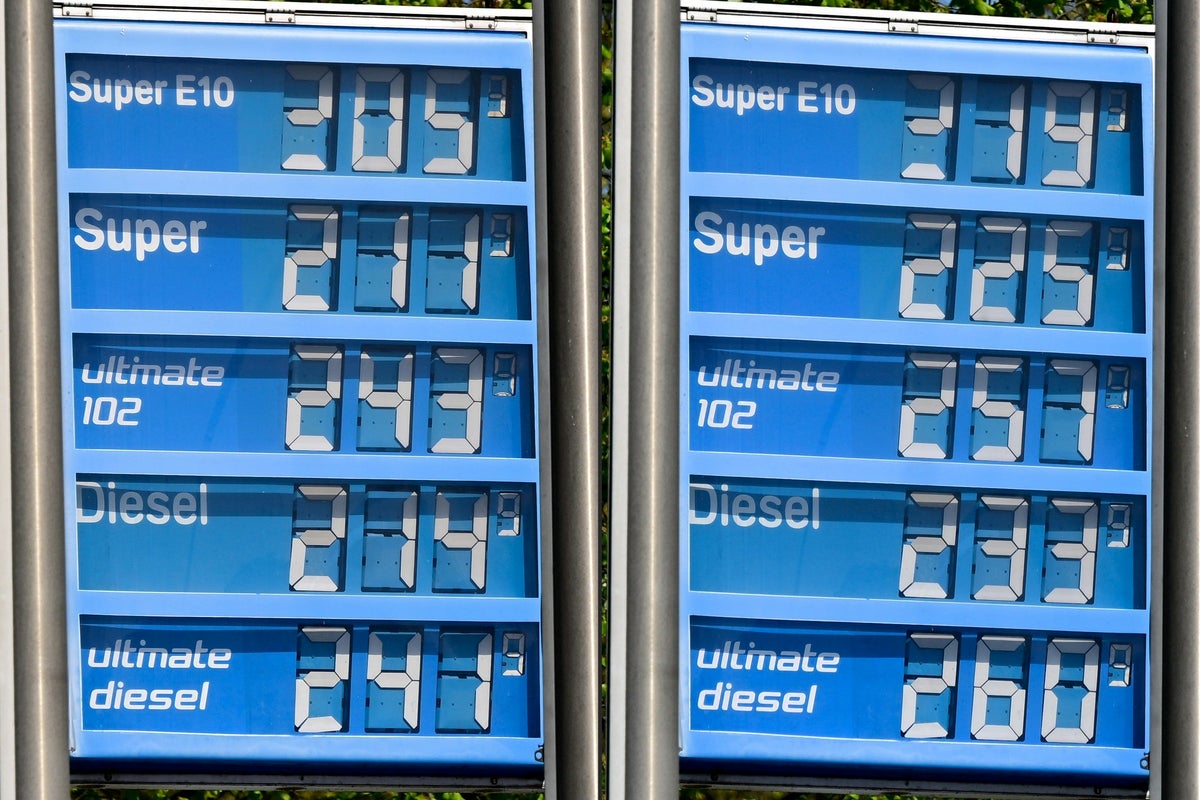
Campaigners accused the group of profiting at the expense of households, who have seen fuel prices rocket at the pumps and are set to see energy bills jump higher once more when the price cap is next updated on July 1.
The price of oil has risen from the mid-$60s range in February to over $100 now, spiking close to $120 several times during the course of the Iran war.
Patrick Galey, head of news investigations at campaigning organisation Global Witness, said: “It is horrifying to see BP’s profits grow as millions suffer the fallout from the US-Israel war on Iran. Unfortunately we’ve been here before – when Russia invaded Ukraine four years ago we saw big oil firms make bumper profits from spiralling fuel costs.
“As oil prices drive up bills once again, it’s clear that fossil fuel companies don’t enhance affordability or energy security, they make life worse. They destroy the climate, push up the cost of living, and rake in billions in profit while innocent civilians die.
“It’s well overdue that we make oil companies pay for the damage their doing. If they broke it, they need to fix it. It’s clear they can afford to. BP profits, we all pay.”
Mike Childs, head of science, policy and research at Friends of the Earth, added: “Just as we saw in 2022 following Russia’s invasion of Ukraine, fossil fuel giants are quids in when global instability drastically inflates fuel prices.
“But again, it’s ordinary people who pay the price when soaring energy prices threaten to plunge the UK into an even deeper cost-of-living crisis.”
The End Fuel Poverty Coalition called for a windfall tax on firms profiting from the Iran-related energy crisis.
The campaign group’s co-ordinator Simon Francis said: “These astronomical profits are a startling reminder that when conflict drives up the price of oil and gas, energy companies profit and households pay.”
BP’s new chief executive Meg O’Neill, who took over at the helm on April 1, said the group was ensuring fuel supplies are met across the UK.
She said: “The teams across BP are playing their part to keep oil, gas and refined products flowing during an incredibly challenging time – focused on maintaining safe, reliable and cost-efficient operations.”
She added: “We are working with customers and governments to get fuel where it’s needed, helping minimise disruption and the impact it can have on people’s lives.”
Ms O’Neill took over from Murray Auchincloss, who himself served only two years in the role after succeeeding Bernard Looney’s three-year tenure. Prior to the recent regular changes, Bob Dudley spent a full decade in the job up to 2020.
BP have struggled with strategy direction and the transition to clean energy, first doubling down on their green plan before an abrupt about-face turn.
In share price terms, the results saw BP rise 2.5 per cent in early trading on Tuesday, adding to a surge of more than 28 per cent in the past three months alone, as investors watched a soaring oil price and predicted the profits to come.
“In February, BP announced it was halting share buybacks as weak oil prices hurt profitability. How times change,” said Freetrade’s investment writer, Duncan Ferris.
“The firm has been among the best-performing supermajors since the escalation of conflict in Iran. Higher oil prices, and the opportunities they offer to the company’s traders, have breathed life into a stock battered by faltering low-carbon projects and investor unrest.”
Oil prices have raced higher since the US-Israel war on Iran started on February 28 and are now more than 60% up so far this year.
Brent crude reached close to 120 dollars a barrel at one stage and, despite falling back, is still above the 100 dollars level as peace talks falter and amid fears over a looming global energy supply crisis.
BP’s update showed its customers and products division – including its oil trading unit – reported profits of 2.5 billion (£1.84 billion), compared with 1.4 billion dollars (£1.03 billion) in the previous quarter and just 103 million dollars (£76.2 million) a year ago as traders were able to capitalise on highly volatile oil prices.
Additional reporting by PA
Oil prices jumped on Tuesday as Donald Trump weighed Iran’s latest proposal to end the war.
The US president is unhappy with the latest Iranian proposal, a US official said on Monday. Iranian sources disclosed that Tehran’s proposal avoided addressing its nuclear programme until hostilities cease and Gulf shipping disputes are resolved.
Trump’s displeasure with the Iranian offer leaves the conflict deadlocked, with Iran shutting shipping flows through the Strait of Hormuz, which typically carries supply equal to about 20 per cent of global oil and gas consumption, and the US keeping in place its blockade of Iranian ports.
Brent crude rose to $108.13 per barrel, hovering near a three-week high, while US West Texas Intermediate went up to $96.48.
Both benchmarks are well above pre-war levels. Brent was trading at $72 before the US-Israeli war on Iran began on 28 February.
Asian stocks were broadly subdued at the opening. While MSCI’s broadest index of Asia-Pacific shares outside Japan was down 0.12 per cent, hovering near the record high it touched on Monday, Nikkei fell 0.5 per cent.
The S&P 500 eked out modest gains on Monday and was on course for a nearly 10 per cent gain for April. US stock futures were 0.1 per cent higher in Asian hours.
Indian shares are set to open lower on Tuesday, with GIFT Nifty futures pointing to the benchmark Nifty 50 opening below Monday’s close of 24,092.70. Both Nifty and Sensex snapped a three-session losing run on Monday, led by a rebound in technology stocks, but the broader momentum remained constrained by unresolved tensions around the Strait of Hormuz.
Elevated oil prices are a particular headwind for India, the world’s third-largest crude importer, heightening inflation risks, pressuring economic growth and widening the country’s import bill.
Foreign portfolio investors offloaded domestic stocks worth Rs 11.5bn ($122m) on Monday, extending their selling streak to a sixth straight session.
Vessel crossings showed signs of recovery over the weekend, according to the maritime intelligence firm Windward, but analysts warned increased movement was yet to translate into a surge in oil and gas flows.
Iran reportedly offered to end its blockade of the waterway without addressing its nuclear programme, passing the proposal to Washington through Pakistani mediators. But Mr Trump has made ending Iran’s atomic programme a condition for any deal.
Central banks are also in focus this week, with the Bank of Japan, the US Federal Reserve, the Bank of England, and the European Central Bank all due to announce policy decisions. All are expected to hold rates steady, but markets will be watching closely for signals about how policymakers plan to respond to the inflationary pressure from the war.
“The BOJ is likely to stay highly sensitive to market volatility,” Fred Neumann, chief Asia economist at HSBC, told Reuters. “Our base case remains one single 25 basis point hike this year in July, but a June rate rise becomes more likely if the Strait of Hormuz is still effectively closed after mid-May.”
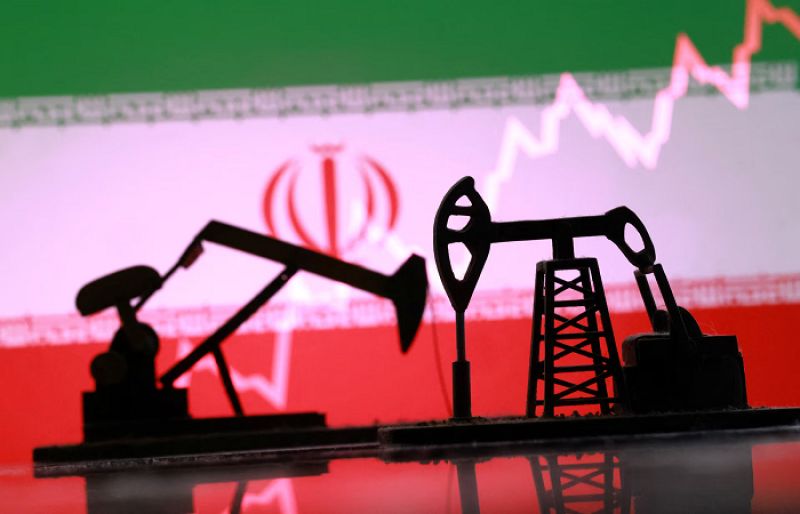
Oil prices extended their gains on Tuesday as efforts to end the US-Iran war appear stalled, with the crucial Strait of Hormuz waterway still mainly shut, keeping energy supplies from the key Middle East producing region out of the reach of global buyers.
US President Donald Trump is unhappy with the latest Iranian proposal aimed at ending the war, a US official said on Monday.
Iranian sources disclosed on Monday that Tehran’s proposal avoided addressing its nuclear program until hostilities cease and Gulf shipping disputes are resolved.
Trump’s displeasure with the Iranian offer leaves the conflict deadlocked, with Iran shutting shipping flows through the Strait of Hormuz, which typically carries supply equal to about 20% of global oil and gas consumption, and the US keeping in place its blockade of Iranian ports.
Brent crude futures for June climbed 45 cents, or 0.4%, to $108.68 a barrel, after gaining 2.8% in the previous session to its highest close since April 7. The contract is up for a seventh day.
US West Texas Intermediate (WTI) crude for June rose 58 cents, or 0.6%, to $96.96, after gaining 2.1% in the previous session.
An earlier round of negotiations between the US and Iran collapsed last week following failed face-to-face talks.
“For oil traders, it’s not the rhetoric that matters any more, but the actual physical flow of crude oil through the Strait of Hormuz, and right now, that flow remains constrained,” Fawad Razaqzada, market analyst at City Index and FOREX.com, said in a note.
Razaqzada added that even if a resolution is reached, production outages and logistical challenges mean recovery could take months.
Ship-tracking data revealed significant disruptions in the region, with six Iranian oil tankers forced to turn back due to the US blockade.
However, a liquefied natural gas tanker managed by the United Arab Emirates’ Abu Dhabi National Oil Co did cross the Strait of Hormuz and appears to be near India, ship-tracking data showed on Monday.
Before the US-Israeli war on Iran, which began on February 28, between 125 and 140 vessels transited the strait daily.


Match officials announced for HBL PSL 11 qualifier – SUCH TV
BP profits more than double as oil trading booms amid Iran war

‘Dances With Wolves’ star Nathan Chasing Horse gets life imprisonment for sexual assault verdict

-

 Sports1 week ago
NCAA men’s gymnastics championship: All-time winners list
-

 Sports1 week ago
WWE WrestleMania 42 Night 2: Live match results and analysis
-

 Fashion1 week ago
UK’s Sosandar returns to profitability amid robust FY26 performance
-

 Politics7 days ago
UK’s Starmer seeks to deflect blame over Mandelson appointment
-
 Business1 week ago
No fuel shortage: Govt assures 100% domestic LPG, PNG, CNG supply amid Hormuz energy crunch – The Times of India
-

 Entertainment1 week ago
Lee Anderson, Zarah Sultana kicked out of UK Parliament for calling PM ‘liar’
-
 Business1 week ago
How Trump’s psychedelics executive order could unlock stalled cannabis reform
-
 Business7 days ago
Us-India Trade Talks: US–India trade deal: Where do talks stand & what to expect – explained – The Times of India