

Business
Jamie Dimon says U.S. should impose Trump’s credit card rate cap in Vermont and Massachusetts


Jamie Dimon, CEO of JPMorgan Chase, speaks at the American Business Forum at the Kaseya Center in Miami on Nov. 6, 2025.
Chandan Khanna | AFP | Getty Images
JPMorgan Chase CEO Jamie Dimon on Wednesday advocated for a test of President Donald Trump‘s proposed 10% cap on credit card interest rates in two U.S. states: Vermont and Massachusetts.
Dimon, speaking on a panel at the World Economic Forum at Davos, Switzerland, addressed a question about Trump’s order for banks to voluntarily limit their interest rates for a year. The president had called for the lower rates to take effect Tuesday.
Several large credit card lenders contacted by CNBC on Tuesday said they had made no changes to their interest rates, but they all declined to be identified as defying Trump’s proposal.
“It would be an economic disaster,” Dimon said Wednesday. “In the worst case, you’d have a drastic reduction of the credit card business” for 80% of Americans, he said.
In earnings conference calls last week and behind the scenes, banks have pushed back against Trump’s order this month to voluntarily forgo billions of dollars in revenue.
Their main argument, that price controls will result in lenders canceling accounts for many card customers, has resonated with several Republican lawmakers, including House Speaker Mike Johnson. Most banking analysts believe that Trump would need legislation to enact a nationwide cap on card rates.
‘A great idea’
Dimon then said he had a “great idea” to help quell disagreement over the proposed card cap, suggesting that the U.S. government impose the pricing controls on Americans in just two states.
Vermont and Massachusetts are the home states of Sens. Bernie Sanders and Elizabeth Warren, respectively, both of whom support a bill capping card rates at 10% for five years. Dimon didn’t mention the lawmakers by name Wednesday.
The U.S. government “should force all the banks to do it in two states, Vermont and Massachusetts, and see what happens,” Dimon said, drawing laughter from the audience.
Dimon said “the left” and people who argue for price controls “will learn a real lesson, and the people crying the most won’t be the credit card companies,” he said.
“It’ll be the restaurants, the retailers, the travel companies, the schools, the municipalities, because people miss their water payments,” he said. “It would be something else to watch.”
The offices of Sanders and Warren did not immediately return calls for comment.
Dimon added that JPMorgan was planning on giving the Trump administration its analysis on what would happen under a national credit card rate cap.
“I think it’s wrong for the government to get involved extensively in pricing of stuff, but I got to deal with the world I got,” Dimon said.


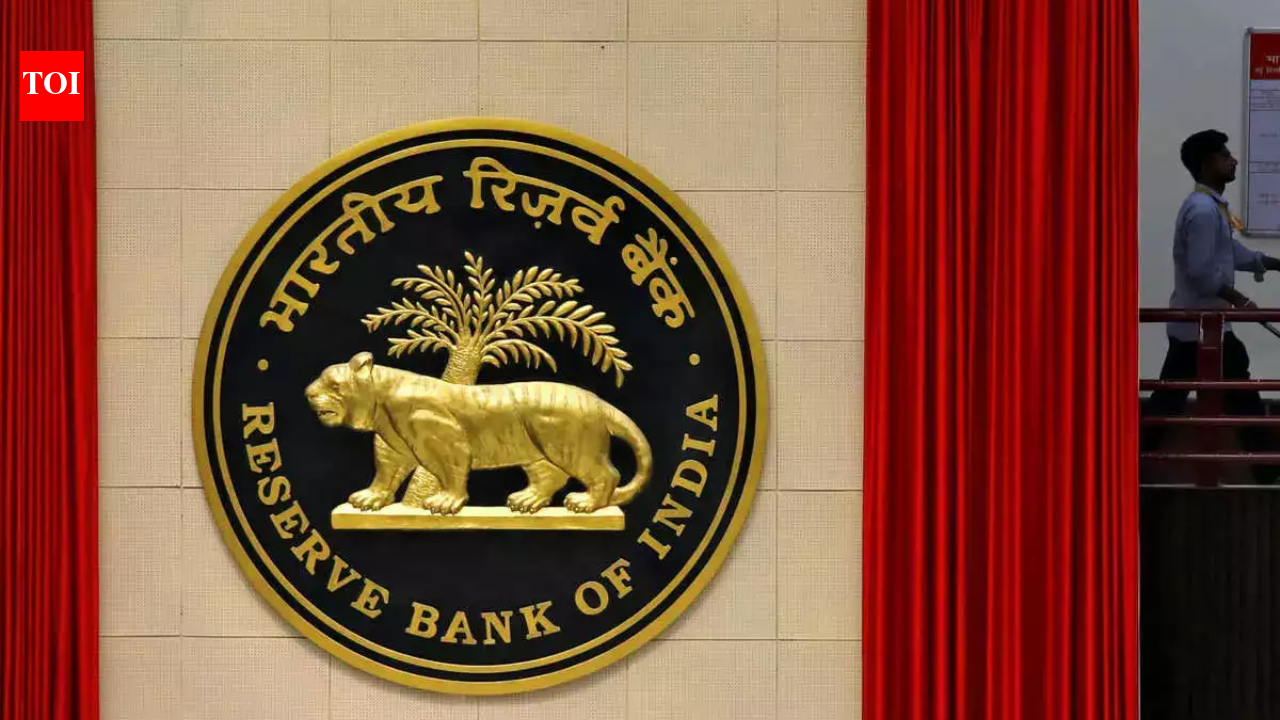
The Reserve Bank of India (RBI) on Monday decided against activating the countercyclical capital buffer (CCyB), indicating that current financial and credit conditions do not warrant an additional capital requirement for banks, PTI reported.The central bank said the decision followed a review and empirical assessment of indicators used under the CCyB framework.“Based on review and empirical analysis of CCyB indicators, it has been decided that it is not necessary to activate CCyB at this point in time,” RBI said in a statement.Under the RBI (Commercial Banks – Prudential Norms on Capital Adequacy) Directions, 2025, the CCyB framework is activated when financial conditions indicate rising systemic risks linked to excessive credit growth.The framework primarily relies on the credit-to-GDP gap as a key indicator, along with supplementary metrics.According to the RBI, the CCyB mechanism is intended to serve two broad objectives.Firstly, it requires a bank to build up a buffer of capital in good times, which may be used to maintain the flow of credit to the real sector in difficult times.Secondly, it achieves the broader macro-prudential goal of restricting the banking sector from indiscriminate lending in the periods of excess credit growth that have often been associated with the building up of system-wide risk.The framework was introduced globally after the 2008 financial crisis as part of measures proposed by the Group of Central Bank Governors and Heads of Supervision (GHOS) under the Basel framework to strengthen financial system resilience.

The company has announced plans to build seven new models in Europe including a small electric hatchback.
Source link

“Today’s policymaking is constrained by a more volatile external environment with more frequent and overlapping shocks, a rising public interest bill, in part reflecting market concerns with countries’ elevated debt, and the long-standing challenge of weak productivity growth,” he said.


UK’s clothing imports fall 3% in Q1, sharply lower than Q4 2025
RBI sees no signs of excess credit risk, keeps countercyclical capital buffer inactive

The Catastrophic Swatch x Audemars Piguet Launch Was Entirely Predictable and Utterly Avoidable

-

 Entertainment6 days ago
Conan O’Brien hat tricks as Oscar host
-

 Tech1 week ago
Could Contact-Tracing Apps Help With the Hantavirus? Not Really
-

 Fashion5 days ago
Italy’s Zegna Group’s Q1 growth boosted by strong organic performance
-

 Sports1 week ago
Bobby Cox, legendary Atlanta Braves manager who led 1995 World Series champions, dead at 84
-

 Entertainment1 week ago
Martin Short: Facing tragedy with joy
-

 Entertainment1 week ago
Tom Brady gets back at Kevin Hart during Netflix roast
-

 Entertainment1 week ago
Martha Stewart: How to make an omelet
-

 Sports1 week ago
Jacob Fatu unleashes vicious assault on Roman Reigns after World Heavyweight Championship loss at WWE Backlash