

Fashion
Janie and Jack plus Hatch to open first UK dual-concept store on King’s Road in 2026


Published
November 25, 2025
In a meeting of minds that heralds “a significant step toward global brand expansion and multi-brand innovation”, children’s fashion house Janie and Jack and premium maternity fashion and beauty brand Hatch, will make their dual-concept UK debut in Chelsea in February.
The Chelsea opening will serve as both brands’ flagship UK presence and a cornerstone for future international expansion, parent of both brands, Matri Group, said.
Located in the historic Gaumont Building on London’s King’s Road, it will become part of a £40 million investment by landlord Cadogan to revitalise the area while preserving its heritage and cultural character.
Janie and Jack’s seasonal collections feature twists on classic fashion with its curated marketplace extending into home décor, toys, and baby gear.
Hatch, meanwhile, combines maternity-based fashion, skincare, and beauty, “for before, during, and beyond pregnancy”.
“Our London opening represents more than a retail expansion — it’s a symbol of our evolving vision,” said Matri president and CFO Mo Beig.
“We’re building a connected community that supports families from maternity through childhood where design, craftsmanship, and style come together across every stage of life.”
Parnell Eagle, president of Janie and Jack, added: “This next phase is about deepening our connection with modern families while bringing a new expression of our signature style to London.”
Copyright © 2025 FashionNetwork.com All rights reserved.











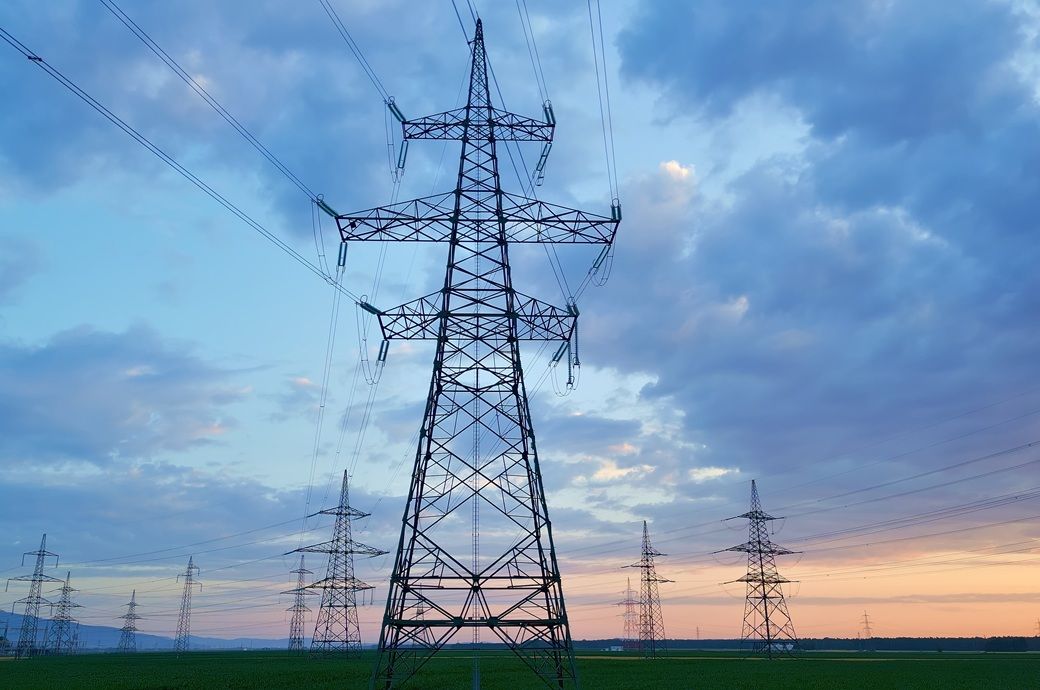
The report highlighted that although overall energy demand growth slowed compared with 2024 and remained slightly below the previous decade’s average, electricity demand rose by around 3 per cent, driven by increased usage across buildings, industry, electric vehicles, and data centres.
Global energy demand growth slowed to 1.3 per cent in 2025, while electricity demand rose around 3 per cent, driven by EVs, industry, and data centres, according to IEA.
Solar PV led supply growth for the first time.
Oil demand grew modestly, and coal growth slowed.
CO2 emissions rose slightly.
Renewables and nuclear expansion highlighted an accelerating shift towards cleaner energy systems.
Solar photovoltaic (PV) emerged as the largest contributor to global energy supply growth for the first time, accounting for over 25 per cent of the increase. Natural gas followed with a 17 per cent share, while renewables and nuclear together met nearly 60 per cent of additional demand.
Global oil demand rose modestly by 0.7 per cent, reflecting the continued expansion of electric vehicles, with sales surpassing 20 million units in 2025. Coal demand growth slowed overall, with declines in China offset by increases in the United States due to high natural gas prices.
“Global energy demand continued to increase in 2025 against a complex economic and geopolitical backdrop, with one trend unmistakeable: the expanding electrification of economies,” said Fatih Birol, IEA executive director.
He added that electricity consumption was growing much faster than overall energy demand, with one energy source outpacing all others. He noted that solar PV accounted for over a quarter of global energy demand growth for the first time, followed by natural gas, and added that countries prioritising resilience and diversification would be better placed to manage volatility and ensure secure, affordable energy.
Regional trends varied significantly. Energy demand growth in the United States rose sharply, supported by industrial activity, data centre expansion, and colder weather, while China’s growth slowed to 1.7 per cent due to rising renewable adoption and improved efficiency.
Global energy-related CO2 emissions increased marginally by around 0.4 per cent. Emissions declined in China and remained flat in India, aided by renewable deployment and favourable weather conditions, while advanced economies recorded higher emissions growth due to colder winter conditions.
In the power sector, solar PV generation surged by a record 600 terawatt-hours, marking the largest annual increase for any electricity generation technology. Battery storage emerged as the fastest-growing segment, with around 110 gigawatts of new capacity added, while nuclear energy also saw renewed momentum with over 12 gigawatts of new reactors under construction.
The IEA noted that cumulative deployment of low-emissions technologies since 2019 now offsets fossil fuel consumption equivalent to the entire energy demand of Latin America, underscoring the accelerating transition towards cleaner energy systems.
Fibre2Fashion News Desk (SG)
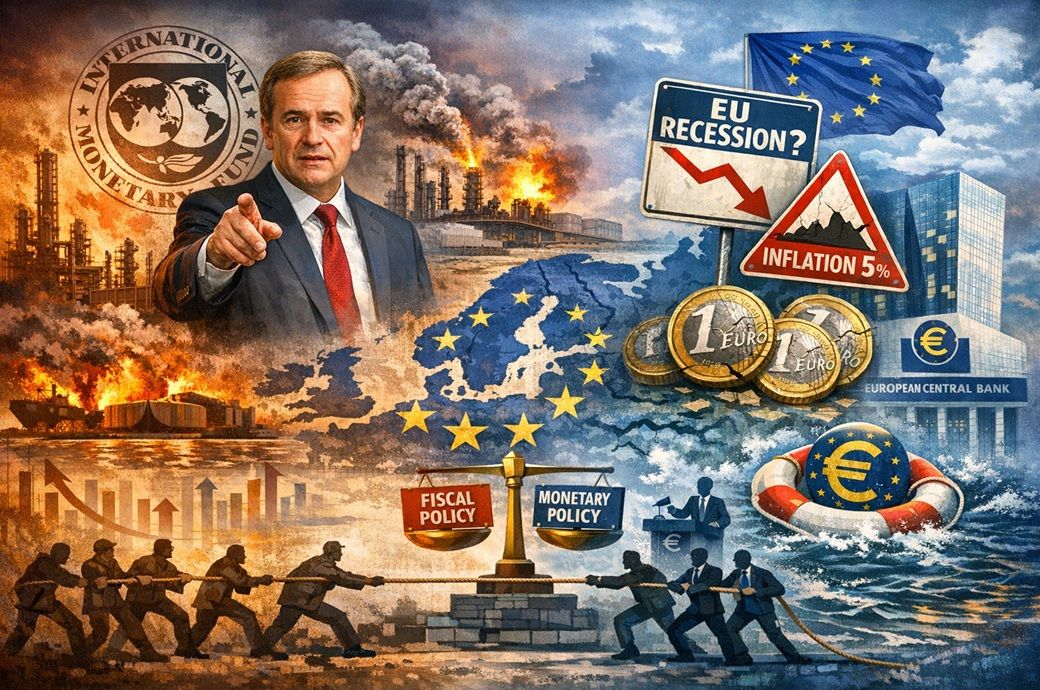
In a blog post, Alfred Kammer, director of the IMF’s European department, said his organisation sees growth slowing down in the continent. Initial data point already to weaker private investment and consumption.
The energy shock that has hit Europe due to the Middle East conflict, though smaller than in 2022, is weighing on growth and pushing inflation higher, an IMF expert recently cautioned.
IMF sees growth slowing down in the continent.
Initial data point already to weaker private investment and consumption.
Central banks must remain laser focused on keeping inflation expectations anchored, he wrote.
The outlook for euro area growth is projected at just 1.1 per cent in 2026, for the European Union it is 1.3 per cent; and this forecast comes with a high degree of uncertainty.
In a more severe scenario as described in the World Economic Outlook—a persistent supply shock compounded by tightening financial conditions—the EU could come close to recession with inflation approaching 5 per cent. No European country is spared, Kammer observed.
Policymakers face intense pressure—to act fast, visibly and for all, which results in policies that have more long-term downsides than short-term benefits, he wrote.
Targeted support is much more effective. Europe’s response to this shock should be shaped by two imperatives, he suggested. First, robust macroeconomic policy that is fit for a world with unpredictable and frequent shocks, and second, resilience built without wasting fiscal resources or getting in the way of markets.
The first imperative involves getting monetary and fiscal policy right. Central banks must remain laser focused on keeping inflation expectations anchored, the IMF expert wrote.
In the euro area, where inflation is close to target and medium-term expectations are broadly anchored, the European Central Bank has some scope to wait and observe the shock evolve before acting. IMF now expects a cumulative 50 basis point increase in the policy rate by the end of this year, maintaining a broadly neutral monetary stance in light of higher near-term inflation expectations, Kammer noted.
A rise in core inflation or increasing medium-term expectations would warrant a more restrictive stance, he wrote.
“Europe must reform under pressure. The current shock is not an argument for delay. It is all the more reason to push forward the reform agenda,” Kammer added.
Fibre2Fashion News Desk (DS)

The text of the agreement was released on February 7.
India and the US will today resume talks on the first phase of their bilateral trade agreement in Washington, DC.
The three-day talks will discuss the situation that has evolved under the changed US tariff regime.
The two unilateral probes launched by the USTR against India may also be discussed at the meeting.
Darpan Jain, additional secretary in the department of commerce, is leading the Indian team.
Darpan Jain, additional secretary in the department of commerce, is leading the Indian team.
The three-day talks will discuss the situation that has evolved under the changed US tariff regime, according to Indian media reports.
Following the US Supreme Court decision against the sweeping tariffs imposed by President Donald Trump on several countries, the US administration imposed a 10-per cent tariff on all countries beginning February 24 for 150 days.
This led to a meeting between chief negotiators of both sides scheduled in February getting postponed to this month.
The two unilateral investigations launched by the US Trade Representative (USTR) against India may also be discussed at the meeting. India has rejected allegations made by the USTR in these two probes under its Section 301 of Trade Law and has called for termination of the probes as the initiation notice has failed to provide cogent rationale to substantiate the claims.
Fibre2Fashion News Desk (DS)


Electricity bills targeted in planned shakeup to energy pricing

Here’s what Jamaican legend told teen phenom?

I’ve Tested Gaming Laptops for Over a Decade. This Is What I Think You Should Buy

-

 Fashion5 days ago
France’s LVMH Q1 revenue falls 6%, shows resilience amid Iran war
-

 Sports1 week ago
The case for Man United’s Fernandes as Premier League’s best
-

 Entertainment1 week ago
Palace left in shock as Prince William cancels grand ceremony
-
 Business1 week ago
UK could adopt EU single market rules under new legislation
-

 Entertainment6 days ago
Is Claude down? Here’s why users are seeing errors
-

 Fashion1 week ago
Energy emerges as biggest cost driver in textile margins
-
 Business1 week ago
Delta Air Lines unveils first new Delta One suite in premium cabin arms race
-

 Entertainment1 week ago
Cop guarding polio vaccination team martyred in Hangu attack