

Politics
Japan appoints China hawk Takaichi as its first woman PM

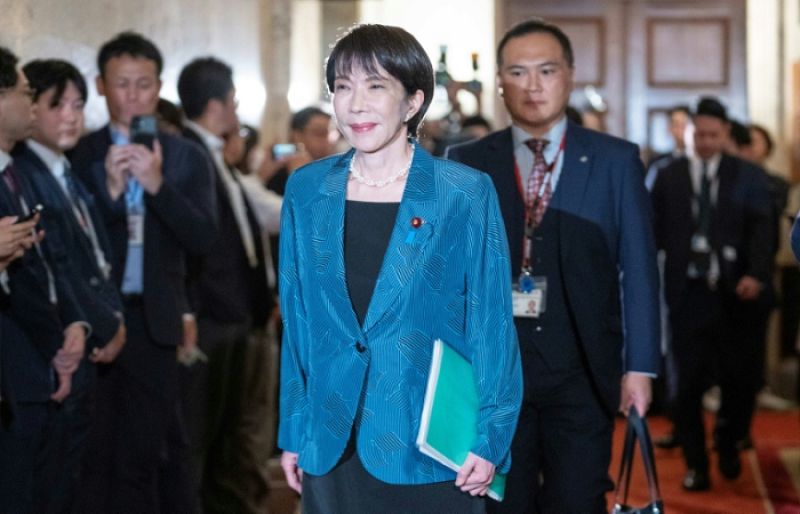

Japan made history on Tuesday by appointing Sanae Takaichi as its first female prime minister. A China hawk and social conservative, Takaichi secured the position after striking an 11th-hour coalition deal.
She becomes Japan’s fifth premier in as many years and will lead a minority government with a packed agenda, including a scheduled visit by US President Donald Trump next week.
Parliament voted Takaichi into office after she unexpectedly won a majority in the first round. She is set to formally take office following a meeting with the emperor.
Takaichi, a former heavy metal drummer, became head of the ruling Liberal Democratic Party (LDP) on October 4.
The LDP, which has governed almost continuously for decades, has been losing support, and six days later, the Komeito party left the coalition due to Takaichi’s conservative views and an LDP slush fund scandal.
This prompted Takaichi to form a last-minute alliance with the right-leaning Japan Innovation Party (JIP), which supports lowering the consumption tax on food to zero, abolishing corporate and organizational donations, and reducing the number of MPs.
Takaichi pledged to “make Japan’s economy stronger and reshape the country for future generations.”
“She’s a strong-minded person, regardless of being a woman,” said 76-year-old pensioner Toru Takahashi in Takaichi’s hometown of Nara. “She’s not like Trump, but she’s clear about what’s right and wrong.”
Nordic
Takaichi has promised a cabinet with “Nordic” levels of women, up from two under outgoing premier Shigeru Ishiba.
These could include the right-wing Satsuki Katayama in charge of finances and the half-American Kimi Onoda as economic security minister, local media said.
Japan ranked 118 out of 148 in the World Economic Forum’s 2025 Global Gender Gap Report. Around 15 percent of lower house MPs are women and corporate boardrooms are overwhelmingly male.
Takaichi, 64, has said she hopes to raise awareness about women’s health struggles and has spoken candidly about her own experience with menopause.
But she opposes revising a 19th-century law requiring married couples to share the same surname, and wants the imperial family to stick to male-only succession.
In Nara, company worker Keiko Yoshida, 39, told AFP she hopes Takaichi will “make Japan a more liveable place for women”.
“I’d be happy if we saw more policies from a woman’s perspective: support for childcare, and help for women returning to work after having children,” agreed student Nina Terao, 18.
Abenomics
Details of a trade deal between Washington and Tokyo remain unresolved, and Trump also wants Japan to stop Russian energy imports and boost defence spending.
“I’d like her to be a Prime Minister who can clearly say ‘No’ when needed,” Satoshi Sakamoto, 73, another Nara pensioner, told AFP.
Beyond Trump, Takaichi’s many challenges include reversing the decline of Japan’s population and injecting some vim in the flatlining economy.
Being in a minority in both houses of parliament, the new coalition will need support from other parties to push through legislation.
Takaichi has in the past backed aggressive monetary easing and expanded government spending, echoing her mentor, former premier Shinzo Abe.
Despite walking back on these “Abenomics” calls in the LDP leadership contest, her victory has boosted Japanese stocks to record highs.
She previously said that “Japan is completely looked down on by China”, and that Tokyo must “address the security threat” posed by Beijing.
But she has since toned down her rhetoric on China, and stayed away last week from a festival at the Yasukuni shrine — she has been a regular visitor before — honouring Japan’s war dead.
Takaichi will also be under pressure to restore the fortunes of the LDP after a string of poor election results that cost Ishiba his job.
Smaller parties gaining support include the populist Sanseito, which calls immigration a “silent invasion”.
“Prices have gone up, and it’s tough,” Nara pensioner Satoe Tominaga, 77, told AFP, saying she was “50-50” about Takaichi.
“Honestly, I mostly shop at 100-yen ($0.66) stores now.”


- Trump says leaders commit to halt border fighting effective tonight.
- Malaysia’s PM Anwar praised for assisting renewed ceasefire.
- Thailand vows compliance while urging Cambodia to fix violations.
US President Donald Trump said Friday that Thailand and Cambodia had agreed to halt fighting along their disputed border, which has killed at least 20 people this week.
The latest fighting between the Southeast Asian neighbours, which stems from a long-running dispute over the colonial-era demarcation of their 800-kilometre (500-mile) frontier, has also displaced around half a million on both sides.
Each side had blamed the other for reigniting the conflict.
“I had a very good conversation this morning with the Prime Minister of Thailand, Anutin Charnvirakul, and the Prime Minister of Cambodia, Hun Manet, concerning the very unfortunate reawakening of their long-running War,” Trump said on his Truth Social platform.
“They have agreed to CEASE all shooting effective this evening, and go back to the original Peace Accord made with me, and them, with the help of the Great Prime Minister of Malaysia, Anwar Ibrahim,” he said, referring to a deal made in July.
“Both Countries are ready for PEACE and continued Trade with the United States of America,” Trump noted, thanking Anwar for his assistance.
Earlier, Anutin had said, after his call with Trump: “It needs to be announced to the world that Cambodia is going to comply with the ceasefire.”
“The one who violated the agreement needs to fix (the situation) — not the one that got violated,” Anutin said, adding that the call with Trump “went well”.
‘Talk among themselves’
The United States, China and Malaysia, as chair of the regional bloc ASEAN, brokered a ceasefire in July after an initial five-day spate of violence.
In October, Trump backed a follow-on joint declaration between Thailand and Cambodia, touting new trade deals after they agreed to prolong their truce.
But Thailand suspended the agreement the following month after Thai soldiers were wounded by landmines at the border.
In the northeastern province of Buriram, Thai evacuee Jirasan Kongchan said peace should come through direct bilateral talks, not foreign mediation.
“I want Thailand and Cambodia to talk among themselves first, clearly and decisively,” said the 50-year-old farmer.
“If Cambodia breaks the peace (agreement) again, ASEAN countries should step in, maybe impose some kind of sanctions.”
Cambodian evacuee Choeun Samnang, 54, said he was “very happy” to hear Trump had called the Thai prime minister asking for the countries to abide by the joint declaration.
“I don’t want to see countries at war. I want both Cambodia and Thailand to have peace,” he told AFP at a shelter in Banteay Meanchey province.
At the White House on Thursday, Trump again boasted about having resolved multiple conflicts, but said that with “Thailand and Cambodia, I think I’m going to have to make a couple of phone calls…but we’ll get that one back on track”.
Anutin said there were “no signs” Trump would connect further trade talks with the border conflict, but that he had guaranteed Thailand would get “better benefits than other countries”.


Venezuelan opposition leader Maria Corina Machado, winner of the 2025 Nobel Peace Prize, feared for her life during her secret journey from Venezuela to Norway to receive the award, she said on Friday.
“There were moments when I felt that there was a real risk to my life, and it was also a very spiritual moment because, in the end, I simply felt that I was in God’s hands and that whatever would be, would be,” she told reporters in Oslo.
She declined to give precise details about how she managed to leave Venezuela, where she has lived in hiding since last year, to protect those involved — following dramatic accounts of her journey in US media.
“We did get support from the United States government to get here,” Machado told a press conference on Thursday, when asked by AFP about whether Washington had helped.
The Wall Street Journal reported this week that she wore a wig and a disguise on the high-risk journey, leaving her hide-out in a Caracas suburb on Monday for a coastal fishing village, where she took a fishing skiff across the Caribbean Sea to Curacao.
The newspaper said the US military was informed to avoid the boat being targeted by airstrikes, given Washington’s attempts to pile pressure on Venezuela with a major naval buildup in the region and strikes on alleged drug-trafficking boats.
The Wall Street Journal later reported that Machado and the small crew of the skiff had been left drifting after their GPS fell overboard in rough seas and a backup failed.
As a result, she did not meet the extraction team at the designated pickup point, prompting a search to find her in the Gulf of Venezuela.
In an interview with CBS News, Bryan Stern, who heads a nonprofit rescue organisation, recalled meeting Machado out at sea after she left Venezuela.
She boarded his boat for a 13-14 hours journey to an undisclosed location to catch a plane as part of a mission planned just four days earlier, CBS reported.
Stern described a “scary” and very wet boat trip in the middle of the night.
“The sea conditions were ideal for us, but certainly not water that you would want to be on […] the higher the waves, the harder it is for radar to see,” Stern said.
A representative for Machado confirmed that Stern’s company, Grey Bull Rescue Foundation, was behind the operation that began on Tuesday, CBS said.
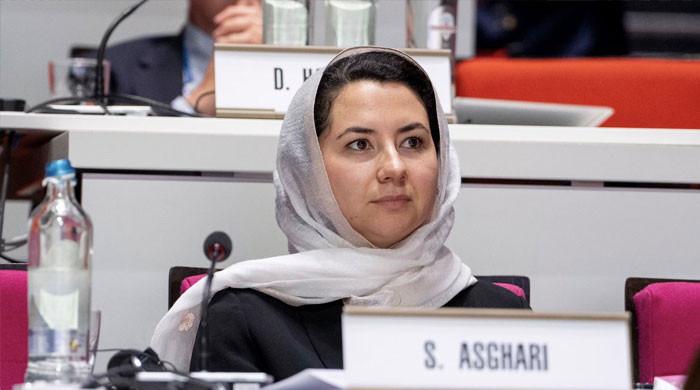
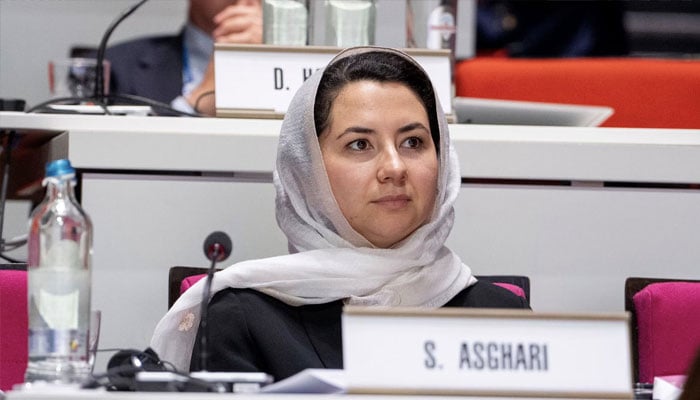
PARIS: Afghanistan’s International Olympic Committee member Samira Asghari has told AFP that the Taliban authorities must face the stark truth that if they are ever to be accepted internationally, they must respect the rights of women to education and sport.
Asghari, who at 31 is living in exile for the second time, does however, favour engaging with Afghanistan’s rulers.
The Taliban government had banned girls from schools beyond the age of 12, and barred women from most jobs and public services, and from playing sport.
Asghari, who in 2018 became Afghanistan’s first ever IOC member, accepts her “situation is quite challenging” and beating the drum for Afghan women’s sport “does require certain precautions”.
Nevertheless, the former international basketball player, like many top Afghan women athletes, is undeterred in speaking out about the treatment of women under the Taliban authorities.
“The reality is that when you take a public stand for women’s rights, you do become a target, but I believe strongly in communication and engagement,” she said in an email interview.
“As long as the Taliban remain the reality on the ground in Afghanistan, we cannot afford to waste time doing nothing.
“In my role, I have tried to help smooth the discussions between the IOC and those currently in control, focusing on the sport rights of women and girls and particularly primary school girls who are still inside Afghanistan.”
Asghari, one of four children born to a retired professional make-up artist mother and a father who was a manager in the Afghan Olympic national committee, says the “conversations are not always easy.”
“They are not about legitimising any government,” she said.
“But they are very important for creating tangible opportunities for future generations of young boys and girls in Afghanistan.”
‘Fundamental change’
With Afghan sportswomen spread around the globe, putting together teams is complex.
However, a women’s football team, Afghan Women United, made up of players based in Europe and Australia, recently competed in FIFA Unites: Women’s Series 2025 in Morocco.
“This support for athletes outside Afghanistan is just the first step, and I hope FIFA can align with the IOC’s ongoing talks with the Taliban,” she said.
Asghari, who had been involved in the “project” for over a year, hopes the message gets through to Afghanistan’s rulers.
“The Taliban were given the country, and now they’re trying to maintain power while ignoring fundamental human rights, particularly for women,” she said.
“It’s very difficult for them to continue ruling Afghanistan this way in the long term, and the Taliban need to understand that their international acceptance is directly linked to respecting human rights, including the rights of women to education and sport.”
Asghari, who attended the recent Islamic Solidarity Games in Riyadh, where Afghan women and men competed, said she hoped for “small openings” in the Taliban’s stance.
“I also believe that if we can find small openings — like developing sport in primary schools where girls are still allowed to attend up to sixth grade — we should take them,” she said.
“This isn’t about accepting the Taliban’s restrictions; it’s about not abandoning the girls and women of Afghanistan.
“We have to work with reality, while continuing to push for fundamental change.”
Asghari says even achieving small breakthroughs like that could prevent the long-term harm women suffered during the Taliban’s first spell in power, from 1996 to 2001.
She said she had seen the impact on her return from her first period of exile in Iran.
“What concerns me deeply is that we’re creating another lost generation,” she said.
“I remember when I was in sixth grade, aged 12, and there was a 20-year-old woman sitting next to me in the same class because she couldn’t go to school during the previous Taliban era.
“I didn’t know how to communicate with her, and it was difficult for both of us, but especially for her because she had lost so many years.
“I cannot accept seeing this happen again. That’s why even small opportunities matter so much.”
Asghari retains hope despite the bleak outlook and believes in “continued engagement and dialogue” with the Taliban.
“The future of Afghanistan is this young generation. We need to give them every opportunity we can, no matter how small, and never, ever give up on them.”


Erling Haaland inspired by Cristiano Ronaldo and Lionel Messi – not only for their goals

AMD CEO Lisa Su Isn’t Afraid of the Competition

Meghan Markle urges ‘thoughtfulness’ as King Charles TV appearance looms

-

 Sports1 week ago
Australia take control of second Ashes Test | The Express Tribune
-

 Politics6 days ago
17 found dead in migrant vessel off Crete: coastguard
-

 Politics5 days ago
Thailand launches air strikes against Cambodian military: army
-

 Entertainment1 week ago
Sabrina Carpenter recalls ‘unbelievable’ experience with pal Taylor Swift
-

 Politics1 week ago
Gen-Z battles to gain political ground after ousting ex-PM Hasina in Bangladesh
-

 Fashion1 week ago
Bangladesh’s economic outlook cautiously optimistic: Govt
-

 Fashion5 days ago
Germany’s LuxExperience appoints Francis Belin as new CEO of Mytheresa
-

 Tech7 days ago
WIRED Roundup: DOGE Isn’t Dead, Facebook Dating Is Real, and Amazon’s AI Ambitions