

Politics
Japan’s ‘Iron Lady’ Takaichi forges stunning election win

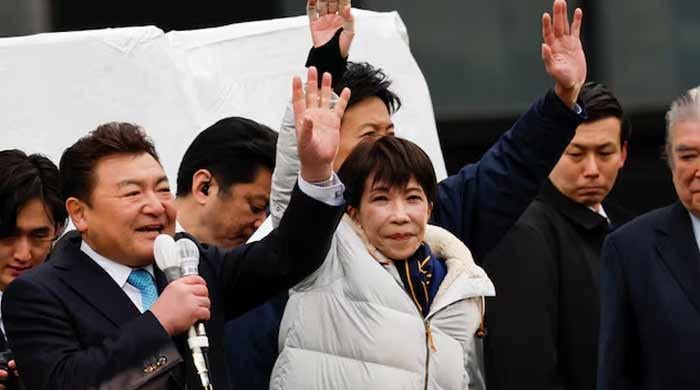
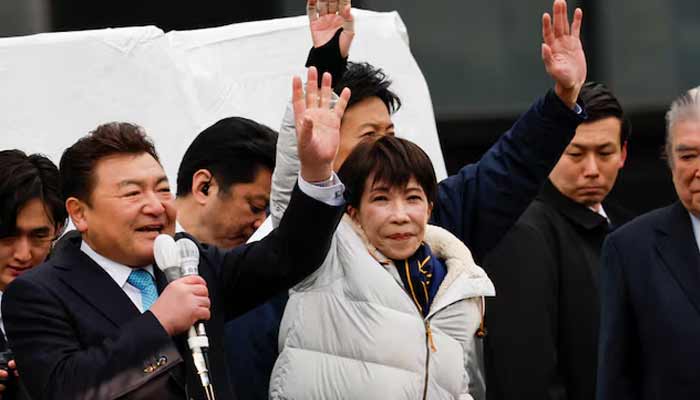
Japanese Prime Minister Sanae Takaichi’s coalition swept to a historic election win on Sunday, paving the way for promised tax cuts that have spooked financial markets.
The conservative Takaichi, Japan’s first female leader who says she is inspired by Britain’s “Iron Lady” Margaret Thatcher, was projected to deliver as many as 328 of the 465 seats in parliament’s lower house for her Liberal Democratic Party.
The LDP alone sailed past the 233 seats needed for a majority less than two hours after polls closed, on track for one of its best ever election results.
With her coalition partner, the Japan Innovation Party, known as Ishin, Takaichi now has a supermajority of two-thirds of seats, easing her legislative agenda as she can override the upper chamber, which she does not control.
Winter election brings blizzard of votes
“This election involved major policy shifts — particularly a major shift in economic and fiscal policy, as well as strengthening security policy,” Takaichi said in a television interview as the results rolled in.
“These are policies that have drawn a great deal of opposition […] If we have received the public’s support, then we truly must tackle these issues with all our strength.”
Takaichi, 64, called the rare winter snap election to capitalise on her buoyant personal approval ratings since she was elevated to lead the long-ruling LDP late last year.
Residents trudged through snow to cast their ballots with record snowfall in some parts snarling traffic and requiring some polling stations to close early. It was only the third postwar election held in February, with elections typically called during milder months.
Outside a polling station in the town of Uonuma in the mountainous Niigata prefecture, teacher Kazushige Cho, 54, braved below-freezing temperatures and deep snow to cast his vote for Takaichi’s Liberal Democratic Party.
“It feels like she’s creating a sense of direction — like the whole country is pulling together and moving forward,” Cho said.
But Takaichi’s election promise to suspend an 8% sales tax on food to help households cope with rising prices has rattled investors concerned about how the nation with the heaviest debt burden among advanced economies will fund the plan.
Takaichi said on Sunday she would speed up consideration of the sales tax cut while focusing on fiscal sustainability.
“Her plans for the cut in the consumption tax leave open big question marks about funding and how she’s going to go about making the arithmetic add up,” said Chris Scicluna, head of research at Daiwa Capital Markets Europe in London.
Taiwan President Lai Ching-te was one of the first foreign leaders to congratulate Takaichi, saying he hoped her victory would “bring a more prosperous and secure future for Japan and its partners in the region”.
Takaichi’s strong mandate could accelerate her plans to bolster Japan’s defences, further angering Beijing, which has cast her as attempting to revive its militaristic past.
Japan’s Defense Minister Shinjiro Koizumi told TV stations on Sunday evening that he wanted to push ahead with policies to strengthen Japan’s defence.
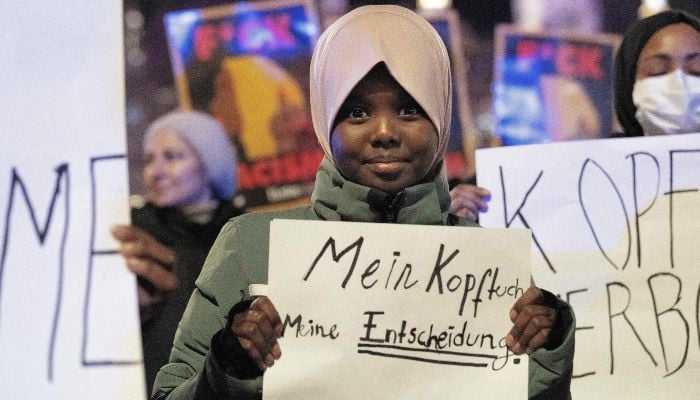
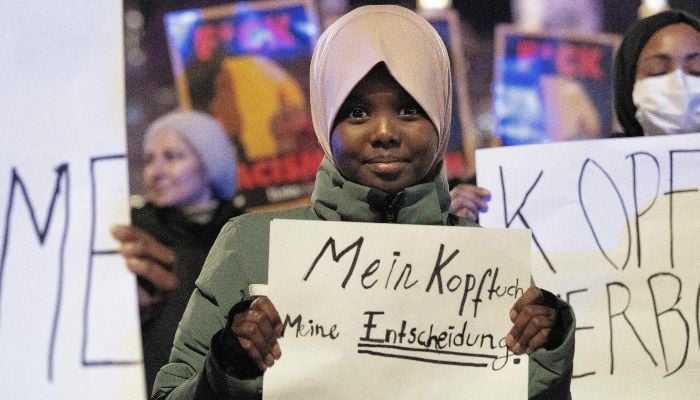
VIENNA: A headscarf ban for girls under 14 in Austrian schools has stirred unease, anger and fears of further targeting of Muslims in the EU member state.
Austrian lawmakers in December approved the measure, which is set to take effect from the new school year in September.
With anti-immigration sentiment running high, the conservative-led government argues the law is aimed at protecting girls from “oppression”.
But rights groups and experts say it is discriminatory, risks deepening social division and is likely unconstitutional.
“It’s my decision… No one can force me to wear a headscarf, and no one can force me to take it off,” a 12-year-old student told AFP at a protest against the ban in Vienna last month, declining to give her name.
‘Legal consequences’
The government estimates around 12,000 girls would be affected by the new law, but this projection has been questioned as too high.

Roughly 8% of Austria’s nine million residents are Muslim, according to 2021 government statistics.
The education ministry sent out information to all schools several weeks ago on how to enforce the new law.
It contains illustrations of different Islamic head coverings.
“Every teacher who observes a violation must instruct the student to remove her headscarf. If she does not immediately comply, the teacher must report the violation to the school administration without delay,” the instructions state.
“The school administration must immediately hold a meeting with the student and her legal guardians.”
For repeated non-compliance, parents can face fines ranging from 150 to 800 euros ($175 to $930).
Failure to report those in violation of the law could also have “legal consequences” for teachers and school managements, the instructions warn.
One Vienna schoolteacher, who spoke on condition of anonymity, told AFP she was not planning to enforce the law.
“It’s a populist measure” that fails to address “the real problem when parents of any religion use violence or psychological violence against children,” she said.
‘Deeply rooted racism’
Last month, hundreds gathered at a central Vienna square to protest the ban before marching to the chancellery.

Malika Mataeva, co-founder of the Muslim Women Network, decried “years of systematic, deeply rooted racism in Austria.”
“It’s simply another step that makes us say, ‘Enough is enough,'” she told AFP, adding “guaranteed freedoms” were not being respected.
Austria has long drawn immigrants, as well as asylum seekers fleeing conflict. But anti-immigration sentiment is strong.
In the 2024 elections, the far-right Freedom Party won for the first time even though it failed to form a government.
Muslims in Austria suffered the highest rates of racism and discrimination in the EU, according to a 2024 report by Europe’s FRA rights agency.
Past ban struck down
The IGGOe, the body which officially represents the country’s Muslim communities, is set to challenge the ban in court.
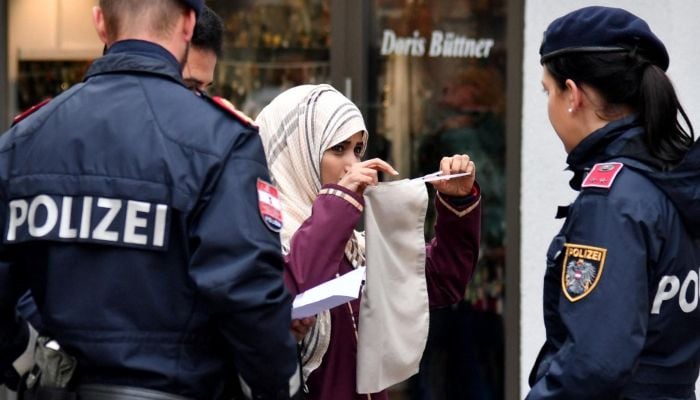
Austria introduced a similar ban on headscarves in primary schools in 2019, but the constitutional court struck it down.
“It is clear that we consider this law… to be unconstitutional in Austria, given its focus on a specific religious item of clothing,” the Ombud for Equal Treatment told AFP.
At the Vienna protest, an 11-year-old, who only gave her name as Hadiya, said she is the only student in her class of 27 who wears a headscarf.
“I’m angry…. I find it (the ban) is without reason,” she said.
A mother of two girls, aged 11 and 13, also said the ban has weighed heavily on her family, with her daughters not wanting to take off their headscarves.
“It’s supposed to be for their protection, but they’ve been suffering for months now and are worried about what to do,” she told AFP at the protest.
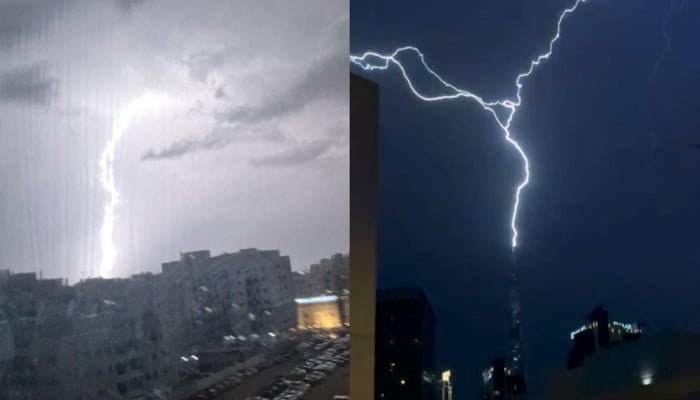
DUBAI: A powerful storm system swept across the United Arab Emirates overnight, bringing heavy rain, strong winds, and near-constant lightning that lit up the night sky for more than two hours, residents said.
Flashes were so bright in some areas that parts of the country appeared “like daytime in the dark,” with booming thunder waking residents around 11pm local time.
The storm affected multiple emirates, including Dubai, Sharjah, Ajman, Umm Al Quwain, Fujairah, Ras Al Khaimah and Abu Dhabi. Fujairah recorded 47.9mm of rainfall, while Ras Al Khaimah saw flooding on sections of Emirates Road caused by overflow from Al Beeh and Qada’a valleys, prompting authorities to advise motorists to take alternative routes.
The National Centre of Meteorology (NCM) issued a flash flood alert after midnight as the storm moved from western regions into Abu Dhabi and Dubai.
Dubai Police and the Ministry of Interior also issued public advisories, including messages in Urdu, urging residents to avoid unnecessary travel, maintain safe distances on roads, and stay away from pools of water or fast-moving rivers to prevent vehicles from skidding. Hail and reduced visibility in some areas were reported.
Dubai Airports warned travellers to allow extra time for journeys to DXB and DWC airports as adverse weather might cause delays. Authorities also announced the temporary closure of Jebel Jais in Ras Al Khaimah due to hazardous conditions.
The UAE Government and NCM said unstable weather, including heavy rain, thunderstorms, strong winds, and occasional hail, is expected to continue through Friday before gradually easing from Saturday, with clearer skies and cooler temperatures forecast. Officials urged residents to remain vigilant and cooperate with authorities to stay safe.
- US officials say shipments began year ago and may still be ongoing.
- Says collaboration may include training on semiconductor technology.
- Allegations risk worsening tensions between Washington and Beijing.
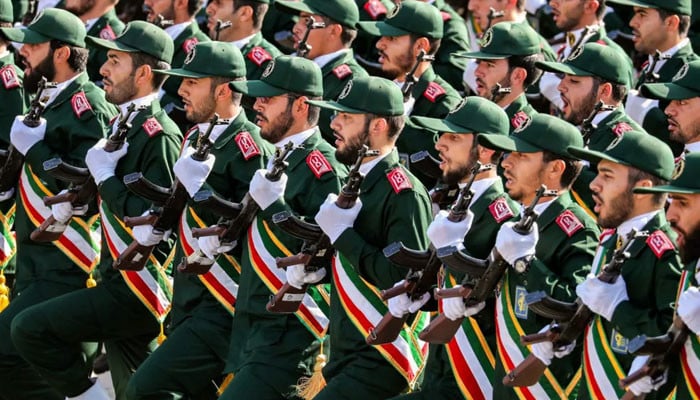
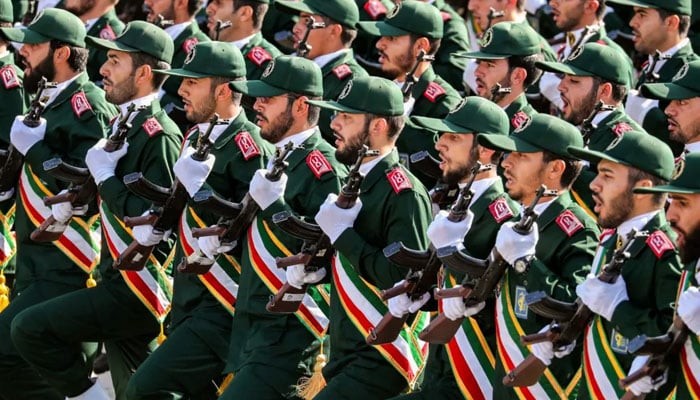
WASHINGTON: SMIC, China’s largest chipmaker, has sent chipmaking tools to Iran’s military, two senior Trump administration officials said on Thursday, raising questions about Beijing’s stance in the month-old US-Israeli conflict with Iran.
SMIC, which has been heavily sanctioned by the US government over alleged ties to the Chinese military, began sending the tools to Iran roughly a year ago and “we have no reason to believe that any of this has stopped,” one of the officials said.
The official added that the collaboration “almost certainly included technical training on SMIC’s semiconductor technology.”
The officials spoke on condition of anonymity in order to discuss previously undisclosed US government information. They did not specify whether the tools were of US origin, which would likely make shipment to Iran a violation of US sanctions.
SMIC, the Chinese Embassy in Washington, and a spokesperson for the Iranian mission to the United Nations did not immediately respond to requests for comment.
The Chinese government maintains that it carries out normal commercial trade with Iran. SMIC, which was added to a trade blacklist in 2020 that restricts its access to US exports, has denied allegations that it has ties to the Chinese military-industrial complex.
China has not publicly taken a side in the Middle East conflict. Chinese Foreign Minister Wang Yi this week called on the parties to seize all opportunities to start peace talks as soon as possible.
The allegations threaten to heighten tensions between Washington and Beijing as the US wages war against Tehran and as it has sought to choke off China’s advanced chip industry.
Reuters reported last month that Iran was close to a deal with China on the purchase of anti-ship cruise missiles, just as the United States deployed a vast naval force near the Iranian coast ahead of strikes on the Islamic Republic.
It was not immediately clear what, if any, role the chipmaking tools have played in Iran’s response to the war, which was launched by the US and Israel on February 28 and has roiled financial markets, triggered a surge in oil prices and fuelled global inflation fears.
One of the officials said the tools have been provided to Iran’s “military industrial complex” and could be used for any electronics that require chips.
Washington has sought to curtail China’s ability to make advanced semiconductors through sanctions on SMIC and other Chinese chipmakers, aiming to limit their access to advanced chipmaking equipment from top US suppliers such as Lam Research, KLA and Applied Materials.
The Biden administration tightened restrictions on SMIC in 2024 by cutting off its most advanced factory from more US imports after it produced a sophisticated chip for Huawei’s Mate 60 Pro phone, Reuters reported.


Transfer rumors, news: Could Foden leave Man City this summer?

Germany’s ifo index drops to 86.4 in March as uncertainty weighs on

Just Eat and Autotrader among five firms under investigation over online reviews

-

 Fashion1 week ago
Sales at US apparel, clothing accessories stores up 4% YoY in Jan 2026
-

 Entertainment1 week ago
Val Kilmer revived 1 year after death through AI
-
 Fashion1 week ago
US’ G-III Apparel’s FY26 sales fall 7% to $2.96 bn
-
 Business1 week ago
Brits cashing in jewellery as gold price hits record high
-

 Sports1 week ago
March Madness 2026 – How to watch in SA, start time, schedule, TV channel for NCAA championship basketball tournament
-

 Fashion6 days ago
China’s textile & apparel exports surge 17% to $50 bn in Jan-Feb 2026
-
 Business1 week ago
Video: The Effects of High Oil Prices
-
 Business6 days ago
Flipkart group CFO to leave co amid IPO plans – The Times of India