

Business
Job seekers use AI for cover letters; employers turn to AI-led interviews — both are equally miserable, here’s why – The Times of India

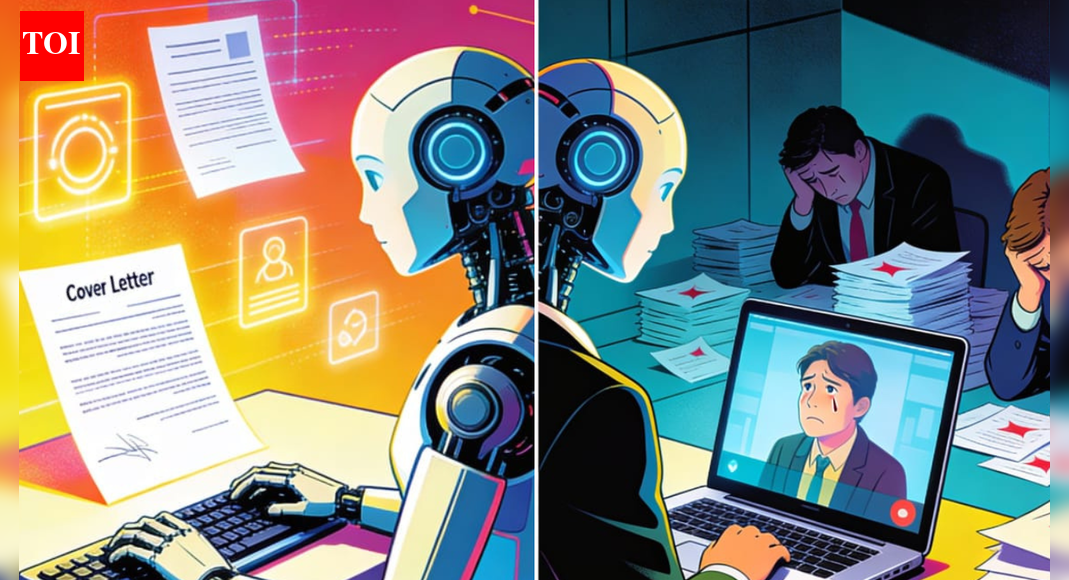
Turned to artificial intelligence (AI) to help you stand out during the job process, but got rejected in the first round? Or are you a hiring manager who relied on AI to frisk through applications to select the best candidate, but ended up with not what you quite envisioned?The answer lies in the approach itself. Relying on artificial intelliegnce for job application might be doing you more harm than good.The growing use of artificial intelligence in recruitment is reshaping how Americans search for work, just as the country’s labour market shows signs of slowing. From automated interviews to AI-written cover letters, technology is now a part of almost every stage of the hiring process. But is it working? In 2025, more than half of organisations surveyed by the Society for Human Resource Management reported using AI tools to recruit workers. At the same time, almost one-third of ChatGPT users turned to the OpenAI chatbot for help with job applications. Yet recent research indicates that candidates who rely on AI during the application process are actually less likely to be hired, even as employers struggle to cope with a flood of applications. “The ability (for companies) to select the best worker today may be worse due to AI,” Anais Galdin, a researcher at Dartmouth told CNN Business. Galdin and Jesse Silbert of Princeton University examined tens of thousands of cover letters submitted on Freelancer.com, a job listing platform and found that after the launch of ChatGPT in 2022, cover letters became longer and more polished. However, employers placed less importance on them, making it harder to distinguish strong candidates from the wider pool. As a result, hiring rates dropped, and so did average starting wages, CNN reported. “If we do nothing to make information flow better between workers and firms, then we might have an outcome that looks something like this,” Silbert said, referring to the study’s findings.
A negative cycle
As application volumes rise, companies are increasingly automating interviews as well.According to a survey by recruitment software firm Greenhouse conducted in October, 54% of US job seekers said they had taken part in an AI-led interview. While virtual interviews became common during the pandemic in 2020, many employers now use AI systems to conduct interviews, without necessarily removing subjectivity from hiring decisions. “Algorithms can copy and even magnify human biases,” said Djurre Holtrop, a researcher who studies the use of asynchronous video interviews, algorithms and large language models in hiring.“Every developer needs to be wary of that,” CNN cited the expert. Daniel Chait, chief executive of Greenhouse, said the growing use of AI by both applicants and employers has created a negative cycle. “Both sides are saying, ‘This is impossible, it’s not working, it’s getting worse,’” Chait told CNN.
What’s next?
Despite these concerns, adoption of the technology continues with one estimate projecting that the market for recruitment technology will grow to $3.1 billion by the end of this year. At the same time, resistance is mounting from lawmakers, labour groups and workers worried about discrimination. Liz Shuler, president of the AFL-CIO labour union, described AI-driven hiring as “unacceptable”. “AI systems rob workers of opportunities they’re qualified for based on criteria as arbitrary as names, zip codes, or even how often they smile,” Shuler said in a statement to CNN. Several US states, including California, Colorado and Illinois, are introducing new laws and regulations aimed at setting standards for the use of AI in hiring. However, a recent executive order signed by US President Donald Trump raised questions about the future of state-level oversight. Samuel Mitchell, a Chicago-based employment lawyer, said the order does not “preempt” state law but adds to the “ongoing uncertainty” around regulation. He added that existing anti-discrimination laws still apply, even when companies use AI systems, and legal challenges are already emerging. In a case supported by the American Civil Liberties Union, a deaf woman is suing HireVue, an AI-powered recruitment company, alleging that an automated interview failed to meet legal accessibility standards. HireVue denied the claim, telling CNN that its technology reduces bias through a “foundation of validated behavioral science”. Even with these challenges, more and more AI is getting hiring access. New tools have made resume screening more sophisticated, potentially helping some candidates who may have been overlooked. But for those who value personal interaction, the shift has been unsettling. Jared Looper, an IT project manager in Salt Lake City, Utah, who previously worked as a recruiter, recently underwent an AI-led interview during his job search. He described the experience as “cold”, and said he initially hung up when contacted by the automated system. Looper said he worries about job seekers who have yet to adapt to a hiring environment where appealing to algorithms has become essential. “Some great people are going to be left behind.”

MUMBAI/BENGALURU: The restaurant industry is struggling to run regular operations due to the meagre supplies of LPG cylinders . With the govt’s move to hike commercial LPG allocation to up to 70%, it will take some time before the measure actually translates into sustained supply, executives said. “Supply is still hugely limited and erratic. A feeling of uncertainty looms large,” said Anurag Katriar, founder at Indigo Hospitality. The key question is how quickly this revised allocation will translate into on-ground availability, said Pradeep Shetty, vice-president at Federation of Hotel & Restaurant Associations of India (FHRAI).A walk along Indiranagar’s 12th Main, known for its cluster of independent restaurants, reflects the strain. “It is all hand-to-mouth at this point,” said Nikhil Gupta, who runs brands including The Pizza Bakery and Paris Panini . The move doesn’t directly help the restaurant sector which is still getting 20%-30% of LPG supplies, said Sagar Daryani, co-founder & CEO at Wow! Momo Foods and president at National Restaurant Association of India (NRAI). State-wise, the supply situation varies with some such as Maharashtra, Karnataka, Rajasthan restricting allocation for restaurants, hurting the sector , Daryani said.
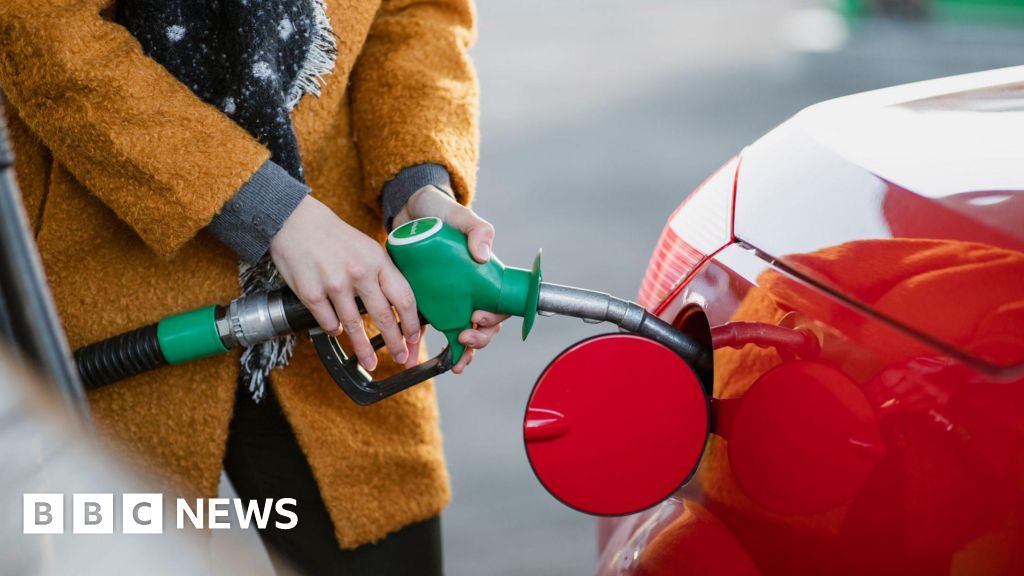
Motorists are facing higher fuel prices ahead of Easter break due to the conflict in the Middle East, the RAC says.
Source link
Business
E-cheques coming soon? RBI unveils Payments Vision 2028, plans wider oversight of digital players – The Times of India
The Reserve Bank of India (RBI) on Friday unveiled its ‘Payments Vision 2028’ document, outlining a roadmap that includes exploring electronic cheques, expanding regulatory oversight to digital platforms, and strengthening safeguards in the fast-growing payments ecosystem, PTI reported.The central bank said it will examine the introduction of e-cheques to combine the advantages of paper instruments with the speed and reliability of digital payments. “To leverage the unique benefits of paper-based instruments and the speed and reliability of electronic payments, and cater to new business use cases, the introduction of electronic cheques in India shall be explored,” the RBI said.Alongside, the RBI is considering widening the regulatory ambit to include entities such as e-commerce marketplaces and centralised platforms that play a growing role in facilitating digital transactions.“In addition, e-commerce marketplaces and centralized platforms have been assuming significant responsibilities that could have implications on the orderly functioning of the payments ecosystem. These aspects shall be examined in detail and, if required, the scope of direct regulations shall be extended to cover such entities,” the document said.The vision document also proposes allowing users to enable or disable transactions across digital payment modes, similar to controls available for card transactions.To address fraud risks, the RBI is exploring a “shared responsibility framework” under which both the issuing bank and the beneficiary bank would share liability in cases of unauthorised digital transactions.The central bank also plans to review cheque design and security features, introduce a Domestic Legal Entity Identifier (DLEI) framework for better transaction traceability, and bring in a Cyber Key Risk Indicators (KRI) framework for non-bank payment system operators.Other initiatives include exploring white-label solutions in the Aadhaar Enabled Payment System (AePS), developing interoperability in the Trade Receivables e-Discounting System (TReDS), and introducing a ‘Payments Switching Service’ to ease customer migration across platforms.The RBI said it will also review the cross-border payments ecosystem to improve efficiency and streamline authorisation processes, alongside publishing periodic reports on global and domestic payment trends.Additionally, the central bank aims to enhance access to payment data and reimagine the card payments ecosystem by promoting secure tokenisation, improved transparency in pricing, and greater choice for users and merchants.


EU gains meet a harsh reality in India: War, rupee, energy shock

Hainan free trade port crosses $11.6 bn trade in 100 days

Antonio Banderas opens up on ethnic stereotyping in Hollywood

-
 Business1 week ago
Flipkart group CFO to leave co amid IPO plans – The Times of India
-
 Business1 week ago
Video: The Effects of High Oil Prices
-

 Fashion7 days ago
China’s textile & apparel exports surge 17% to $50 bn in Jan-Feb 2026
-

 Sports1 week ago
Rating Adidas’ 2026 World Cup away shirts: Argentina, Spain, Mexico and more
-

 Fashion1 week ago
The hidden $1.62 war tax now embedded in every garment you source
-

 Sports1 week ago
American Conference Commissioner Tim Pernetti thanks Trump for Army-Navy game executive order
-
Tech1 week ago
The Corsair 4000D RS PC Case Keeps Your System Cool
-

 Tech1 week ago
‘Uncanny Valley’: Nvidia’s ‘Super Bowl of AI,’ Tesla Disappoints, and Meta’s VR Metaverse ‘Shutdown’