

Business
John Swinney under fire over ‘smallest tax cut in history’ after Scottish Budget

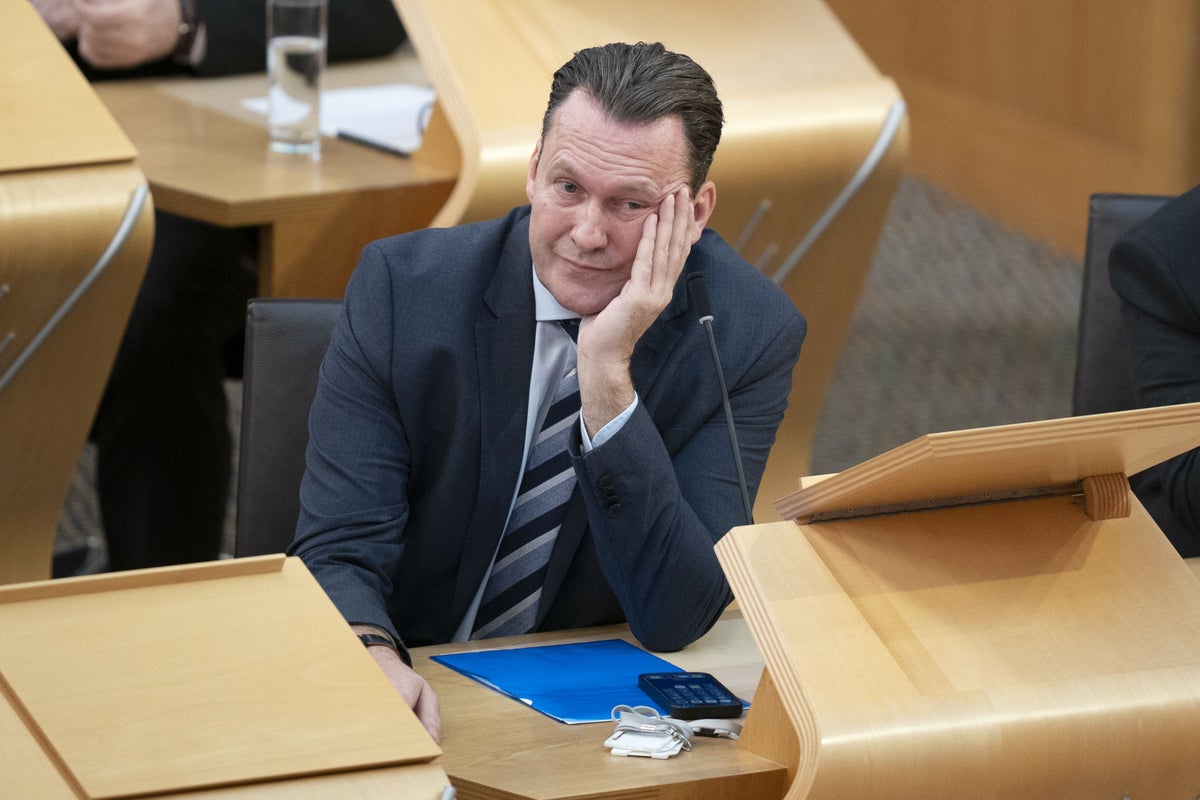
John Swinney has been pressed over whether this week’s Scottish Budget gives some workers the “smallest tax cut in history” – with Tory leader Russell Findlay branding the reduction “miserly” and “insulting”.
The Scottish Conservative leader challenged the First Minister after Tuesday’s Holyrood Budget effectively cut taxes for lower earners, by increasing the threshold for the basic and intermediate bands of income tax.
But Mr Findlay said that would leave workers at most £31.75 a year better off – saying this amounts to a saving of just £61p a week
“That wouldn’t even buy you a bag of peanuts,” the Scottish Tory leader said.
“John Swinney’s Budget might even have broken a world record, because a Scottish Government tax adviser says it ‘maybe the smallest tax cut in history’.”
Raising the “miserly cut” at First Minister’s Questions in the Scottish Parliament, Mr Findlay demanded to know if the SNP leader believed his “insulting tax cut will actually help Scotland’s struggling households”.
The attack came as the Tory accused the SNP government of increasing taxes on higher earners, with its freeze on higher income tax thresholds, which will pull more Scots into these brackets.
This is needed to pay for the “SNP’s out of control, unaffordable benefits bill”, the Conservative added.
Mr Findlay said: “The Scottish Conservatives will not back and cannot back a Budget that does nothing to help Scotland’s workers and businesses.
“It hammers people with higher taxes to fund a bloated benefits system.”
Hitting out at Labour – whose leader Anas Sarwar has already declared they will not block the government’s Budget – Mr Findlay said: “It is absolutely mind-blowing that Labour and other so-called opposition parties will let this SNP boorach of a budget pass.
“Don’t the people of Scotland deserve lower taxes, fairer benefits and a government focused on economic growth?”
Mr Swinney said the Budget “delivers on the priorities of the people of Scotland” by “strengthening our National Health Service and supporting people and businesses with the challenges of the cost of living”.
He insisted income tax decisions in the Budget would mean that in 2026-27 “55% of Scottish taxpayers are now expected to pay less income tax than if they lived in England”.
The First Minister went on to say that showed “the people of Scotland have a Government that is on their side”.
Referring to polls putting his party on course to win the Holyrood elections in May, the SNP leader added that “all the current indications show the people of Scotland want to have this Government here for the long term”.
Benefits funding is “keeping children out of poverty”, he told MSPs, adding the Budget contained a “range of measures” that would build on existing support.
The First Minister said: “What that is a demonstration of is a Government that is on the side of the people of Scotland and I am proud of the measures we set out in the Budget on Tuesday.”
Meanwhile he said the Tories wanted to make tax cuts that would cost £1 billion, with “not a scrap of detail about how that would be delivered”.
With the weekly leaders’ question time clash coming less than 48 hours after the draft 2026-27 Budget was unveiled, the First Minister also faced questions from Scottish Labour’s Anas Sarwar, who insisted that the proposals “lacks ambition for Scotland”.
Pressing his SNP rival, the Scottish Labour leader said: “While he brags about his £6 a year tax cut for the lowest paid, one million Scots including nurses, teachers and police officers face being forced to pay more.
“Even his own tax adviser says this is a political stunt. So why does John Swinney believe that someone earning £33,500 has the broadest shoulders and therefore should pay more tax in Scotland?”
Mr Swinney, however, said that many public sector workers would be better off in Scotland.
He told the Scottish Labour leader: “A band six nurse at the bottom of the scale will take home an additional £1,994 after tax compared to the same band in England.
“A qualified teacher at the bottom of the band will take home £6,365 more after tax in Scotland than the equivalent in England. There are the facts for Mr Sarwar.”
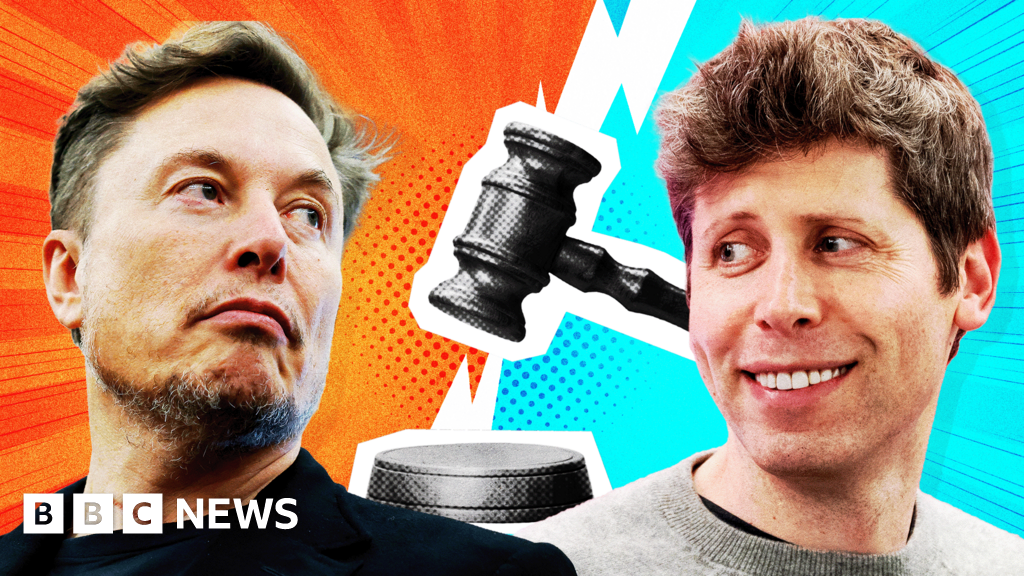
The battle between the AI big hitters has largely played out on social media. Now it is coming to the courtroom.
Source link
Shell has agreed a 16.4 billion US dollar (£12.1 billion) deal to buy Canadian energy firm ARC Resources in a bid to boost its gas production and reserves.
The British energy giant said the acquisition will strengthen its resource base “for decades to come”.
It will also strengthen the business’s presence in North America, where it already operates gas plants.
The deal will combine ARC’s more than 1.5 million net acres of land with Shell’s approximately 440,000 in the Montney gas resource in Canada.
It will increase Shell’s production growth rate from 1% to 4% through to 2030, compared with 2025, according to the firm.
Shell’s chief executive Wael Sawan said acquiring the “high quality, low-cost” energy business “strengthens our resource base for decades to come”.
He added: “We are accessing uniquely positioned assets and welcoming colleagues that bring deep expertise which, combined with Shell’s strong basin level performance, provides a compelling proposition for shareholders.
“This establishes Canada as a heartland for Shell while furthering our strategy to deliver more value with less emissions.”
Shell has been carrying out a new growth strategy focused on extracting more oil and gas, moving from a focus on green energy and reducing spending on renewables.
It hopes the shift will support production targets and drive greater returns for investors.
The announcement comes a few weeks after Shell said it had cut its gas production outlook for the first quarter of 2026 after being affected by the conflict in the Middle East.
The energy giant trimmed its guidance for integrated gas production after volumes from Qatar were particularly affected during recent attacks.
The deal will see ARC’s shareholders receive 8.20 Canadian dollars (£4.50) and about 0.4 Shell shares for each ARC share.
Including about 2.8 billion US dollars (£2.1 billion) in debt that Shell will take on, the acquisition is valued at about 16.4 billion US dollars (£12.1 billion).
It is expected to complete in the second half of 2026, subject to shareholder, court and regulatory approvals.
BP has come under fire after revealing profits more than doubled in the first three months of the year, thanks to the soaring cost of crude caused by the Iran war.
Chief executive Meg O’Neill praised the quarter as sending the firm “in the right direction” and “strengthening the balance sheet” – but critics have labelled the energy giant’s revenues as “horrifying” as “millions suffer the fallout” from war.
The FTSE 100 firm revealed its preferred profit measure – underlying replacement cost profit – surged by over 130% to a better-than-expected $3.2bn (£2.4bn) in the first quarter, up from $1.38bn (£1.02bn) a year earlier and $1.54bn (£1.13bn) in the previous three months. Most analysts had expected first-quarter profits of $2.67bn (£1.97bn).
Campaigners accused the group of profiting at the expense of households, who have seen fuel prices rocket at the pumps and are set to see energy bills jump higher once more when the price cap is next updated on July 1.
The price of oil has risen from the mid-$60s range in February to over $100 now, spiking close to $120 several times during the course of the Iran war.
Patrick Galey, head of news investigations at campaigning organisation Global Witness, said: “It is horrifying to see BP’s profits grow as millions suffer the fallout from the US-Israel war on Iran. Unfortunately we’ve been here before – when Russia invaded Ukraine four years ago we saw big oil firms make bumper profits from spiralling fuel costs.
“As oil prices drive up bills once again, it’s clear that fossil fuel companies don’t enhance affordability or energy security, they make life worse. They destroy the climate, push up the cost of living, and rake in billions in profit while innocent civilians die.
“It’s well overdue that we make oil companies pay for the damage their doing. If they broke it, they need to fix it. It’s clear they can afford to. BP profits, we all pay.”
Mike Childs, head of science, policy and research at Friends of the Earth, added: “Just as we saw in 2022 following Russia’s invasion of Ukraine, fossil fuel giants are quids in when global instability drastically inflates fuel prices.
“But again, it’s ordinary people who pay the price when soaring energy prices threaten to plunge the UK into an even deeper cost-of-living crisis.”
The End Fuel Poverty Coalition called for a windfall tax on firms profiting from the Iran-related energy crisis.
The campaign group’s co-ordinator Simon Francis said: “These astronomical profits are a startling reminder that when conflict drives up the price of oil and gas, energy companies profit and households pay.”
BP’s new chief executive Meg O’Neill, who took over at the helm on April 1, said the group was ensuring fuel supplies are met across the UK.
She said: “The teams across BP are playing their part to keep oil, gas and refined products flowing during an incredibly challenging time – focused on maintaining safe, reliable and cost-efficient operations.”
She added: “We are working with customers and governments to get fuel where it’s needed, helping minimise disruption and the impact it can have on people’s lives.”
Ms O’Neill took over from Murray Auchincloss, who himself served only two years in the role after succeeeding Bernard Looney’s three-year tenure. Prior to the recent regular changes, Bob Dudley spent a full decade in the job up to 2020.
BP have struggled with strategy direction and the transition to clean energy, first doubling down on their green plan before an abrupt about-face turn.
In share price terms, the results saw BP rise 2.5 per cent in early trading on Tuesday, adding to a surge of more than 28 per cent in the past three months alone, as investors watched a soaring oil price and predicted the profits to come.
“In February, BP announced it was halting share buybacks as weak oil prices hurt profitability. How times change,” said Freetrade’s investment writer, Duncan Ferris.
“The firm has been among the best-performing supermajors since the escalation of conflict in Iran. Higher oil prices, and the opportunities they offer to the company’s traders, have breathed life into a stock battered by faltering low-carbon projects and investor unrest.”
Oil prices have raced higher since the US-Israel war on Iran started on February 28 and are now more than 60% up so far this year.
Brent crude reached close to 120 dollars a barrel at one stage and, despite falling back, is still above the 100 dollars level as peace talks falter and amid fears over a looming global energy supply crisis.
BP’s update showed its customers and products division – including its oil trading unit – reported profits of 2.5 billion (£1.84 billion), compared with 1.4 billion dollars (£1.03 billion) in the previous quarter and just 103 million dollars (£76.2 million) a year ago as traders were able to capitalise on highly volatile oil prices.
Additional reporting by PA

Elon Musk-Sam Altman trial: Tech billionaires take their toxic AI row to court

This Ambitious Laptop Doesn’t Leave Much Room for Your Hands
Shell strikes £12.1 billion deal to buy Canadian energy firm

-

 Sports1 week ago
NCAA men’s gymnastics championship: All-time winners list
-

 Sports1 week ago
WWE WrestleMania 42 Night 2: Live match results and analysis
-

 Fashion1 week ago
UK’s Sosandar returns to profitability amid robust FY26 performance
-

 Politics1 week ago
UK’s Starmer seeks to deflect blame over Mandelson appointment
-
 Business1 week ago
No fuel shortage: Govt assures 100% domestic LPG, PNG, CNG supply amid Hormuz energy crunch – The Times of India
-

 Entertainment1 week ago
Lee Anderson, Zarah Sultana kicked out of UK Parliament for calling PM ‘liar’
-
 Business1 week ago
How Trump’s psychedelics executive order could unlock stalled cannabis reform
-
 Business7 days ago
Us-India Trade Talks: US–India trade deal: Where do talks stand & what to expect – explained – The Times of India