

Entertainment
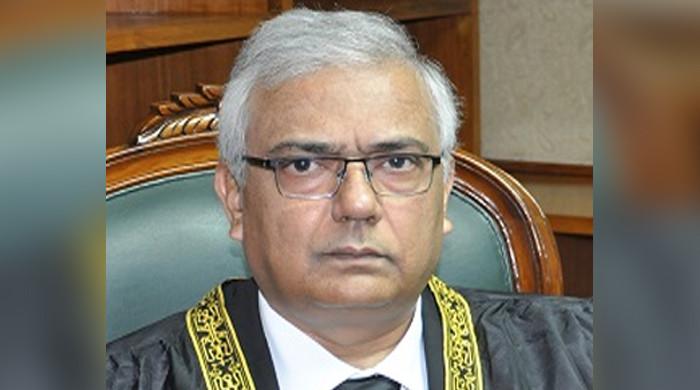
Justice Aminuddin Khan appointed as Constitutional Court’s first Chief Justice

- President gives approval on PM Shehbaz’s advice.
- Justice Khan served as head of constitutional bench.
- Appointment comes after NA approves to SC Procedure Bill.
ISLAMABAD: President Asif Ali Zardari has approved the appointment of Justice Aminuddin Khan as the first Chief Justice of the newly established Federal Constitutional Court.
President Zardari approved the appointment of Justice Aminuddin on the advice of Prime Minister Shehbaz Sharif, read a statement.
Justice Khan was serving as the head of the now-dissolved constitutional bench.
His appointment comes shortly after the National Assembly passed amendments to the Practice and Procedure Rules, paving the way for the cessation of the Constitutional Benches. The bill was passed by the lower house with a majority.
The changes were part of the government’s reforms in the judicial structure through the much-touted 27th Constitutional Amendment.
The bill was initially presented in the upper house of parliament on Monday and got a nod on the same day. It was then referred to the NA, which approved it with some amendments. Therefore, the legislation was again presented in the Senate today to approve the latest changes.
Supreme Court Practice, Procedure Bill, 2025
In today’s NA session, Law Minister Tarar introduced the Supreme Court Practice and Procedure (Amendment) Bill 2025. The law minister said the amendments were aimed at aligning the laws governing the judiciary with the 27th Amendment.
Under the tweaks, the government removed Clause 191-A related to the top court’s practice and procedure.
Under the new law, the authority to constitute benches for hearing cases has been vested in a three-member committee headed by the chief justice.
The committee will comprise the chief justice of the Supreme Court, the most senior judge, and a third judge nominated by the country’s top jurist.
In the absence of any member, the chief justice may nominate another judge to serve on the committee.
Decisions regarding the formation of benches by the committee will be made by a majority vote.
Who is Justice Khan?
Born to a noble family of a famous lawyer of the time, Advocate Khan Sadiq Muhammad Ahsan in Multan on December 1, 1960, Justice Khan received his education from a local school in the district, according to the Supreme Court’s website.
After completing his secondary school education in the year 1977 in Multan, he secured his Bachelor’s Degree in subjects of Philosophy in the year 1981 and completed his LLB from University Law College, Multan in 1984 and a diploma in Taxation Law.
Justice Khan started practice as a junior with his father and obtained the license to practice in the lower courts in the year 1985. He enrolled as an advocate of the Lahore High Court in 1987.
Some years later, he was enrolled as an Advocate of the Supreme Court in 2001. He joined a local firm in Multan in the year 2001, till elevation remained there.
He practiced in the civil side — mainly from the trial court up to the Supreme Court — and appeared in the Supreme Court in famous and important cases relating to property, pre-emption, and matters of inheritance. These subjects remained the favourite subjects.
In 2011, Justice Khan was appointed to the Lahore High Court bench, where he soon became noted for resolving long-standing civil cases efficiently. Presiding over cases at the Bahawalpur, Multan, and Lahore benches, he contributed a series of judgments that were frequently upheld by the Supreme Court.
He was elevated to the Supreme Court of Pakistan on October 21, 2019. Notable among Justice Khan’s recent judgments is his dissenting note in the July 12 reserved seats verdict. Justice Khan was also part of the nine-member larger bench that reviewed the presidential reference filed against the hanging of former prime minister Zulfikar Ali Bhutto.
He has also made substantial contributions to legal education, serving as an examiner and lecturer at University Law College, Multan. Additionally, he has held roles on the Syndicate of several universities, including the University of Engineering and Technology, Lahore.

Sean Diddy Combs filed a new appeal in the court for his immediate release with a new argument against his allegedly unfair trial.
The 56-year-old disgraced music mogul presented the argument through his legal team Alexandra Shapiro and Nicole Westmoreland in New York on Thursday, April 9.
They claimed that the Bad Boy Records founder ought to be freed under the First Amendment, according to the details obtained by Page Six.
Shapiro and Westmoreland argued that Diddy was wrongfully convicted under the Mann Act, while he was involved in the creation of independent adult tapes, which is legal under US laws for freedom of speech.
The Last Night rapper’s legal team claimed that the Judge Arun Subramanian who was in-charge of the case, used the wrong allegations against Combs to sentence him strongly.
“We made it abundantly clear. The District Court should not consider the acquitted conduct,” Shapiro said, adding that Combs’ sentence is the “highest sentence ever imposed on a Mann Act defendant under the same-based defence level.”
The attorneys demanded immediate acquittal and release of the music mogul or at least his freedom and resentencing to lesser time.
However, Assistant US Attorney Christy Slavik called the whole argument “meritless” marking the distinction between Diddy and adult filmmakers.
He also doubled down on Judge Subramanian’s “correctly applied” ruling given the “aggravated manner in which [Combs] committed his Mann Act offenses.”
Combs was was convicted of transportation for prostitution in July 2025 after his arrest in September 2024.

As the Artemis II mission crew heads back toward Earth following a history-making trip around the moon this week, NASA dropped the astronauts‘ highly anticipated morning playlist.
“You asked for it. Here it is,” NASA wrote Wednesday on social media, sharing the list via Spotify. “Each track was selected by the Moon crew, continuing a tradition that started more than 50 years ago. Stay tuned to find out which songs they’ll choose next.”
The list includes:
- “Sleepyhead” by Young & Sick
- “Green Light (feat. André 3000)” by John Legend and André 3000
- “In a Daydream” by Freddy Jones Band
- “Pink Pony Club” by Chappell Roan
- “Working Class Heroes (Work)” by CeeLo Green
- “Good Morning” by Mandisa and TobyMac
- “Tokyo Drifting” by Glass Animals and Denzel Curry
- “Under Pressure” by Queen and David Bowie
- “Lonesome Drifter” by Charley Crockett
Artemis II commander Reid Wiseman, Victor Glover, Christina Koch and Canadian astronaut Jeremy Hansen were launched into space on April 1 for their 10-day moon mission. Earlier this week, they completed a lunar flyby, becoming the first astronauts to loop around the moon in more than half a century. The crew captured stunning photos of Earth, the far side of the moon and an eclipse in space.
NASA
The astronauts are the first humans to have seen with their own eyes large swaths of the far side of the moon in daylight, and they traveled farther from Earth than any humans in history, reaching a maximum distance from Earth of 252,756 miles.
The crew has woken up to music each day — “Under Pressure” played Wednesday and “Lonesome Drifter” on Thursday — which is a tradition held over from previous Apollo missions.
Why does NASA use music for wake-up calls?
In 2015, Colin Fries of the NASA History Division compiled a chronology of wake-up calls.
“There have always been inquiries about flown items and mission events as we all know, and those about wakeup calls and music played in space encompassed a steady stream (no pun intended)!” he wrote.
In his chronology, Fries referenced a letter from Lynn W. Heninger, then NASA’s acting assistant administrator for congressional relations, to a lawmaker in 1990 in which Heninger wrote: “Use of music to awaken astronauts on space missions dates back at least to the Apollo Program, when astronauts returning from the Moon were serenaded by their colleagues in mission control with lyrics from popular songs that seemed appropriate to the occasion.”
“The common element of all these selections is that they promote a sense of camaraderie and esprit de corps among the astronauts and ground support personnel. That, in fact, is the sole reason for having wake-up music; and it is the reason that NASA management has neither attempted to dictate its content nor allowed outside interests to influence the process,” Heninger wrote to Illinois Rep. Robert H. Michel.
What are past crews’ wake-up songs?
The Apollo 10 mission crew’s wake-up songs in 1969 included “The Best Is Yet To Come” by Tony Bennett and “It’s Nice to Go Trav’ling” by Frank Sinatra, and “Come Fly With Me” when Apollo 10 woke up Mission Control.
The Apollo 15 mission in 1971 had a sense of humor, selecting the theme song from “2001: A Space Odyssey.”
What song will the Artemis II crew wake up to on their final day in space?
NASA hasn’t said just yet, but in the past, several crews have woken up on their final day in space to Dean Martin’s popular song “Going Back to Houston.”
The Artemis II crew’s final day in space is Friday, when the Orion capsule is expected to splash down off the California coast near San Diego.
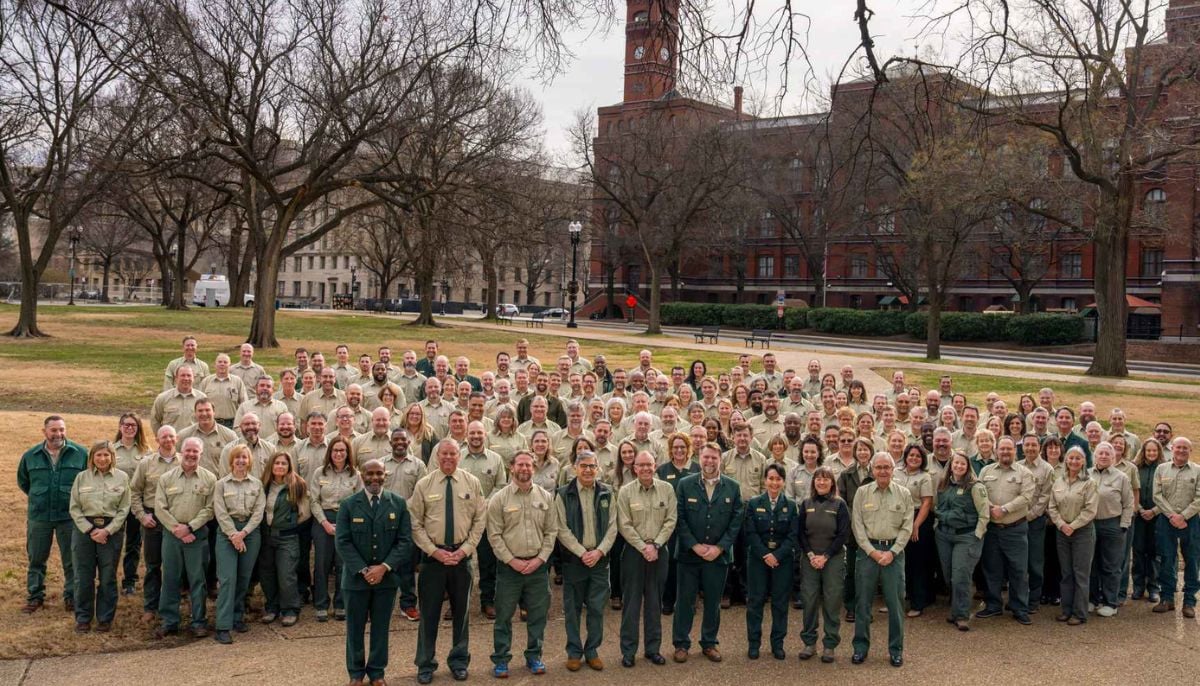
The Trump administration has made a sweeping reorganisation of the U.S. Forest Service.
Critics referred to this as the most catastrophic attack on the 121-year-old agency in its history.
In a major dismantling, the headquarters are shifted to Utah, and all ten regional offices have been shut down.
The restructuring was announced on Tuesday, April 7, via a press release announcing that the Agency’s headquarters are shifting from Washington, DC, to Salt Lake City.
Ten regional centers will be shut down to make way for fifteen political appointees referred to as “state directors.”
Additionally, more than fifty scientific centers located in thirty-one different states will also be abolished. It is important to note that according to scientists, any attempt to relocate the decades’ worth of long-term ecological research will result in its death.
It is believed that there is a systematic effort to demolish. Already, the current government has reduced by over 25% of the number of staff members within the land management agencies. A reduction in the budget for the Forest Service by one-third has been proposed.


Rory’s defense, disappointing first rounds and looking ahead to the rest of the Masters

TV for dogs booms but are they watching?

Gary Player, Jack Nicklaus address Tiger Woods arrest, recovery

-
 Business1 week ago
Jaguar Land Rover sees sales recover after cyber attack
-
Uncategorized1 week ago
[CinePlex360] Please moderate: “Trump signals p
-

 Entertainment6 days ago
Joe Jonas shares candid glimpse into parenthood with Sophie Turner
-

 Tech6 days ago
Our Favorite iPad Is $50 Off
-

 Sports6 days ago
UConn Final Four run could trigger a $50M furniture giveaway for Massachusetts-based Jordan’s Furniture
-

 Entertainment6 days ago
Blake Lively reacts to harassment claims dismissal against Justin Baldoni
-

 Fashion1 week ago
China’s Anta Sports posts record $11.62 bn revenue in 2025
-
 Business6 days ago
Video: Why Is the Labor Market Stuck?